

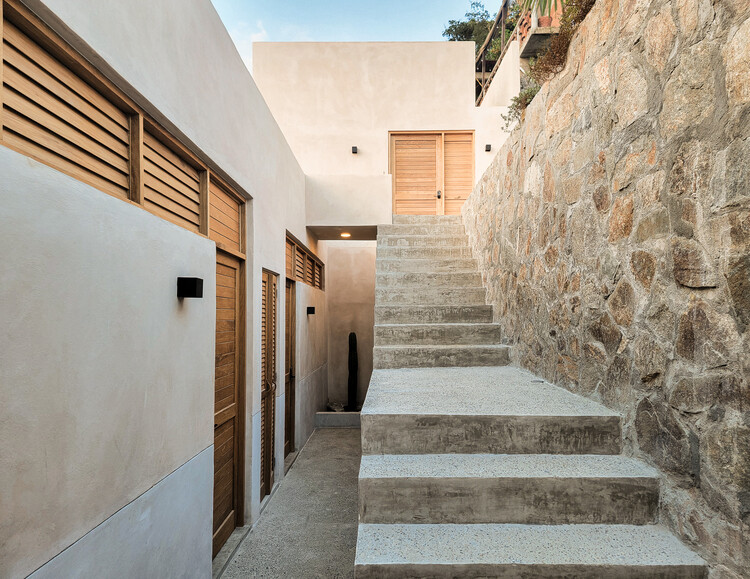
-
Architects: Veö estudio
- Area: 150 m²
- Year: 2023
-
Manufacturers: Cemex, Perdura, Tecnolite


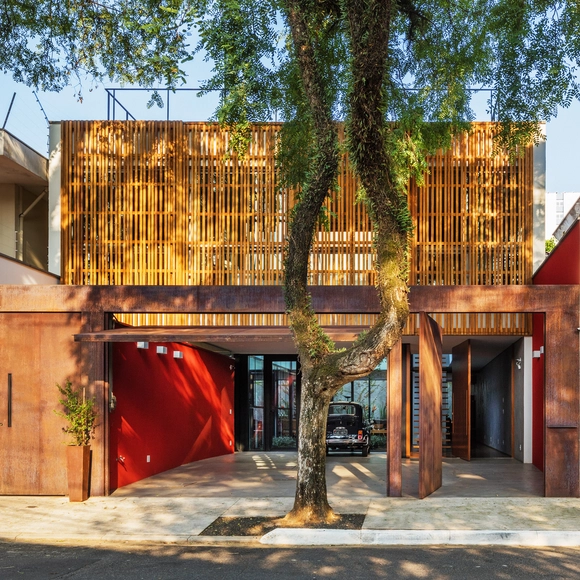
The concept of "eyes on the street" is perhaps the most famous within architectural and urban literature when it comes to urban security. Jane Jacobs uses this expression to refer to people who - consciously or unconsciously - use public spaces or observe them from their homes, generating natural surveillance. A movement that, within our discipline, is encouraged both through quality public spaces and through the powerful relationship between the public and private created through building facades. Advocating for this daily control, Jacobs believes in a way of making architecture and cities that condemns excessive verticalization, reinforced by isolated buildings and single-use ones that deny contact with the street.


Buenos Aires is a city shaped by successive layers of architectural, cultural, and urban transformations. Its built environment reflects a complex history of migration, economic development, political change, and cultural exchange, resulting in a remarkably diverse architectural landscape. From historic institutional buildings and European-inspired residential architecture to modernist landmarks, industrial heritage, and contemporary public spaces, the city offers countless opportunities to explore the relationship between architecture and urban life.

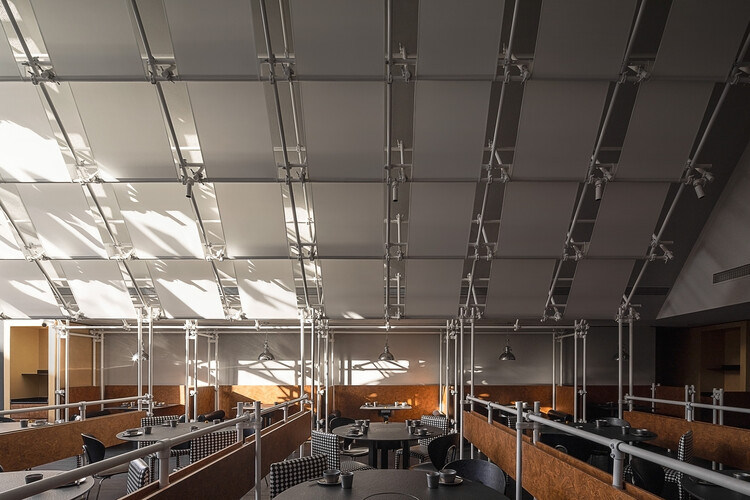
Scaffolding is perhaps one of architecture's most familiar temporary structures. It accompanies buildings through construction, maintenance, and renovation, only to disappear once its work is complete. Yet its apparent impermanence conceals a different kind of longevity. Scaffolding systems are designed to be assembled, dismantled, transported, and reused, with standardized components robust enough to withstand repeated handling and changing site conditions. Their temporary character lies less in the material itself than in the duration of each assembly.
This logic is not unfamiliar in furniture design. Dieter Rams's 606 Universal Shelving System, designed for Vitsœ in 1960, established a modular approach in which shelves, cabinets, and other components could be rearranged, expanded, or transported as circumstances changed. Similarly, IKEA's modular storage systems popularized and demonstrated how furniture can be understood as a collection of interchangeable parts rather than a singular, finished object. Although different in material and intended lifespan, these systems share an important principle: longevity can be achieved through adaptability rather than permanence of arrangement.


As cities struggle to provide adequate and affordable housing, examining built examples of collective housing can help inform decisions about what to build and how. These projects offer opportunities to assess solutions, understand their limitations, and consider what might be applied elsewhere. In Paris, two recent examples combine apartments of different sizes with access to gardens, courtyards, and other outdoor spaces, working with structures already in place.