



-
Architects: MARCOZERO Estudio
- Area: 110 m²
- Year: 2018
-
Manufacturers: REKA

To purchase computers for economically vulnerable students at the Department of Architecture, Urbanism, and Design of the Federal University of Ceará—who, due to the pandemic, are unable to attend classes and lectures, develop projects, hold meetings, work in research groups, or access the vast amount of online information—professors and artists have come together for a common project: SOLIDARIEDAUD.

Arqguia Colorir is a digital coloring book that invites everyone to visually reinterpret the main architectural landmarks of Rio de Janeiro. Available for free download in both English and Portuguese, the drawings feature QR codes providing direct access to descriptions of each work on the online architecture guide ArqGuia Rio.
_11.44.10.jpg?1595963269)
Despite UNESCO's recognition of specific world heritage sites, some are in constant danger of disappearing due to natural phenomena like earthquakes and human factors such as urbanization. By definition, these landmarks are significant to human history, embodying characteristics that reflect the core values of various civilizations. However, many have never been experienced firsthand by a large portion of the global population.

Among the hardships we have faced due to the pandemic, perhaps one of the most keenly felt is the loss of freedom to enjoy public open spaces. Walking down a pedestrian street, meeting friends in a plaza, exercising in large parks or on beaches, enjoying a nature that is also urban. Beyond the desire to meet someone, there is a deep yearning to meet somewhere—beyond the private and intimate sphere.


Mixed-use buildings are those where diverse programs converge into a single project. Crucial for compact, dense cities, this architectural typology can help reduce daily urban commutes by integrating housing, workspaces, and occasionally leisure facilities into one structure.

This online event brings together experts from various fields to demonstrate how companies are adapting to the current landscape and what to expect from upcoming changes.

The way you experience the city, the urban infrastructure provided in the areas you frequent, and even the job opportunities that come your way are all, to some extent, shaped by the color of your skin. These themes unfold across multiple layers to discuss racial segregation in the urban environment in the seminar "The City and Racial Subjection," organized in 2018 by the Laboratory of Race and Urban Space Studies (Labraça) at FAUUSP.
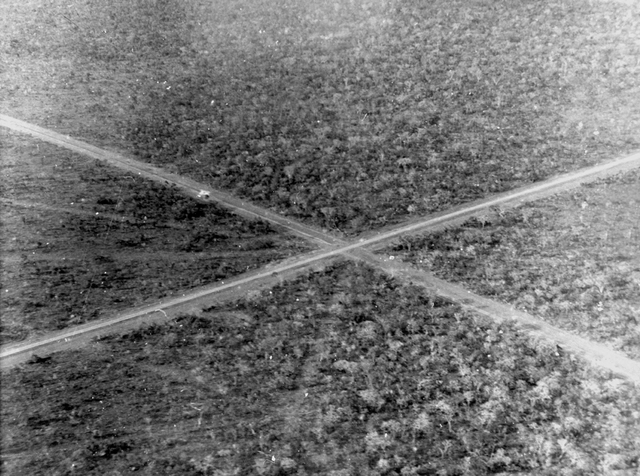
As it celebrates its 60th anniversary, Brasília has an opportunity to draw inspiration from the anti-racist and anti-colonial movements worldwide that have challenged the monumentality of official history, confronting the memorialization of colonialism within its own urban landscape. Rather than celebratory events that reiterate official narratives, marking the city as a *bandeirante* milestone of national modernity, we should pause—a pause moreover imposed by the pandemic—to reflect on how certain memories are eternalized while others are erased, and thus trace new memorial cartographies onto the urban fabric of the capital.
.jpg?1596827058&format=webp&width=640&height=580)

During the pandemic, major cities became some of the most vulnerable environments; moreover, the global health crisis validated remote work and called into question the necessity of living in dense urban centers. Consequently, the urban exodus is likely to remain a constant theme in the near future, sparking major discussions within the fields of architecture and urban planning on how to manage this shift.

In one of the country's hardest-hit cities by the Covid-19 pandemic – São Paulo – and in the face of the suffocating socio-environmental crisis plaguing our world and our time, how can architects and urban planners take a stand and effectively act against widespread asphyxiation and for the fundamental right to breathe, to exist, and to inhabit the Earth?


Twenty-first-century urbanism will be marked by an increase in both the number and scale of global megacities—urban agglomerations with over 10 million inhabitants, according to the UN—alongside a geographical shift. By 2100, African metropolises such as Lagos (Nigeria) and Kinshasa (Democratic Republic of the Congo) are projected to exceed 80 million residents. The rise of these new, larger metropolises, especially in Africa and Asia, compounded by the urgent need to address the ongoing climate crisis, demands immediate changes in the discourse surrounding urban mobility.

The public transit system in large Brazilian cities was already in crisis long before the coronavirus pandemic. Transit operators have seen passenger demand steadily decline over recent decades, driven by a combination of factors: urban policies that incentivize private vehicle use; urban sprawl, which dilutes economies of scale when serving peripheral areas; rising congestion; transit routes increasingly disconnected from actual urban mobility patterns; a growing need for transfers along passenger routes; deteriorating fleets and service quality; rising incomes leading to alternative choices like private cars, motorcycles, and ride-hailing services; and, above all, steadily rising fares.


While the architecture and construction industry has been advancing in new fields for years, it remains one of the most lagging in terms of automation and efficiency. And indeed, while many of these innovations never progress past the experimental stage, we face a sobering reality: the sector is one of the largest producers of pollutants and waste worldwide. How can we reverse this trend?

One of the most iconic selection tools for architecture and urban planning projects in Brazil is the design competition. Firmly established in the country's architectural culture, they provide, on the one hand, an environment of stimulation, opportunity, and revitalization for both practice and the debate of ideas—an important condition for reaffirming a democratic and horizontal approach to choosing winning proposals. On the other hand, they are the subject of heated debate due to how they have evolved, their evaluation methods, and, above all, because they frequently award proposals that reiterate a certain type of architecture linked to a modern formal vocabulary, neglecting proposals that seek some form of renewal of this formal imagery.
_11.44.10.jpg?1595963269)





.jpg?1596827331 "© Ivan Araújo")
.jpg?1596827150 "© Ivan Araújo")
.jpg?1596827362 "© Ivan Araújo")
.jpg?1596827181 "© Ivan Araújo")
.jpg?1596827058)