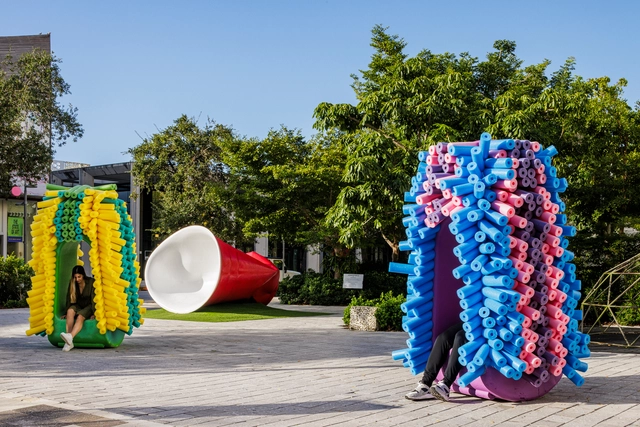
Rock | Roll by Germane Barnes. Image Courtesy of Miami Design District
Distinguished for its quality, depth, and diversity, Design Miami 2022 has concluded, giving worldwide collectors and locals the best in contemporary and emerging art and design. Kicking off at the end of November and running through the first week of December, this event ran alongside the annual Art Basel Miami Beach. The ultimate international art fair ranged from interactive installations to art exhibitions by promising up-and-comers to 20th-century masterworks, including Daniel Arsham and Andrés Reisinger, and Stefano Boeri. Also during this event, MetaMundo has presented their Top 50 Creators of the Metaverse - a hand-picked collection of some of the world’s best 3D artists.
For this edition, The Miami Design District has awarded Miami-based architect and designer Germane Barnes and commissioned a multifaceted installation that honors the city's polyethnic culture. Along with other relevant architectural installations during the Miami Art Week, the following selection includes work by Leandro Erlich at Perez Art Museum Miami and Pilar Zeta.
It could be argued that indoor air quality has never received its due attention throughout history. While atmospheric pollution has been considered a threat since the time of Hippocrates in 400 BC, becoming a tangible concern with industrialization during the Industrial Revolution, little is said about comfort conditions in indoor environments. This issue is increasingly critical given that humanity spends about 90% of its time indoors, and the quality of these spaces directly affects long-term well-being and health. In fact, Indoor Environmental Quality (IEQ) encompasses far more than just indoor pollution. It refers to a balance between air quality, acoustics, lighting, temperature, and other factors that contribute to a pleasant and, above all, healthy environment for occupants. Under the motto “every space can be a healthy space,” Armstrong has developed solutions to help improve the environments where we spend the most time, such as educational and healthcare facilities, offices, and homes.
Now in its eighth edition, the Prix Versailles awards are presented to honor the best achievements in the field of architecture and design worldwide, promoting architectural production as a vector of intelligent sustainable development and considering ecological, social, and cultural impacts.
With the rapid urbanization of our cities, animals that once called these environments home have been displaced, forced to seek refuge elsewhere.
Birds are perhaps among the species hardest hit by urban growth, as they are drawn during flight by stimuli like artificial light and wind currents—both of which can be radically altered by how a city is built and laid out.
Penthouse Tuymans - Arocha. Image Courtesy of Glenn Sestig
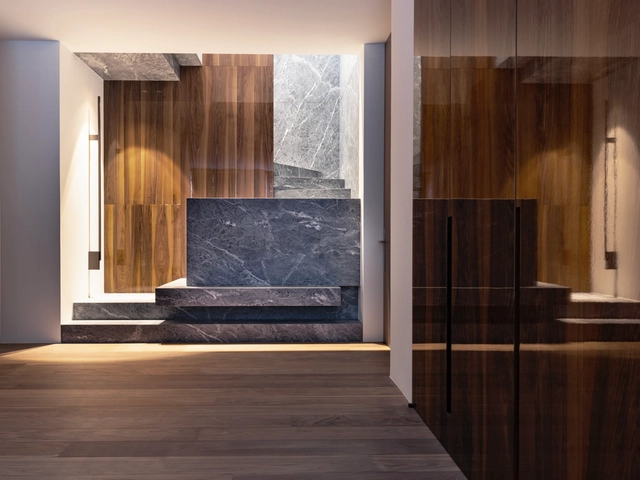
Whether an apartment building, house, storefront, office interior, or restaurant, Glenn Sestig’s architecture consistently reveals itself in tidy fragments of robust and determinately monumental geometry that tends to evoke urban qualities. His austere facades, colonnades, stair landings, and even reception desks and shelf displays appear to be quite hefty and substantial. And, in fact, every project, be it a small boutique or gallery, starts with rigorous planning – visual primary and secondary axes get established, circulation flow is laid out, and major anchors are identified before the architect moves on to addressing the appropriate materials, surfaces, and details. Every space is architecture first; its program and appearance will fit into it.
Cities concentrate opportunities and exchanges, culture and business, while, at the same time are a key contributor to climate change. They are highly complex organisms, with multiple actors involved, that bring to light underlying social interests and conflicts present in society. In 2007, the world's urban population surpassed the rural and this difference has been increasing ever since. According to the 2018 Revision of World Urbanization Prospects report, 55% of the world's current population lives in urban areas, rising to 68% by 2050. This will represent an increase of 2.5 billion people in urban areas, with almost 90% of this increase occurring in Asia and Africa. The Smart Sustainable Cities: Reconnaissance Study also points out that urban centers account for 67% of global energy demand, emit 70% of greenhouse gases and, on top of it all, buildings consume 40% of all energy worldwide. The prospect of a mostly urban world, along with the alarming onset of climate change, both raise challenges regarding living conditions in the coming decades and centuries, and all the implications that will accompany these changes.
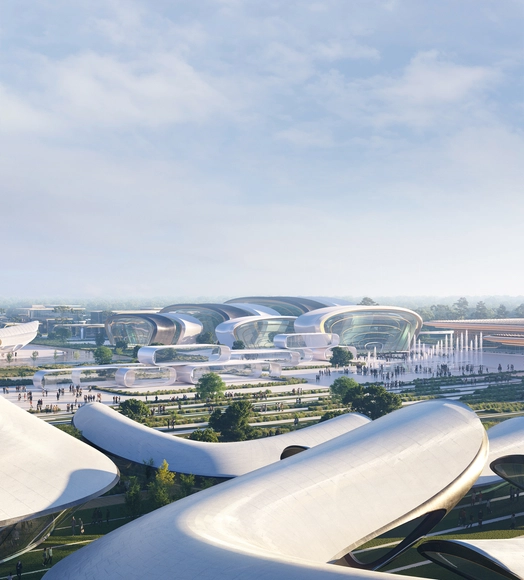
Zaha Hadid Architects has joined Ukrainian authorities to present the OdesaExpo 2030 bid proposal, an event planned to become the first Expo to be hosted in Eastern Europe. The masterplan is designed with legacy and sustainability in mind. The central pavilions are configured to be transformed into Ukraine’s first fair exhibition hub after the closing of the Expo, while the national pavilions are designed to be dismantled and redeployed as new civic buildings throughout Ukraine.
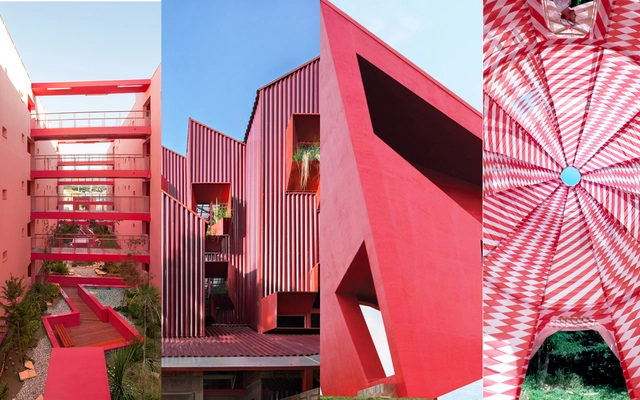
Pantone has revealed its Color of the Year for 2023, 18-1750 Viva Magenta, a brand-new color "brave and fearless, whose exuberance promotes a joyous and optimistic celebration." The shade falls under the red family and is inspired by the tone of cochineal extract, one of the most precious dyes historically used to color textiles, cosmetics, and food.
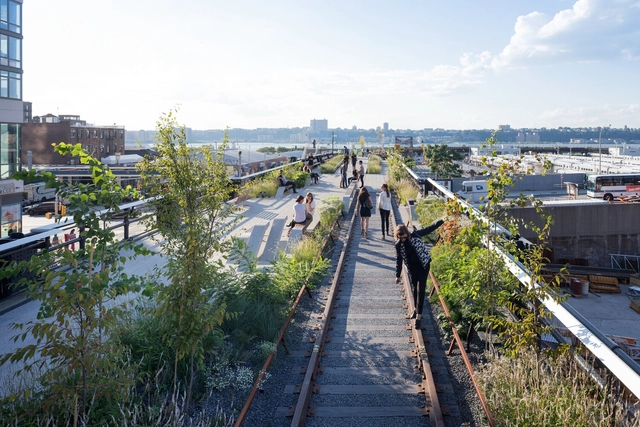
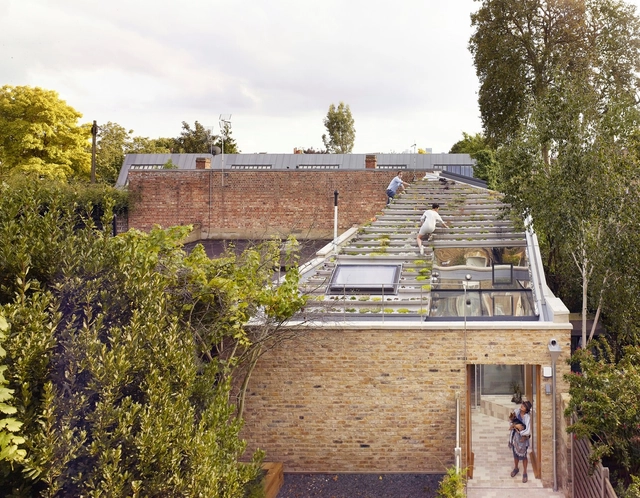
For some time now, roofs have become leisure spaces, whether in large luxurious buildings or houses on the outskirts. This condition, however, is not limited to our times. Different cultures at different times used flat roofs in their architecture, in different ways.
Source: screenshot from "The Rings of Power" (2022) - Amazon Prime Video
In cinematic works, the architecture chosen and designed to compose the frame can communicate with the viewer in many ways. Buildings and cities can establish the setting through well-known monuments or specific building types adapted to certain climates, as well as indicate the historical period through tectonic aesthetics. Fantasy works offer an endless creative field for architectural composition and interior design.
On November 26, ArchDaily Brasil received the FNA 2022 Award (Prêmio FNA), a prize that recognizes initiatives in favor of architecture and Brazilian cities. In its 5th edition, the award was presented during the 46th National Meeting of Architects and Urbanists Unions (46th ENSA), in Brasilia, and recognized the non-profit organization Comunidades Catalisadoras (ComCat) and the Fab Social project as well. On the same occasion, the architect, teacher, and activist Cláudia Teresa Pereira Pires was awarded the Architect and Urban Planner of the Year Prize.
https://www.archdaily.com/993171/archdaily-brasil-wins-the-fna-2022-prizeArchDaily Team
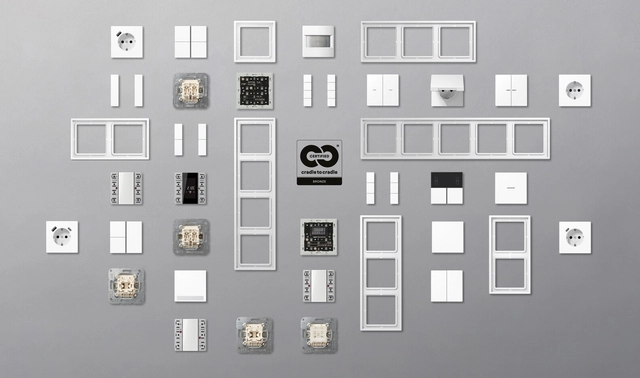
Frames, inserts, modules - hundreds of individual elements from JUNG have successfully gone through the Cradle to Cradle certification process. The LS 990, LS CUBE, AS 500, A 550, A FLOW, A CREATION series from JUNG in white are now Cradle to Cradle certified. Image Courtesy of JUNG
Annually, 13% of the waste generated by humans is recycled, but where does the remaining 87% go? The combination of different types of waste is gradually filling the Earth’s oceans and landfills, leading to a negative impact on wildlife, the natural environment and human health. Within the large amounts of solid waste produced in developed cities, used electronics are a clear example of how materials can be efficiently managed after their life cycle ends. Understanding the behavior of these materials and resources before, during and after their useful life cycle has guided the search for new solutions, such as the Cradle to Cradle (C2C) methodology.
C2C proposes the design of products or processes that function as a healthy ecological system, where resources are efficiently managed in a cyclical way. By applying this methodology to electric appliances, JUNG has developed circular design strategies for their most-used switches and plugs for conventional and smart building technology, allowing them to be dismantled and reused when the product is no longer fit for use.
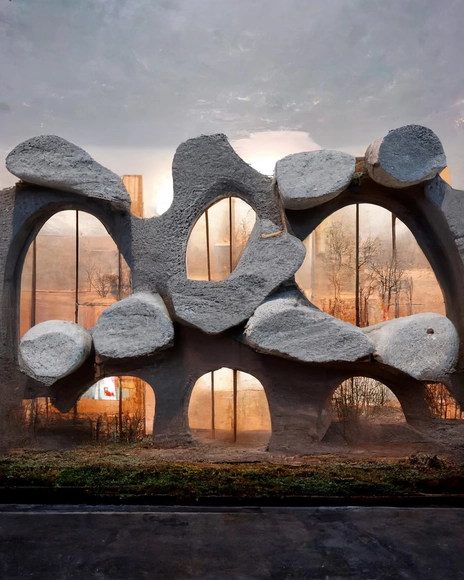
Much has been said about the power of artificial intelligence and how its rise could transform the architectural profession. This topic has already been explored in previous articles here.
The primary tool causing concern among industry experts is DALL-E, a machine learning-based software that generates images from text prompts entered by the user. Other platforms offer similar capabilities, such as Midjourney and Stable Diffusion.
For nearly a century, the areas of urban sprawl where every single-family home has its own yard, garage, and white picket fence represented the peak of life aspiration. Homeownership and the idea of claiming space away from the hustle and bustle of the city core was once considered the ideal lifestyle and the pinnacle of the American Dream. But as time went on, and socio-economic conditions shifted, cities that were once filled with these single-family homes realized that perhaps these zoning regulations were outdated, and new solutions needed to be created to prevent the current housing crisis from growing even more out of control.
Cross-border guests catch up Cross-border guests catch up at the forumat the forum. Image Courtesy of Shaoxing Jianhu Planning and Design Competition
From October 29th to 30th, 2022, the Final Review Meeting, Award Ceremony and Cross-border Forum of the 「Beyond YUE|Jianhu Revival」Shaoxing Jianhu Planning and Design Competition were successfully held at Jianhu in Keqiao. After 11 months of international competition, gathering talents from all over the world and global wisdom, the design and cultural event was held in October to kickstart the transformation of Shaoxing's Jianhu.
According to a survey by the Brazilian Association for Recycling of Construction and Demolition Waste (ABRECON), there has been an increase in the recycling of construction and demolition waste (C&D) in Brazil in recent years. According to the 2015 report, 21% of the total C&D was recycled in the country that year, while in 2013 the rate was 19%.
The outlook is promising but not yet ideal, and the growth of recycled C&D materials is still considered small. In Brazil, construction waste can represent between 50% and 70% of the total municipal solid waste. This means, we still need to advocate for a more common practice of material recycling and reuse in architecture, especially in Brazil.
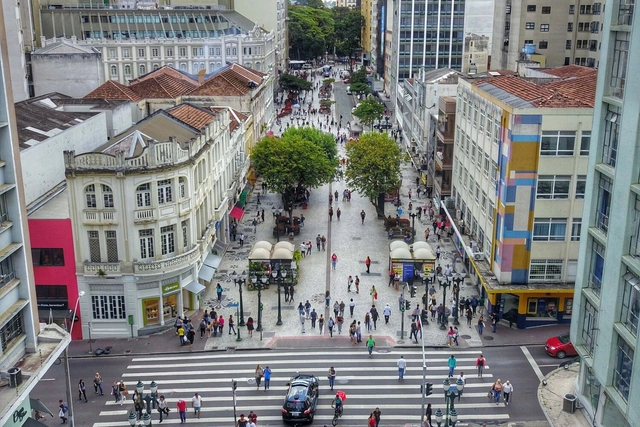
XV de Novembro Street in Curitiba, Brazil, became a social gathering point after being closed to cars in 1972. Via: CBN Curitiba
The urgent need to reduce greenhouse gas (GHG) emissions in the transportation sector presents both a challenge and an opportunity for local governments. This is particularly true for Zero Emission Areas (ZEAs)—urban zones where pollutant emissions are neutralized. This measure primarily benefits citizens, who enjoy healthier urban spaces and more vibrant commercial activity. However, ensuring success—or at least mitigating public backlash—requires deep social engagement and effective communication with the population.
https://www.archdaily.com/1132084/what-are-zero-emission-zonesITDP Brasil
Various studies have indicated that, to prevent temperatures from rising more than 1.5°C, there must be a major drop in greenhouse gas (GHG) emissions. To achieve this, it is necessary to developcompact cities designed for pedestrians, cyclists, and transit users, as well as rapidly and strategically adopting electric vehicles, with a focus on public transportation.
https://www.archdaily.com/1132312/compact-and-electrified-cities-to-curb-climate-changeITDP Brasil
The city of Sharm El Sheikh, Egypt, hosts the 2022 United Nations Climate Change Conference, COP27, from November 6 to 18. The conference builds on the negotiations of COP26 in Glasgow, Scotland, in 2021, with the expectation that countries will demonstrate climate ambition and urgency to limit the rise in global temperature to 1.5°C.
https://www.archdaily.com/1132088/3-topics-of-interest-to-brazil-at-cop27WRI Brasil
What is good architecture? More than two thousand years ago, Vitruvius would have answered that good architecture is that which contemplates three basic principles: firmitas (firmness), utilitas (utility), and venustas (beauty), as he described in his treatise De Architectura, and probably no one would have questioned it. Today, this broad question is capable of eliciting hundreds of answers, all personal and subjective, which have to do with the experience of each person.
DEADMAU5 The Metaverse Festival. Image by Duncan Rawlinson flickr under Attribution-NonCommercial 2.0 Generic (CC BY-NC 2.0).
“All the physical spaces that we (architects) design – buildings, interiors and cities are born as metaspaces, and we call them 3D models”. With this statement Brian Jencek, director of planning at San Francisco-based architecture firm HOK, narrows the boundaries between the current way of designing and the future of architecture in the metaverse. According to him, we are not that far from this technology, since we already use the same tools that visual designers use to create realistic environments, such as Unity, Twin motion and Blender.
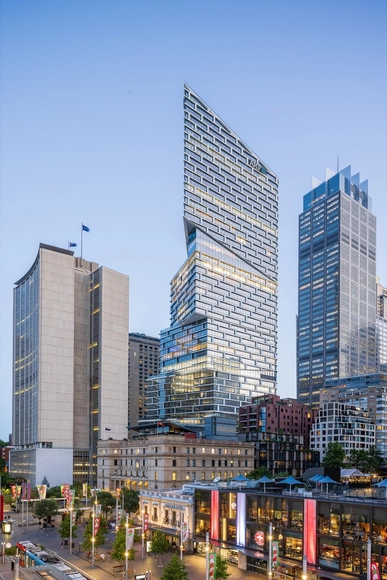
Quay Quarter Tower (QQT), designed by 3XN has been declared the World Building of the Year 2022 at the fifteenth annual World Architecture Festival (WAF), held in Lisbon.
The 206-meter tower, located close to the Sydney Opera House, is an office building arranged as a vertical village, creating a sense of community and providing spaces that focus on collaboration, health, well-being and external terraces.
Talking to architect Marta Maccaglia about her work is not just talking about architecture. Each of her projects derives from a participatory way of working, based on the approach and deep understanding of its users in their social and local context, their needs, the territory and the available resources, resulting in works that acquire a meaning beyond that of the function itself.




















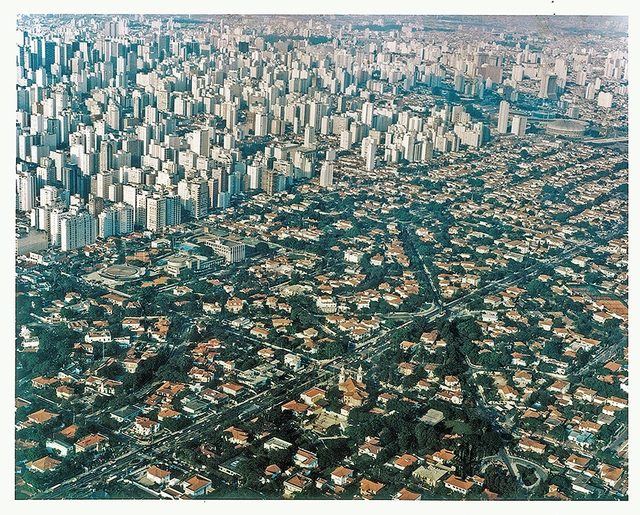
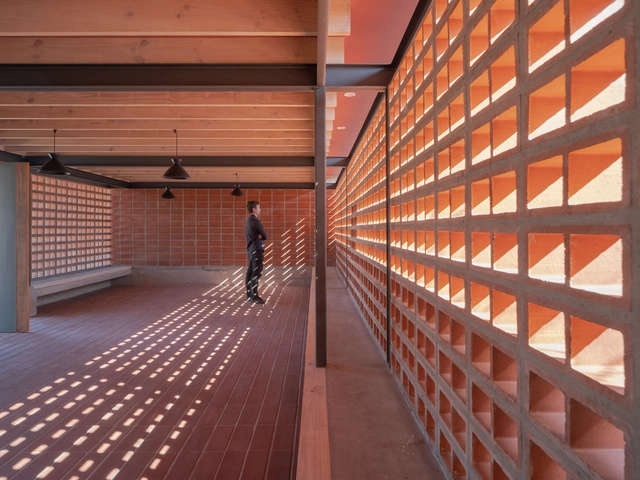

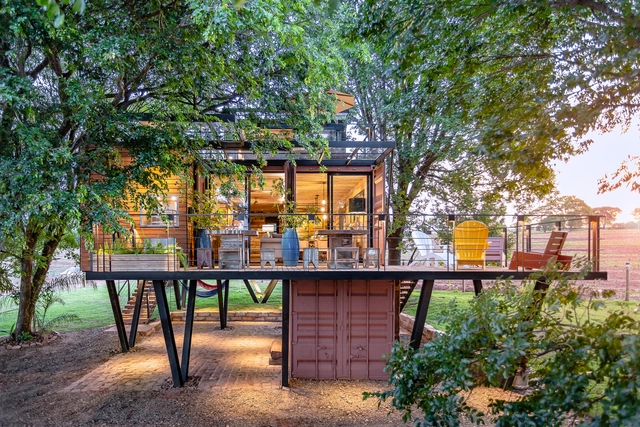


.jpg?1600352094 "Flamboyant Residence / Perkins+Will. Image: © Nelson Kon")