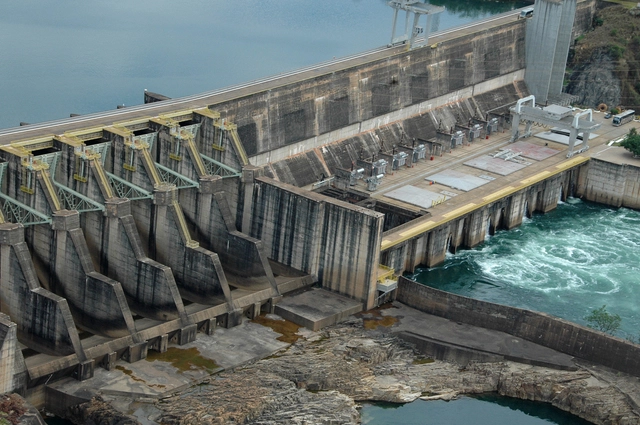
Two young entrepreneurs from Curitiba have developed a technological innovation that brings a long-held dream within reach for many Brazilians: owning a personal power plant. As reported by Tribuna do Paraná, mechanical engineers Felipe Wotecoski (31) and Juliano Rataiczyk (30) have created a device capable of generating electricity in a backyard with minimal environmental impact.
Similar in size to a four-burner stove, the micro-plant can generate up to 720 kilowatt-hours (kWh) per month—enough electricity to power three to four homes and feed the surplus back into the grid. According to the engineers, this output translates to savings of approximately R$ 500 per month on electricity bills.
Opened in August 2017 and setting attendance records, Sesc 24 de Maio—the second-to-last branch of the network to open, succeeded by Sesc Avenida Paulista—was designed by Paulo Mendes da Rocha in partnership with the office MMBB Arquitetos, who retrofitted a former department store, remodeling its interior spaces within the existing structure and creating a new central structure to support the rooftop swimming pool.
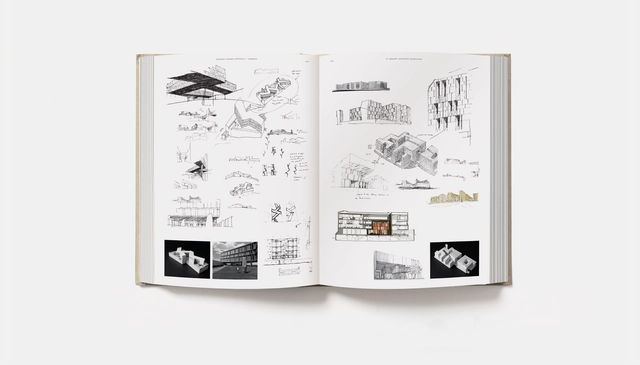
From the Fundación Arquia Blog, architect Raúl García García invites us to explore the creative process of Álvaro Siza—one of the leading figures of 20th and early 21st-century architecture—through his sketches.
https://www.archdaily.com/1113968/alvaro-siza-the-draftsman-of-dreamsRaúl García García
As the annual graduation season arrives worldwide, we recognize that among the various ways to learn architecture, nothing is more direct than a hands-on design-build project. It offers a firsthand look at how different materials form structures, how those structures respond to compression and tension, and how the process of construction shapes the final outcome. In recent years, architecture schools have increasingly embraced opportunities for students to build, producing work that ranges from small-scale temporary interventions and pavilions to permanent structures, each with its own unique character.
To demonstrate that exceptional architecture can emerge from an educational environment, ArchDaily has issued an open call for student work for four consecutive years, inviting submissions of student-built projects completed over the past year. ArchDaily’s four localized platforms—English, Chinese, Spanish, and Portuguese—are now accepting submissions for our fourth annual selection of the "Best Student Design-Build Projects," which will be featured and shared with our global audience.
https://www.archdaily.com/1113969/global-call-outstanding-student-build-projectsJoanna Wong
Following the election, the new government has already begun to announce several changes to its ministries. Among these is the elimination of the Ministry of Cities. In an effort to prompt discussion and prevent this dissolution, a petition has been organized and can be signed here.
Fotografia de Gustavo Neves da Rocha Filho (1954). Image Cortesia de IAB - SP
The IAB played a key initial role in consolidating the profession of architects and urban planners as an autonomous activity from engineering back in the 1940s and 1950s. It was organized as a representative institution, a voluntary association of architects, and a platform for the field's public policies. This applied both to guiding legitimate practices concerning the built environment, the landscape, and the city, and to educating both architects and society about an activity so fundamental to citizenship. Action across these diverse areas began with support for the regulation of architecture as a profession in Brazil (the creation of Crea/Confea in 1933), followed by the organization of the 1945 congress, and, in the case of São Paulo, support for the founding of the Faculty of Architecture and Urban Planning of the University of São Paulo (FAUUSP) in 1948.
Google has launched the Environmental Insights Explorer tool to provide users with access to data and technology that can contribute to the transition toward a lower-carbon world. The information is primarily based on data already available on Google Maps.
The goal is to enable cities worldwide to calculate their greenhouse gas (GHG) inventories to facilitate climate action planning. “The inventory can help prioritize investments in the areas of greatest impact, as it highlights key emission sources or hotspots and can be used as a baseline to measure progress,” the company states on the tool's website.
The open course Arquitetura Paulistana, organized by Estúdio Artigas, offers guided tours of prominent contemporary projects in São Paulo. Accompanied by the architects behind the designs, participants gain insight into each work through the eyes of those who conceived them.
The Brazilian Institute of Geography and Statistics (IBGE) released last week the 2017 edition of the Profile of Brazilian Municipalities (Munic). According to the document, fewer than half of Brazilian cities have structured planning for housing. The report points out that last year, of the country's 5,570 municipalities, 59.6% had some type of housing-directed initiative, but only 39.7% had a Municipal Housing Plan.
One way to make cities visible is by intervening in forgotten or peripheral areas, as well as by addressing basic needs, bringing them to light and raising an urgent call to action. A few months ago we announced the call for entries for this competition, and today it surprises us with the variety of responses. It is also interesting to see how participants from other countries view our context and what they propose; this is a great contribution, expanding the possibilities for multi-perspective interventions in building projects with and for society.
CIUDADES [en] VISIBLE is a competition that invited architects and engineers, whether students or professionals, to design in agreement with the beneficiary families: the Salazar, Acarraz, Teccse, Huamán, and López families. Five families, five homes. Housing is itself a basic need, making this competition both a city laboratory in search of alternative solutions for planned housing construction in a country like Peru, where nearly 70% of homes are self-built. The site of intervention is the 3 de Diciembre Community, located south of the city of Lima, in the District ofLurín.
Behind this initiative is the organization MUTUO, which seeks to positively impact the self-built housing situation in Peru by collectively engaging the architectural community in the issue. Additionally, it aims to provide citizens with a tool that encourages environmental awareness and active involvement in creating change to improve living conditions for disadvantaged sectors. The call for entries received 108 proposals, including many international submissions. After a thorough analysis, three winning proposals and five honorable mentions were selected.
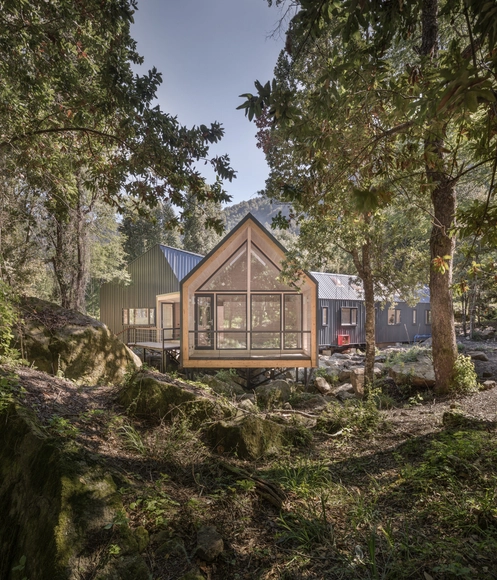
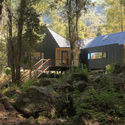
The project Casa sobre las rocas by the Chilean firm Schwember García-Huidobro Arquitectos has been recognized at the German Design Award 2019. The accolade, awarded in Germany by the Ministry of Technology, "identifies and presents unique design trends," according to the organization.
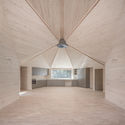
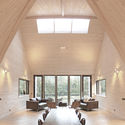
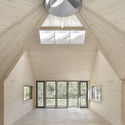
Built in a forest in the town of Cunco, Chile, Casa sobre las rocas received a Special Mention in the Architectural Design Communication category of the competition. The project is a second home that prioritizes communal areas, featuring a Y-shaped floor plan designed to optimize views and natural light.
A historical platform available online offers a look at the last one hundred years of architectural competitions in Uruguay, exploring the shape of the city its society set out to imagine.
100 Years of Architecture Competitions in Uruguay is a project created by authors Virginia Delgado, Francisco Magnone, and Marcelo Staricco (architects and design instructors, DEAPA - FADU, UdelaR) along with research advisor Mag. Arch. Diego Capandeguy.
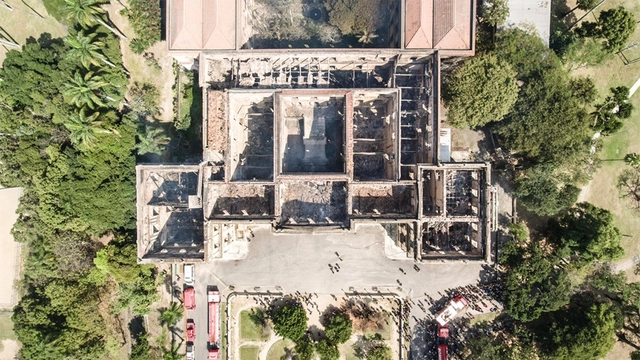
The destruction of the National Museum at Quinta da Boa Vista in Rio de Janeiro cannot go unnoticed. This tragedy must serve as a cry of "enough!" against the abandonment, neglect, and destruction of the nation's memory. The unfortunate reality is that the situation of the National Museum is not unique. Similar tragedies could happen again.
The values that define us as a society cannot turn to ashes like the National Museum. We call upon the State, architects and urban planners, universities, intellectuals, professional associations, and ultimately, Brazilian society as a whole to mobilize.
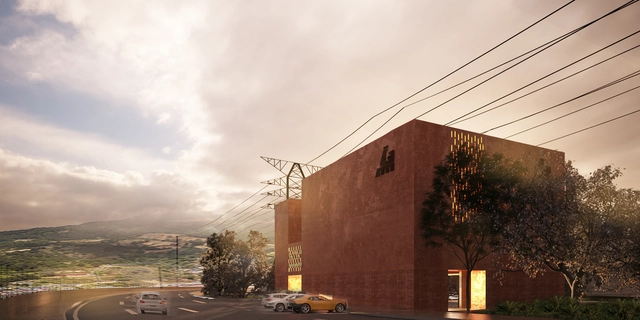
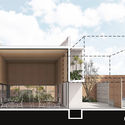
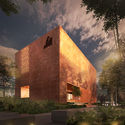
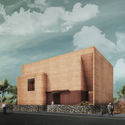
The Colegio de Arquitectos del Estado de Michoacán is a non-profit association established 54 years ago serving the city of Morelia, dedicated to heritage preservation and fostering debate on contemporary architectural production and urban development. To provide an adequate space for these activities, a competition was launched after securing a site for the new headquarters to support and foster contemporary architecture.
On November 29, the National Competition for the Headquarters Project of the Colegio de Arquitectos Michoacán, A.C. was held at its current headquarters. The jury—composed of Pedro Núñez González, Isaura González Gottdiener, Salvador Reyes Ríos, José Muñoz, Carlos Marín, and Jorge Humberto Flores Romero—evaluated 17 completely anonymous proposals.
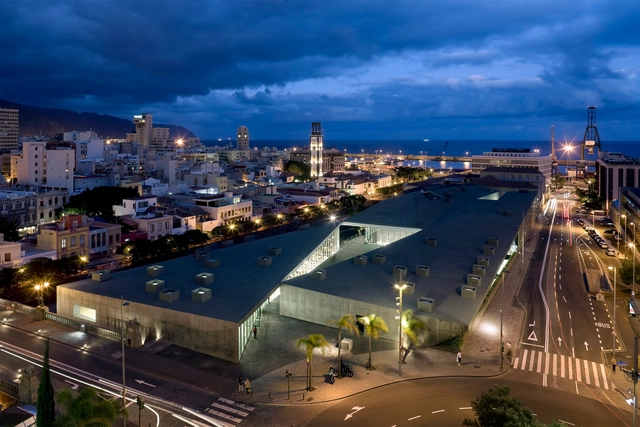
Tenerife Espacio de las Artes / Herzog & de Meuron + Virgilio Gutiérrez Herreros. Image Cortesía de COACTFE
As part of Architecture Week, celebrated by the Official Association of Architects of Tenerife, La Gomera, and El Hierro (Spain), the Oraá Architecture Prizes were awarded, recognizing the best architectural achievements of the last 10 years on the islands of Tenerife, La Gomera, and El Hierro.
The Spanish accolade highlights new construction, restorations, renovations, landscape, public space, and interior design, along with special distinctions for outstanding career achievements, emerging talent, patronage, and the best architectural photography.
Pontificia Universidad Católica de Chile [Flickr]: Lo Contador, CC BY-SA 2.0. ImageFaculty of Architecture, Design and Urban Studies of the Pontificia Universidad Católica de Chile
América Economía magazine has published its most recent ranking of Chilean universities, just a few months ahead of the upcoming 2019 higher education admission process. In addition to the general evaluation—in which the Universidad de Chile remains in first place for the fourth consecutive year—the publication features the specific ranking of the 16 "most in-demand or highly regarded and prestigious" programs in Chile, including Architecture.
With our commitment to providing the most comprehensive information for university applicants, in this article we share the ranking of the best universities to study Architecture in Chile. This list includes technical data on average admission scores, faculty specialization levels, annual tuition costs and variations, and first-year post-graduation employability rates, among other key metrics.
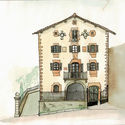
Dibujo en Torre de Donamaría. Image Cortesía de Premio Rafael Manzano
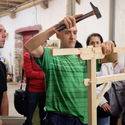
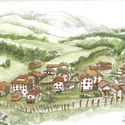
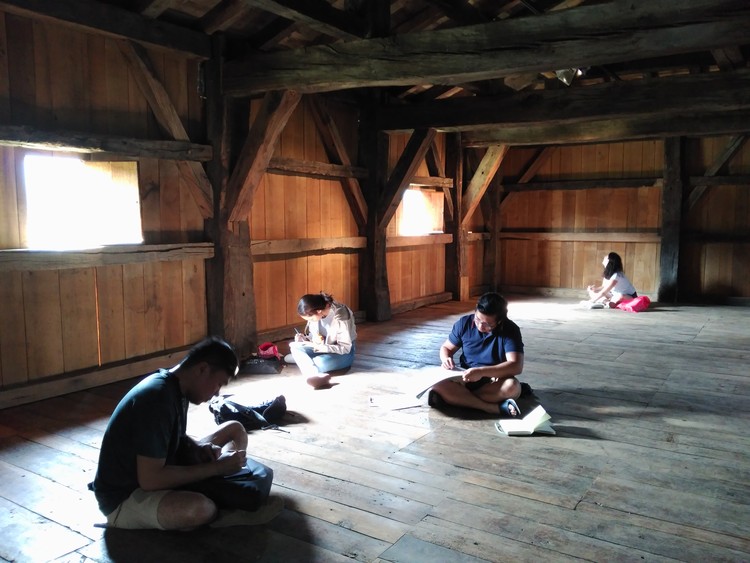
Organized by INTBAU and the Rafael Manzano Prize for New Traditional Architecture, the most recent edition of the Summer School of Traditional Architecture focused its work on the Baztan Valley (Navarre, Spain). The program studied traditional construction, architecture, and urban planning to produce a manual for conservation and new traditional construction in the area. In addition, hand drawing and building surveys were the primary activities carried out by the participating students.
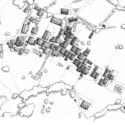
Although the scope of work extended to the entire Baztan Valley, the bulk of the study was carried out in Amaiur, the town that hosted the group during those two weeks. Articulated around the branch of the Camino de Santiago that passes through it, the town's urban layout is structured almost as a linear development. Along this axis, the richness, diversity, and versatility of its architectural tradition unfold, presenting a showcase of solutions from different eras that have adapted to multiple trends and functions without ever losing their essence. Accordingly, the study examined the architecture of the town center in its entirety, from fine details to the broader urban structure.
Construction works at the Cidade Matarazzo complex in June 2018. Image: Cidade Matarazzo. Via Instagram
Announced in 2016, the Cidade Matarazzo complex is currently under construction near Paulista Avenue in São Paulo. In addition to a tower designed by Jean Nouvel, the development includes the restoration of the former Matarazzo Hospital and the Santa Luzia Church, both heritage-listed by Condephaat – the Council for the Defense of Historical, Archaeological, Artistic, and Tourist Heritage of the State of São Paulo.
To protect the church's structure during excavation work, the engineering team behind the Grupo Allard development carried out a delicate procedure to keep the 1,200-ton building suspended 31 meters above the ground.
Diseño ganador del Museo de la Memoria y los Derechos Humanos en Concepción, fallado en noviembre de 2016. Image Cortesía de Gobierno Regional Biobío
Construction of Chile's second Museum of Memory will have to wait. As reported by national newspaper La Tercera, the project designed for the city of Concepción "was not included as a priority in the 2019 budget" by the Regional Ministerial Secretariat (Seremi) of the Ministry of Public Works (MOP) of Biobío.
“We are talking about a construction project that we have estimated at nearly 4 billion pesos [USD 6 million]; it is therefore beyond what the MOP has historically built,” Daniel Escobar, regional secretary (Seremi) of Public Works, told the same outlet, adding that the budget is reaching 88 UF per square meter (2.6 million Chilean pesos). Following the shelving of the project, the mayor of Concepción, Álvaro Ortiz, questioned on Radio Cooperativa that “some technical reasons are being argued that, curiously, we did not know about before.”
After analyzing 94 projects by undergraduate students from 20 architecture schools across 8 regions in Chile, the jury of the 2018 Arquitectura Caliente Competition has announced the winning projects of its latest edition.
These projects span the entire country and encompass diverse typologies, ranging from urban planning to student housing, as well as landscape designs and structural emergency initiatives.
Below, we present the award-winning third-year projects:
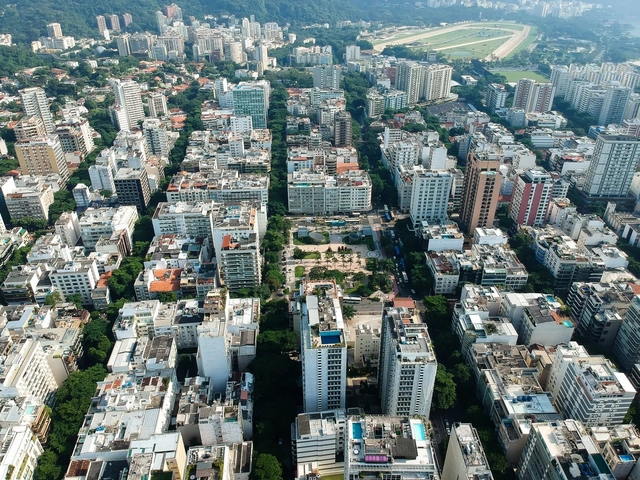
The Brazilian Institute of Geography and Statistics (IBGE) has released the publication Urbanized Areas of Brazil, which maps the urban footprints of major Brazilian cities. Covering the changes that occurred between 2011 and 2015, the study presents an overview of the country's recent urbanization process.
This month, we continue to celebrate the 6th anniversary of ArchDaily Mexico, an achievement made possible thanks to the hard work of our great team, as well as the relationships we have built over the years with the local architectural community and our readers.
With this in mind, this year we decided to celebrate with a contest that involved all of our readers. We wanted to discover their favorite projects in Mexico, whether classic or contemporary. We asked our readers to follow the @ArchDailyMx account on Instagram and share their favorite project with us using the hashtags #ConcursoArchDailyMx and #6AñosArchDailyMx.
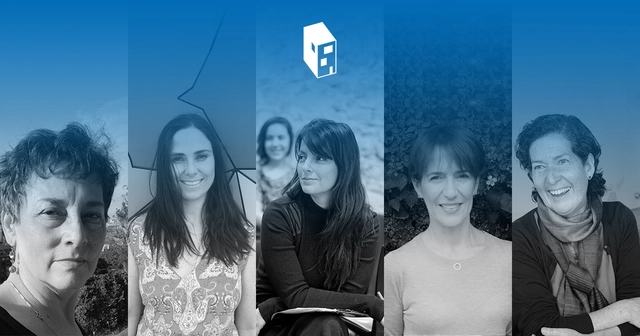
Beatríz García Moreno (left), María Paula González Bozzi, Lina Toro, Ana Elvira Vélez, María Cecilia O'Byrne. Image
In recent years, International Women's Day has reclaimed the political significance of its origins, bringing together some of the most recent discussions surrounding women: the gender pay gap, the exposure of sexual abuse through the #MeToo movement, and, in the specific case of our discipline, the visibility of women in architecture. Zaha Hadid went so far as to say that she felt "harshly judged for [the fact of] being a woman," despite winning the Pritzker Prize in 2004.
If that happened to her, imagine the rest.
In this regard, at ArchDaily we have opened up the discussion and are proud to highlight the work of women architects worldwide, in addition to partnering with interesting Latin American initiatives along the same lines, such as Un día, una arquitecta. For this edition of International Women's Day, we have joined forces with the Colombian print publication de-Arq (Universidad de los Andes) to showcase the work of five contemporary Colombian women architects, who represent distinct yet complementary approaches within our discipline: design, research, teaching, and experimentation.







![[In]visible Cities: Meet the winners and honorable mentions of this competition proposing social housing for Lima - Featured Image](https://snoopy.archdaily.com/images/archdaily/media/images/5ae4/a807/f197/cccc/c100/062b/slideshow/M_LOPEZ_PATIO_(F).jpg?1524934653&format=webp&width=640&height=580)



_(1).jpg?1539273048&format=webp&width=640&height=580)