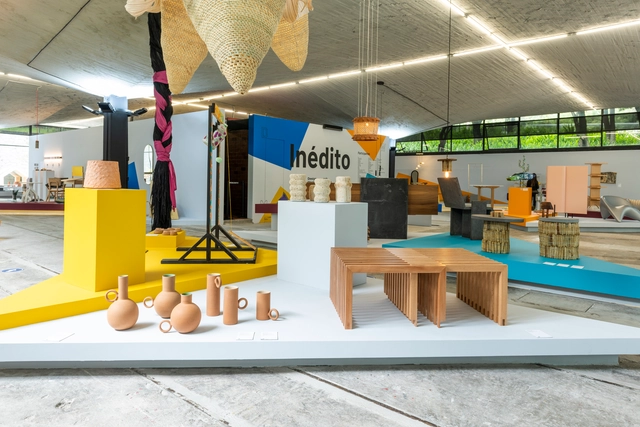
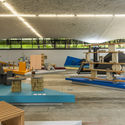
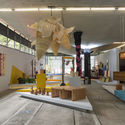
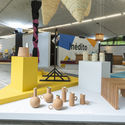
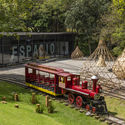
As part of the annual collaborative efforts of the Design Week team in Mexico City, the "Inédito" exhibition opened on October 9 at the Espacio CDMX Arquitectura y Diseño gallery. It marks the sixth consecutive edition of this open call, which aims to support, promote, and showcase utilitarian design projects across several categories: social impact, environmental impact, innovation, function, aesthetics, concept, user experience, materials, and processes. The exhibition is divided into three categories—professional, student, and digital—where, far from competing, participants gain exposure to opportunities in both national and international markets for outstanding design with commercial and production viability.
As a consequence of the COVID-19 health emergency, the way we understand urban transportation is likely to change. While concerns regarding fossil-fuel vehicles already carried significant weight before the outbreak—primarily due to their environmental impact—and sustainable transportation had already become a key issue on the urban agenda, the need for social distancing to halt the spread of the coronavirus has accelerated debates around mobility. As a result, the bicycle quickly emerged as a viable alternative for safer transit during the COVID-19 pandemic in cities worldwide.
Bulla is an Argentine landscape design, urban, and territorial planning studio that has dedicated over a decade to "inserting a landscape agenda into the public and intellectual scene." To explore their beginnings, purpose, methods of working, reflecting, and exploring, as well as their vision for the future of landscape architecture in Argentina, we interviewed Ignacio Fleurquin, founding partner.
On this occasion, Víctor Feingold, President of Contract Workplaces, shares his perspective on how working from home is shaped by the environment, organizational culture, and the drive for innovation.
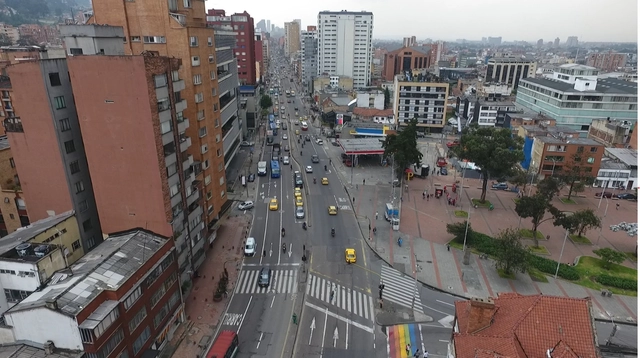
All large cities face the challenge of managing growth, expansion, and, above all, functioning as an integrated system. In Bogotá, one of the main issues is the mobility of both the commuter and resident populations. We spoke with urban planner and architect Liliana Mejía González, Director of the Projects Division at the Urban Development Institute (IDU), who shared insights into the District Development Plan 2020-2024 for the capital district.
Despite UNESCO's recognition of specific World Heritage sites, many of them remain in constant danger of disappearing due to natural phenomena like earthquakes and human factors such as urbanization. By definition, these landmarks are vital to human history, possessing characteristics that reflect the deepest values of diverse civilizations. Nevertheless, much of the global population has never experienced them in person.
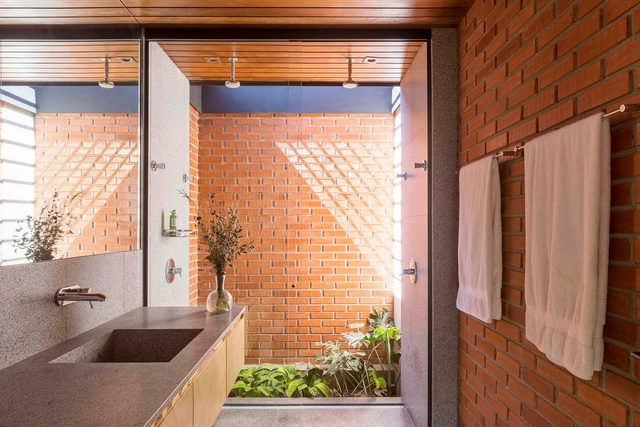
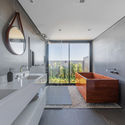
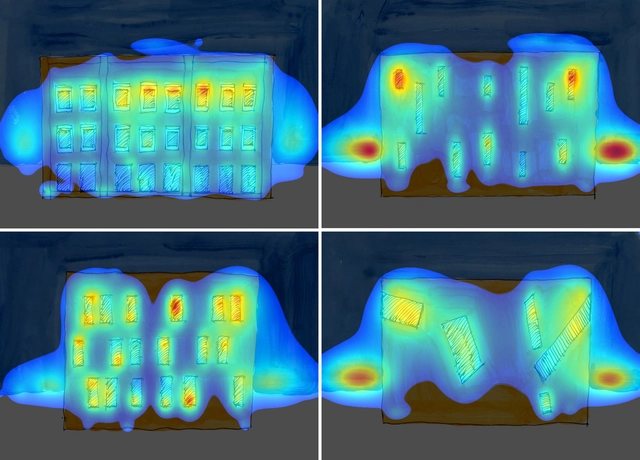
To ensure privacy, windows in bathrooms are typically characterized by their small size and high sills. Yet, natural light, alongside ventilation, plays a crucial role in the health and comfort of these spaces. As a result, seeking a greater incidence of daylight in these interiors expands the design possibilities for their openings.
Adamo Faidencontinues to capture widespread interest, not only for their multifaceted and passionate approaches to contemporary architecture, which consistently extend into the fields of teaching and research. Their building Bonpland 2169 in Argentina was selected by our jury of experts—meaning you, the readers—as one of the winners of the 2020 Building of the Year award.
On this occasion, we spoke with Marcelo Faiden for an in-depth conversation about the role of everyday buildings in transforming our environment, current shifts in how we live and inhabit, the purpose of practicing and teaching architecture today, and future projections for the discipline.
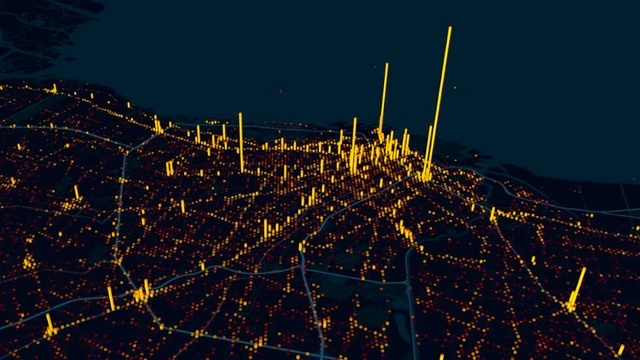
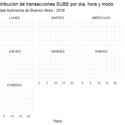
Today, the availability of information and data has vastly expanded our ability to analyze, interpret, and understand life in our cities. In urban planning, some of the most valuable and highly sought-after data for analyzing urban mobility dynamics comes from the use of the SUBE system (the Unified Electronic Ticket System, used in Argentina to pay for public transit). By gathering this information, millions of digital footprints can be aggregated and visualized, allowing us to interpret and anticipate citizen transit behavior. This, in turn, helps us understand urban trends based on the time of day and the day of the week.
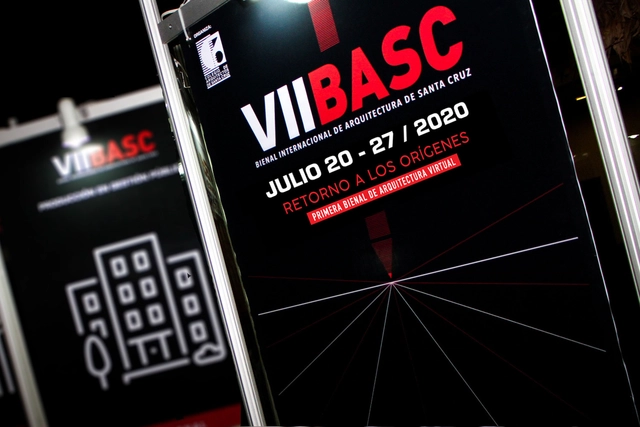
Cortesía de Bienal Internacional de Arquitectura de Santa Cruz
The Santa Cruz International Biennial of Architecture (BASC) is adapting and transforming. As a result, it will become the first virtual architecture biennial in the Americas, taking place from July 20 to 27 alongside the International Construction, Architecture, and Design Fair (FICAD).
https://www.archdaily.com/1124245/the-santa-cruz-international-architecture-biennial-2020-will-be-virtualArchDaily Team
The documentary Vilanova Artigas: The Architect and the Light, written by Laura Artigas and co-directed with Pedro Gorski, was produced to mark the architect's centennial and released in 2015. The film won the "Lusophony Award" at the Portuguese film festival Arquiteturas Film Festival Lisboa 2015 and is now available online to watch from home.
Have you ever had to alter an original design due to construction difficulties or budget overruns, yet never because it negatively impacted the environment?
That is why we want to give our readers the opportunity to openly express their views on this matter. If we were fully aware of the environmental costs of materials today, or their potential future consequences, or the real, global challenges that arise during construction, would it change the way we select and create our designs? Would it be easier for us to advocate for our projects to others and fellow professionals?
Architect Cristián Boza Díaz, known for designing the Parque Fluvial de la Familia, the Centro de la Justicia, and the Universidad San Sebastián in Santiago, Chile, passed away today at the age of 76 following a liver disease that afflicted him in his final years.
This medieval city in Croatia was one of the inventors of quarantine and emerged victorious from every major plague humanity has ever faced. Photo: Bigstock, courtesy of Haus
The medieval city of Dubrovnik, in Croatia, boasts many distinctions. Surrounded by ancient walls and a sea of azure waters that enchant visitors, during the Middle Ages it was the only city-state with enough prominence to rival Venice.
Another lesser-known aspect is that the Pearl of the Adriatic, as this Croatian city is known, was the first known European municipality to implement a smart quarantine and to build isolation spaces to combat the major diseases that plagued humanity. This is what archaeologist Ante Milošević and physician Ana Bakija-Konsuo assert in their book "Lazaretto in Dubrovnik: Beginning of Quarantine Regulation in Europe."
The following interview with Nikos Salingaros by Irina Bembel is an excerpt from the one originally published in Russian by Kapitel Magazine, St. Petersburg, Russia, on July 27, 2020.
https://www.archdaily.com/1124172/nikos-salingaros-traditional-building-facades-attract-contemporary-ones-do-notIrina O. Bembel
Due to the global coronavirus pandemic, the sixth edition of the Concéntrico International Architecture and Design Festival has been postponed, with new dates set for September 3 to 6, 2020. The postponement is accompanied by an innovative online coverage initiative called the "Concéntrico Marathon," which will take place during the originally scheduled dates, from April 29 to May 3, 2020.
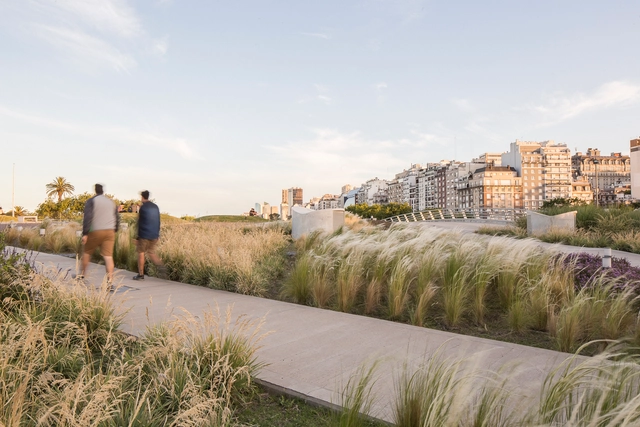
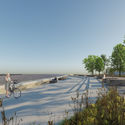
The winners of the Buenos Aires and the River "Salguero Park" National Ideas Competition, Young District CABA, have been announced. Promoted by the Government of the City of Buenos Aires and organized by the Central Society of Architects (SCA) and the Faculty of Architecture, Design, and Urbanism of the UBA (FADU), the call invited participants to develop comprehensive urban ideas for the "Costa Salguero - Punta Carrasco" complex of the Young District across its 32 hectares and 2,535 linear meters along the Río de la Plata.
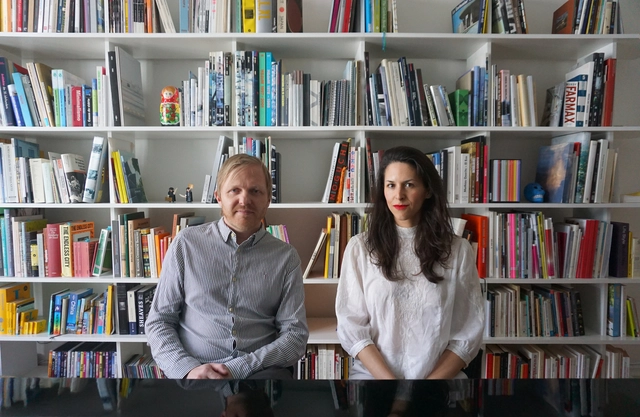
In this exclusive interview with ArchDaily, Ingrid Moye and Christoph Zeller, founders of the Mexico City- and Berlin-based firm Zeller & Moye, discuss the history of the practice, as well as how their personal and professional interests have evolved over the years regarding their way of living and making architecture.
For more than 70 years, Guatemala's professional associations have sought to preserve a spirit of unity among their fields. In 1958, in an effort to enhance communication and interaction, a new headquarters was established to bring the different professional associations together in a single space for the first time. Later, the Assembly acquired its own land, and between 1971 and 1972, an architectural design competition was held, resulting in the design of the current complex. Today, Guatemala's professional population is growing steadily, and the complex designed nearly fifty years ago is no longer sufficient to house all the associations and their members. For instance, several organizations, such as the associations of engineers and psychologists, do not operate out of the main headquarters. Therefore, there is a clear need to expand the infrastructure of the professional headquarters to accommodate all current and future associations in a single complex, adequately meeting the needs of their members.
Closed playground in Vancouver, Canada. Photo: Rod Raglin / Creative Commons / Flickr
At the time of writing, it is still difficult to envision the post-pandemic world of COVID-19, which spread across the globe in just three months after the first cases were detected in Wuhan, China, in December 2019. Dystopian scenarios of human and economic devastation managed by totalitarian regimes still run parallel to visions of societies successfully returning to the streets with more sustainable and secure patterns for their habits, modes of production, consumption, and social organization. Regardless, there is a lingering sense that the world will never be the same and that we will have to reorganize a significant portion of our collective and individual lives. The global suspension of activities triggered by COVID-19 could point to solutions—not only for the pandemic but also for other pressing crises that have been knocking on our door for some time, notably climate change and persistent, brutal social inequality.
https://www.archdaily.com/1124181/mobility-and-the-pandemic-what-can-we-expect-for-the-future-of-life-in-citiesITDP Brasil
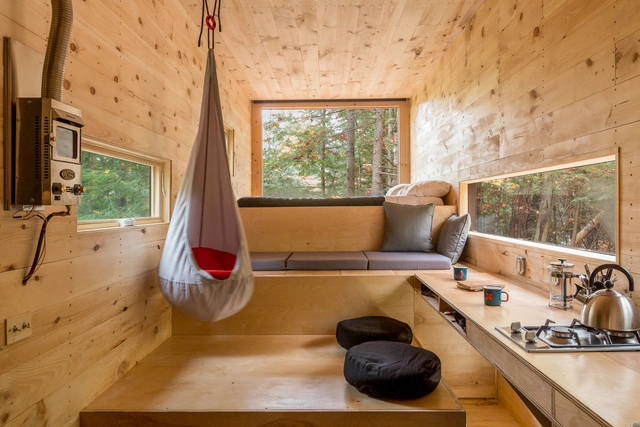
Housing is a fundamental architectural inquiry. How we interact with the spaces we inhabit daily, and the lifestyles we cultivate within them, are constant subjects of debate in the discipline—discussions aimed at achieving a higher quality of life and discovering new ways of living. Beyond this, other contemporary factors—such as real estate speculation, high density in urban centers, the desire for a nomadic lifestyle, or even simply following current trends—have made the discourse around small-scale living increasingly relevant and urgent. Consequently, we must ask ourselves: what is the absolute minimum space we actually need to live?
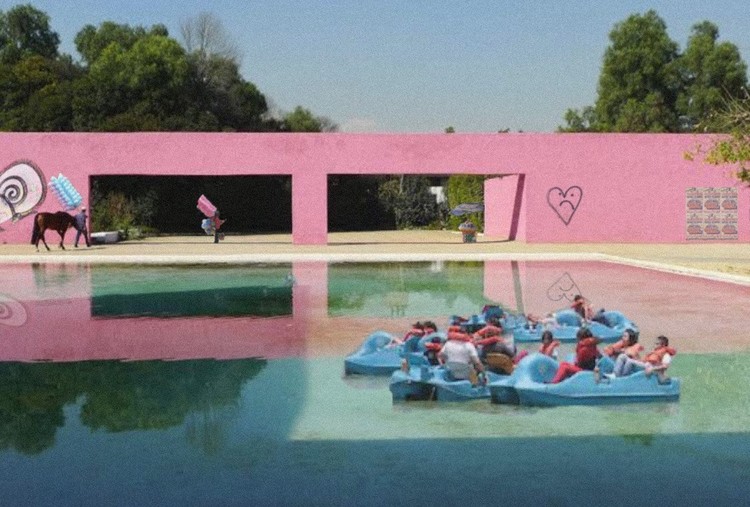
For a long time in Mexico and around the world, the architecture of pioneering Modernist architects like Luis Barragán and Juan O'Gorman, among many others, has been presented as sacred and untouchable to ensure its preservation over time.



_11.44.10.jpg?1595954667&format=webp&width=640&height=580)



_11.44.10.jpg?1595954667)





.jpg?1583109973 "Cortesía de Martin Alalu")
.jpg?1583109981 "Cortesía de Martin Alalu")
.jpg?1583109965 "Cortesía de Martin Alalu")


.jpg?1579619906&format=webp&width=640&height=580)

.jpg?1595432199&format=webp&width=640&height=580)
.jpg?1595432199)