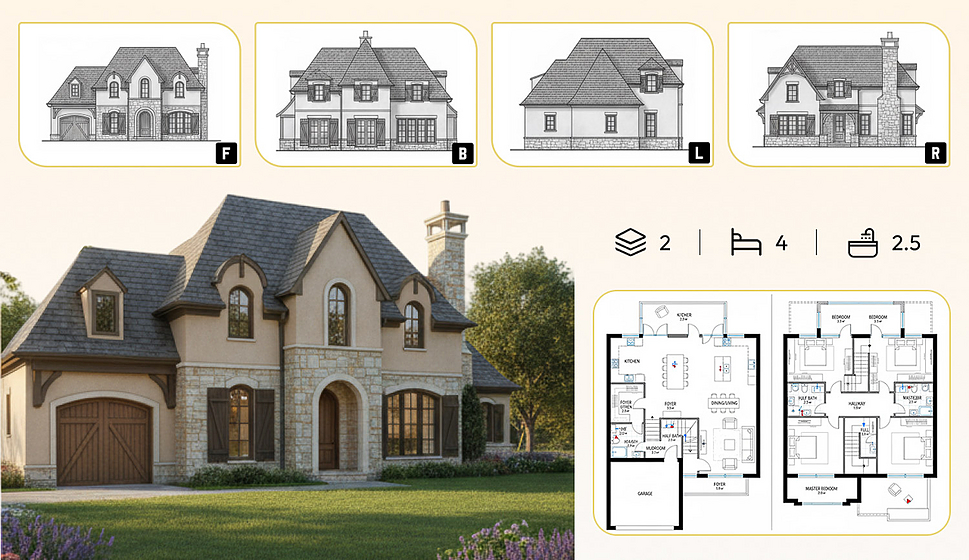
This guide covers a workflow that moves from project parameters to generated floor plans, 3D perspective views, exterior design exploration, and site context visualization, using AI tools in place of preliminary CAD and rendering work.
This guide covers a workflow that moves from project parameters to generated floor plans, 3D perspective views, exterior design exploration, and site context visualization, using AI tools in place of preliminary CAD and rendering work.
As our world evolves at an unprecedented pace, the challenges that come with it are becoming more and more complex. The questions faced by the cities and networks of our global world, the physical and virtual environments where our evolution takes place, are making architecture more relevant than ever.
The issues of the built environment are no longer exclusive to the incumbents who build and design it and have become transversal questions in our society. From the citizens who question the quality of their public spaces to the self-trained builder erecting a tiny house in the woods, to the homeowners using an app to codesign their interiors during lockdown, we want to have a saying and we want to take action. Why does architecture have to be so uncertain, so distant?
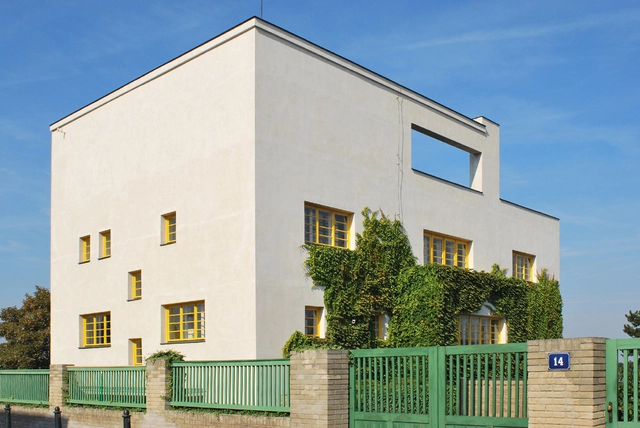
Throughout history, architectural styles, have experienced numerous movements throughout time, giving us various expressions of interior and exterior spaces. These movements are often created out of dissatisfaction with the status quo, shifts in religious ideologies, or the emergence of new building technology. Perhaps one of the most famous instances in history was the precedent set by Adolf Loos and his desire to break away from Viennese tradition with his strong dissent of ornament in architecture in favor of simplicity, and his literary discourse that lay the cornerstone for the modernist movement in architecture.
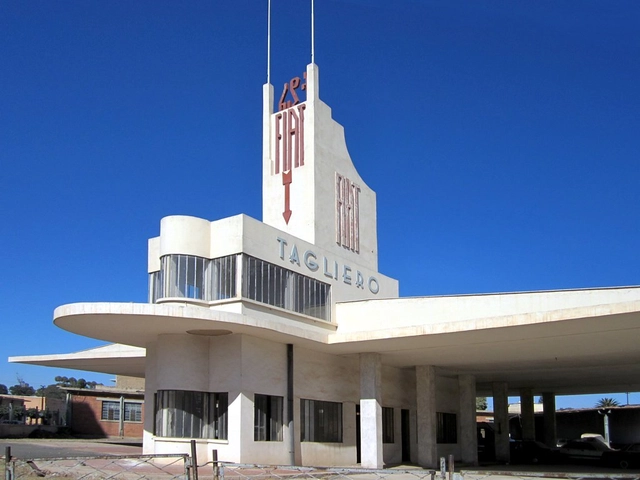
The built environment we all inhabit is part and parcel of global, interconnected processes and systems. When we appraise the historically significant architecture of our cities, the structural integrity and aesthetics of a building merits equal consideration with factors such as the labour conditions of its builders to the existing power structures of its time. Examples of Italian Modernism in Eritrea, for instance, might be worthy of aesthetic praise – but intertwined with the legacy of these buildings hailed as Modernist icons is the sobering fact that they were built to further an imperial project. In the complex fields of architectural conservation, preservation and cultural heritage, democratisation should always remain a key priority.

Today, a new generation of architects is trying to tackle the challenges of contemporary society while navigating different hurdles within the profession. Emerging architects are redefining the values and focus of design in response to the various issues facing the contemporary built environment, such as sustainability, affordability and equity. At the same time, new practices are operating a within rapidly changing field in which the architect's role is increasingly more ambiguous. The following explores the issues faced by young architects in their practice, as well as what they see as being architecture's most significant challenges, that inherently shape their work in a contrasting way to that of their older peers.



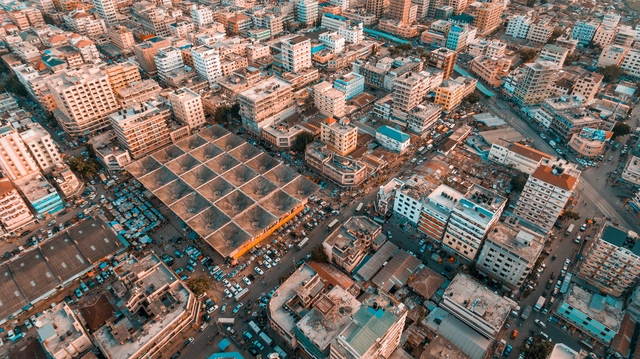
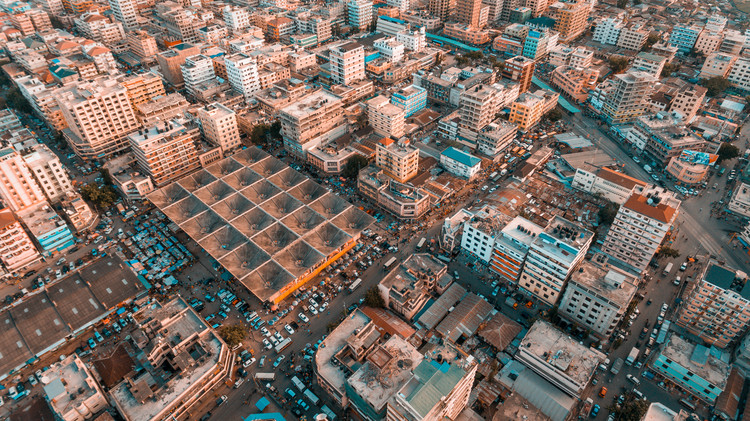
A few months ago – in July 2021, the 47-year-old Kariakoo Market went up in flames in Dar es Salaam. Designed by Tanzanian architect Beda Amuli, the market is a central landmark – a key part of Dar es Salaam’s commercial hub. Early images of a new Kariakoo Market show a taller structure, with six floors compared to the three in Amuli’s design. Conversations on social media have abounded on the new design, and if a “tower” typology is really the appropriate choice considering the unpopular nature of other similar “tower” market halls in Dar es Salaam.
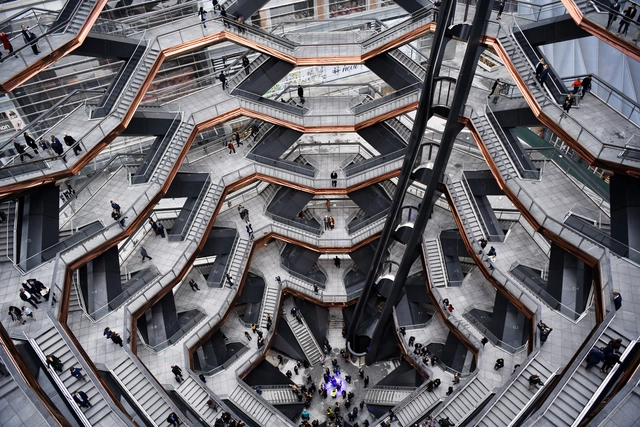
Earlier this year, a fourth person tragically took their life by jumping over the edge of The Vessel, a monumental Escher-like structure that serves as the anchor of tourism to New York City’s Hudson Yards development. Many immediately called for the 16-story sculpture to be torn down, and others demanded further safety barriers to be put in place, even if it meant blocking some of the views and vantage points. For now, The Vessel is closed until officials decide what to do next. Unfortunately, it’s become an attraction loosely associated with death, especially as it sits silently while the hustle and bustle of Hudson Yards remains.
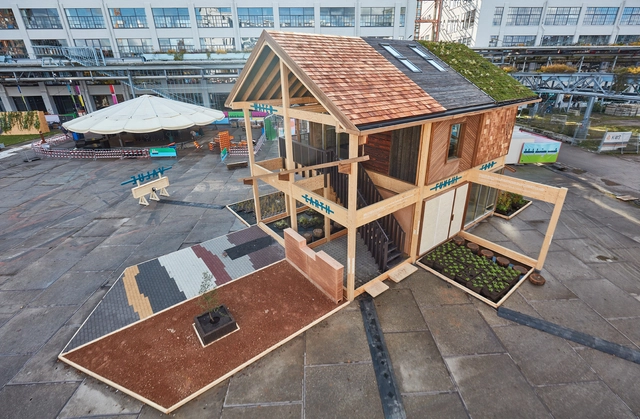
The climate crisis has become a staple of the architecture discourse, with the field slowly acknowledging its contribution to environmental issues and seeking to reframe its values and approaches. However, there is an evident lack of commitment and consistency in addressing the matter and an absence of systemic change. Emerging practices, organizations and startups are carving a new architecture practice, slowly unfolding a paradigm shift beyond "green" add-ons and technical equipment. Addressing environmental issues on multiple levels, from policy and design strategies to materials and construction processes, the following are some of the actors reframing the profession's relationship with sustainability.
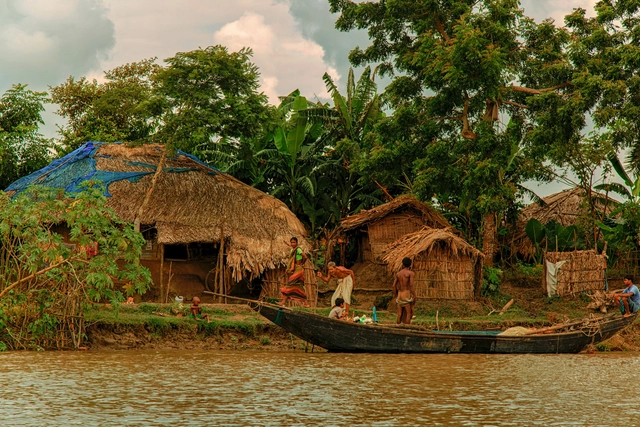
Architecture, by its very definition, involves the construction of structures. Structures that are meant to serve as spaces for work, living, religious devotion, amongst many other purposes. Architectural projects and interventions, however, need land – and it is this intrinsic relationship, between land and architecture, that has massive ramifications not only regarding reducing carbon emissions but more importantly in forming an equitable future rooted in climate justice.
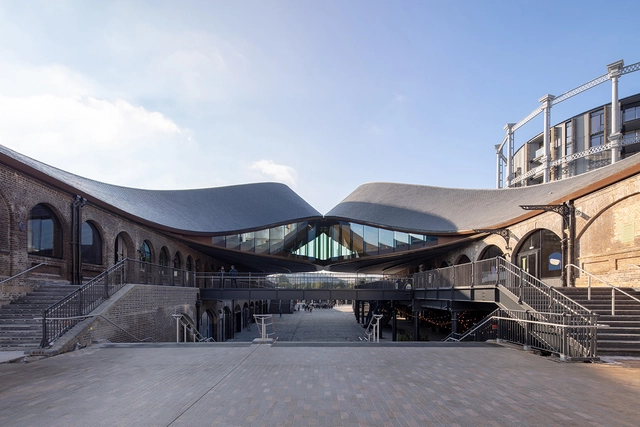
Sustainable architecture begins with designing for longer lifecycles and reuse. Looking to create more inclusive and viable futures, architects are exploring adaptive reuse as one of the best strategies to address the climate crisis and promote social justice. Reuse keeps the culture of an area alive, bridging between old and new as projects push the boundaries of circular and adaptive design.
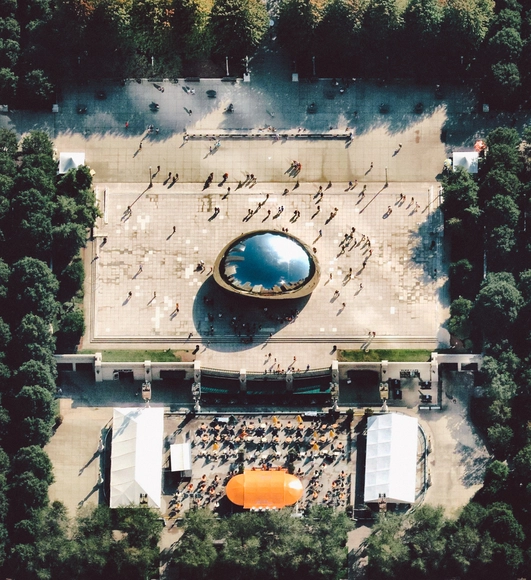
As cities grow in scale, dimensions, and amplitude, taking in 60% of the world population, the United Nations has designated the 31st of October as “World Cities Day”, an opportunity to talk furthermore about global urbanization, addressing challenges, encouraging opportunities across borders and highlighting responses. Focusing this edition on the theme of “Adapting Cities for Climate Resilience”, this day, part of Urban October, seeks to raise awareness about the climate crisis and its repercussions on the built environment.
Cities, at the center of the global challenges, are hubs for institutions, society, economy, commerce, and transportation. Understanding the importance of “Thinking the City”, we have compiled in this roundup, articles published by ArchDaily’s editors that offer planning tools and guidelines, tackle the different components of the urban realm and highlight worldwide as well as contextual questions and responses.

Urban environments are in a constant process of social evolution, political and economic transformation. Attached to the idea of urban renewal is gentrification, a complex phenomenon circumscribing a variety of issues, from the improvement of the built environment and strengthening the local economy to displacement and demographic change. On the one hand, redevelopment means revitalizing neighbourhoods, improving the built environment and infrastructure and boosting the local economy, and on the other hand, gentrification drives up property prices and cost of living, forcing out low-income communities. Is the displacement of local communities a "collateral damage" of urban development? Does redevelopment intrinsically drive gentrification, and can urban environments be revitalized more ethically?
In this Editor's Talk edition, editors from Argentina, Lebanon, Brasil, Chile, Tanzania share their views on gentrification.


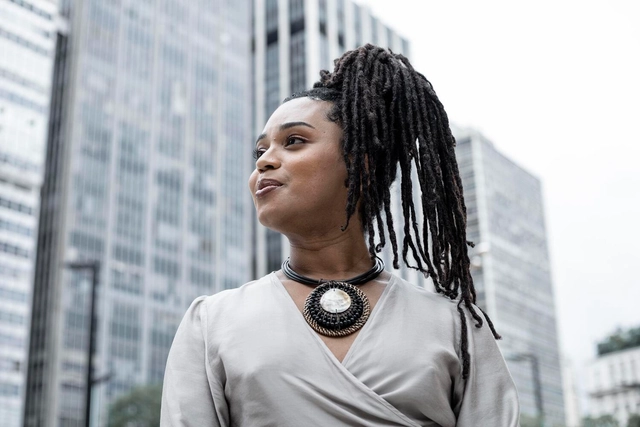
When crossing a space, a body carries within it many meanings. The reading that translates into this person-architecture dialogue, and the sensations that arise from it, demonstrate much of the social inequality and violent structures intrinsic to the Western imagination, which privileges the same standard: the white man. Finding a place of rebalancing in which it is possible to create an alternation of power —in race and gender - is a commitment by Erica Malunguinho.
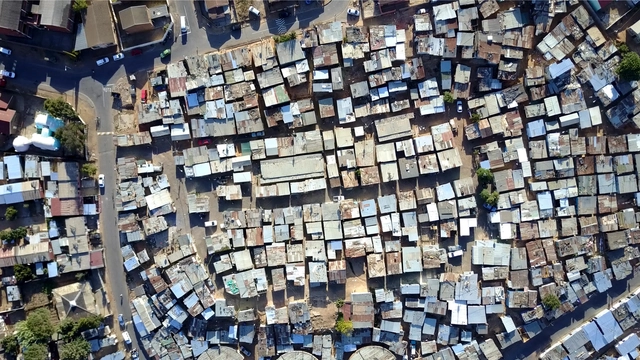
María Cristina Cravino, the head of numerous research projects and publications on informal settlements and the politics of public habitation, draws from her background in anthropology to become one of the most prominent voices in the discussion about rights to the city and modern urban conflicts.
To get her perspective, we sat down with Cravino to discuss her observations and understanding of the issue--especially in the context of quarantine and lockdowns--as well as her reflections on the role of academia in exploring the problem and finding solutions.
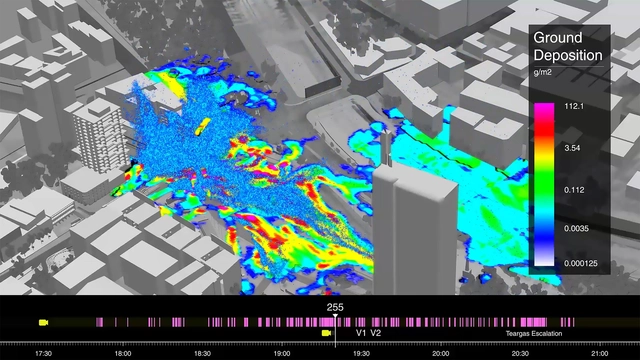
On October 18, 2019, a 4-cent increase on Santiago's Metro fare caused an uproar on the streets of the Chilean capital. The citizens' anger escalated quickly, leading to demands of immediate structural changes in the Chilean economic and social system. Alongside the people's call for change, daily clashes between protesters and the police led to excessive use of tear gas by the latter across the country.
Even though the use of tear gas is banned in warfare since 1925, police worldwide are allowed to use it for the sole purpose of scattering protesters, as had happened in Chile. The most iconic example can be seen in Plaza Dignidad (Dignity Square), previously known as Plaza Italia ahead of the social outbreak that erupted in the country: everyday, a camera records the activities around the iconic roundabout, capturing the constant and excessive use of lachrymatory gas every Friday.
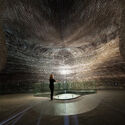
Chilean architect Smiljan Radic has designed and installed a perfectly transparent dome for Alexander McQueen's Spring / Summer 2022 fashion show earlier this week in London.

The housing shortage has long been the catalyst for architectural speculation over adaptive resue scenarios or the valorisation of underused places in cities. At the same time, the health crisis and its work from home imperatives have brought into sharp focus the adaptive reuse potential of offices spaces into housing. The probability that some office buildings remain vacant post-pandemic opens up the possibility of bringing back housing to city centres, enabling the implementation of a 15-minute city vision. The following discusses the challenges and opportunities of transforming office spaces into housing, highlighting this limited phenomenon's long-term feasibility and impact.
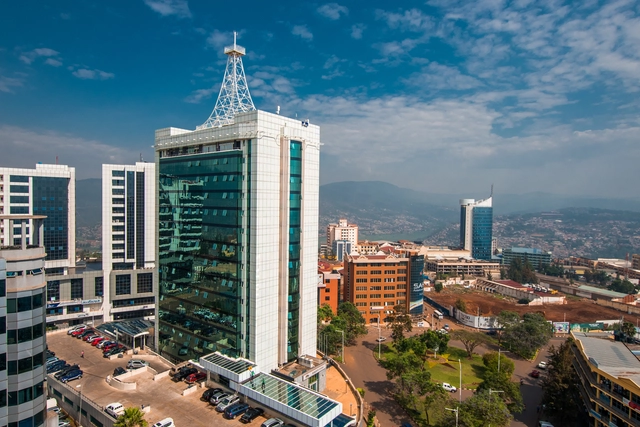
The urban metropolises of our planet are home to an abundance of stories. They are home to stories of wealth, of innovation, and of architectural marvels. They are home, too, to stories of inequality, inequity and of urban divides – places where one’s income determines the quality of the spatial environment around them. Within these stories has developed an increasing advocation for making cities “smarter”, the goal being to use data and digital technology to build more efficient and convenient urban environments.

Architectural events like biennales, urban festivals or the World Expo provide a framework for research and experimentation, allowing architects to showcase their visions on an international stage, with the aim of advancing the practice and driving innovation. World Expos, in particular, allow for these lines of inquiry to unfold at an architectural scale rather than that of an installation. Within these platforms for discourse and knowledge exchange, temporary architecture becomes a medium for communicating ideas about architecture and the city, its challenges and possible lines of development.
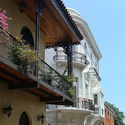
.jpg?1637861666 "Casco Viejo - Panama City, Panama. Image © Wikimedia User David Broad under the Creative Commons Attribution 3.0 Unported license.")