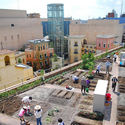
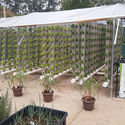
The Metropolitan Region of São Paulo (RMSP) has nearly 22 million inhabitants, representing about 10% of Brazil's total population. To feed this massive population, tons of food supplies arrive in the metropolis daily from different parts of the country. However, a new study by Instituto Escolhas shows that, with certain measures, it is possible to supply this entire population with locally grown vegetables.
Urban planning is a vital tool for reducing inequality and promoting equity in cities. In Brazil, prioritizing these goals is even more urgent given not only the country's deep social disparities as a whole, but also the stark divide in access to opportunities, infrastructure, and urban services—which ultimately defines true access to the city itself.
Yet, while many believe that urban inequality stems from a lack of planning—as if it were merely a product of chance—the reality is that, historically and to this day, urban planning has often exacerbated inequalities rather than mitigating them.
The history of collective housing has been the focus of the research group PC3 - Pensamento Crítico e Cidade Contemporânea (Critical Thinking and the Contemporary City), at FAUUSP, coordinated by professors Leandro Medrano and Luiz Recamán. Through the Cadernos de Habitação Coletiva (Collective Housing Notebooks) — developed under a cooperation agreement between researchers from FAUUSP and ETSAM-UPM in Madrid — the group explores the most significant examples of this housing typology in Brazil.
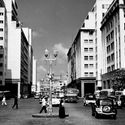
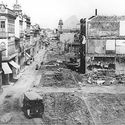
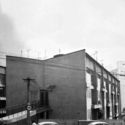
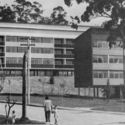
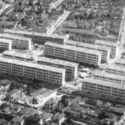
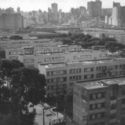
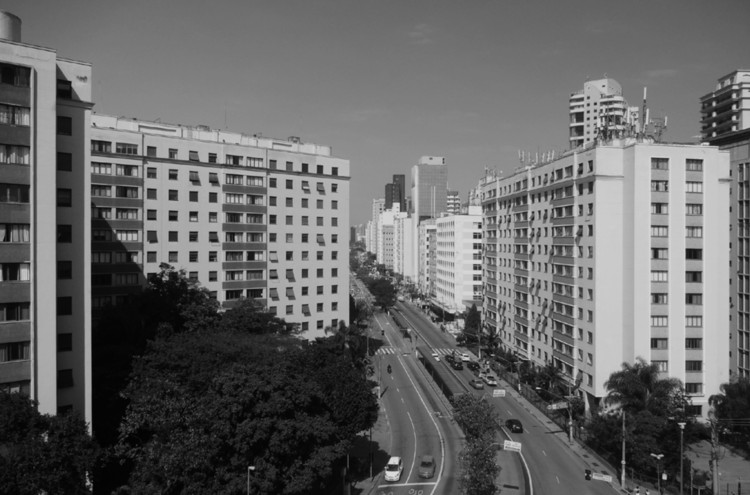
According to the group's platform, "the main objective of the Cadernos de Habitação Coletiva has been to build a comprehensive database, organized by decade, that includes the most relevant Brazilian collective housing buildings, both designed and built." Below, we highlight eight collective housing experiments built in São Paulo between the 1930s and 1960s, studied in detail by CHC and featured in individual articles here on ArchDaily.
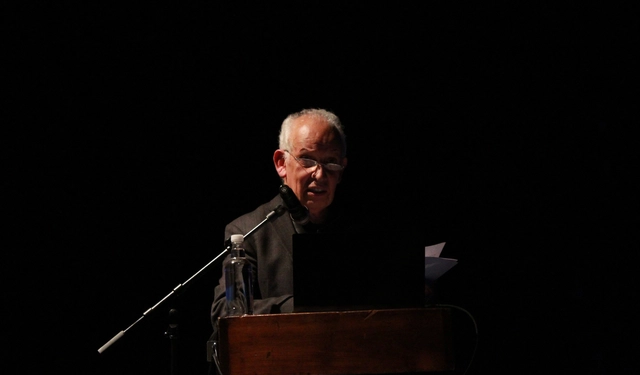
On December 2, the 26th National Congress of Architects concluded at the Bíobio Theatre with a moving ceremony that featured the presentation of the 2023 CA Awards, a keynote lecture by National Architecture Prize winner Fernando Pérez Oyarzún, and the submission of the congress's final resolutions, which will serve as a mandate for change for the National Board of the Chilean Association of Architects.
As the end of the year approaches, it brings the opportunity to reflect on the standout architectural moments of 2023. With this in mind, we looked at the most liked photos on ArchDaily Brasil's Instagram.
In May 2016, the 15th Venice Architecture Biennale opened—perhaps the most important and iconic event in international architecture since its inception in the 1980s. This opening, however, brought something new: for the first time, the event was curated by a Latin American, Alejandro Aravena. This milestone was not an isolated event in the recent career of the architect, who served on the Pritzker Prize jury from 2010 to 2015 before being awarded the prize himself in 2016. Crucially, this prominence is not an absolute exception; rather, it can be understood as the vanguard of a broader appreciation and visibility that contemporary Chilean architecture began to receive in the late 1990s.
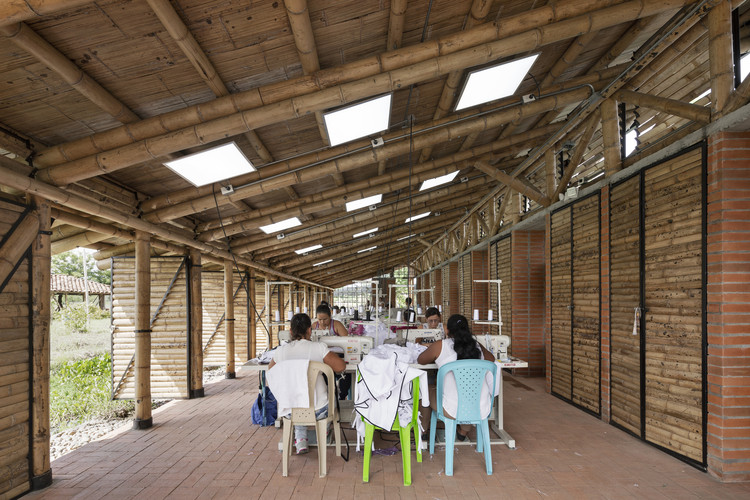
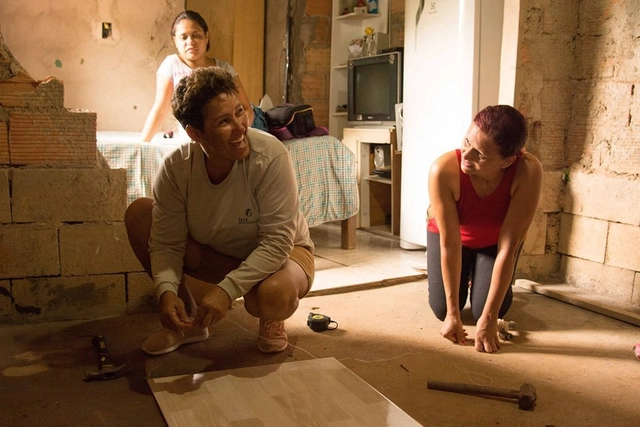
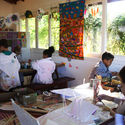
Amairis Community Sewing Workshop / ruta 4 taller. Image
Taller Síntesis, based in Medellín, Colombia, shared this article with us. It emphasizes the importance of recognizing the Colombian rural built environment—which accounts for most of the country's territory but not the majority of its architectural practice—with the aim of raising awareness of how architecture is developed and recognized in the country.
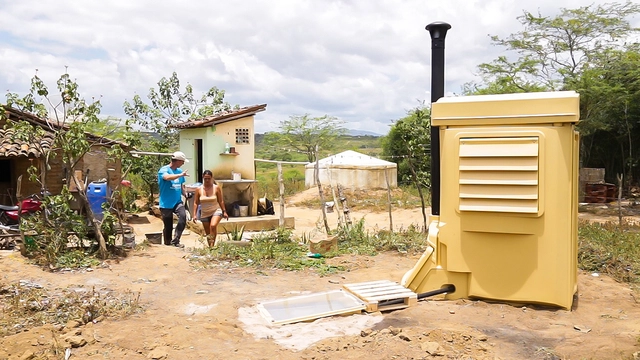
According to the 2018 National Sanitation Information System, 25.8% of the population in Northeast Brazil lacks access to water and 72% has no connection to the sewage network. “Now tell me, how am I supposed to have a bathroom at home under these conditions?” This was the question that robbed Vera of her sleep and peace of mind.
Vera lives in the small community of Riacho das Almas (PE), and her story is similar to those of thousands of families living in the rural areas of the semi-arid Northeast. Where access to water is scarce and basic sanitation is practically nonexistent, the use of traditional bathrooms—equipped with faucets, showers, and flushing toilets—is uncommon in the region. Consequently, families like Vera's and many others rely on improvised outdoor spaces for their needs: the "aveloz bathroom."
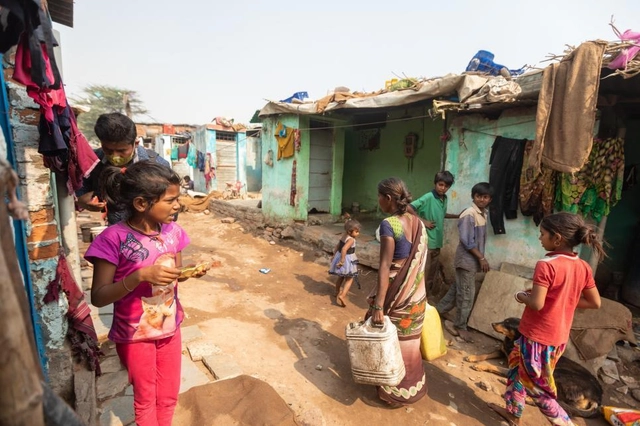
In 2013, Ahmedabad launched the first Heat Action Plan among South Asian cities, but it faces increasingly high temperatures and has little data to support local policies. Photo: WRI
2023 broke temperature records worldwide. People across different regions of the planet are already facing historic heatwaves, wildfires, and droughts with just 1.1°C of warming above pre-industrial levels. Under current policies, which put the world on track for a warming scenario of 2.5°C to 2.9°C by 2100, the stifling heat felt this year is just a small taste of the future ahead.
Photomontage based on the project "Mitigation Strategies for Urban Heat: A Study on Porto Alegre" by Carolina Cristófoli Falcão
The academic world has much to contribute to the field of architecture and urbanism. Its research and proposals foster inspiring visions, new materials, and concepts, sparking essential debates on how we perceive, occupy, and design the built environment. Across their entire spectrum, final graduation projects offer students an opportunity to put forward a final proposal before earning their degree, addressing diverse themes and touching upon urgent issues. Consequently, we host an annual call for submissions open to all Portuguese-speaking countries to present a panorama of outstanding projects that help us reflect on the past year and look to the future.
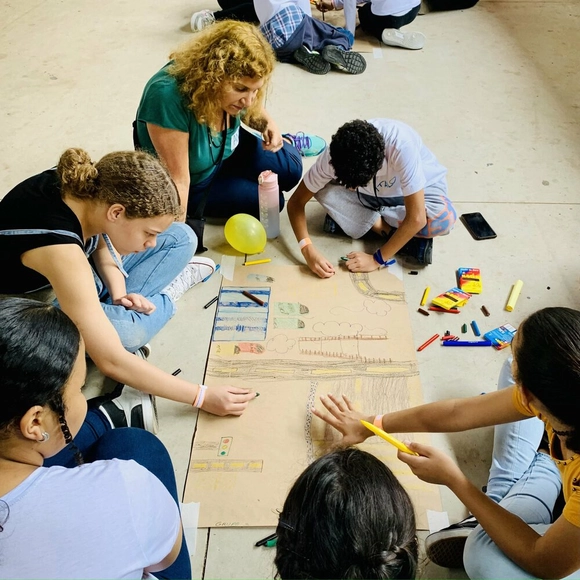
The Instituto Corrida Amiga works to bring people closer and connect them to the spaces they inhabit, aiming to transform citizens' daily lives through the perspective of active mobility, access, and the right to the city.
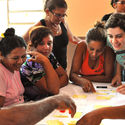
Part of the institute's initiatives consists of educational practices designed for diverse audiences, featuring playful-educational activities that encourage active participation and collaboration. This allows participants to express their opinions and desires, fostering decision-making, critical thinking, and empathy.
Caring for the earth, caring for people, and caring for the future. These are the three ethical principles that have guided the practice of permaculture since the term was coined in the late 1970s by Australian ecologists David Holmgren and Bill Mollison. This was an era when the environmental movement gained significant traction, with the emergence of various organizations and movements united in an effort to curb the destruction of the planet's natural resources.
Its three core principles embody a commitment to caring for natural resources, pursuing a social life in harmony with nature, and creating systems to share these resources.
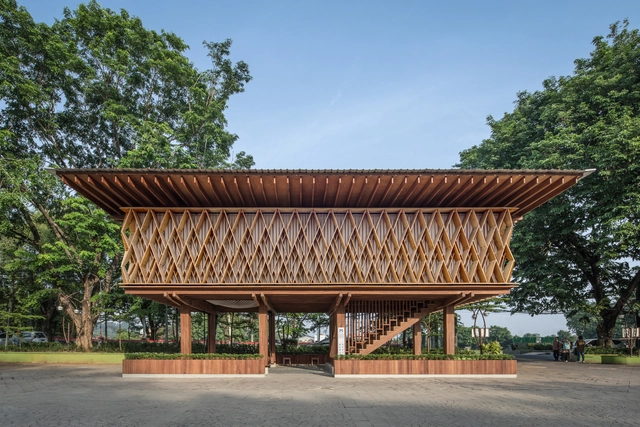
Whether for environmental, structural, or aesthetic reasons, wood is widely used in contemporary architecture, although it still falls far short of its true potential. Properly managed, it becomes an inexhaustible resource—which, in itself, should attract significant attention from architects and other construction professionals.
To separate wood from its association with cladding and partitions—or purely ornamental uses—we have compiled 10 public and community projects of varying scales, from small neighborhood libraries to conference centers, built in locations as far apart as Ecuador and Bangladesh, that employ wood in their structures.
The existence of urban centers as hubs of trade and culture spans millennia. As construction, water supply, and transportation technologies developed—especially vessels capable of carrying large volumes of goods and people—small villages transformed into major cities.
By 500 BCE, there were already one million inhabitants in Rome. Yet it was only after 1760, following the Industrial Revolution in England, that cities began to take center stage. Since then, cities have faced monumental challenges, and so far, absolutely nothing has been able to disperse populations or dismantle large urban centers.
In 1936, the Brazilian Press Academy launched a competition for the design of its new headquarters in Rio de Janeiro. Herbert Moses, president of the Association, was, according to Cláudio Pereira (2002), in sync with international avant-garde trends, having even served as an interpreter for Frank Lloyd Wright during his lectures in Rio de Janeiro in 1931. It was Moses who handpicked the jury members, which consisted of ABI members, architects, and representatives from specialized organizations.
https://www.archdaily.com/1123740/proposals-collages-urban-context-and-the-abi-headquarters-buildingThiago Santos Mathias da Fonseca
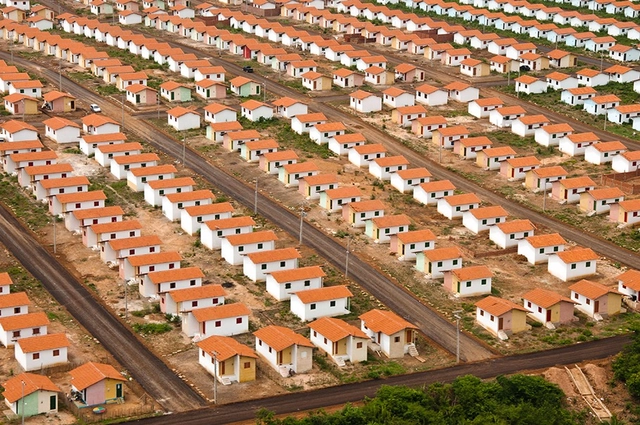
Access to adequate housing is difficult in a country like Brazil, which has a housing deficit of 6.3 million homes (FUNDO FICA, 2019). The perverse logic of the real estate market—where the costs of buying land and property, and even renting, are extremely high—coupled with the lack of public housing policies—in a social context where urban families earning up to two minimum wages spend 41.2% of their household income on housing consumption expenses (GUERREIRO; MARINO; ROLNIK, 2019)—makes homeownership extremely difficult for the poorest segments of the population.
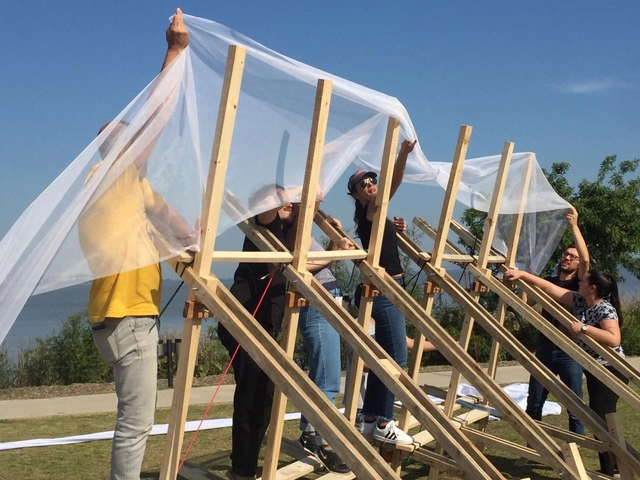
Design-build workshop: Habitáculo. ELA Escola Livre de Arquitetura. Image courtesy of ELA
The first architecture course in Brazil was established more than 200 years ago as part of the "French Mission" of 1816. The Royal School of Sciences, Arts, and Crafts of Rio de Janeiro offered the only course in the country for over fifty years. It was an institution geared toward educating the Brazilian elite, lacking any research purpose, and training an "architect-artist in service of the court."
According to architect and researcher Sônia Marques, the requirements for admission to the Royal School were "knowing how to read, write, and count," and the curriculum of the architecture course consisted of subjects such as: ornamental drawing, ornamental sculpture, archaeology and applied mathematics, perspective and shadows, and stereotomy (the technique of cutting construction materials), among others. Its foundation aimed to meet the needs of a clientele consuming symbolic goods—a demographic developed and fostered primarily by the recent presence of the Portuguese court in Brazil. [1]
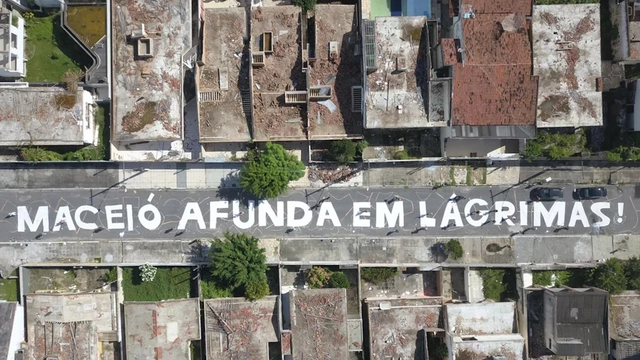
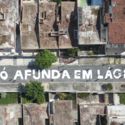
"Maceió sinks in tears!" was painted on a street in the Pinheiro neighborhood, in Maceió. Photo: Mayra Costa
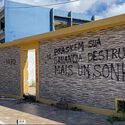
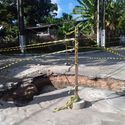
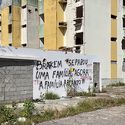
Since March 2018, when a 2.5-magnitude tremor on the Richter scale startled the residents of Maceió, the population of the Alagoas state capital has become aware of—and gradually had to grapple with—the consequences of a tragedy that would soon fully unfold. Following the appearance of a series of cracks and sinkholes across various neighborhoods, geological analyses identified the primary cause of the ground subsidence: the extraction of rock salt—a mineral used in the manufacturing of caustic soda and PVC—which had been carried out in Maceió for over 40 years by the petrochemical company Braskem.
With new tremors in November 2023 and the imminent risk of the mines collapsing, Maceió's crisis returned to the Brazilian headlines, shedding light on a range of complex urban issues tied to the tragedy. From physical damage to city infrastructure and forced displacement to inflation and real estate speculation, the unfolding disaster reveals painful scenes of what is already being called one of the worst urban tragedies in the world. Immersed in this crisis, the city's population suffers from incalculable damage: "The cracks weren't just in the buildings; they were in us, in our souls."
The interaction between architecture and human well-being is a field drawing increasing interest in the contemporary world. The role of architecture in daily life extends far beyond its aesthetic or practical functions; it directly shapes the experience and well-being of those who interact with built spaces. This fundamental link between architectural space and human well-being is being increasingly explored by researchers and practitioners seeking to understand and optimize the impact of the built environment on people's health and quality of life.
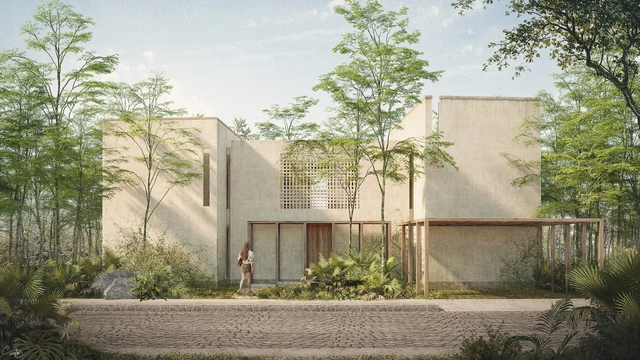
Mexico City- and Guadalajara-based firm Estudio AMA debuts with its "Riviera Ka’an Residencias" project, located in Xpu Ha, a town in the state of Quintana Roo, Mexico, situated south of Playa del Carmen and north of Tulum on the Caribbean coast. Estudio AMA presents itself as a creative space encompassing all fields of design: architecture, interiors, graphic design, and art.
They say that it doesn’t matter what happens, but how you see it. They also say that literature does not reproduce reality, but rather creates another. It all starts with an idea. Just an idea. Image and imagination go hand in hand, meaning they constitute the mechanism of human perception, thought, language, and memory. And in essence, architecture is nothing more than organizing ideas. The question is: how do we organize these ideas? Or rather, how do you see things? Is there really perception without social and cultural context? The short answer is no. The long answer involves interpretive anthropology, a bit of theory, and a great deal of criticism.
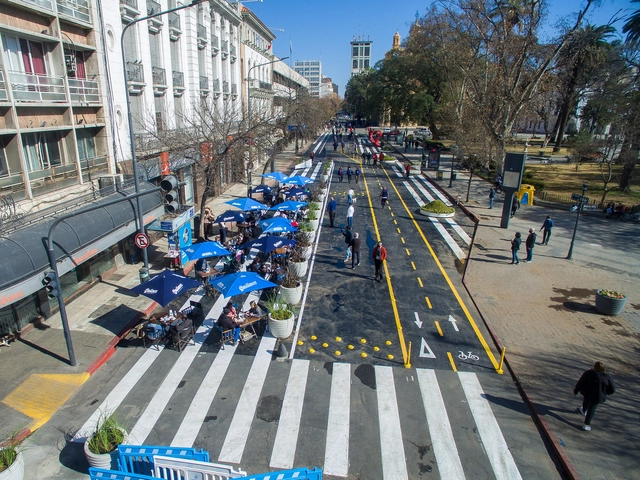
Redistribution of street space as a response to Covid-19 in Córdoba, Argentina. New areas were created for cyclists, pedestrians, and patrons of bars and restaurants. Photo: Municipalidad de Córdoba
As the venues of social life, public spaces are key elements of individual and collective well-being. They comprise a network of open areas such as streets, plazas, and parks, as well as sheltered spaces like public libraries and museums. This network serves multiple roles in cities, including recreation, social interaction, environmental conservation, circulation, and economic exchange. Despite their vital role in urban life, public spaces in Brazilian cities are, as a rule, poorly maintained, featuring insufficient lighting, broken sidewalks, and deteriorated street furniture—conditions that actively discourage use and result in social and economic losses that are commonly underestimated by both public authorities and the population itself.
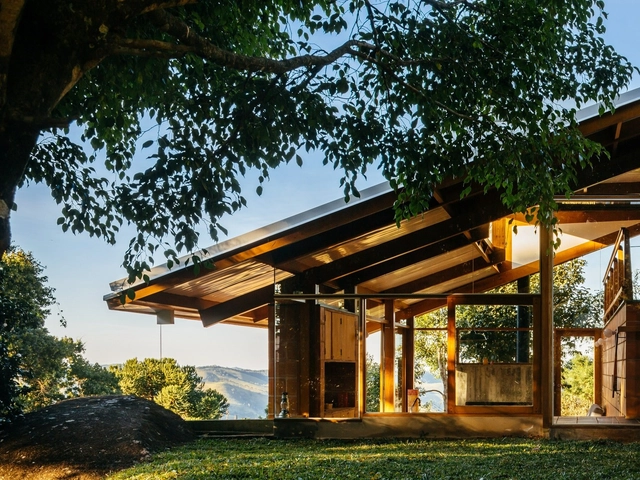
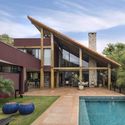
Simpler to build, yet less common than traditional gable roofs, single-pitch roofs—or meia água, as they are known in some parts of Brazil—are formed by a single inclined plane responsible for shedding rainwater.
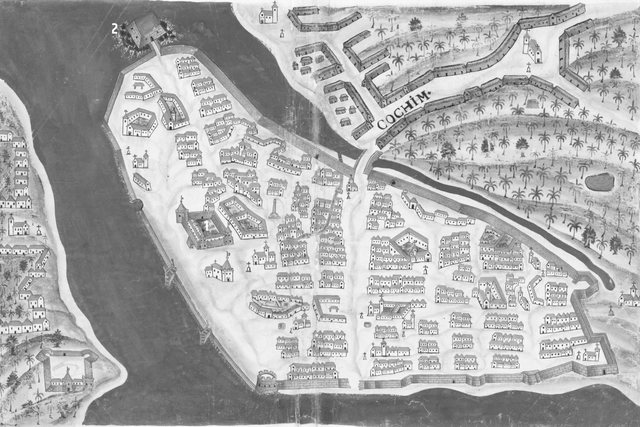
FIG. 5: Plan of the city of Cochin, by Pedro Resende, 1635 (BOCARRO, 1635). Source: BIBLIOTECA NACIONAL DIGITAL DE PORTUGAL. Edited by the author
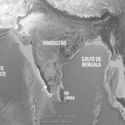
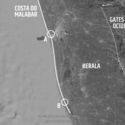
The following text contributes to the debate on a topic crucial to understanding the Portuguese presence in the world: urbanization processes. Focusing on the landscape of Cochin as a case study, we seek to build alternative pathways for thinking about “Portuguese” cities around the globe and their relations with the diverse agents and cultures with whom the Portuguese interacted during their overseas activities across practically the entire planet. Amid this sea of options, the choice of Cochin is guided by two main aspects.
First, Cochin was the first location where the Portuguese established a solid foothold in the Indian Ocean, in the early sixteenth century. While the Portuguese had previously accumulated a wealth of experience on the West African coast and the Atlantic islands, the same could not be said of the Indian Ocean: Cochin served as the first permanent laboratory of the Portuguese experience on Asian shores. In this context, the case allows us to analyze how the Portuguese accommodated themselves to an unfamiliar environment, as well as to debate their strategies and instruments.







.jpg?1606937540&format=webp&width=640&height=580)

.jpg?1606937426 "Têkoa. Courtesy of Sem Muros arquitetura integrada")

.jpg?1606937540)











.jpg?1607603966 "Unit of the Centro Aberto (Open Downtown) Program implemented in Largo de São Francisco, downtown São Paulo. Photo: SP Urbanismo")
.jpg?1607603889 "Scenic lighting of historic buildings shapes the public space in downtown Mexico City. Photo: Danielle Hoppe / ITDP Brasil")
.jpg?1607603882 "In Fortaleza, since 2018 all revenue from paid on-street parking has been directed toward cycling infrastructure policies. Photo: ITDP HQ")