Rethinking Heritage

ArchDaily Topic

A curated selection of articles, interviews, and essays on how today’s architecture shapes tomorrow’s memory.

Error 404: Architectural Memory in the Age of Algorithms

Error 404: Architectural Memory in the Age of Algorithms

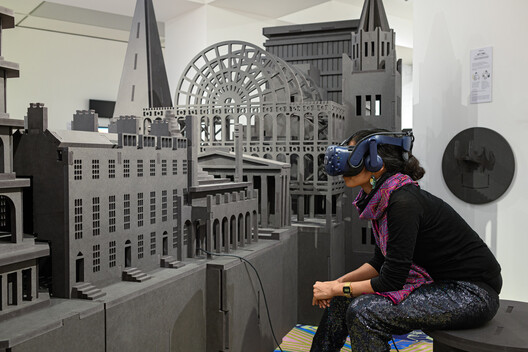
Before the digital turn, architecture's memory was largely tangible. It lived in the weight of drawings, the patina of models, and the thickness of books. To preserve architecture meant to preserve its traces, the documents, sketches, and photographs through which buildings could be remembered long after their material form had changed or disappeared. The modern architectural archive, as it developed in the 20th century, was both a refuge and a device of legitimacy. Institutions such as the Canadian Centre for Architecture, Casa da Arquitectura, or the Deutsches Architekturmuseum were built upon the conviction that to preserve architecture was to preserve its documents.

Read more »

Intestines of a Building: Aziza Chaouni on Architecture’s Systems and Resources

Intestines of a Building: Aziza Chaouni on Architecture’s Systems and Resources

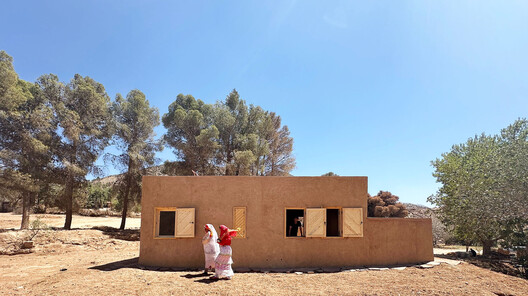
In an age so obsessed with skincare and appearances, few architects are truly interested in the intestines of our buildings. With a practice rooted in contextual awareness and technical pragmatism, sensitive to the needs of the people it serves and to resource limitations, Moroccan architect Aziza Chaouni focuses on the hidden systems that allow architecture to be. Over the past two decades, she has been working on projects across different geographies, particularly in the Saharan region, actively engaging with its communities and heritage.

Read more »

The Centauric Heritage: Equine Scale and Mexican Monumental Architecture

The Centauric Heritage: Equine Scale and Mexican Monumental Architecture

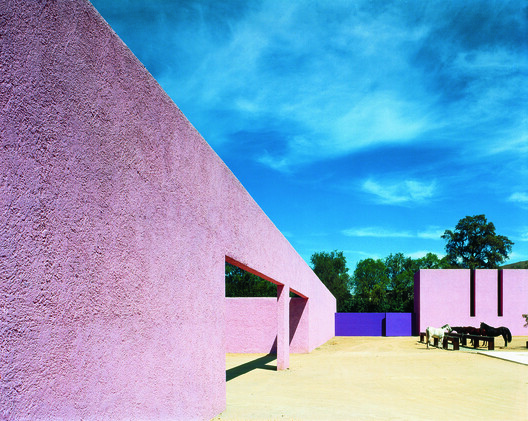
In the architectural history of the Mexican territory, the built environment has functioned not merely as a human stage, but as a biological infrastructure designed to organize proximity between species. The resulting spatial logic is not a solo performance, but a negotiated coexistence between human and animal bodies. To examine this heritage today is to shift the analytical focus away from stylistic authorship and toward a more fundamental phenomenon: the persistence of spatial practices that emerged to sustain shared forms of life. 

Read more »

Thermal Memory: How Climate Shapes Architectural Heritage

Thermal Memory: How Climate Shapes Architectural Heritage

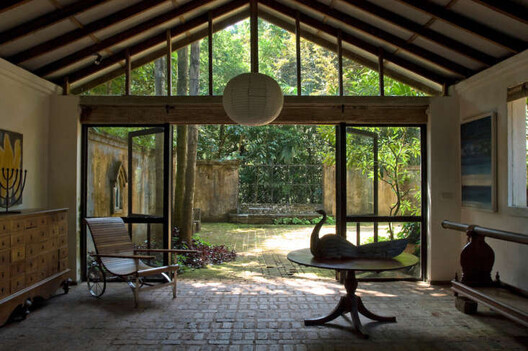
On a hot afternoon in May, when the air over western India turns metallic with heat, no one remembers façade composition. They remember where the shade falls. They remember which corridor breathed. They remember the house that was cooler than the street. What stays in memory is comfort beyond the form. Repeated thermal preference stabilizes into spatial configuration, and over time, those configurations become building types.

Read more »

Everyday Heritage: 10 Vietnamese Coffee Shops Reviving Small-Scale Traditional Buildings

Everyday Heritage: 10 Vietnamese Coffee Shops Reviving Small-Scale Traditional Buildings

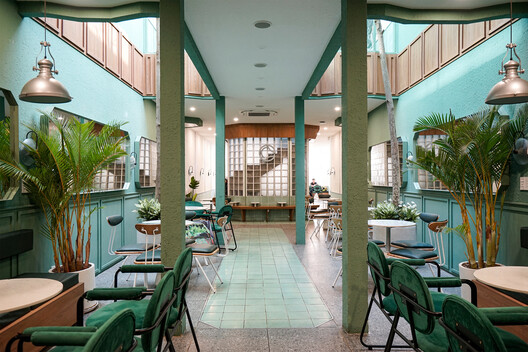
To fully know a city's architectural heritage, one must look beyond its designated sites and iconic buildings. For many, understanding a city's urban fabric and what makes it tick also means discovering the smaller-scale, locally appreciated, conserved buildings and popular gathering spaces. This is especially true when considering bustling Vietnamese cities, with their peculiar architectural characteristics, which can only be appreciated when learning about their many inspirations and historic layers, combining traditional Vietnamese motifs, modernism, local materiality, and climatic design solutions, but mostly by learning about the site constraints that are addressed through the implementation of the narrow tube houses and low-rise buildings. 

Read more »

Heritage Without Permanence: When Architecture Endures by Disappearing

Heritage Without Permanence: When Architecture Endures by Disappearing

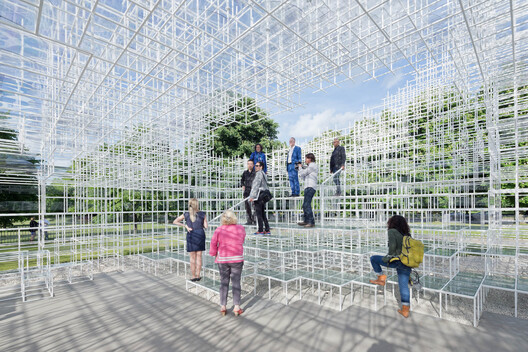
​​A Gothic cathedral can take centuries to complete. A world exposition pavilion may stand for six months. A ritual structure in Kolkata rises and vanishes within five days. Yet each draws pilgrimage, shapes collective memory, and reorganizes urban life. If heritage has long been defined by what endures, architecture repeatedly shows that cultural authority can also belong to what gathers people.

Read more »

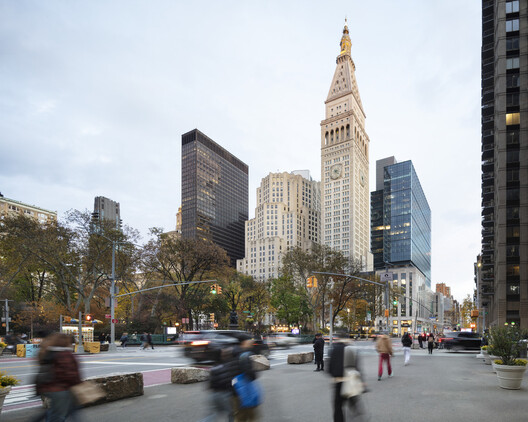
Dispatched: Architecture of the American Post Office and the Privatization of Civic Space

Dispatched: Architecture of the American Post Office and the Privatization of Civic Space

Post offices stand among the most enduring monuments of civic life in the United States. Across towns and city centers, they carry the shifting architectural ambitions of the nineteenth and twentieth centuries, from Greek Revival formality to Beaux-Arts monumentality and Art Deco ornament. Architects and federal planners would give these buildings a clear public role and a powerful physical presence. Stone façades, monumental halls, and crafted interiors projected stability, trust, and permanence. The post office placed the federal government directly into the everyday landscape of American life.

Read more »

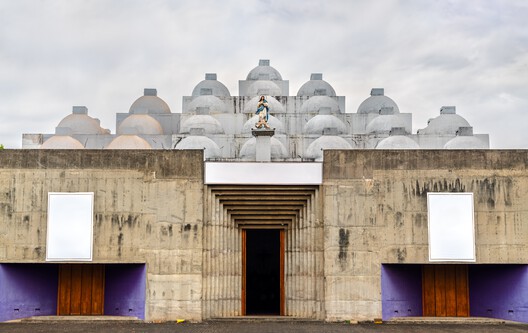
The Two Cathedrals of Managua: Architectural Memory After Nicaragua’s 1972 Earthquake

The Two Cathedrals of Managua: Architectural Memory After Nicaragua’s 1972 Earthquake

On December 23, 1972, Managua, the capital of Nicaragua, was struck by a 6.3-magnitude earthquake. In a matter of minutes, its urban core, which for decades had functioned as a compact political and economic center, abruptly collapsed. In the reconstruction process that followed, the authorities sought not simply to rebuild but to reorganize. Their objective was to decentralize the city and prevent future paralysis by dispersing functions across multiple zones. Among the most significant architectural outcomes of this shift was the new Metropolitan Cathedral. Its modernist language symbolized both institutional continuity and urban transformation. In doing so, it embodied Managua's transition from a Spanish-style, centralized urban grid to a contemporary, decentralized metropolis.

Read more »

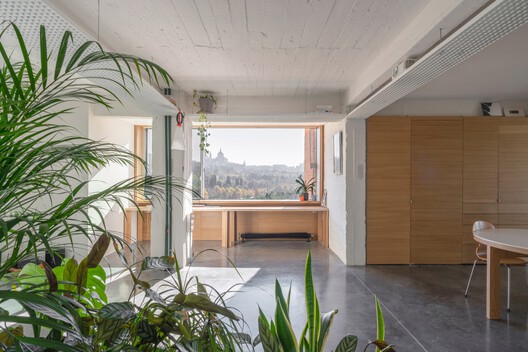
Between Materials and Memory: Three Madrid Architecture Practices on Heritage Rehabilitation

Between Materials and Memory: Three Madrid Architecture Practices on Heritage Rehabilitation

The role of heritage rehabilitation in the contemporary architectural landscape is shaped by a wide range of research, beliefs, memories, and efforts aimed at redefining and strengthening our built environment. When undertaking a transformation, renovation, or preservation project, architects can employ diverse strategies and tools to encourage a meaningful coexistence between what already exists and what is newly introduced. Together with three Madrid-based architecture practices—SOLAR, Pachón-Paredes, and BA-RRO—we set out to engage in conversation and explore their creative processes and ideals, recognizing the complexity and value of historic buildings as repositories of materials, structures, and construction techniques from other eras.

Read more »

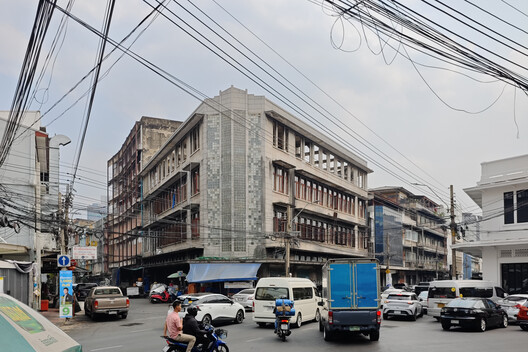
Heritage in Motion: Bangkok’s Buildings That Continue to Become

Heritage in Motion: Bangkok’s Buildings That Continue to Become

Architectural heritage is not only what a building was, but what it continues to become: a long process of building, rebuilding, and re-occupying over time. Where opportunities allow, this continuity produces a layered condition—one in which visitors can witness, experience, and feel the gradual shifting of a building's fabric, materiality, spatial order, and patterns of use, and occasionally even participate in that transformation.

Read more »

Shaping Architectural Continuity: 25 Revitalization Projects Across Historic, Industrial, and Natural Sites

Shaping Architectural Continuity: 25 Revitalization Projects Across Historic, Industrial, and Natural Sites

Heritage sites constitute complex spatial archives in which architecture, history, and collective memory converge. They encompass a wide spectrum of contexts—from archaeological remains, ancient and historic townscapes, UNESCO-listed landscapes, to early modern civic structures and industrial infrastructures. Yet these environments confront challenges: climate change, urban transformation, disaster, shifting social needs, and the gradual erosion of material fabric. Revitalization and restoration projects respond to these conditions by positioning architectural and spatial practice as an active mediator between preservation and the contemporary topologies.

Read more »

When Do Buildings Begin to Matter? Rethinking Heritage in Local Time

When Do Buildings Begin to Matter? Rethinking Heritage in Local Time

A building still being adjusted, repaired, and debated is declared World Heritage. Another, equally influential, must survive five centuries before anyone considers protecting it. This is not an anomaly in the heritage system; it is the system. Across the world, architecture does not age at the same pace because time itself is not neutral. It is cultural, political, and deeply uneven. What we call "heritage" is not simply old architecture; it is architecture that has reached the right moment in a particular place.

Read more »

Playful and Ironic: The Legacy of Postmodernist Architecture in the United States

Playful and Ironic: The Legacy of Postmodernist Architecture in the United States

Postmodernism in the United States turned architecture into a stage for cultural memory, irony, and heritage at a moment when the built environment was becoming less civic and more commercial and curated. By the late twentieth century, architectural investment no longer centered on monumental public institutions or shared federal commitment to civic space. Private development, corporate expansion, and consumer environments increasingly shaped cities across the country. Buildings took on a new role as cultural images, expected to communicate identity and meaning as much as they provided function.

Read more »

Material Mediation and Architectural Heritage

Material Mediation and Architectural Heritage

Preserving historic buildings requires simultaneously addressing technical, environmental, and regulatory demands while maintaining the material, cultural, and symbolic continuity of what already exists. As the understanding consolidates that the most sustainable building is the one that is already standing, and that preservation also involves construction knowledge, material traditions, and the social fabrics from which they emerged, these same buildings are increasingly confronted with more rigorous contemporary parameters. Energy efficiency, safety, carbon emission reduction, and regulatory compliance have become unavoidable references, placing architecture before a central tension: how to update what already exists without breaking the continuity that sustains its heritage value.

Read more »

Rooms as Heritage: How Interior Typologies Carry Cultural Memory

Rooms as Heritage: How Interior Typologies Carry Cultural Memory

For decades, heritage has been easiest to recognize from the street. We protect facades, skylines, and monuments because they are visible, stable, and legible as cultural assets. Yet most of what we remember about living is how we eat together, withdraw, argue, care, and rest, which happen far from view. It happens inside rooms. As open plans quietly give way to thresholds, corridors, and enclosures, a deeper question emerges: what if cultural memory survives not in what architecture shows, but in how it is lived? 

Read more »

Heritage After Failure: What We Will Keep From Today’s Architectural Mistakes

Heritage After Failure: What We Will Keep From Today’s Architectural Mistakes

Architectural heritage is often described as what survives time. Yet survival does not explain why certain buildings are preserved while others disappear. Many works now protected as cultural heritage were once criticized, contested, or openly rejected; they were accused of being socially misguided, materially flawed, or symbolically excessive. Over time, however, these same shortcomings have become central to their meaning as heritage emerges as a slow and unstable process of interpretation.

Read more »