“Equity” is a moving target. We who create architecture want our devotion to have a true forum of objective Equity. But motivations are not outcomes. How we judge design inevitably carries the baggage of “Style” and that makes universal equity in design apprehension impossible.
Bavarian wood furniture expert Zeitraum’s Curtain table marks a departure from classic table archetypes, while also embracing the company’s trademark commitment to sustainability.
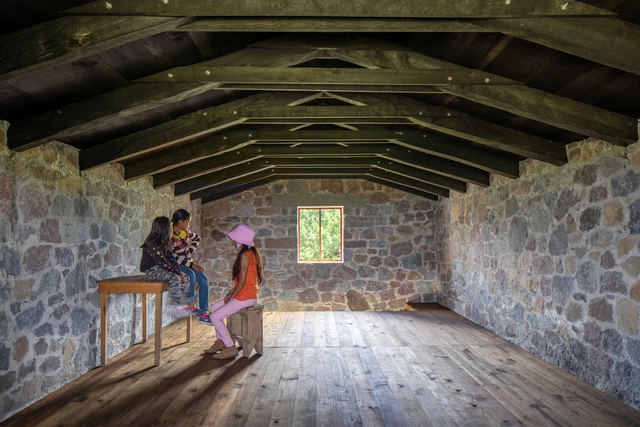
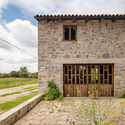
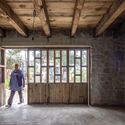
The project “Tequiocalco. Campa tlachializtli mozcalializtli in totlamatiliz huan toyuhcatiliz” –located in the state of Tlaxcala, Mexico– which translates to Spanish as the Autonomous Center for Research and Revitalization of Community Knowledge (CAIRSCO), is the “place where our wisdom and culture, ways of being, or what is lived in the community are observed, researched, and revitalized.”
https://www.archdaily.com/1127672/the-re-existence-of-dwelling-language-and-territory-arte-a-360-grados-plus-comunalArte a 360 grados + Comunal Taller de Arquitectura
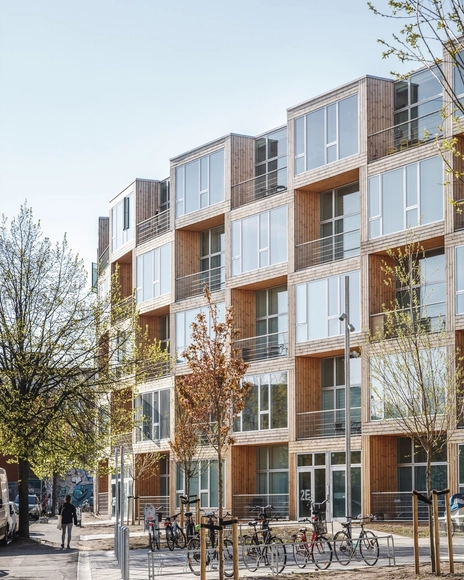
The concept of prefabrication in construction corresponds to elements, parts or entire buildings produced in a factory and transported to a construction site for a quick installation. This represents numerous advantages over traditional construction methods, such as speed, precision in execution, efficiency, cleanliness of the work and, in many cases, cost. Considering that housing is a primary human need, using industrial methods for the construction of affordable and good quality housing has always interested architects, whether to house growing urban populations or for temporary or emergency settlements, on the most diverse scales. After many attempts throughout history, the question remains whether the popularization of prefabrication in the construction field can be a solution to provide greater equity in access to housing.
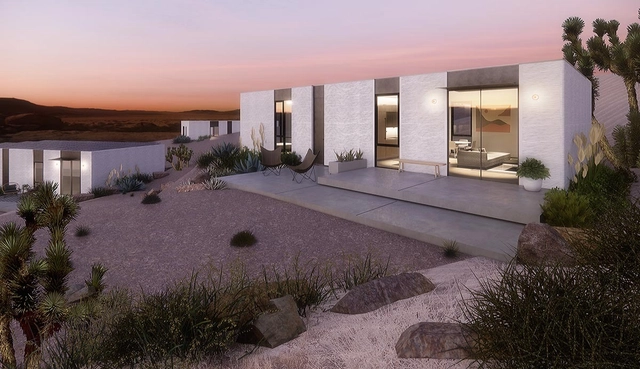
The Mighty House Single Family Home and ADU designed by EYRC Architects. Rendered in Enscape. Image Courtesy of EYRC and Mighty House
Why is 3D-printed architecture on the rise?
According to a July 2021 report by Grand View Research, the global 3D construction market is set to grow by an incredible 91% between 2021 and 2028. And, why is printed architecture seeing such rapid growth? Firstly, 3D printing is emerging as a possible solution to some of the challenges currently facing architecture, engineering, and construction (AEC) – it can provide affordable housing, shelters for disaster-hit regions, and an answer to sustainable construction. Alongside these, one of the main advantages is the lower construction costs. It’s far easier to calculate the actual volume of construction material required, resulting in less waste.
https://www.archdaily.com/968146/building-the-future-with-3d-printing-and-real-time-visualizationGemma Falconer Da Silva
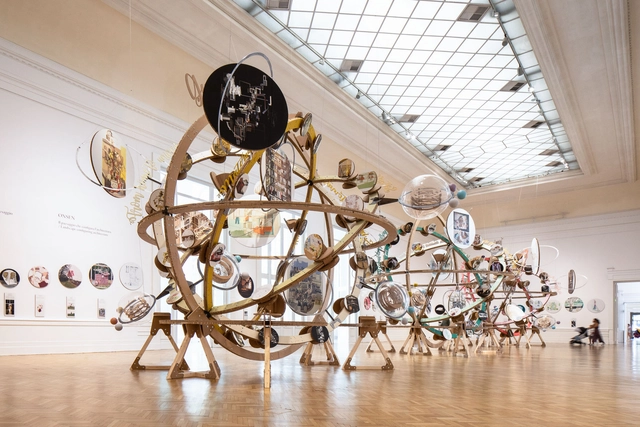
Curated by Spanish architect Izaskun Chinchilla Moreno, Cosmowomen. Places as constellations is an exhibition currently open at La Galleria Nazionale di Roma, Italy. Reflecting on the incorporation of women into architecture, Cosmowomen displays a series of projects developed by 65 Bartlett School of Architecture-alumni women architects from over 20 different nationalities.
Few cities combine history and contemporary culture like Prague. The so-called "Mother of all Cities" was spared from widespread destruction during World War II, and as a result, its diverse architecture dates back over a millennium. As a political, cultural and economic center of Europe, the city has become a significant metropolis balancing both its past and future as one of the world's most beautiful cities.
American architect Brian Mac grew up near Detroit. He graduated from the Architecture School at the University of Detroit in 1988 and for the next five years worked for a preservationist firm, Quinn Evans Architects in Ann Arbor. There he learned to love historic architectural detailing, and, while working at the firm, in 1992, became a licensed architect. Then followed a short period of disillusion with the profession and moving to Ohio to work in a residential treatment center for adolescent felony offenders.
Videos
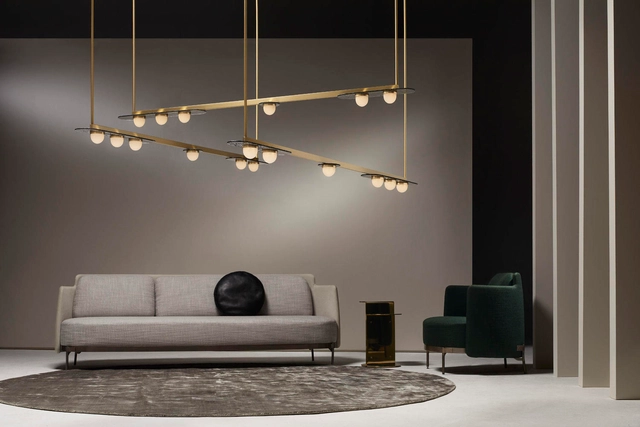
Modulo’s horizontal pendants, seen here in satin bronze, can be grouped to create a one-off sculptural arrangement to fit a specific space. Image Courtesy of CTO Lighting
For CTO Lighting’s new Modulo collection, designer Federico Peri found inspiration in a childhood memory to create a luminaire family that is contemporary and timeless, all at once.
Galería RGR presents for the first time in Latin America the exhibition You Are Everything by Danish artist Jeppe Hein, which creates a space for social interaction and intercultural dialogue. This space aims to activate the works through visitor engagement, offering opportunities for exchange among them and fostering a form of interaction that emerges between the artwork and the audience.
https://www.archdaily.com/1128436/danish-artist-jeppe-hein-presents-the-exhibition-you-are-everything-at-rgr-gallery-mexico-cityArchDaily Team
Modular system Mywall by Fantoni. Image Courtesy of Fantoni
As material technology becomes more advanced and the importance of health and wellbeing is taken more seriously, sculpting sound is now a consistent part of specifiers’ briefs in all sectors, from echo-free hospitality to clear and functional meeting rooms, and even transforming home offices or music rooms into headache-free sound vaults.
The 7th edition of the International Architecture and Design Festival Concéntrico proposed new readings of public space through a series of temporary installations that re-imagined various places throughout the Spanish city of Logroño. Emerging architecture practices and artists from around the world shared their perspectives on the public realm and the spaces of social interaction by exploring various themes and experimenting with new ways of understanding urban spaces.
Five emerging architecture studio profiles from Switzerland, France, the Netherlands, Austria, the UK, and Slovakia have been chosen by New Generations, a European platform that analyses the most innovative emerging practices at the European level, providing a new space for the exchange of knowledge and confrontation, theory, and production. Since 2013, New Generations has involved more than 300 practices in a diverse program of cultural activities, such as festivals, exhibitions, open calls, video interviews, workshops, and experimental formats.
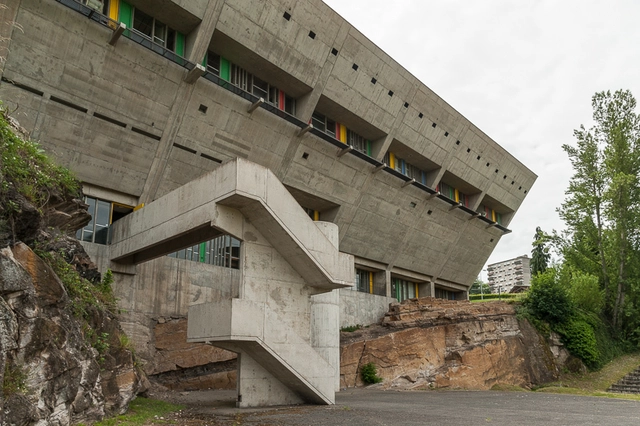
Le Corbusier was a pioneer of the Modernist Movement in architecture. Throughout his career, he undertook an array of projects all around the world. See below for 17 of his works that have been named World Heritage Sites by UNESCO, as well as many more of his other popular pieces. Hopefully, someday you get to go and see them yourself!
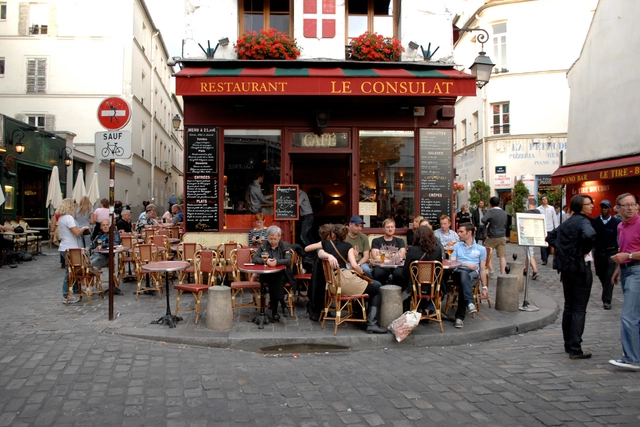
The intentions of the 15-Minute City are laudable. I have long believed that walking is the best of all modes of transportation. I also believe that cities should be free from commercial regulations that hinder the emergence of small shops and cozy cafes in residential neighborhoods. A lively and dynamic mixed-use neighborhood can be one of the greatest gifts of urban entrepreneurship.
In the United States, we regulate the entrepreneurship of the poor much more than that of the rich. The rich innovate in cyberspace, a zone largely free of regulation. Conversely, the poor innovate in practice, in real things, under local government rules that micromanage physical space.
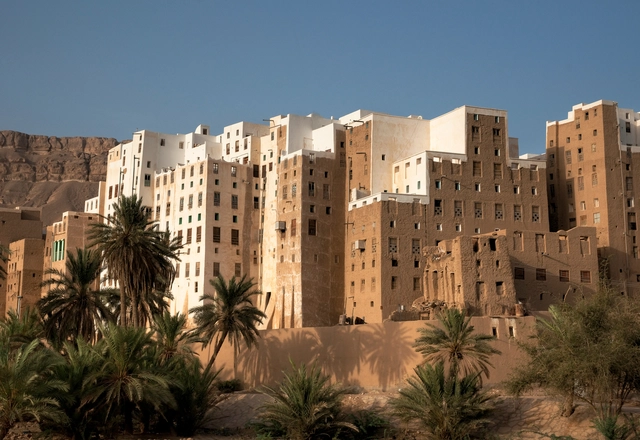
Shibam, the Manhattan of the Desert, a 500-year-old mud-brick city in eastern Yemen. Photograph by Don Whitebread. Image via Shutterstock
The construction industry's role in today's climate crisis is deeply concerning—between material production, building execution, and operations, the sector is one of the largest emitters of greenhouse gases. At the same time, urban populations are growing at unprecedented rates. Within the shaping of major cities—which consume massive amounts of energy—reducing the discipline's impact seems to rely on small-scale interests and personal initiatives rather than sweeping action from the academic, professional, or political spheres.
History has provided us with numerous construction techniques and local material uses that have proven sustainable over time. This involves the efficient use of resources that bypass major industrial processing stages and eliminate the need for long-distance transport. In some cases, at the end of their life cycle, they can even be returned to the environment, such as adobe and timber. In other instances, reclaimed materials—such as recyclable waste and debris generated directly on-site—can also be integrated. Undoubtedly, modern technology and knowledge can help optimize these materials for large-scale application in major cities. Is it possible to develop projects with low environmental impact and adapt them to dense urban contexts? Is this the future path for building materials?
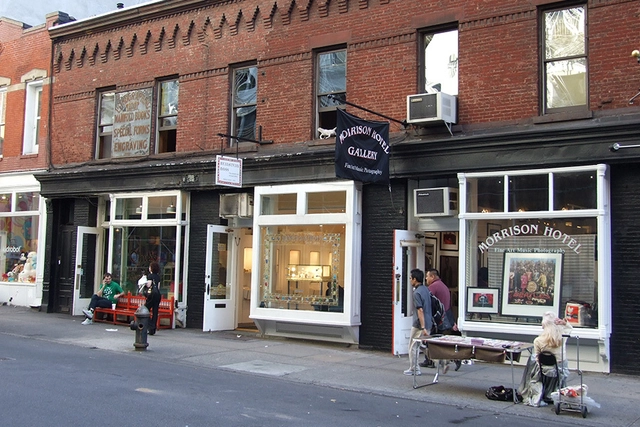
The remarkable research paper “A Long History of a Short Block,” by Bill Easterly, Laura Freschi, and Steven Pennings, analyzed the development of a block on Greene Street in New York's SoHo neighborhood over four centuries. Throughout this period, the city remained in a constant state of development, demonstrating that the question “What is the ‘original character’ of a neighborhood?” is far more difficult to answer than it seems.
To begin with, the skyscraper-filled Manhattan we know today is a relatively recent development in its history. Before the Dutch arrived in what they would call “New Amsterdam” in 1625, the region was dominated by forests and wetlands—a rich ecosystem that even included bears and wolves.
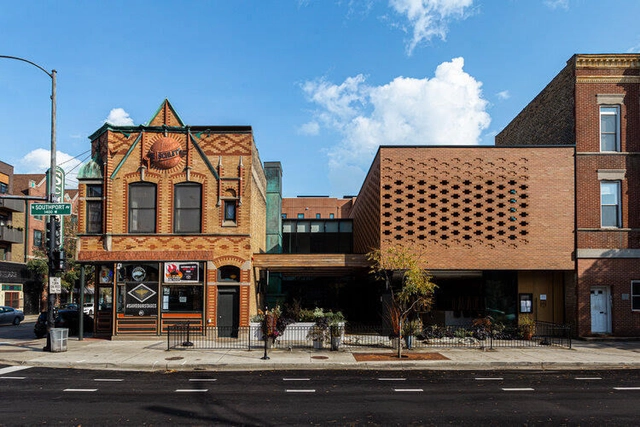
In this video, Will Quam of Brick of Chicago takes us around the American city to question Louis Kahn’s adage that all bricks are motivated to be arches. Here, in the Logan Square neighborhood, we find bricks of all sorts, that — in addition to arches — take on other configurations and metaphors to describe their qualities; textile bricks and diapering, brushstrokes of a painting, butter joints and glazes, soldiers and bullnoses.













.jpg?1631121402 "Cortesía de Galería RGR")
.jpg?1631121278 "Cortesía de Galería RGR")