1. ArchDaily
  2. Articles

Articles

Palace of Versailles in France is converted into a luxury hotel

Subscriber Access | 

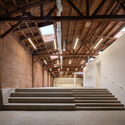
Located near Paris and symbolizing the power of French absolute monarchs, the Palace of Versailles was originally built between 1610 and 1643 as a rural hunting retreat for King Louis XIII of France. Over time, the residence was expanded and refined, becoming a small chateau in 1634. Its transformation into a grand, luxurious palace and a display of royal opulence began during the reign of Louis XIV, known as the Sun King.

Palace of Versailles in France is converted into a luxury hotel - Image 1 of 4Palace of Versailles in France is converted into a luxury hotel - Image 2 of 4Palace of Versailles in France is converted into a luxury hotel - Image 3 of 4Palace of Versailles in France is converted into a luxury hotel - Image 4 of 4Palace of Versailles in France is converted into a luxury hotel - More Images+ 3

"Displacements," the Mexican Pavilion for the 17th International Architecture Exhibition of the Venice Biennale 2021

Subscriber Access | 

"Displacements," the Mexican Pavilion for the 17th International Architecture Exhibition of the Venice Biennale 2021 - Imagen 1 de 4"Displacements," the Mexican Pavilion for the 17th International Architecture Exhibition of the Venice Biennale 2021 - Imagen 2 de 4"Displacements," the Mexican Pavilion for the 17th International Architecture Exhibition of the Venice Biennale 2021 - Imagen 3 de 4"Displacements," the Mexican Pavilion for the 17th International Architecture Exhibition of the Venice Biennale 2021 - Imagen 4 de 4Displacements, the Mexican Pavilion for the 17th International Architecture Exhibition of the Venice Biennale 2021 - More Images+ 7

The federal Ministry of Culture and the National Institute of Fine Arts and Literature (INBAL) will present the pavilion titled Desplazamientos (Displacements), representing Mexico at the 17th International Architecture Exhibition – La Biennale di Venezia, from May 22 to November 21, 2021, at Venice's historic Arsenale complex. The proposal rethinks the way Mexico has traditionally participated in this prominent forum, where the world gathers to discuss architecture—a field fundamental to heritage and human life in both cities and nations.

Jobs of the Week | People's Architecture Office, Meng Architects

Subscriber Access | 

This week, we feature job openings from two of China's leading architecture practices: Beijing-based People's Architecture Office (PAO) and Shenzhen-based Meng Architects. Known for their distinct design philosophies and active presence in different sectors of the architectural field, both offices are looking for talented architects to join their teams.

"They aren't used in big cities simply because they aren't regulated": Our readers weigh in on local materials

Subscriber Access | 

The construction industry's role in today's climate crisis is deeply concerning—between material production, building execution, and operations, the sector is one of the largest emitters of greenhouse gases. At the same time, urban populations are growing at unprecedented rates. Within the shaping of major cities—which consume massive amounts of energy—reducing the discipline's impact seems to rely on small-scale interests and personal initiatives rather than sweeping action from the academic, professional, or political spheres.

History has provided us with numerous construction techniques and local material uses that have proven sustainable over time. This involves the efficient use of resources that bypass major industrial processing stages and eliminate the need for long-distance transport. In some cases, at the end of their life cycle, they can even be returned to the environment, such as adobe and timber. In other instances, reclaimed materials—such as recyclable waste and debris generated directly on-site—can also be integrated. Undoubtedly, modern technology and knowledge can help optimize these materials for large-scale application in major cities. Is it possible to develop projects with low environmental impact and adapt them to dense urban contexts? Is this the future path for building materials?

12 Christmas Tales by Superstudio

Subscriber Access | 

"Domingos Libro" is hosted by Carmelo from Enorme Studio. Every two weeks, he delves into forgotten architectural publications, books, and architecture magazines from the '60s, '70s, and '80s that carry the most fascinating backstories.

This new episode is a holiday special focusing on the December 1971 issue of Architectural Design magazine and the "12 Cautionary Tales for Christmas" proposed by Superstudio.

Jobs of the Week | Origin Architect, Jaeger Kahlen Partner

Subscriber Access | 

This week’s job openings come from two design firms based in Beijing and Shenzhen: Origin Architect and JKP Architects. Specializing in different scales and themes, both practices are active across various architectural fields and are seeking like-minded architects to join their teams.

The Right to Habitat: Other Worlds in Southwestern Mexico

Subscriber Access | 

The Right to Habitat: Other Worlds in Southwestern Mexico - Imagem 1 de 4The Right to Habitat: Other Worlds in Southwestern Mexico - Imagem 2 de 4The Right to Habitat: Other Worlds in Southwestern Mexico - Imagem 3 de 4The Right to Habitat: Other Worlds in Southwestern Mexico - Imagem 4 de 4The Right to Habitat: Other Worlds in Southwestern Mexico - More Images+ 6

During the 1980s, NGOs and other organizations interested in housing highlighted the urgent need to address the housing issue comprehensively—seeking a dignified home and environment for vulnerable populations, particularly in Latin America, which was already the world's most urbanized region by the turn of the 21st century. Eight megacities concentrated 14% of the global population, including Mexico City, São Paulo, Buenos Aires, and Rio de Janeiro, among others. Furthermore, urban areas have expanded so rapidly that they have outpaced population growth, driven by the construction of residential complexes, shopping malls, and industrial parks.
Houses for Sale at Leo Castelli Gallery: Another Way to Buy Housing Projects in 1980

Subscriber Access | 

"Domingos Libro" is presented by Carmelo from Enorme Studio, where every two weeks, he delves into forgotten architectural publications, books, and architecture magazines from the 60s, 70s, and 80s that have the most interesting stories behind them.

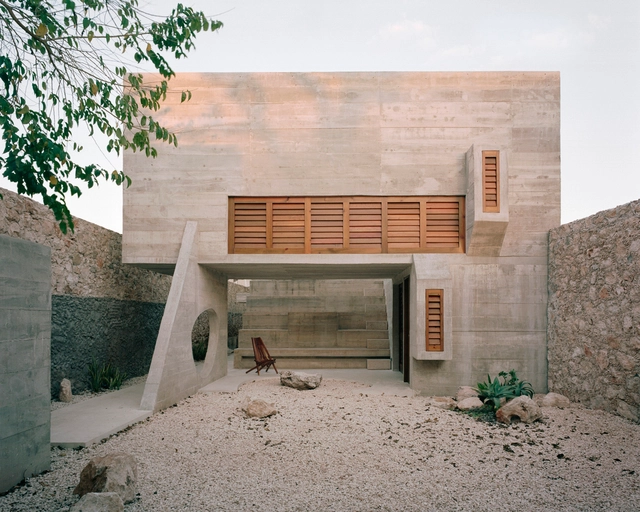
In this new episode, he discusses the catalog of the exhibition "Houses For Sale," published by Rizzoli and B.J. Archer in 1980. Through the Leo Castelli Gallery, one could purchase the designs for eight houses by renowned architects (Emilio Ambasz, Peter Eisenman, Vittorio Gregotti, Arata Isozaki, Charles Moore, Cesar Pelli, Cedric Price, and Oswald M. Ungers), upending the traditional "client commissions architect for their dream home" relationship.

A reading of the inaugural exhibitions of the Anahuacalli Museum and the Museum of Popular Art of Unhão

Subscriber Access | 

In 1963, the exhibition “Nordeste” inaugurated the Museum of Popular Art of Unhão in Salvador. Despite the promising backdrop for Lina Bo Bardi to launch the museum project within the restored premises of Solar do Unhão, its activities were cut short after only a year. This temporary and sole exhibition open to the public relied on loans from various private collections and museum archives to present a vast assembly of diverse objects, inviting the general public to understand the value of popular craftsmanship. The exhibition, which the architect would have preferred to title ‘Civilização Nordeste’ [Northeast Civilization], exposed class attitudes that had little to do with an understanding of what she termed the "progressive attitude of popular culture linked to real problems." (BO BARDI, 1963)

"We must anticipate population mobility and build faster," our readers share their thoughts on migration in cities

Subscriber Access | 

Economic crises, health emergencies, and natural disasters, followed by social conflicts, political disagreements, and the search for new places to live, have historically driven the displacement of hundreds of thousands of people. The result: changes in residence, habitat, and culture.

Ocupa Rua Project: How Public Space Sustains Bars and Restaurants in Times of Pandemic?

Subscriber Access | 

Who would have thought that residents of São Paulo, one of the busiest cities in the world, would miss the hustle and bustle of the streets? Through a simple and elegant intervention, Brazilian architects Gustavo Cedroni and Martin Corullon of Metro explain how they supported one of the areas hardest hit by the pandemic, using small architectural gestures to bring life back to the street.

Art in Architecture: Flame, Illuminating the Staircase of a House by Inés Esnal

Subscriber Access | 

Inés Esnal has designed a sculpture specifically conceived for the stairwell of a single-family home. Her architectural training has heavily influenced her understanding of art in relation to space, from both phenomenological and geometric perspectives. By combining artistic approaches with scientific strategies in her creative process, she aims to create a work of art that is geometric yet atmospheric, logical yet experiential.

Titled Flame, this sculpture is made of polypropylene ropes on a steel frame, measuring 75 x 502 cm and spanning the three levels of a residence in La Moraleja, Madrid.

The documentary REGIOPOLIS explores the history of one of Mexico's most important cities

Subscriber Access | 

As part of an initiative to document the history of Monterrey, Nuevo León, Mexico, REGIOPOLIS emerged as a documentary video series narrated from the perspective of the city's creators, aiming to leave an architectural record of the Monterrey metropolis. Each episode showcases some of the most significant works that laid the foundation for its urban fabric, exploring the historic and emblematic architecture built to this day.

A (new) end for construction waste in the city of São Paulo

Subscriber Access | 

How can waste become a resource? Or rather, when did waste stop being a resource? Why does contemporary architecture still build as if our buildings were great titans that will survive different eras and adversities? These are all questions that cross the mind of a recent architecture graduate. One of the current challenges of architectural production in a metropolis like São Paulo is understanding that, after demolition, the building does not disappear. What does our National Solid Waste Policy indicate?

Although latent, this issue is still rarely debated within academia, a space that should be constantly proposing alternatives to our way of life. And even when it is debated, where is the benefit to the public? How can we disseminate these lessons? Education is still the key to getting our future back on track.

A (new) end for construction waste in the city of São Paulo - Imagen 1 de 4A (new) end for construction waste in the city of São Paulo - Imagen 2 de 4A (new) end for construction waste in the city of São Paulo - Imagen 3 de 4A (new) end for construction waste in the city of São Paulo - Imagen 4 de 4A (new) end for construction waste in the city of São Paulo - More Images+ 9

Cartography of Inequality: Geographic Research on Access to Public Spaces and Green Areas in Peru

Subscriber Access | 

Cartography of Inequality: Geographic Research on Access to Public Spaces and Green Areas in Peru - Imagen 1 de 4Cartography of Inequality: Geographic Research on Access to Public Spaces and Green Areas in Peru - Imagen 2 de 4Cartography of Inequality: Geographic Research on Access to Public Spaces and Green Areas in Peru - Imagen 3 de 4Cartography of Inequality: Geographic Research on Access to Public Spaces and Green Areas in Peru - Imagen 4 de 4Cartography of Inequality: Geographic Research on Access to Public Spaces and Green Areas in Peru - More Images+ 10

Just over a year after the start of the pandemic in Peru, a multidisciplinary team from OjoPúblico and Espacio y Análisis has conducted an extensive investigation based on various geographical and socioeconomic databases. The study reveals wide gaps in access to public spaces and green areas across 44 districts in Lima and Callao (Peru). In several cities around the world, the pandemic has demonstrated how unequally public space is distributed, especially in low-income neighborhoods and vulnerable areas that lack shared spaces like green areas, parks, or playgrounds. Through this mapping report, the team shows how more than half of the districts in Lima and Callao have less than 3 square meters of recreational space per inhabitant. It also highlights stark urban contrasts along district boundaries separating different socioeconomic levels and underscores the urgent tasks facing local authorities to increase and improve the quality of recreational areas.

Weaving the Street: Testimonies of Participation and Recycling for Summer Shade

Subscriber Access | 

"You should know that Mr. Matías took down one of the sunshades from where you installed it and put it on his balcony, because he wants the shade right at his doorstep," says Pepe, a resident of Valverde de la Vera, a small rural municipality in Extremadura, featured in the book "Tejiendo la Calle." This new publication gathers nearly ten years of testimonies from weavers and residents who brought to life the project of the same name, initiated by Marina Fernández Ramos in 2013.

Shanghai Jobs | Atelier I-N-D-J: Architect / Spatial / Interior Designer, CAD Draftsperson, Assistant Designer, Intern

Subscriber Access | 

Founded in 2009 by Ian Douglas-Jones, Atelier I-N-D-J’s practice is rooted in a strong architectural foundation. Combined with experimentation, technology, and an unrestricted, interdisciplinary approach, this allows the studio to pursue a diverse range of creative endeavors.

The Best Student Projects in Latin America and Spain 2021

Subscriber Access | 

To showcase the valuable academic production of Latin American and Spanish universities, we launched an open call this year, inviting architecture students to submit their thesis projects completed in 2020.

Following a thorough review of 305 submissions, our editorial team selected and highlighted 10 projects that demonstrate rigorous critical thinking in response to their chosen issues. The selection process not only valued projects that delivered the best possible architecture through efficient design suited to their context, program, and users, but also those demonstrating significant attention to human scale, experimentation, and novel ways of approaching architecture in cities. Additionally, we recognize 10 honorable mentions whose immense dedication and academic quality made them impossible to overlook.