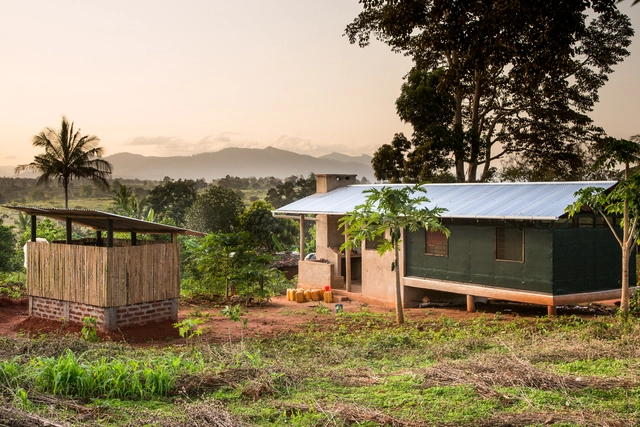
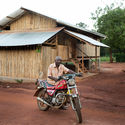
Architecture firm Ingvartsen Architects has turned their gaze towards “cultural exchange architecture”—not with the aim of exploring identity or experimenting with aesthetics, but with a practical purpose in mind: to minimize the spread of diseases. The Magoda Project combines Asian elements with traditional rural African building methods in the village of Magoda, in the Tanga region of Tanzania, taking shape in the form of eight prototype homes. The design goes to show that cultural exchanges in design and architecture can make great contributions towards problem solving for a humanitarian purposes, not only to improve health and hygiene, but also comfort and happiness.
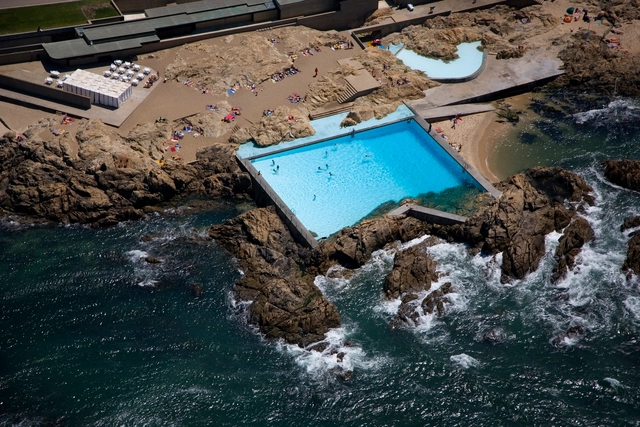
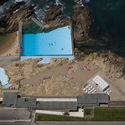
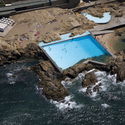
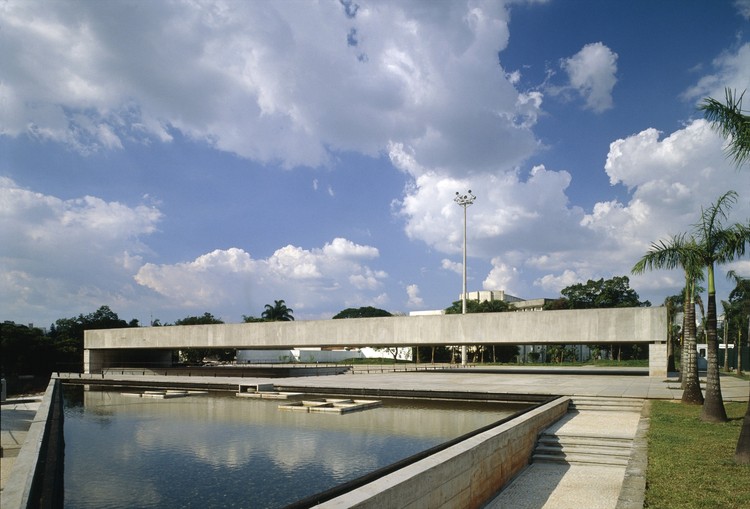
The young Álvaro Siza Vieira, then 26, was called to make salt water pools along the shore at Leça da Palmeira in Matosinhos, Portugal. The facility, which was completed in 1966, is made up of changing rooms, a café and two pools- one for adults and one for children - and became one of Siza Vieira’s most recognized projects, classified as a National Monument of Portugal in 2011.
For centuries before the invention of screws and fasteners, Japanese craftsmen used complex, interlocking joints to connect pieces of wood for structures and beams, helping to create a uniquely Japanese wood aesthetic that can still be seen in the works of modern masters like Shigeru Ban.
Up until recent times, however, these techniques were often the carefully guarded secrets of family carpentry guilds and unavailable for public knowledge. Even as the joints began to be documented in books and magazines, their 2-dimensional depictions remained difficult to visualize and not found in any one comprehensive source.
That is, until a few years ago, when a young Japanese man working in automobile marketing began compiling all the wood joinery books he could get his hands on and using them to creating his own 3-dimensional, animated illustrations of their contents.
Through their books, theories and design projects, there's no doubt that Denise Scott Brown and Robert Venturi dramatically altered the course of architecture at the end of the Modernist period. In this interview conducted at the Harvard Graduate School of Design in 2013, Shalmali Wagle and Alen Žunić talk with Scott Brown about the origins of the groundbreaking theories that underpinned the work of Venturi Scott Brown and Associates, what she is working on now, and her hopes for the future of the profession.
When you decided to practice architecture, was there a second option? What could have been your alternate career?
Because my mother had studied architecture, I wanted as a child, to be an architect, and as she drew a great deal for us, I spent much of my preschool life drawing and painting. In grade school I loved my teachers and wanted to do what they did. And in middle school I wanted to write, study languages, travel, and perhaps be a librarian—a career I saw as appropriate to my interests and open to women. But on entering architecture school, I saw only men there (5:60 was the ratio everywhere, until almost 1980). But the architects I knew were women, so I had thought it was a female's profession. "What are all these men doing in the studio?" I asked myself. When I was 40 I looked back and realized I had had all the roles I hoped to have but within the framework of architecture.
https://www.archdaily.com/796821/denise-scott-brown-on-the-past-present-and-future-of-vsbas-groundbreaking-theoriesShalmali Wagle and Alen Žunić
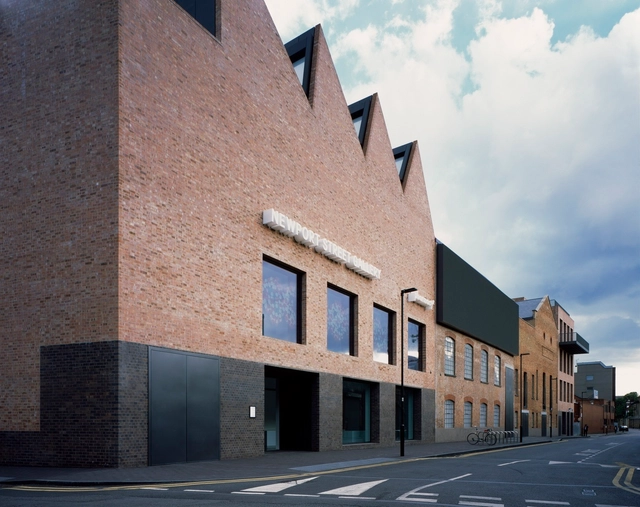
Designed as a free public gallery to house artist Damien Hirst’s private art collection, Caruso St John’s scheme sandwiches three restored Victorian-era industrial buildings between two new structures, one of which features a distinct saw-tooth roof.
"This highly accomplished and expertly detailed art gallery is a bold and confident contribution to the best of UK architecture. Caruso St John’s approach to conservation is irreverent yet sensitive and achieves a clever solution that expresses a poetic juxtaposition of old and new," said the jury in their citation.
As part of a masterplan along the Chicago River, the River Beech Tower is a residential high-rise which, if built, would be taller than any existing timber building. The collaborative team behind River Beech consists of architects Perkins+Will, engineers Thornton Tomasetti and the University of Cambridge. Currently a conceptual academic and professional undertaking, the team state that it could potentially be realized by the time of the masterplan’s final phases.
How much space do we really need to take up in order to have rich and rewarding lives?
In this short documentary for The Atlantic, filmmaker Sam Price-Waldman visits Arcosanti, the revolutionary experimental community and urban laboratory envisioned by architect Paolo Soleri. Since its founding by Soleri in the northern Arizona desert in 1970, the city has grown and evolved as it has demonstrated how to create a walkable, social city that could meet the needs of future societies.
The video is narrated by architect and Arcosanti co-president Jeff Stein, who explains how the city is able to maximize the potential of architecture for providing for communities, and features interviews with several Arcosanti community members.
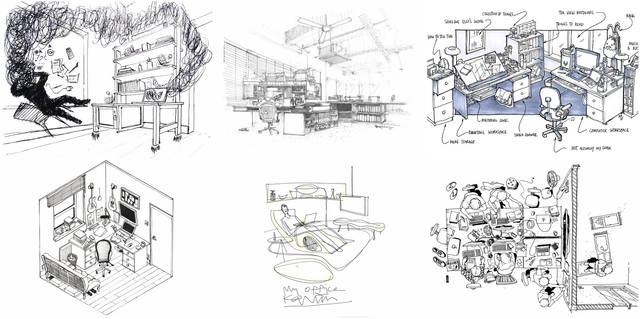
Last month we put out a call to our readers to show us where they work. It was a pleasure to receive so many submissions, each showing the particular talent and creativity--and, the incredible geographical scope--of the ArchDaily community. These are our favorites (in no particular order). Enjoy and submit your own drawing in the comments.
https://www.archdaily.com/796178/42-sketches-drawings-and-diagrams-of-desks-and-architecture-workspacesAD Editorial Team
Videos
2016 Aga Khan Award for Architecture Recipients
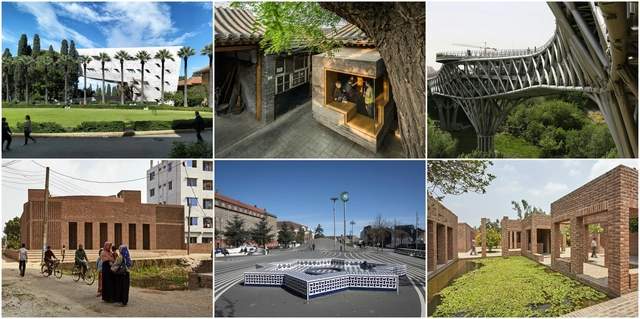
Six exemplary projects have been announced as winners of the 2016 Aga Khan Award for Architecture. Presented once every three years, the award was established by the Aga Khan in 1977 to “identify and encourage building concepts that successfully addressed the needs and aspirations of communities in which Muslims have a significant presence.” To be considered for the award, projects must exhibit not only architectural excellence, but also the ability to improve users overall quality of life.
Cars have reshaped cities across the world, largely at the cost of everyone outside of a private vehicle. In recent years the "grid city" of Barcelona has been suffering from clogged roads and choked air quality, with urban traffic contributing to the 3500 premature deaths caused by air pollution each year. Beginning in the district of Eixample, proposals laid out in the 2014 Urban Mobility Plan aims to diffuse traffic congestion and reduce air pollution in the city. In a recent film Vox have picked up on one of a number of potential schemes: the Superblock concept (known as superilles in Catalan). According to Salvador Rueda, the Director of the Urban Ecology Agency of Barcelona who developed the plan, these are "grid[s] of nine blocks [in which] the main mobility happens on the roads around the outside, [...] and the roads within are for local transit only."
https://www.archdaily.com/796252/how-barcelonas-superblocks-pedestrian-plan-hopes-to-return-the-streets-to-the-peopleAD Editorial Team
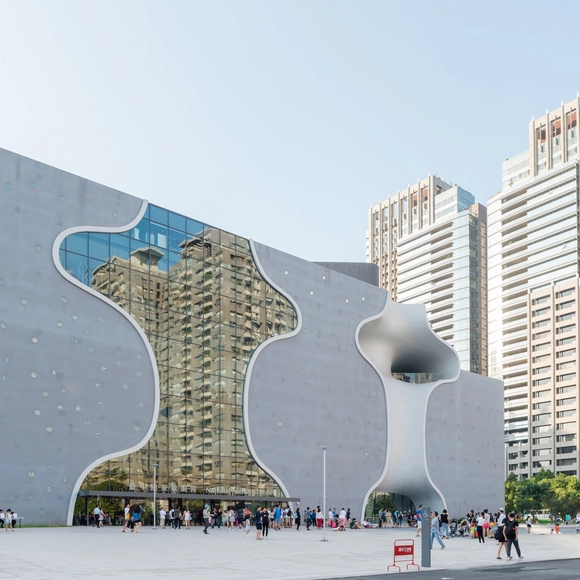
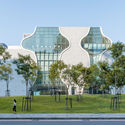
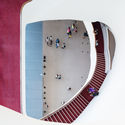
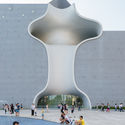
Designed in 2006, and under construction since 2009, Toyo Ito & Associates, Architects much anticipated National Taichung Theater has finally officially opened. The design is notable for its cavernous, curved and folded interior forms, which produce a dramatic and complex section that is neatly resolved into a rectilinear exterior form. Taiwan-based photographer Lucas K Doolan visited the new Opera House to study its impressive internal spaces and its presence in the surrounding urban environment.
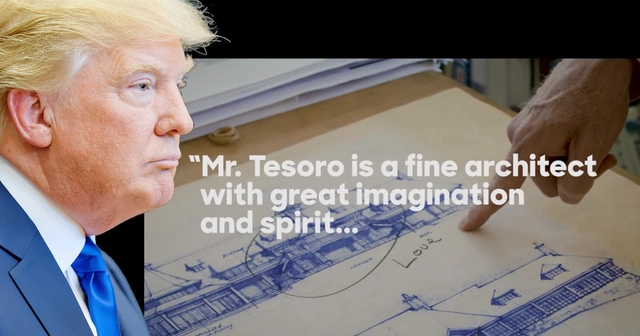
The United States is currently embroiled in what is unquestionably one the most bizarre and unpredictable presidential races in its history. In this strange context, the world of architecture has unexpectedly found itself a hot political topic, with one architect at the center of the controversy: Andrew Tesoro.
Given the nature of the campaign video, which was undoubtedly edited to paint Trump in a negative light, many have understandably questioned whether Tesoro's opinions and story were accurately portrayed. This skepticism was then reinforced by a "condensed and edited interview" published by Forbes, which suggested that Tesoro's opinion of Trump was much more forgiving than the one perpetuated by the Clinton campaign. Given the confusion around Tesoro's true opinions, ArchDaily decided to give the architect a chance to present his message unambiguously. What follows are Andrew Tesoro's responses to three simple questions about Donald Trump. These responses have not been edited by ArchDaily staff.
The Nolli Map made history when it was created in 1748, largely because of its focus on public spaces. With it, Giambattista Nolli highlighted the fact that public places don’t exclusively exist in the forms of streets and parks, but also in enclosed spaces. Yet the importance of our communal areas is constantly being undermined. Our public areas exist to promote inclusion and equal opportunities, but despite that they are being forgotten and abandoned, debilitating their ability to bind communities together.
Given that the main goal of Studio Gang’s newly released, free, downloadable booklet, Reimagining The Civic Commons has been to “help communities everywhere activate their civic commons,” then, it is unsurprising that the booklet includes graphic maps reminiscent of Nolli’s visual aim. The booklet, which arose from work funded by the Kresge Foundation and Knight Foundation, focuses on the advancement of 7 types of “existing assets”: libraries, parks, recreation centers, police stations, schools, streets and transit. Since the start of Studio Gang's research, a larger, $40 million initiative has begun—funded by the JPB Foundation, The Knight Foundation, The Kresge Foundation and The Rockefeller Foundation along with a multitude of local donors—with plans taking shape in Philadelphia, Chicago, Detroit, Memphis and Akron. The graphic guide is designed to offer adaptable, cost-effective and flexible approaches to these spaces, so that it can be implemented over time and in a variety of different communities. Read on for our summary of the report’s 7 strategies for improvement.
During the IV International Congress in Pamplona, organized by the Architecture and Society Foundation, we had the opportunity to speak with Bjarke Ingels about his approach to theme "Architecture: Climate Change." The founder of BIG told us about the importance of clean technology and how these technologies must be integrated into architecture. He asserts that new industrial projects must also break from traditional paradigms and question established concepts in order to be reintegrated into communities as clean, attractive and multi-use spaces. Ingels suggests that clean technologies holds exciting possibilities for public spaces.
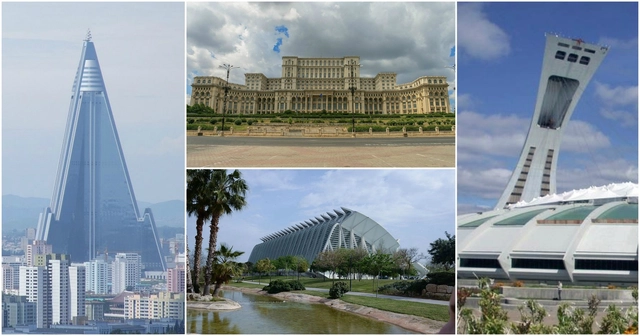
Not every piece of architecture can be an economic and social success. But there is one dreaded term reserved for only the mot wasteful of projects: "white elephants." The term comes from a story of the kings of Siam, now Thailand, who would reportedly gift sacred albino elephants to courtiers they didn't like. Refusing the gift from the king would have been unacceptable, but being sacred, these animals were forbidden from work, leading the courtier to financial ruin—a fact the kings knew all too well.
Of course, in architecture the term "white elephant" is used frequently to disparage certain projects, and whether a project is deserving of such infamy is usually a matter of perspective. Often eyesores or reminders of poorly spent funds, these projects refuse to be forgotten despite few wanting to remember them. Dotted around the world and across history, they all have the same thing in common: although they may (or may not) have once looked good on paper, they probably should have just stayed on paper.
Videos
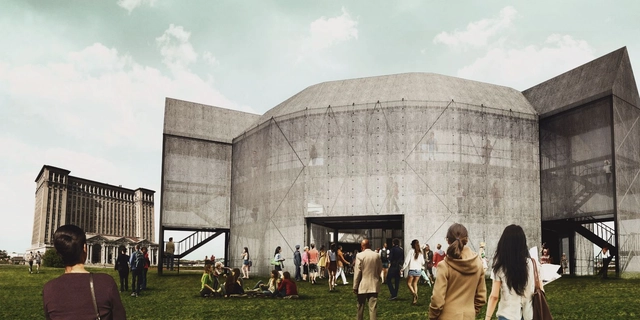
Globe by Michigan Station, Detroit. Image Courtesy of The Container Globe
All the world’s a stage – quite literally so, in the case of the Container Globe, a proposal to reconstruct a version of Shakespeare’s famous Globe Theatre with shipping containers. Staying true to the design of the original Globe Theatre in London, the Container Globe sees repurposed containers come together in a familiar form, but in steel rather than wood. Founder Angus Vail hopes this change in building component will give the Container Globe both a "punk rock" element and international mobility, making it as mobile as the shipping containers that make up its structure.





.jpg?1475760547&format=webp&width=640&height=580)








.jpg?1474243524 "Globe in Waitangi Park, Wellington NZ. Image Courtesy of The Container Globe")
