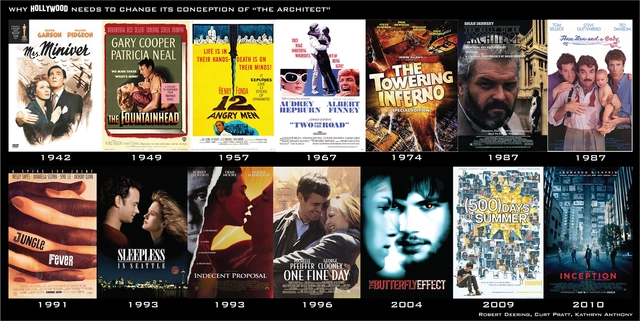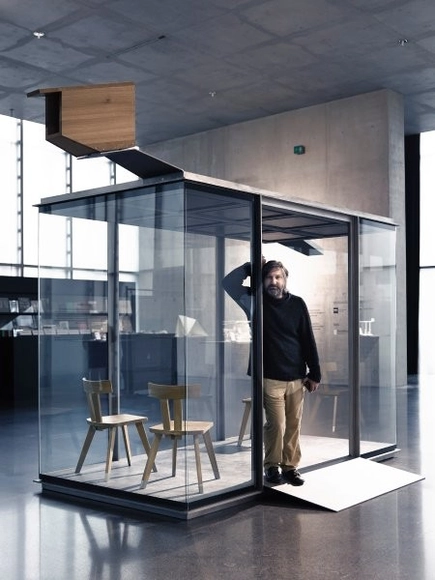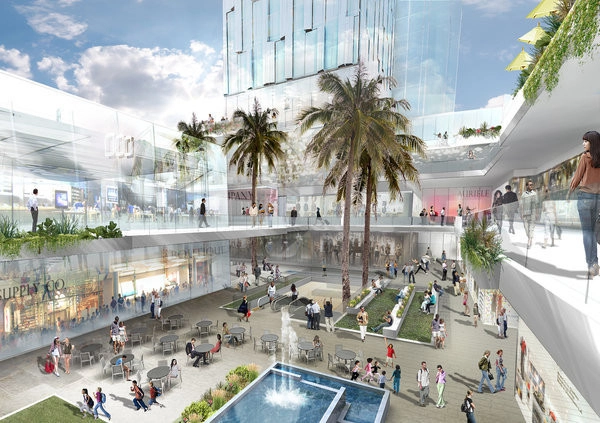
In an effort to reestablish Mid-Market as an arts district in San Francisco, developer Joy Ou has commissioned BIG to design a mixed-use arts, housing and hotel complex on 950 Market St. As the San Francisco Business Times reports, Group I is collaborating with the Thacher family and the nonprofit 950 Center for Art & Education to develop the project, which could potentially include a 250-room hotel, 316 residential units, a 75,000-square-foot arts complex, and 15,000 square feet of retail. The project will be BIG's first in the Bay Area.
Iwan Baan’s curiosity for the built environment has led him to be one of the world’s most preeminent photographers whose skills are in constant demand by architectural elites worldwide. Constantly on the move, Baan has found himself documenting fascinating testaments to human ingenuity. From the informal vertical community of Torre David in Caracas to the floating Niagara slum of Makoko, Baan’s encounters with thriving communities in some of the most unexpected places has led him to believe that there is “no such thing as normal” and humans can truly adapt to anything.
Four Towers In One (Competition). Image Courtesy of Morphosis
Despite what you may think, Thom Mayne isn't the "bad boy" of architecture - at least, not according to Thom Mayne. He sees himself more as a skilled negotiator than a starchitect (a phrase he hates) - after all, he reasons, how else would he have completed so many buildings? In this interview, originally published on Metropolis Magazine's Point of View blog as "Q&A: Thom Mayne," Andrew Caruso and Mayne discuss Morphosis, SCI-ARC, the early days of his career, and his architectural ethos.
Andrew Caruso: Your professional career began in the discipline of planning. What led to the shift toward architecture and your eventual partnership with Jim Stafford?
Thom Mayne: I started working at the Pasadena redevelopment agency doing low cost housing, and that’s where I met Jim [Stafford]. Coming out of USC, I had no background about Mies, Khan or Corbusier, for example. USC was very strong in being anti-historical, looking forward instead of backward. I was essentially naive.
Jim was a year ahead of me at USC and had part of the older regime at the school. When I met him at the planning agency, he started introducing me to history. I got fascinated by [Paul] Rudolph; and then it just took off. Jim guided me through this thought process, reestablishing me in the tradition of architecture.
Janette Sadik-Khan demonstrates how paint, lawn chairs and a bit of imagination can quickly transform city streets, creating immediate public and commercial vitality. Sadik-Khan, listed as one of Business Insider's "50 Women Who Are Changing the World," is responsible for re-purposing 26 acres of dense New York City car lanes into pedestrian-friendly space. "More people on foot is better for business," she says. Despite commanding a two billion dollar budget, her economical approach as commissioner of NYC's Department of Transportation are testaments to her design sensitivity, relying on rapid-testing and regular iteration to expand the city's public domain.
https://www.archdaily.com/438069/janette-sadik-khan-nyc-s-streets-are-not-so-mean-anymoreJose Luis Gabriel Cruz
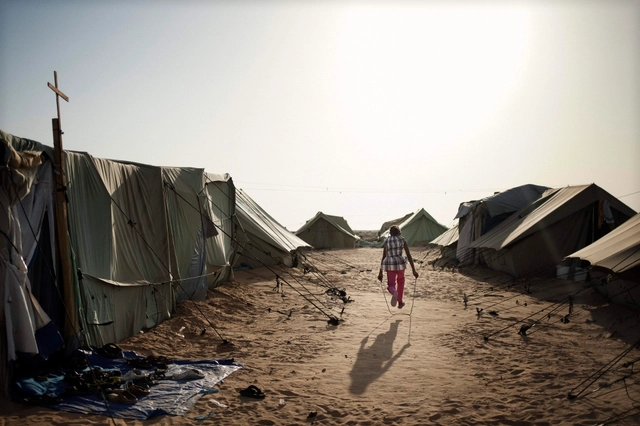
In 2013 alone some 1 million people have poured out of Syria to escape a civil conflict that has been raging for over two years. The total number of Syrian refugees is well over 2 million, an unprecedented number and a disturbing reality that has put the host countries under immense infrastructural strain.
Host countries at least have a protocol they can follow, however. UN Handbooks are consulted and used to inform an appropriate approach to camp planning issues. Land is negotiated for and a grid layout is set. The method, while general, is meticulous – adequate for an issue with an expiration date.
Or at least it would be if the issue were, in fact, temporary.
https://www.archdaily.com/435492/beyond-the-tent-why-refugee-camps-need-architects-now-more-than-everKatherine Allen
As 3D Printing becomes more accessible, and a whole lot cheaper, it will open up a whole new world for architecture. There’s just one problem: how to share all that 3D data easily over the web. With this in mind, we've partnered with Gigabot - the biggest, most affordable 3D printer (printing models up to 60x60x60cm) - and Sketchfab - a new platform bridging the gap between the 3D models on your desktop and the web - to launch a new, exciting competition.
While most of us are grappling with the idea of 3D printing, Skylar Tibbits - computational architect and lecturer at MIT - is spearheading projects towards a fourth dimension. Transformation, Tibbit claims, is an uncharted capability that enables objects - straight off the printing bed - to assemble themselves, changing from one form to another. "Think: robots with no wires or motors." Tibbits exhibits how a single strand - embedded with predetermined properties - can fold from a line to a three dimensional structure. "I invite you to join us in reinventing how things come together."
https://www.archdaily.com/437587/3d-printing-moves-into-the-fourth-dimensionJose Luis Gabriel Cruz
A render from Aditazz's entry to the Small Hospital, Big Idea competition. Image Courtesy of Aditazz
This article, originally posted in Metropolis Magazine as "Derek Parker's Third Act," tells the story of Aditazz, a Silicon Valley design startup founded by Deepak Aatresh, an entrepreneur with a background in silicon chip manufacturing. Now in collaboration with Derek Parker, a renowned veteran with six decades of experience in healthcare design, the pair could be set to revolutionize the way that hospitals are designed and built.
In June 2011, Derek Parker boarded a plane at San Francisco International Airport. The veteran health-care architect was headed to San Diego to deliver the most improbable presentation of his illustrious, six-decade-long career. For six months, he had worked as a consultant with a Silicon Valley design start-up called Aditazz. Shortly after Parker signed on, the new company had entered Small Hospital, Big Idea—a design competition launched by Kaiser Permanente. The first round, in which the firms remained anonymous, drew more than 400 entries. Eight of the nine shortlisted firms invited to San Diego were industry heavyweights. The ninth, to everyone’s surprise, was the unknown Aditazz.
In 2002, Magda Mostafa, a then-PhD student at Cairo University, was given an exciting project: to design Egypt's first educational centre for autism. The young architect set herself down to the task of researching into autism design, certain she'd soon find guidelines and accessibility codes to direct her through the process (after all, about one in every 88 children is estimated to fall into the autism spectrum).
But, as Mostafa told me, "I had a rude awakening; there was virtually nothing."
So she started setting up studies to gather the evidence she'd need to come up with her own guidelines. And she was breaking ground: a study she completed in 2008 was "among the first autism design studies to be prospective not retrospective, have a control group, and measure quantifiable factors in a systematic way."
Since those uncertain beginnings, Mostafa has positioned herself as one of the world's pre-eminent researchers in autism design. Her latest work, summarized in "An Architecture for Autism," the journal IJAR's most downloaded article in 2012, outlines Mostafa's latest accomplishment: the Autism ASPECTSS™ Design Index, both a matrix to help guide design as well as an assessment tool "to score the autism-appropriateness of a built environment" post-occupancy. In the following interview, we discuss the Index, the potential of evidence-based design for architecture, and what it's like to break ground (and try get funding) in a country where "black-outs, security threats, water shortages and unbelievable traffic" are everyday occurrences.
Videos
At the Clinton Global Initiative (l to r) Robert Ivy, FAIA; New Orleans Mayor Mitch Landrieu; Cameron Sinclair, co-founder Architecture for Humanity; Former U.S. President Bill Clinton; Martyn Parker, Chairman Global Partnerships at Swiss Re; Alex Karp, co-founder Palantir; Judith Rodin, Ph.D, President of The Rockefeller Foundation. Image Courtesy of The AIA
Last week, we noted how the American Institute of Architect's (AIA) participation with the Clinton Global Initiative (CGI), as well as it's many other initiatives, signify the organization's commitment to putting resiliency on the agenda. The following article, written by Brooks Rainwater, the Director of Public Policy at the AIA, outlines these efforts and emphasizes how architects are tackling today's most pressing global challenges.
Architects are increasingly demonstrating their ability to help solve large-scale problems in the areas of resilience and health. At the same time the continued ascendancy of social impact design has helped elevate the conversation and prescribed a needed emphasis on equity considerations, uplifting global populations, and the idea that design should be for and impact all people.
With more than 1,000 global leaders convened in New York last week for the Clinton Global Initiative Annual Meeting it is an ideal time to ask the question, how does design fit into the global conversation?
I don’t mean to poo poo the US Department of Energy’s Solar Decathlon project, but the more I hear about it the more I wonder if this isn’t an indication of just how far behind the United States is in terms of energy policy and the design of smart environments. Are we really that far behind that we need a program like this to prove this stuff really works? Are people still disbelieving? Do they really need demonstration homes to show how photovoltaics produce electricity or how sustainable principles can be applied to architecture? I suppose it makes sense in a country that still obsesses about the Case Study Houses and has debates about climate change.
The purpose of the Solar Decathlon is primarily to educate the public on high-performance building practices. Since 2002 when the DOE held the first one, it’s been putting “green” building in front of people who otherwise would not get to experience it—or, in reality, a self-selecting population of people who are probably already into such things.
Interiors is an online film and architecture journal, published by Mehruss Jon Ahi and Armen Karaoghlanian. Interiors runs an exclusive column for ArchDaily that analyzes and diagrams films in terms of space.
The Golden Age of Television has made way for shows that run counter to the traditional, expected narrative model. In the course of its five-year run, Breaking Bad has effectively transformed its protagonist into an antagonist, placing its hero/anti-hero in a distinctive landscape. In this sense, the use of space and location in Breaking Bad, filmed in Albuquerque, is noteworthy, from the use of actual locations that serve as the backdrop for businesses (car wash, Los Pollos Hermanos) to constructed sets that are used for characters’ homes (Walter White’s house, Jesse Pinkman’s house).
In our analysis, we focus on the three different spaces where Walter White (Bryan Cranston) and Jesse Pinkman (Aaron Paul) cook meth: the RV, Superlab and makeshift labs across Albuquerque. These spaces, much like the character of Walter White himself, a chemistry teacher who uses his teaching as a cover for his new life as a drug lord, disguise themselves with their exterior appearances, blending into their surroundings.
Auckland Art Gallery Toi o Tamaki / FJMT + Archimedia
At the last day of the World Architecture Festival, the winners of each category had their chance to showcase their projects in front of the jury and the audience. The jury, which included Ken Tadashi Oshima (University of Washington), Ken Yeang (Llewelyn Davies Yeang), Patrick Bellew (Atelier Ten), Jeanne Gang (Studio Gang Architects) and Dietmar Eberle (Baumschlager Eberle), gave the World Building of the Year Award to the new Auckland Art Gallery Toi o Tamaki, by Francis-Jones Morehen Thorp (FJMT) and Archimedia.
Picture this: self-assembling blocks that, when given a task, have the ability to reorganize themselves into new geometries.
This is precisely what research scientist, John Romanishin, at MIT's Computer Science and Artificial Intelligence Laboratory (CSAIL) has long envisioned for a near future — robotic modules known as M-Blocks. Romanishin has teamed with his professor, Daniela Rus, and colleague, postdoc Kyle Gilpin, to prototype robotic cubes with no external moving parts, able to climb over, around and even leap onto each other.
Till now, robots have depended on arms or attachments to move themselves. "We wanted a simpler approach," says Romanishin, that uses fewer moving parts. Inside each M-Block is a flywheel that spins at 20,000 revolutions per minute, creating enough angular momentum when it brakes that the blocks assemble themselves in new configurations. On each face and edge of the cubes are magnets, naturally connecting the cubes when spurred by the flywheel.
Learn more after the break...
https://www.archdaily.com/435250/mit-researchers-propose-self-assembling-robots-as-future-of-constructionJose Luis Gabriel Cruz
Night photographs of the Brazilian capital created by architectural photographer Andrew Prokos are among this year’s winners at the International Photography Awards competition. Entitled “Niemeyer’s Brasilia” the series of photographs capture the surreal architecture of Oscar Niemeyer, who shaped the Brazilian capital for over 50 years.
More fantastic photographs and information on the awards after the break.
The first two days of the World Architecture Festival 2013 have been intense. Keynotes by Charles Jencks and Dietmer Eberle, and several other lectures, have filled the auditorium and the festival hall stage, while hundreds of architects watch the live "crits," where firms present their projects in front of the jury and the audience. As a jury for the Health and Future Education categories, I've seen architects from firms from all ranges, sizes and trajectories present their shortlisted projects, a very strong selection of buildings.
After these two days the winners of each category have been announced, and today the super jury will choose the World Building of the Year, followed by a lecture by Sou Fujimoto. Stay tuned for updates via Twitter!
"From the subtle to the spectacular, from a four room house to an 80 storey tower, the sheer quality and diversity reflected in the array of projects shortlisted today demonstrates the increasingly global nature of the event. All eyes are now on the festival’s venue, the Marina Bay Sands in Singapore, where the architects will battle to win their individual categories, with the victorious projects competing for the coveted World Building of the Year award" - Paul Finch, Director of the WAF.
Check out the full list of winners, highly commended entries and the jury's comments: