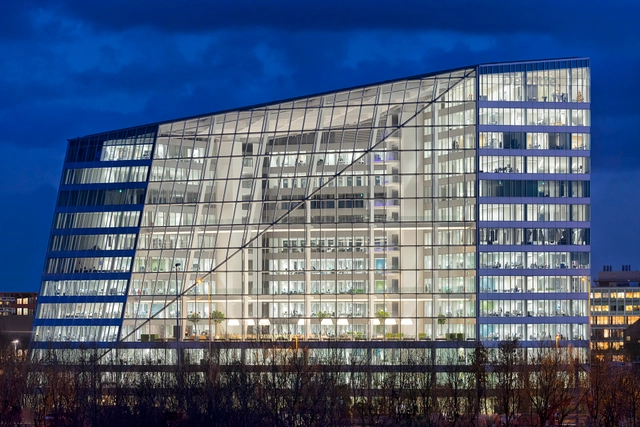
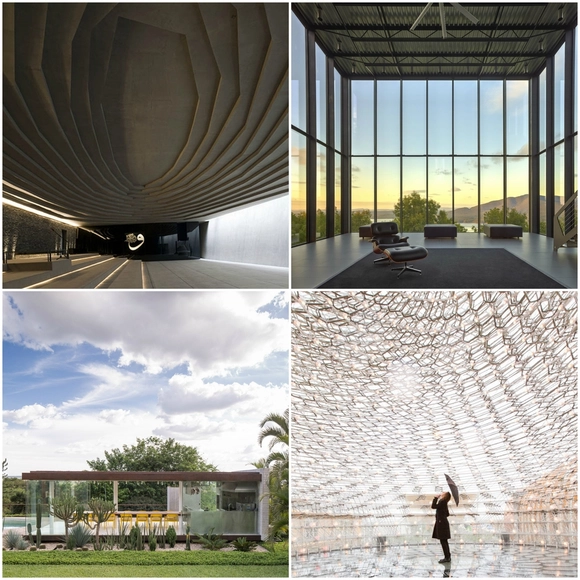
If there's one word that sums up our most popular projects of 2015, it's "diversity." The list features architects ranging from old favorites such as SANAA, Diller Scofidio + Renfro and OMA down to newer names like Sculp[IT] and Tropical Space; it also includes everything from museums to multi-family housing and spa retreats to chapels - along with the usual smattering of private residences. Interestingly, this year's list also shows the symbiosis between great architecture and great photography, with no less than 4 projects also appearing in our most bookmarked images from this year's World Photo Day. But despite their diversity, there's one thing all of these 20 projects have in common: great architecture. So settle in, relax and read on - here's our 20 most popular projects of 2015.
https://www.archdaily.com/779474/the-20-most-popular-projects-of-2015AD Editorial Team
British filmmaker Joe Gilbert has created a short tribute film to Alison and Peter Smithson's Robin Hood Gardens estate in Poplar, East London, which—as of August 2015—is set to be demolished. Accompanied by insightful commentary from Timothy Brittain-Catlin, the film charts the buildings' history and recent threats to a backdrop of monochrome shots of the estate, in all of its dilapidated and "pleasantly wild" current state. The 'Streets in the Sky', made famous by the Smithsons and both widely praised and criticised as a response to the collapse of low-density terrace housing, are one of the focuses of the film.
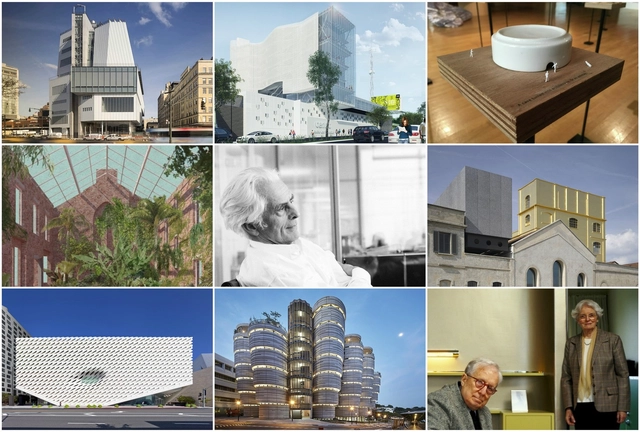
The past 12 months have given us plenty to talk about: 2015 saw the opening of several marquee new museums, and the field took an introspective turn with the “State of the Art of Architecture” at the Chicago Biennial. Now it’s December, and that means it’s time for many critics to look back at the triumphs and failures of the year past and make predictions for the year to come.
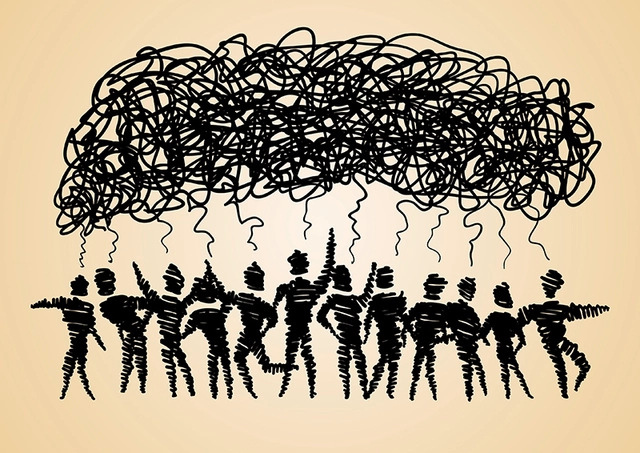
Back in September, we asked our readers to help us make the definitive list of weird words used by architects, and we got an astonishing response. The resulting article, 150 Weird Words that Only Architects Usewas one of our most popular of the year, ranking highly in our most read articles of 2015 and our editors' picks of the best articles of the year. But while it was well received, a number of people commented that something was missing in our list: definitions of all the words, to both aid readers' comprehension of the list and to debate over how different people had interpreted the same word. With that in mind - and considering that it is the time of year for generosity - we've revisited our list to bring you fun definitions for all 150.
If you're looking for an architectural reference dictionary, we assure you that this isn't it. But we hope you'll have fun all the same.
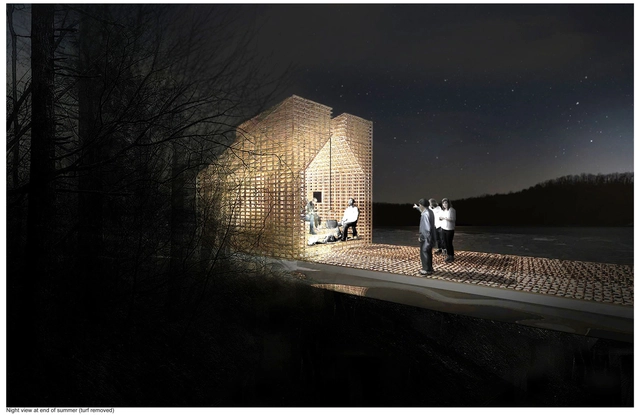
In his 1892 poem Lake Isle of Innisfree, WB Yeats fantasizes about a life lived in solitude on an island in Lough Gill in Ireland, where the poet spent his summers as a child. Earlier this year, as a celebration of the poet’s 150th birthday, an architectural competition was held by the organization Yeats2015 to realize a temporary version of the “small cabin” from the poem.
In their response to the competition brief, New York-based practice CODA’s “Cabinette” feeds off of the contradictions in the competition’s premise, creating a structure that would realize Yeats’ cabin, yet simultaneously maintain its status as a fantasy contingent upon the conditions of everyday reality.
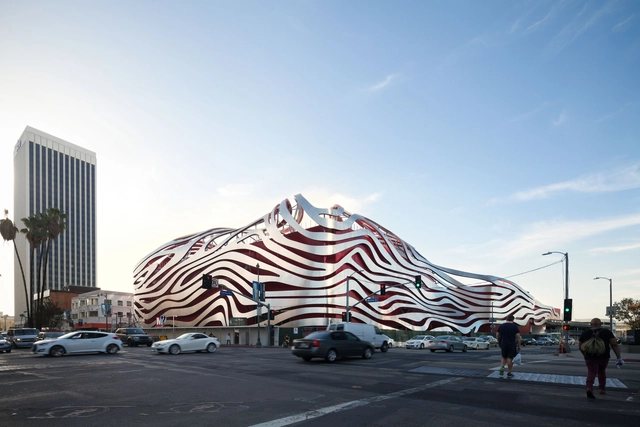
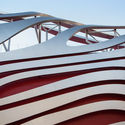
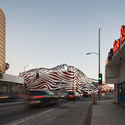
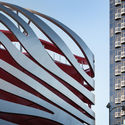
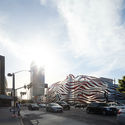
It’s a rare event when a public building is striking enough to grab the attention of most Angelenos. It’s even more curious when that building is almost unanimously panned by the critics. Barring the so-called “iconic” buildings that our city has collected over the last 15 years, Los Angeles seldom received exciting public architecture. Because of this, every new major addition gets placed under a cultural microscope. Now, with Kohn Pedersen Fox’s redesign of the Petersen Automotive Museum nearing completion, architecture critics have sharpened their knives: reviewers have called it “kind of hideous,” "the Edsel of architecture," and “the Guy Fieri of buildings.” But these gripes completely miss the point of what a car museum on the Miracle Mile should be.
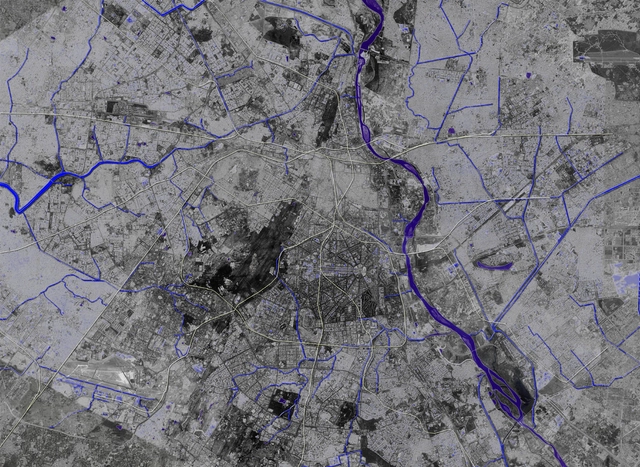
Map of Delhi's nullah network. Image Courtesy of Morphogenesis
The city of Delhi has a transportation problem. The streets are crowded and dangerous, and with 1,100 new vehicles being added to the roads each day the city is suffering from the consequences. Last year, New Delhi was rated the most polluted city in the world by the World Health Organization, with nearly 3 times the particulate matter of Beijing. Noise levels throughout the city consistently exceed regulations set by the Indian Central Pollution Control Board, and heavy traffic means increased travel times and perilous pedestrian conditions. Even walking the last mile from a bus stop to a destination has become a game of chance.
At the same time, the river upon which the city was founded, the Yamuna (a main tributary of the Ganges), has been polluted to the point where it has become little more than a glorified sewer drain. Illegal settlements without sewage systems pollute the river directly, and even within the regulated systems, 17 sewage drains empty directly into the Yamuna. For a city already struggling with water shortages, polluting a main water source is akin to throwing salt into a wound. However, a proposal by Dehli-based Morphogenesis Architects attempts to tackle all of these issues through the revitalization of the river and its canals, known as nullahs.
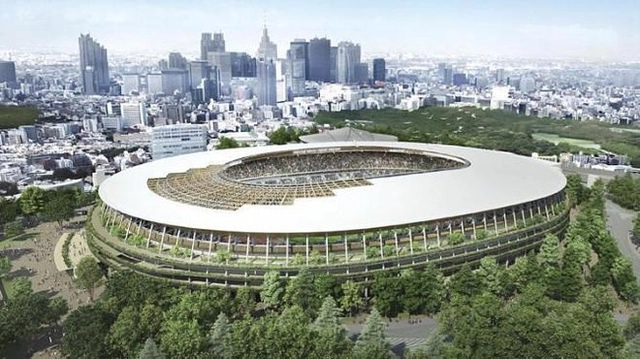
Kengo Kuma & Associates have been selected to replace Zaha Hadid Architects to design the new Tokyo National Stadium, the central venue for the 2020 Tokyo Olympics. Kuma's design was revealed alongside one other, a design by Toyo Ito, last week, after the original design by Zaha Hadid Architects was scrapped earlier this year. As reported by The Japan Times, Kuma's design narrowly won out against Ito's based on nine selection criteria by the Japan Sport Council, being awarded 610 total points compared to Ito's 602. Responding to concerns about the size and cost of Hadid's design, the new design will be under 50 meters tall and cost an estimated ¥153 billion, compared with the 70 meters and ¥252 billion of Hadid's controversial plans.
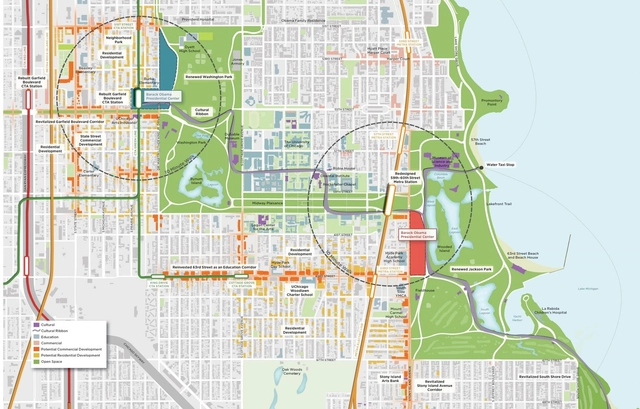
“These finalists offer a variety of backgrounds and styles, and any one of them would be an excellent choice,” Obama Foundation chairman Martin Nesbitt, according to CBS Chicago. “We are excited to see this process moving forward because the Obama Presidential Center will be so much more than a library – this facility will seek to inspire citizens across the globe to better their communities, their countries, and their world.”
How will our buildings change when your mobile device can receive huge amounts of data flowing from the luminaires above you? Not only has LED brought us a highly efficient light source, but a promising instrument for visible light communication (VLC) as well. Therefore light will not only be a medium to support vision, but it will also be an essential means of data communication. With the low energy consumption of LED one can even set up luminaires without mains cables for the power and just install Ethernet cables. Welcome to the world of digital lighting.
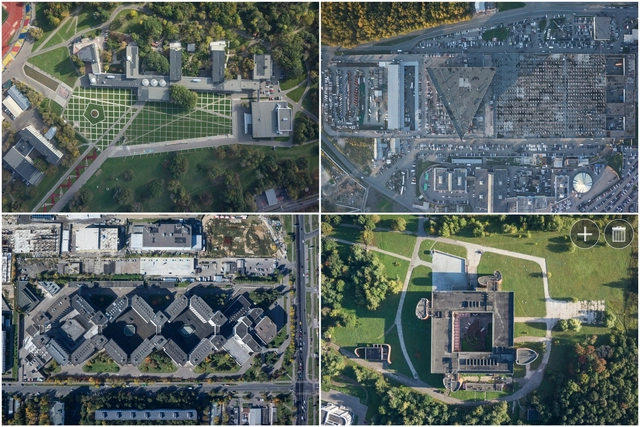
Though the ahistorical dogma of modernism would seem a perfect fit for the Soviet Union’s mandated break with traditions, the architectural history of the USSR was somewhat more complex. Stalin’s neoclassically-inflected socialist realism superseded the constructivist heyday of the early Soviet Union, only to be replaced by a return to modernism under Khrushchev, facilitated by an opening to the West. Architectural photographers Denis Esakov and Dmitry Vasilenko recently used a drone to capture photographs of several landmark structures of the Khrushchev-era return to modernism, focusing on how these aerial views reinforce their rational geometries and regimented forms. Until the recent advent of satellite imagery and commercially available drones, these were views that were only ever seen by the architects, and the officials who reviewed the plans. Even so, the photographer notes that these methodical forms must have been very attractive to the state officers tasked with implementing Khrushchev’s mandated aesthetic.
The photographs, taken in and around Moscow, include works by several prominent Soviet architects. Leonid Pavlov’s long career spanned the full spectrum of state-sponsored architectural styles, starting as a constructivist, and moving into more historicist designs under Stalin, before emerging as one of the Soviet Union’s most prominent post-war modernists. Similarly, Yuri Platonov’s work received extensive state recognition, earning him the title of “People’s architect of the USSR,” as well as awards such the Silver Medal of the Arts Academy of the USSR, the USSR State Prize, and the State Prize of Russia.
Whether from political unrest or natural disaster, refugee crises around the world seem to fill the headlines of late. These events inspired interdisciplinary designer Abeer Seikaly’s conceptual emergency shelter, entitled “Weaving A Home,” which received a Lexus Design Award in 2013. The collapsible structural fabric shelter can adapt to various climates, while also providing the comforts of contemporary life such as heat, running water, and electricity.
One of the most controversial stories to hit the architectural news last week was the revelation by Blair Kamin of the Chicago Tribune that one of the winners of the AIA Chicago chapter's Design Excellence Awards was given on the basis of an image in which unsightly elements of the building's design had been removed in Photoshop.
The "war on reality" (as one commenter ironically referred to it) is a topic that polarizes even the most level-headed people, with many arguing over the effect that such Photoshop trickery has on our perception of our world. However, with many people unaware of what goes on behind the scenes, we decided to reach out to some photographers for a candid look at exactly what role Photoshop has in the everyday processes of architectural photography, and where they draw the line regarding the ethical documentation of buildings. Read on to find out what they had to say.
5,000 3D cameras to help preserve the architecture of a country torn by war; A team of Latin American architects that moved into Venezuela’s most dangerous neighborhoods in order to design and build with the community; A legendary architect who understood architecture’s relationship to the transformation of technology -- and whose projects have celebrated technology across a trajectory of multiple decades. These are the projects, initiatives and people who have proven to be leaders in 2015.
ArchDaily’s editorial team wanted to recognize these projects for their commitment to promoting practices in architecture that serve many, in all corners of the globe -- from Bolivia to London, from Chicago to Venice, from public spaces in favelas to projected drone-ports in Africa. These are the stories that have inspired us in 2015, and whose influence we hope to continue to see into 2016.
https://www.archdaily.com/778937/architectures-most-inspiring-leaders-projects-and-people-in-2015AD Editorial Team
In 2015, we've focused on expanding ArchDaily's editorial content in a number of different directions. We've opened new avenues to bring high-quality architectural content to our readers - whether that's through our many fantastic publishing partnerships with organizations such as The Architectural Reviewand Metropolis Magazine, by working more closely with our sister sites in Spanish, Portuguese and Chinese to bring articles with a global outlook such as our article celebrating "The Best Student Work Worldwide," or by reaching out to people who have expressed strong opinions on our stories, as was the case when we published Mark Hogan's article "What’s Wrong With Shipping Container Housing? Everything."
With all of these developments, it was a challenge to narrow down a full year's worth of articles to just 15 shining examples. Read on to find out which lucky 15 made the cut.
Over the past 12 months at ArchDaily, we've been working hard to bring our readers more articles that will interest, inspire and aid them, and our most read articles of the year reflect a few trends that have characterized the year. Firstly, they show the success of our attempts to bring our readers’ favorite articles from the past back into the limelight through social media and other means, with 7 of our top 20 articles from the year published earlier than 2015. Secondly - perhaps more obviously - it shows the continuing popularity of lists. And what do we do when 75 percent of our most popular articles of the year are lists and rankings? Why, we make a list of them of course. So put your countdown cap on and keep reading to see our top 20 most read articles of the year - including everything from the world's top 100 universities, to 19 notable former architects, to 22 websites you didn't know would be useful to you.
https://www.archdaily.com/778925/archdailys-top-20-most-read-articles-of-2015AD Editorial Team
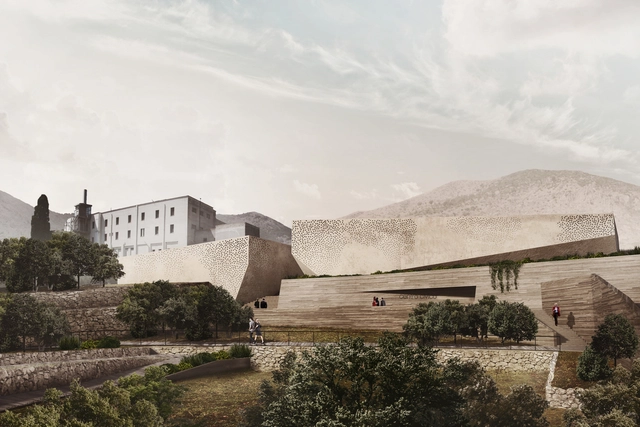
The new Civic Center by 3TI Progetti in Villacidro, Italy, is sited at an important reference point for the city, due to both its history and natural features. Located in the "historic garden of the Episcopal Palace," the new center re-interprets the surrounding urban elements, redefining the relationships between its urban and natural surroundings. Read more about this project after the break.








.jpg?1450044828&format=webp&width=640&height=580)
.jpg?1450044946 "Courtesy of Abeer Seikaly")
.jpg?1450045021 "Courtesy of Abeer Seikaly")
.jpg?1450044961 "Courtesy of Abeer Seikaly")
.jpg?1450044809 "Courtesy of Abeer Seikaly")
.jpg?1450044828)
.jpg?1450380794&format=webp&width=640&height=580)