
Indian Architecture

Capital New Delhi

Language Hindi

Area 3,287,263 km2

Population 1,293,057,000

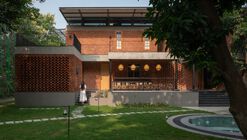
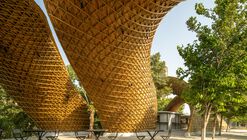
Indian architecture, primarily established through historical and cultural influences, is most recently a conversation about how best to modernize. India's architecture has to mediate rapid urbanization with respecting its climate, culture, and tradition. Questions of cultural preservation are especially pertinent in post-independence India after the dominance of western influences. India's architecture is highlighted in this page through interviews, news, and projects that look forward to a new revitalized urban landscape.
  1. ArchDaily
  2. Countries
  3. India

Latest projects in India

Latest news in India

Architecture as Infrastructure: How India Builds for a Billion

Subscriber Access | 

India's built environment has, in recent years, gained visibility through a growing number of transformative architectural and infrastructure projects. Cities and towns scale faster each year, despite looming concerns around climate and economic volatility. The nation has shown resilience in balancing rapid urbanization with resource constraints; this is no small feat. India's architectural practices rarely rely on novelty alone; they are built on systems that have existed for centuries. Through ArchDaily's Building for Billions, recurring stories have highlighted the social intelligence and adaptive capacity embedded in these practices, revealing an architecture that operates less as isolated form and more as infrastructure.

Circular by Tradition: India’s Vernacular Building Practices for a Warming World

Across India's varied geographies, from coastal backwaters to desert fortress cities, architecture evolved with a deep, instinctive connection to climate. These were not isolated craft traditions but complete ecological systems in which material cycles, thermal comfort, and community knowledge were interdependent. As COP30 turns global attention toward the links between heritage and climate resilience, India's vernacular practices appear less as historical artifacts and more as climate technologies refined over centuries.

How Open-Source Toolkits Are Democratizing Built Heritage

For monuments worthy of sustained admiration, conservation practices have been selectively mobilized to reinforce their prestige and secure their place at the center of heritage narratives. Structures whose vernacular ought to be passed down miss the discerning eye of the experts. Rowhouses, shopfronts, and neighborhood structures that form the fabric of our cities are often left to deteriorate beyond repair. Much more is lost, apart from aesthetics.

World Building of The Year and Interior of The Year revealed at World Architecture Festival 2025

Subscriber Access | 

The Holy Redeemer Church and Community Centre of Las Chumberas by Fernando Menis in La Laguna, Spain has been declared the World Building of the Year at the 2025 World Architecture Festival (WAF).

World Architecture Festival 2025: Day Two Winners Announced

Subscriber Access | 

The second round of award winners of the 2025 World Architecture Festival (WAF) has been announced, following Day Two of the world's largest international live-judged architectural event, held at the Miami Beach Convention Center in Florida.

How Technology Is Quietly Reinventing the Safety of Heritage Buildings

India's palaces and former colonial warehouses are witnessing a new kind of restoration, one that happens beneath the surface. From discreet steel supports tucked behind centuries-old masonry to digital sensors embedded in frescoed ceilings, technology is quietly reshaping how heritage buildings are protected for the future. These upgrades are more about subtle precision and less about spectacle; invisible engineering wonders.

World Architecture Festival 2025: Day One Winners Announced

Subscriber Access | 

The first award winners of the 2025 World Architecture Festival (WAF) have been announced, following Day One of the world's largest international live-judged architectural event, held at the Miami Beach Convention Center in Florida.

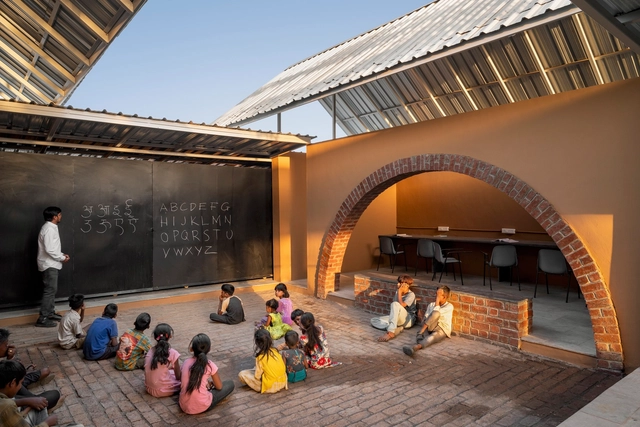
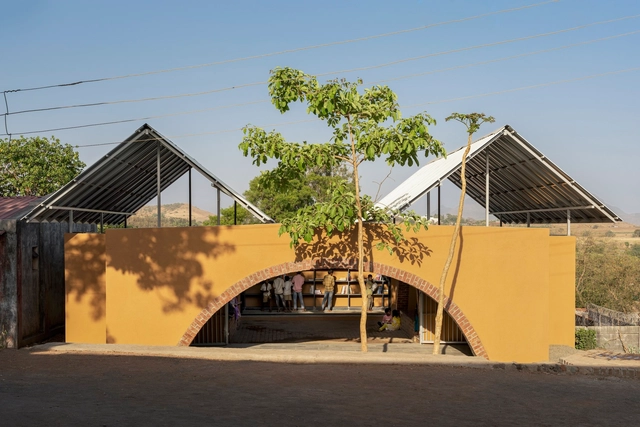
Time-Space to Read, Gather, and Care: 7 Community Libraries in Remote and Peripheral Settings

In many parts of the world, remoteness is not only defined by distance. It may describe a mountain settlement far from infrastructure or an urban and suburban neighborhood on the margins of visibility and opportunity. Across these diverse contexts, the library has been one of the most vital typologies—a space where architecture embodies the modes of accessibility, inclusivity, and community care.

From Munich to Mumbai: 7 Unbuilt Office Towers Redefining the Future of Vertical Workspaces

Subscriber Access | 

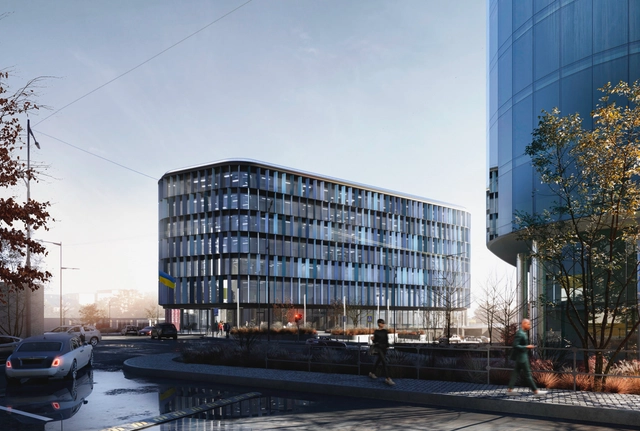
As cities continue to expand upward, the office tower remains one of the most visible symbols of architectural ambition and urban evolution. No longer defined solely by efficiency or corporate image, contemporary workplace architecture is being reimagined as a hybrid ecosystem, one that balances density with daylight, productivity with well-being, and technology with material and spatial integrity. The following unbuilt projects, submitted by the ArchDaily community, reveal how architects across continents are rethinking the typology of the tower, turning verticality into an opportunity for connection, adaptability, and sustainability.

Architects as Mediators: Three Cases of Dialogue Between Communities, Governments, and Businesses in the Global South

In contemporary times, architectural practice goes far beyond designing buildings or materializing ideas; it has become a multidimensional field, taking on broader and more complex roles. In contexts marked by inequality, environmental crises, and territorial disputes, architecture becomes a tool for negotiation, capable of mediating interests among diverse actors. In this scenario, architects also assume the roles of cultural translators, social facilitators, and, often, advocates for collective rights.