Danish architectsElkiær + Ebbeskov (E+E) andLeth & Gori have won an invited competition to design a large multifunctional sports building in Langvang, Denmark. Competing against teams led by Dorte Mandrup Arkitekter, CEBRA, COBE and Kontur, their winning proposal features a combined sports hall and community centre consisting of a series of multifunctional arenas for activities and events. The scheme also includes a masterplan of the surrounding area centeredaround sports and recreation.
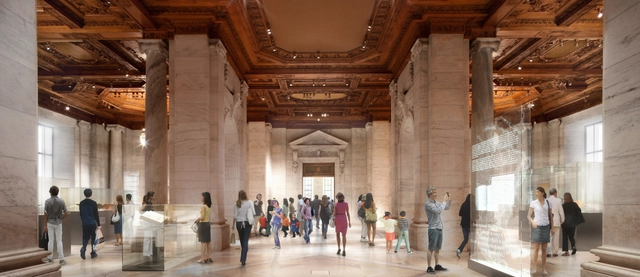
Foster + Partner'scontroversial renovation plans for the New York Public Library (NYPL) are currently in a state of limbo while the city decides their course of action. Foster's proposal for the 20th century Carrère and Hastings "masterpiece" on 5th Avenue is a response to the cultural shift from traditional stacks to online resources, as the library has experienced a 41% decrease in the use of collections over the last 15 years.
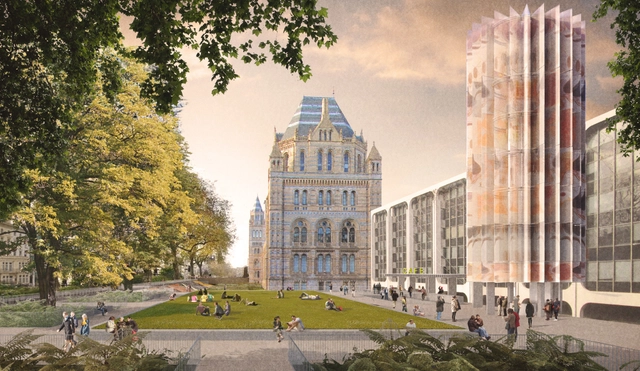
Following the news last year that five teams had been shortlisted to redesign and reimagine the grounds of London's iconic Natural History Museum (NHM), five anonymous concept images have been unveiled. The brief called for proposals to "reshape the Museum’s grounds and reinvigorate its public setting" with an aim to creating "an innovative exterior setting that matches Alfred Waterhouse’s Grade I listed building and the award-winning Darwin Centre for architectural excellence, whilst also improving access and engaging visitors."
Read on to see the competing teams, including individual concept images from BIG, Stanton Williams and Feilden Clegg Bradley.
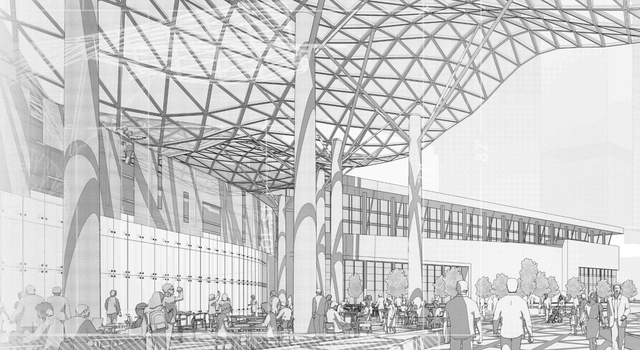
Trimble Buildings Group have recently released SketchUp 2014, the latest version of its 3D modelling platform for architects, engineers, design and construction professionals. With "more than 30 million unique activations in the past year", SketchUp is claimed to be the most widely used 3D modeling software in the world today. The latest incarnation of the simple tool features a new 3D Warehouse and some interesting integrations into the world of Building Information Modelling (BIM).
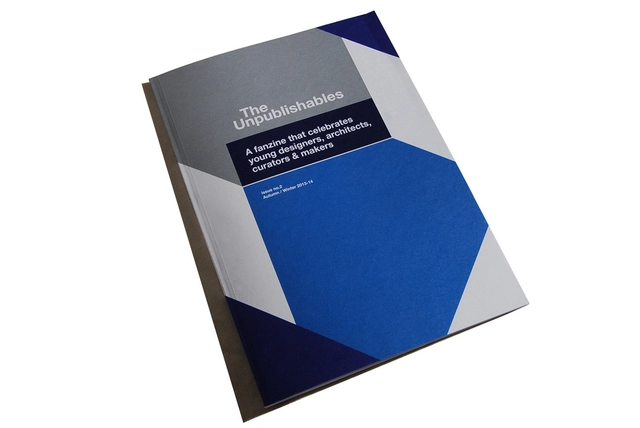
The Unpublishables, an independent architectural fanzine based in the UK, seeks to offer a platform for young architects - as well as designers and makers - to publish their own writing. About to launch their second edition, the zine has provided an outlet for ideas of young people who have the commitment and vision to develop their own design philosophies, polemics and research outside of full-time education or employment.
Berlin'sBarkow Leibinger has won an invited competition to design a new hotel tower and conference centre as part of Berlin's largest hotel complex, the Estrel. Establishing a new gateway to the center of Berlin from Schönefeld International Airport, the tower will stand at 175 meters (578 feet) making it the tallest high-rise in Berlin to date. Located on the Sonnenalle at the intersection of the Ship Canal, S-Bahn and Autobahn, the site acts as a threshold between the heterogeneous industrial and residential periphery of the city and the historical neighborhoods of Neukölln.
Autodesk has launched the Autodesk Foundation, an organization which will "invest in and support the most impactful nonprofit organizations using the power of design to help solve epic challenges." In an effort to aid those tackling global issues such as "climate change, access to water, and healthcare," the foundation will provide select design-oriented grantees with software, training and financial support.
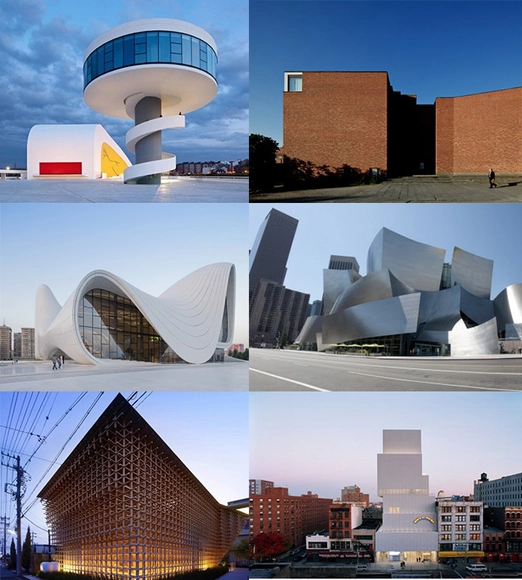
In case you missed it, we’re re-publishing this popular post for your material pleasure. Enjoy! To celebrate the recent launch of our US product catalog, ArchDaily Materials, we've coupled six iconic architects with what we deem to be their favourite or most frequently used material. From Oscar Neimeyer's sinuous use of concrete to Kengo Kuma's innovative use of wood, which materials define some of the world's best known architects?
"Some days it feels like Google is taking over the world." In an article for The Verge Sean Hollister investigates how Google now represents one tenth of Mountain View, the city which hosts the company's Californian headquarters. Having one of the world's largest tech companies on their doorstep is a cause of concern for residents, some of whom are now referring to their home as Googleville. Having just bought the lease for a former military airport some city council members are seeing the expansionist move as a step too far - read the article in full here.
GRAFT Architects have won an invited competition to restore and extend one of Germany's oldest youth hostels in central Munich, Germany. Their proposal, which was judged alongside designs by haascookzemmrich (Stuttgart), Snøhetta (Oslo), and YES Architecture (Munich), centers around the idea of "experiencing community." Their proposal enables exchange and communication whilst also alluding to the "established traditions of simple traveling, youthful curiosity and the thirst for encounter." Connecting the historic quality of the building with the challenges of modern habits and traveling practices, their design "builds a bridge between origins and departure."
ABD Architects. Image Courtesy of Entryway <> Hotel Competition
The Ukraina Hotel, with the support of the non-state educational institution Strelka Institute for Media, Architecture and Design, have announced the finalists for the Ukraina Hotel Entryway competition. Designs from ABD Architects (Russia) in cooperation with Werner Sobek Moskwa (Russia), TPO Lesosplaw (Russia) in cooperation with Malishev Wilson Engineers (UK), and Studio 44 (Russia) have been chosen from a total of ten competing proposals, one of which will now be implemented by the client. Offering the chance to design a new entrance to one of Moscow's foremost landmarks, the winning scheme will provide a rare opportunity to work with an unique example of Stalinist architectural heritage.
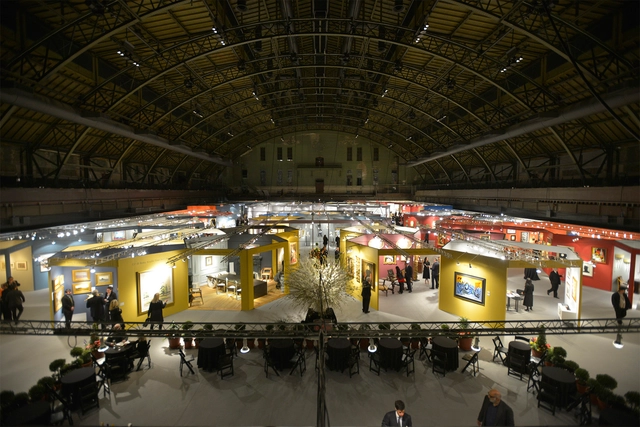
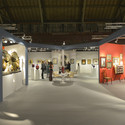
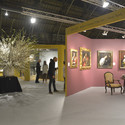
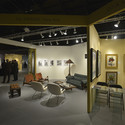
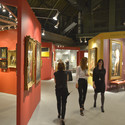
New York's Park Avenue Armory, originally built in 1861 for the Seventh Regiment of the National Guard and restored by Herzog & de Meuron in 2007, is about to be temporarily taken over by Rafael Viñoly. On April 30th 2014 Artvest Partners will launch Spring Masters New York, "a fair for art produced between antiquity and the 20th century, which corresponds with Christie’s and Sotheby’s signature Impressionism and modern art auctions". Viñoly's hexagonal grid of exhibition rooms will fill the 55,000 square foot Drill Hall in an attempt to break with the monotony of the rectangular grid format.
Robert Slinger, a founding partner of Berlin-based practice Kapok, narrates the story of a building "too radical to implement and too relevant to ignore." Having lived in John Hejduk'sKreuzberg Towerfor eight years, Slinger "came to understand how Hejduk’s architecture both flexibly accommodates and yet asserts a presence which resists any attempts to co-opt it. Whilst impressed by its powerful exterior presence, its austerity and frontal directness left a strangely cold impression upon me."
In case you missed it, we're re-publishing this popular post for your material pleasure. Enjoy!
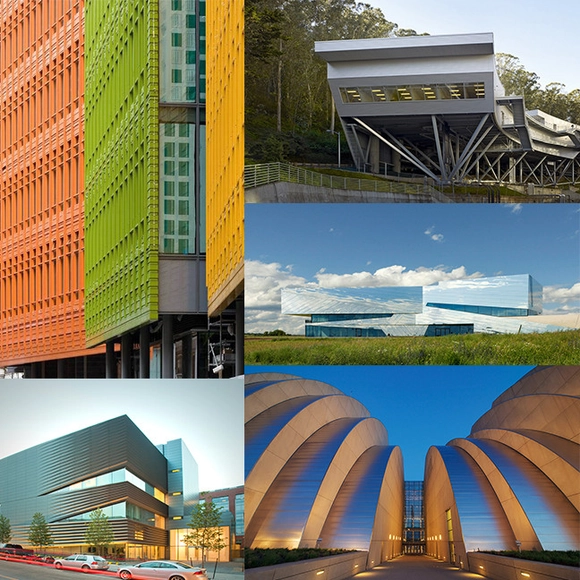
To celebrate the recent launch of ArchDaily Materials we've brought together five projects with fantastic façades, from Viñoly's Dolby Regeneration Medicine Building in San Francisco to Holzer Kobler's PALÄON in Schöningen, Germany. A building's envelope is often people's first impression and, in recent years, have been one of the focuses of innovation in the design and construction industry. The projects we've collated show a glimpse at what's possible with façades and wall finishings.
Termite mounds offer a fascinating architectural quandary: how is it possible that these towering structures (which include complex systems of openings, passages, large volumetric spaces, and even active ventilation systems and humidity regulation) are constructed with no centralised control or planning? The spatial complexity that these thousands of insects can collectively achieve has inspired a Harvard team to create TERMES, a project focused on programming an artificial robotic swarm to build modular structures.
A new hour long documentary for PBS' series, Building the Great Cathedrals, explores the mystery of how, in the 15th century, Florentine architect Filippo Brunelleschi constructed one of the largest domes the world had ever seen. Winning what could be considered one of the earliest architectural competitions, Brunelleschi developed a unique system that allowed construction on the dome to occur while services were being conducted in the cathedral 100 metres below. The team in this episode model this freestanding structure in an attempt to understand just how Brunelleschi achieved such a feat of Renaissance engineering.
You can find out more about the film here. Please note that the film is only viewable through PBS within the USA. For those of you outside the USA, you can watch the 30 second preview above; for those in the USA, see the full video after the break...
Entrance Facade (night). Image Courtesy of Latitude Studio
Latitude Studio, based in Barcelona and Beijing, have unveiled designs for a showroom exhibition centre in China's capital city. Integral to the design is how visitors circulate and interact with the spaces centred around the "future shopping mall". Including an auditorium, model spaces and views onto an area which is expected to see enormous retail development, the building's central atrium and "thematic sightseeing walk" offer a unique journey for the visitor.
The Finnish Institute in London and The Architecture Foundation have unveiled Viewpoint, a floating platform on Regent's Canal in the centre of Camley Street Natural Park, London. Designed by Erkko Aarti, Arto Ollila and Mikki Ristola of Finnish practice AOR, the platform will be operated by the London Wildlife Trust. The permanent structure is intended to bring visitors to London's most central nature reserve, connecting them with the wildlife of the park and the Regent’s Canal. In addition, it will also provide the park with an additional workshop space and learning facility, becoming "an architectural focal point of King’s Cross."