This article is part of ArchDaily Essentials, a series of articles which give you an overview of architecture's most important topics by connecting together some of our best articles from the past. To find out more about ArchDaily Essentials, click here; or discover all of our articles in the series here.
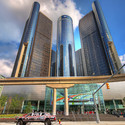
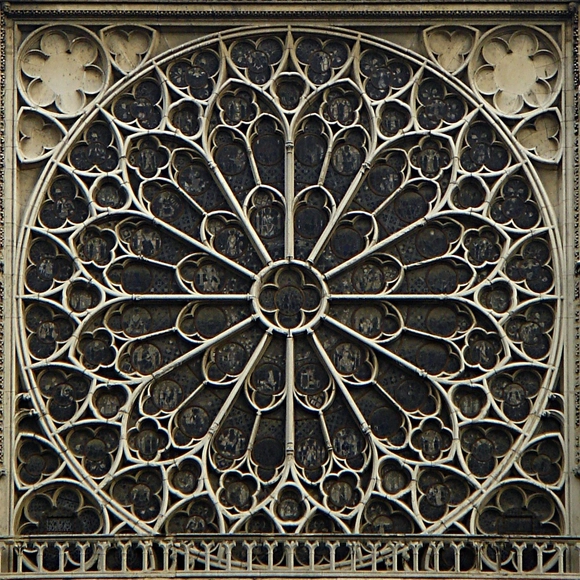
By the mid point of the twentieth century, the clean lines of the International Style and the stripped utilitarianism of functionalism were becoming increasingly common in American and European cities. Created out of a wholesale rethink of core modernist values, Postmodern architecture came as part of a philosophical shift that was just as all-encompassing as the Modernism it sought to replace; aiming to revive historical or traditional ideas and bring a more contextual approach to design. A critical elite who never really left modernism often condemned postmodernism as tacky, regressive or pandering to popular opinion; but after something of a resurgence of modernism in recent years, what’s the value of postmodernism to contemporary thinking?
https://www.archdaily.com/769368/ad-essentials-postmodernismAD Editorial Team
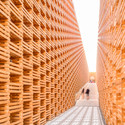
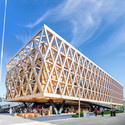
Darren Bradley, an architectural photographer and Instagrammer (@modarchitecture) based in San Diego, has shared a definitive collection of photographs from the 2015 World Expo. Each pavilion in the 1.1million square metre exhibition area, located just outside of Milan, is showcasing the best of their technology which offer "a concrete answer to a vital need: being able to guarantee healthy, safe and sufficient food for everyone, while respecting the planet and its equilibrium."
This article is part of ArchDaily Essentials, a series of articles which give you an overview of architecture's most important topics by connecting together some of our best articles from the past. To find out more about ArchDaily Essentials, click here; or discover all of our articles in the series here.
The world that Modernism was born from is no longer a world that we recognize, yet Modernism - as a style and a philosophy - still dominates so much of architectural discourse today. At its brightest the movement's original utopian ideals still shine through, and the appreciation for simplicity and material still forms a hold on the popular consciousness of much of the world. But after nearly a century since the founding of the Bauhaus, the Chicago Tribune Competition, and the publication of Le Corbusier's Vers Un Architecture, many of the most basic principles of Modernism have come into question, and its most controversial contributions are being re-evaluated. How can we understand Modernism now, and how should we use it?
https://www.archdaily.com/769340/ad-essentials-modernismAD Editorial Team
This article is part of ArchDaily Essentials, a series of articles which give you an overview of architecture's most important topics by connecting together some of our best articles from the past. To find out more about ArchDaily Essentials, click here; or discover all of our articles in the series here.
When the term “sustainability” is brought up in architectural discourse, everyone seems to have a different opinion on the matter. Sustainability is wrought with controversy politically, economically, socially and pedagogically, and while the definition has shifted over time, many new branches of design have developed from sustainability with the aim of driving progressive and innovative change in the world. But what exactly is sustainability, and how do we encounter it in the architectural world?
https://www.archdaily.com/769365/ad-essentials-sustainabilityAD Editorial Team
Since it was founded in 2008, ArchDaily has gotten pretty big. At over 18,000 projects and over 33,000 total articles (to date), the number of pages, images and words that collectively form the ArchDaily website is mind-boggling. In our newsroom you'll often hear references to "the iceberg" - in other words, what you see on the homepage is just a fraction of ArchDaily, while the rest lurks beneath the surface, waiting to be discovered. As editors, one of our biggest challenges is to help you discover it.
We already have a few methods in place to enable this: on our Facebook page we often post older articles or projects that have proven to be popular in the past, and one of the biggest benefits of our recent platform upgrade has been a new, multifaceted search for projects that allows you, for example, to look for "Brick Houses in the United States by Frank Lloyd Wright" and narrow 18,000 projects down to just three.
This week, we're launching a series of articles that we hope will do something similar for some of our most informative and thought-provoking news and editorial articles: ArchDaily Essentials.
Patrick McLoughlin and Chad Johnson are the founders of Build Abroad, a volunteer organization that offers architectural and construction services to developing nations. McLoughlin also sits on the board of Architecture for Humanity in Chicago. In this article they share 3 new ways architects can get involved through volunteering.
In the architectural industry’s current climate, pro bono work is met with a certain stigma. Many architects believe giving time free of charge has a negative impact on the profession and devalues architects everywhere. While this is true in most cases, there is one scenario in which architects should give a small portion of their time to the greater good: humanitarian volunteering. Architecture is certainly a powerful tool, and often much needed in developing areas of the world --- so the next time the words ‘pro bono’ come up, think about helping those who wouldn’t be able to afford architectural services otherwise.
https://www.archdaily.com/770111/3-unique-ways-you-can-volunteer-as-an-architectPatrick McLoughlin and Chad Johnson
Emporis, a German company that collects and distributes information on construction and the built environment, has released a ranking of the world’s 100 most visually impactful skylines, using statistical analysis to address a topic often made frustratingly subjective by civic pride.
To create the rankings, Emporis used data from its archives to determine the number of high-rise buildings in the cities it studied, and applied a points system that gave each building a numerical value determined by the number of floors it has. To standardize their ranking process, the points system ignores spires and other ornament, and does not include television or antenna towers, masts, bridges, or similar architecture.
Of the top 10 most impactful skylines, seven are in Asia, while North and South America combined have the other three. Notably, cities filled with rich architectural history fail to make the list, or fall surprisingly low in the rankings; London is number 44, Paris is ranked 66, and Rome does not make the cut.
To see the top ten skylines, read on after the break, and click here to see Emporis' complete list.
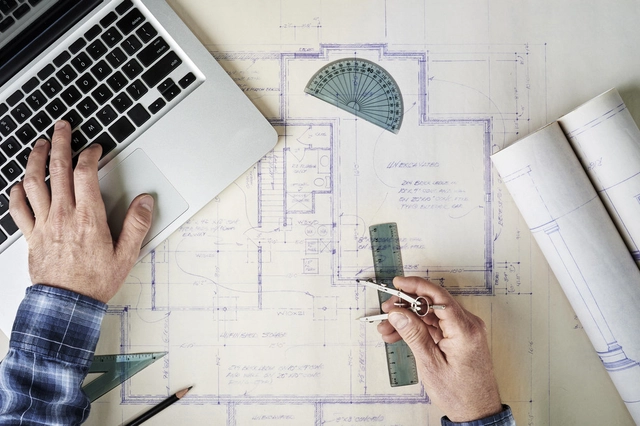
As every architect knows by now, the profession has a problem with its work culture. Incubated in universities and perpetuated once graduates reach practice, the tendency to overwork is currently the subject of much discussion - but while there may be hints that change is afoot, it's unlikely to take place overnight. In the meantime, what can a stressed-out architect do to reduce their work hours to something more reasonable? Originally published by ArchSmarter, this post explores how to become a more effective architect - allowing you to win back some of that lost time by maximizing efficiency and minimizing unnecessary work.
“What’s that smudge in the middle of your drawing? Is that part of your concept?” the juror asked me.
“Um... ” I replied as I squinted at the drawing. “I think that’s from my nose. I haven’t slept in like... two days. I konked out while I was coloring,” I answered sheepishly.
“Good for you,” the juror said. “Nothing like an all-nighter to make you feel alive. It’s good practice for when you’re out working in the real world.”
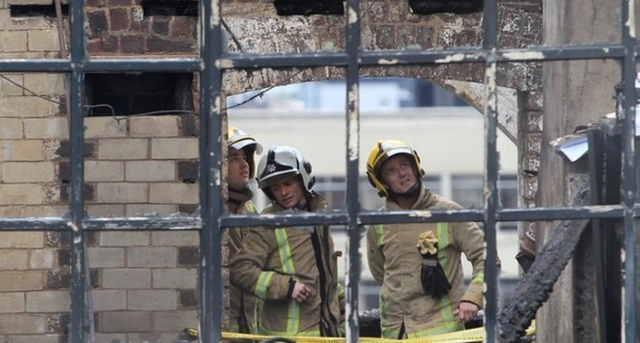
The building was built between 1897 and 1909 and designed by Charles Rennie Mackintosh, Scotland’s influential architect who brought the art nouveau touch to 20th century Britain which influenced design across Europe. As such, the fire that ruined the Mackintosh Building of the Glasgow School of Art in was a reminder of our historical heritage and how crucial it is to preserve it and keep it safe from fire.
This article was written by Rodrigo Bitencourt and Gláucia Dalmolin, and translated from Portuguese by Rodrigo Bitencourt.
The city and civilization are concomitant phenomena. The city can be seen as a receptacle that both accommodates and transmits civilization. In fact, as man differs from other creatures in his ability to learn indefinitely, his perfectibility (ants that lived six thousand years ago had the same features of current ants: they are confined to a narrow range of behaviors dictated by their genetic programs), he acquired the power to extrapolate nature and thus build in his own way, creating history. As every human life is unique and no one can predetermine how it will be carried out, it could be said that the human being bears a historical duality: the individual history, or education, and the collective history, or culture.
Google's Map of Boston. Screenshot via Google Maps
For most of history, mapmaking has been an incredibly specialized pursuit, the domain of either intrepid explorers or highly skilled cartographers, and the resulting maps were some of society's most important repositories of information. In the 21st century, internet-age services such as Google and Wikipedia have made this system largely obsolete - but that doesn't necessarily mean that mapmaking is dead. In this article from Architecture Boston's Summer 2015 issue, originally titled "Redrawing the Map," William Rankin argues that our age of information has instead sparked a new age of cartography; one that is different, but just as important as what came before.
Given the proliferation of GPS devices and interactive mapping online, it’s easy to declare the traditional map obsolete. Intuitive turn-by-turn directions have replaced road atlases, Google has upgraded the static map with everything from real-time traffic to restaurant reviews, and Wikipedia has taken the place of the hefty geography textbook. Is there any hope for a cartophile? Will the stand-alone map, lovingly produced and custom designed, be only a niche product for rich collectors and Luddites?
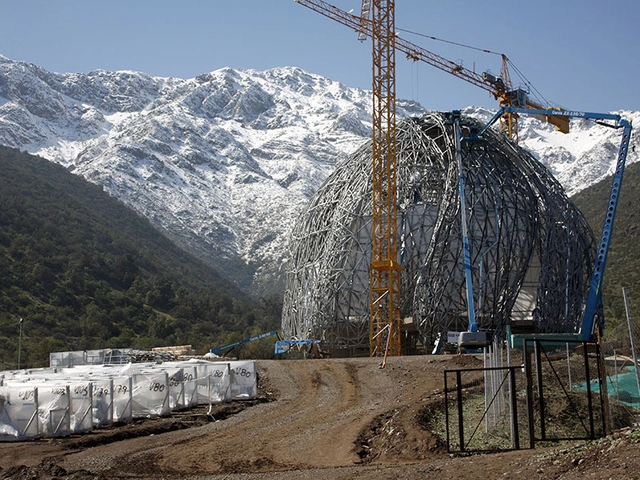
Now nearing completion just outside Santiago, Hariri Pontarini Architects' Bahá'í Temple of South America is currently one of the most significant religious construction projects in the world. In this article, originally published by Metropolis Magazine as "Sacred Structure," Guy Horton relates how - despite being in progress for almost a decade already - the design has changed remarkably little from the initial design sketch, using the latest technology to create a spiritual and emotional space.
For the last few years, in the Andean foothills just outside Santiago, Chile, a mysterious orb-like structure has been slowly rising under construction cranes. The new Bahá’i Temple of South America will be the first of its kind on the continent when it opens in 2016. It has been a historic journey for the Bahá’i faith in this part of the world—Bahá’i first arrived in Chile in 1919—and a patient journey for the architects, engineers, and builders who have brought the temple to life through a decade-long process of innovation.
With the ability to manipulate every interaction players have in a game, video game designers have boundless opportunity to shape the way players experience space. Because of this, game designers often look to architecture to enhance gameplay and provide inspiration for the appearances of their virtual worlds.
In the video above, Jamin Warren of YouTube show PBS Game/Show calls Halo the “most creative architectural game,” remarking that the brutalist-inspired architecture of the series exerted a strong influence on the way players move through levels and makes the battles in the game more immersive. Warren notes that several members of Halo’s development team had backgrounds in architecture; this observation suggests that the video gaming industry views architectural design as an essential element in its creative endeavors.
Warren makes an interesting point with his remarks on Halo: while people that inhabit virtual buildings cannot experience them physically, video game buildings can still be incredibly innovative and interesting. Which other video games feature innovative architectural approaches? Check out our list of six of the most architectural video games after the break.
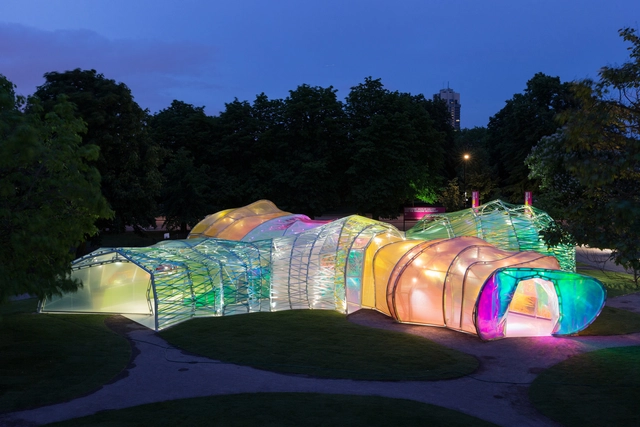
We're just three days into the four-month display of SelgasCano's 2015 Serpentine Gallery Pavilion and the comments it has generated from ArchDaily readers have already been as colorful as the pavilion itself - with criticisms ranging from "worst Serpentine Gallery Pavilion ever" to "trash bag monster" and a few other comparisons that I'd rather not even repeat. This may surprise some people, but at ArchDaily we do actually read the comments section, and we get it: unless you're the brave and persistent soul who comments as "notyourproblem," who thinks "it must be exciting getting inside those tunnels," there's a good chance that you hate this pavilion - and I don't use the word "hate" lightly.
But is this violent dismissal warranted? In short, is SelgasCano's pavilion as bad as you probably think it is? Fortunately, we're not the only publication giving the pavilion extensive coverage: as usual the Serpentine Gallery has attracted a number of the UK's most well-known critics. Find out what they thought of the pavilion after the break.
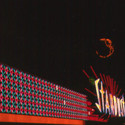
Thanks to the increasing availability of giant LED screens, the Golden Age of Neon has quietly faded in Las Vegas. For decades casinos defined their visual identity with colorful neon signs and competed for the most innovative signage. But with casinos closing, being refurbished and the arrival of new lighting technology a lot of neon signs were replaced, and for many years the Young Electric Sign Company kept the old neon signs in their "boneyard" for storage and recycling. Fortunately historic preservation groups rescued these signs. With support of the arts council The Neon Museum was born to save neon treasures and to educate the public.
Read on to explore Las Vegas' luminous landmarks and The Neon Museum.
In a world where architects can use computers to produce representations of designs with new levels of accuracy and artistry, software fluency is becoming increasingly necessary. With that in mind, last month we asked our readers to help us develop a comprehensive list of tutorials. After studying the comments and scouring the internet for more sources, we have developed this improved list, which we hope will help you to discover new work techniques and better ways to apply different programs.
Of course, it's unlikely that any list of internet resources will ever be complete, so we're hoping to continually update this list with the web's best learning resources. If there are any tutorials sites we've missed which you found helpful, let us know in the comments!
In March of this year, two of the world’s great architects died in the same week. The coincidence was unusual not because of the similarities between these two men - the advanced stage of their careers, their age and relative success - but because of the marked differences. In the few days between their mutual passing, one of the two was awarded architecture’s highest medal, the Pritzker Prize. This year’s winner, Frei Otto, had been notified of his triumph in the months prior to his death. Someone you might call his alter ego – stylistically that is – the late, great Michael Graves, died shortly after the prize was awarded to Otto.
Otto was a leading light of a particular strain of European modernism, whose most lauded works were mainly completed in his youth; on the other side of the pond, Michael Graves ran a busy commercial practice with more than 350 completed buildings, but was reviled by some for his revisionist, classical style.
After exiting bankruptcy at the end of last year, Detroit has suddenly become something of a boomtown in the eyes of the media. Discourse now talks about Detroit Rising, the "Post-Post-Apocalyptic Detroit". Rents are rising, private investment is flowing into the city, and institutions that left the city for the affluent suburbs are now relocating back into Detroit proper. Too long used only as a cautionary tale, the new focus on the reality of Detroit and free flowing money opens the door for architects and urban planners, not to mention the wider community, to begin thinking about how they want to rebuild Detroit, and who they want to rebuild it for.
It’s the perfect opportunity to formulate plans that will genuinely aid Detroit, involve the community and create a revival that really achieves something. But as it stands, the "revival" forming in Detroit, aided and abetted by media coverage, will not improve conditions for the vast majority of Detroiters and will not create a sustainable platform for future growth, instead benefiting only the private investors and those rich enough to benefit from what is currently classic, by-the-book gentrification.
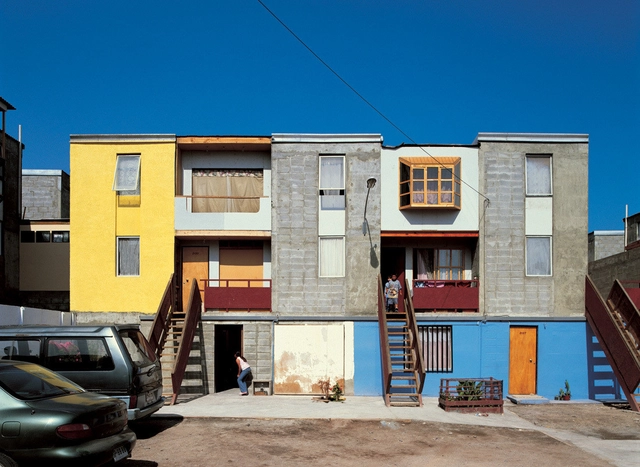
ELEMENTAL's Quinta Monroy Housing. Image Courtesy of ELEMENTAL
In recent years, the architecture world has seen a significant surge of interest in socially-conscious design; from sustainability to social housing, and from public space to disaster relief, architecture is beginning to take on some of the biggest humanitarian challenges of our era. But despite its popularity, public-interest design is still only a fringe activity in architecture, either bolted on to existing design or only practiced by a select group of people. In this short article originally published by Metropolis Magazine, Metropolis Editor-in-Chief Susan Szenasy makes the case that rather than working on the periphery, "the drive to improve living conditions for all life should be at the center of contemporary architecture and design."
On a bright April weekend, a group of committed, passionate, accomplished designers and their collaborators from the Americas and elsewhere gathered in downtown Detroit to speak about socially responsible design. It was the 15th annual Structures for Inclusion conference. The convener, Bryan Bell, is the architect behind the nonprofit organization Design Corps, and the spirit behind the SEED (Social Economic Environmental Design) rating program.
The monograph is a popular platform for dissemination and debate in the art and design world, yet architectural monographs are often treated with suspicion – viewed more as a self-serving PR exercise. But do monographs actually have a more substantive role within the practice of architecture? This was the backdrop for a discussion entitled ‘Why a Monograph?’ held at Waterstones Piccadilly as part of this year’s London Festival of Architecture. The participants included Jay Merrick, architecture correspondent of The Independent; Simon Henley of Henley Halebrown Rorrison (HHbR); David Grandorge, architectural photographer and Senior Lecturer at London’s CASS; and Ros Diamond of Diamond Architects. The session was chaired by ArchDaily Editor James Taylor-Foster.
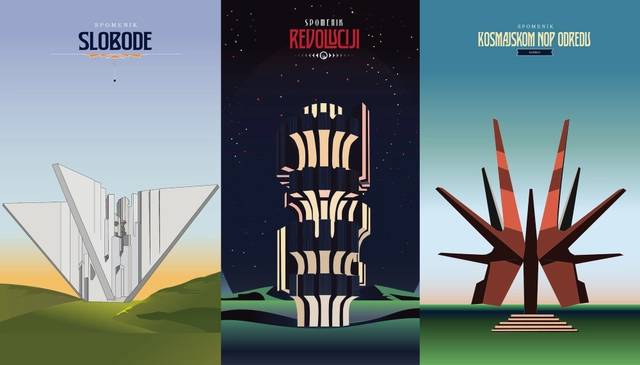
The act of remembering looms large in national cultures. Shared national memories act as a foundation for national identity, a unifying collective interpretation of history that can define what it means to belong in a certain place. Monuments loom even larger - define a national memory in concrete and stone, and you can help define your vision of the nation. That's why Nevena Katalina, a graphic design masters student at the University of Novi Sad in Serbia, has taken the famous abstract war memorials in the former Yugoslavia and translated them into posters, attempting to reconcile the imposing concrete forms with the impact they've had on culture and memory in countries around the former Yugoslavia.
We have been publishing Nikos Salingaros’ book, Unified Architectural Theory, in a series of installments, making it digitally, freely available for students and architects around the world. In Chapter 14, the final chapter of the online version of the book, Salingaros concludes by recounting the effect that the teachings included in his book had on students in a class he taught at the University of Texas at San Antonio, during the Fall Semester of 2012. If you missed them, make sure to read the previous installments here.
Conclusion
At the conclusion of this course, the students told me that they had learned a great many things that are crucial to an understanding of architecture, but which are hardly ever taught in other architecture courses. To be precise, students had previously been told about the importance of various factors to the success of a design—site, surrounding architecture, regional adaptation, ornament (or rather excluding it), the relationship among distinct structural scales, proportions, trees and green areas—but were never taught exactly how to manage them. Now, those factors were taken into account by learning why they arise out of our own biology and natural processes.
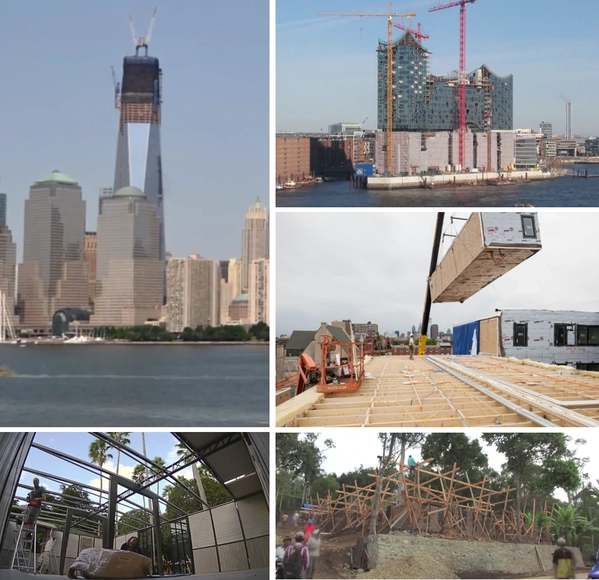
Designers are trained to consider the context for a finished building, but often neglect to consider the construction phase. When architecture is primarily judged based on the impacts it has on their surroundings once they are built, what can be learned from the process of building? The time-lapse is a method that can help architects to do just that, as it can capture years of complex development in a matter of minutes. This can uncover patterns of impact on social and economic levels, as months to years are played back over several minutes.
What is shown by time-lapse videos, though, can be as disturbing as it is interesting; when uncovered, the construction process is a revealing process, and the ramifications in regard to energy consumption can be as monumental as the buildings themselves. The time-lapse allows the viewer to get a better understanding of the types and amounts of materials being put into the construction of buildings, and the impact construction has on its immediate surroundings. By comparing time-lapse videos of different projects, what insight can we gain about how the physically generative process of architecture affects people and place?
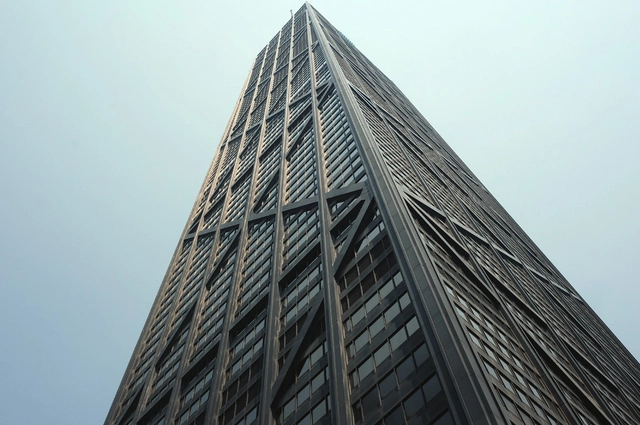
Nothing is more iconic of progress than the skyscraper - but as developers continue to build up, it begs the question: what effect does higher living have on our mental health? Taking opinions from authors, architects, engineers and residences of high-rise apartments, Fast Company reports on the pros and cons of the vertical obsession of the 21st century. Comparing the liberation offered by the Hancock building and the failure of the Pruitt-Igoe project, the article looks at how living at high altitudes may change the way that we socialize and perceive space. Read the full article, “The Psychology of Skyscrapers,” and decide for yourself whether this trend of growing buildings is a good or bad thing.








.jpg?1436658453&format=webp&width=640&height=580)


-2.jpg?1430924661&format=webp&width=640&height=580)











.jpg?1435226672 "© Laurian Ghinitoiu")
.jpg?1435226660 "© Laurian Ghinitoiu")

.jpg?1435226627 "© Laurian Ghinitoiu")







.jpg?1434891617&format=webp&width=640&height=580)
.jpg?1434891896 "Michael Graves' Denver Central Library. Image © Michael Graves")
.jpg?1434891627 "Michael Graves' St. Coletta School. Image © Michael Graves")


.jpg?1434891617)