After 10 years of exploring the world and making LEGO interventions to city walls and masonry in disrepair, artist Jan Vormann invites you to contribute to the ongoing project Dispatchwork. Vormann began making these toy-block repairs in Bocchignano, Italy, and since has made colorful additions to Tel Aviv and Berlin.
Jan Vormann has visited nearly 40 cities across Europe, Central America, Asia, and the United States. Some of the installations use a handful of toy bricks while some have used up to 20 pounds.
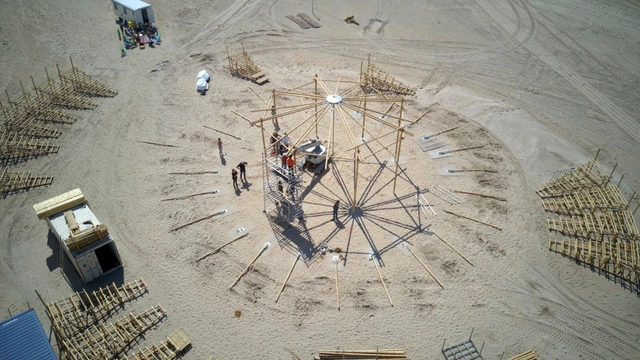
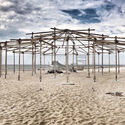
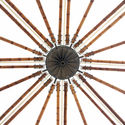
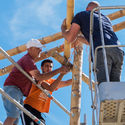
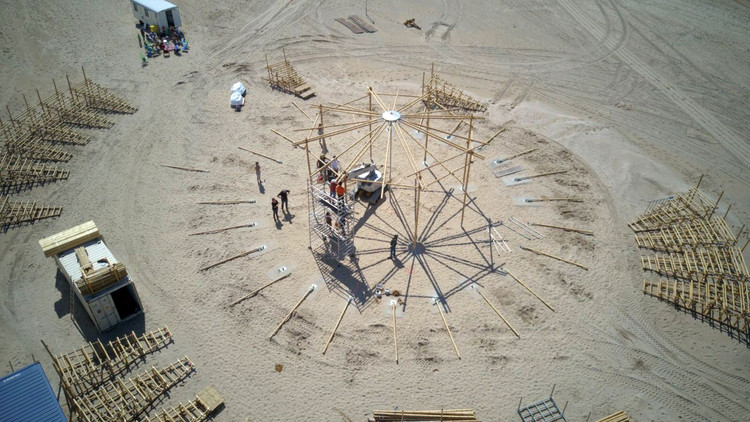
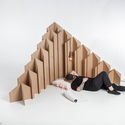
Studio Akkerhuis' bamboo design for a mobile theater proposal off the Netherlands coast addresses the characteristics of the material in the construction of light, resistant, accessible and transportable structures.
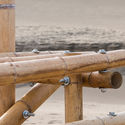
The project, a compact space similar to a small amphitheater, allows reuse with different configurations in various places with its joints made up of ropes and screws.
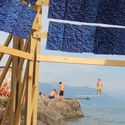
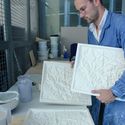
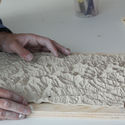
The Pavilion d’Eau, designed by EPFL architecture student Alexander Wolhoff, was constructed in Lake Geneva, Switzerland. The pavilion is a product of six months of research, prototyping, and coordination with different local and academic organizations done in conjunction with LHT3 labs. The exterior of the octagon pavilion has a structural aesthetic, while the interior -- only accessed by wading in the water -- is ornamental, clad in handmade ceramic tiles.
The UNESCOWorld Heritage Site municipality of Saint-Saphorin en Lavaux allowed for the temporary pavilion in the waters of Lake Geneva. The project is designed to touch the landscape lightly, not affecting the natural lake bed. The pavilion is comprised of materials including lake stones, wood, and porcelain tiles. To ensure a minimal and reversible impact on the site, the footings of the pavilion are made of seven gabions, metal cages filled with stones collected from the lake.
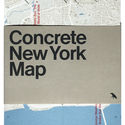
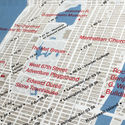
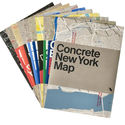
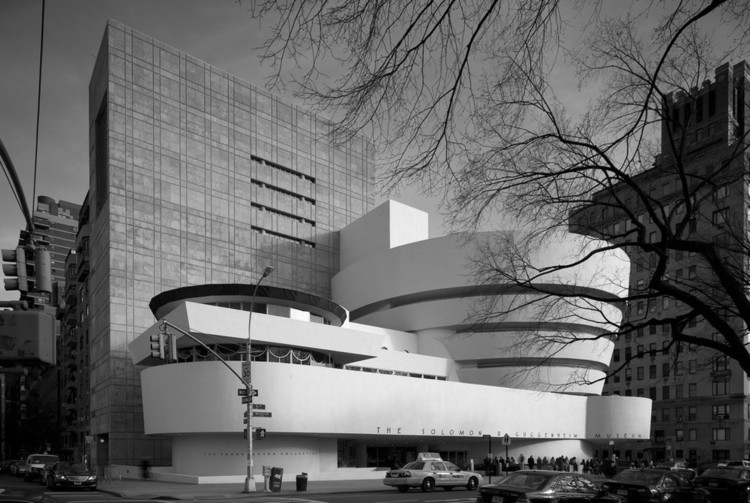
Finally, a brutalist map of New York City, thanks to London-based publisher, Blue Crow Media. The Concrete New York Map marks the tenth map in the architectural guide series, highlighting over fifty of The City’s finest concrete buildings.
Not often thought of as a brutalist capitol, the concrete jungle is filled with remarkable buildings by Breuer, Pei, Rudolph, Saarinen, Wright, alongside lesser-known works, mapped out, photographed, and paired with a description of the building. The map is edited by Allison Meier, and adorned with Jason Woods’ photography and is the perfect pocket guide for any architect or brutalism lover.
Recycling material in architecture is becoming increasingly valued in order to enable the creation of sustainable projects. Certainly, naval containers have been one of the elements that have gained prominence in recent years for the design of private and public buildings that respect the environment. In addition to the ecological appeal, containers are a viable choice due to the speed and ease of assembly, the option of a cleaner construction site, or even the different design solutions that this material provides. With their standardized sizes, it becomes possible to create a modular structure that allows infinite possibilities of intervention, so that it suits different uses.
We have gathered here 20 examples of works that adopt the use of containers and some tips that will certainly help you on your next project.
Housing is certainly one of the most interesting themes that present itself to the architect, after all designing a residence allows the study of the usage and customs of human beings according to their culture, desires and daily life. Each project brings a new customer and, with it, an unprecedented challenge.
Through the ten selected projects, it is possible to see the inventiveness of the architects and how each work distinguishes itself from the other through the colors, geometry, relation with surroundings or even the way in which it innovates when proposing a new daily life to its inhabitants.
Africa is a diverse continent with different contexts that go beyond the stereotypes imagined and propagated by those who do not know it. These stereotypes also cover the architectural field. African architecture is always remembered for its beautiful vernacular projects or works by Keré, but other languages developed by architects on the continent are almost forgotten.
For this reason, in order to increase the panorama of contemporary architecture built in Africa, we have gathered here a selection of buildings that have been realized in fourteen different countries. Be inspired by the eighteen selected projects below.
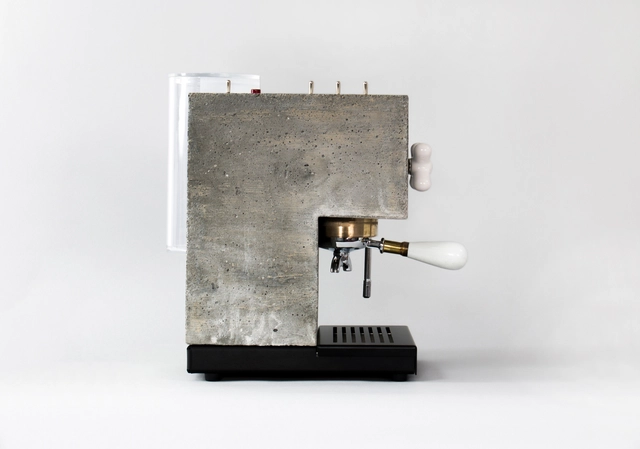
Architects and coffee go hand in hand. The aesthetic of the espresso maker has become a mundane part of the morning ritual. The designers at Montaag are changing that with the release of AnZa a show-stopping espresso maker made of concrete. After four years of prototyping and testing, the espresso maker is equipped with high-tech functionality for important things, like remotely brewing your cup as an incentive to get out of bed.
Designed for the V-A-C Foundation, Venice-Based Israeli architect Omri Revesz’s adjustable Street Cinema rests lightly next to a canal in Venice, Italy, expanding, contracting, opening, and closing as its program changes.
Acting as a social gathering point during the day and an open-air cinema at night, the structure was open for the 74th Venice Film Festival as part of the V-A-C’s Venice Art Biennale 2017 exhibition Space Force Construction – a reflection on the centenary of the Soviet Revolution.
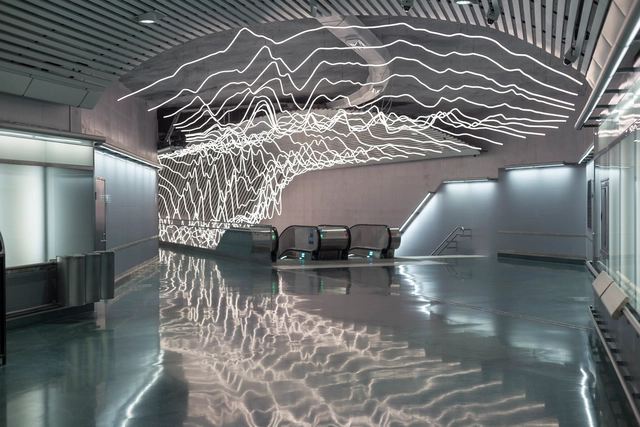
Designed by David Svensson, a total of 400 meters of a neon resembled warm white LED from GE is a work of art representing the pulse of city life in busy Stockholm station.
The project, a piece of suspended light, is built by metal profiles and a ceiling where the warm and white light of a series of LED strips is projected, in the quest to represent the basic visual language of the line.
In the entryway of ArchDaily’s Headquarters, there is a framed, handwritten note from a student in Australia, Alice McLeod. This is something that we have cherished as a company with a very specific mission. She writes,
I grew up in a country town in Victoria, Australia. I lived 3 and half hours drive from a city. My closest library has 5 books in the “architecture & design” category. I had no access to the world and history of Architecture. Your website opened that world up to me. I found my passion and education through ArchDaily. In January I moved to Melbourne to begin my first year of my Architecture Degree. I have never been happier.
https://www.archdaily.com/880524/whats-your-archdaily-storyAD Editorial Team
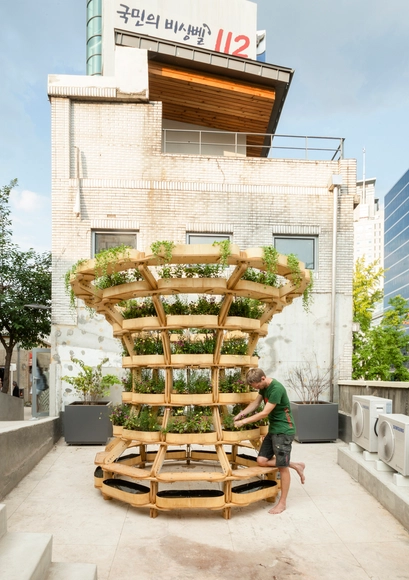
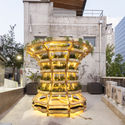
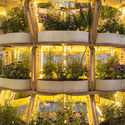
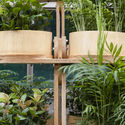
As a response to the fast-paced city life, GrowMore is an urban gardening modular design with endless configurations to suit even the most unexpected of spaces. Designed by Sine Lindholm and Mads-Ulrik Husum, the modular building kit provides an opportunity for social interaction and locally grown vegetation, reminding people to pause and connect with nature.
Videos
Courtesy of Guillermo Fernandez-Abascal, Urtzi Grau and Daniel Perlin
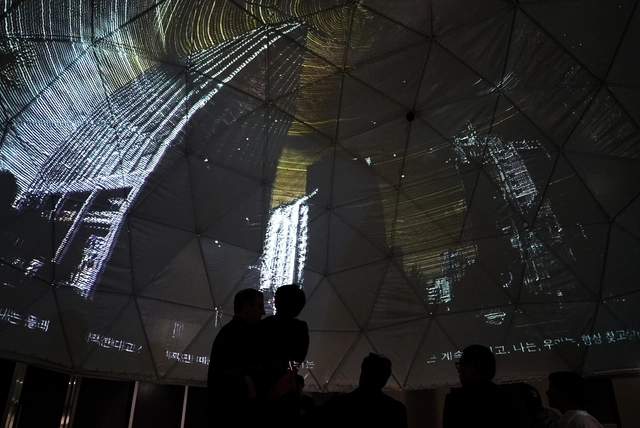
Driver Less Vision, an installation at the 2017 Seoul Biennale of Architecture and Urbanism by Guillermo Fernandez-Abascal, Urtzi Grau and Daniel Perlin, is an immersive 3D video experience comprised of spatial scans of Seoul, projected into a dome and paired with surround sound. The supporting audio is the internal monologue of a personified autonomous vehicle, driving through the streets of a future Seoul, Korea. The installation transports vierers to the front seat of the autonomous vehicle, providing a new perspective of traversing cities—through the car’s point of view.
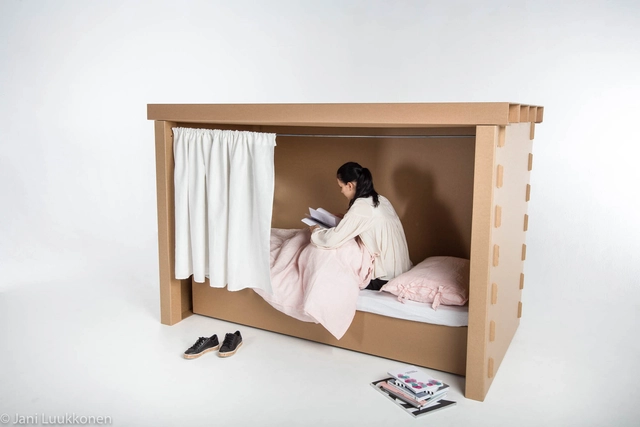
Three M. Arch. candidates at Montana State University, Jonathan Chavez, Kimball Kaiser and Adam Shilling, won an Undergraduate Scholars Programresearch grant which they used to fund their design-build project: B.O.B., the Backyard Office Box. B.O.B. is a kit of parts which, when put together, create a 150-square-foot dwelling space. The design team, also known as Tr3s, wanted their project to be adaptable to a variety of sites and users. B.O.B. can function as an additional space to already existing projects or standalone as a temporary shelter.
Architect Alfredo Thiermann has recently collaborated with Chilean Filmmaker Marialy Rivas in her latest film “Princesita." The film will be premiered next week at the Toronto International Film Festival.
Alfredo Thiermann’s practice has been long involved in the interaction of architecture with other medias (Artifact Nr. I Dynamics of the Void Noise Tower ) and here is the result of his last collaboration with “Fabula Productions," also known for Pablo Larrain’s academy- nominee ”No” and Sebastian Lelio’s “Gloria."
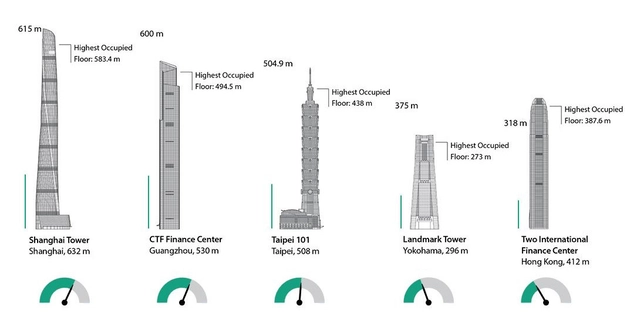
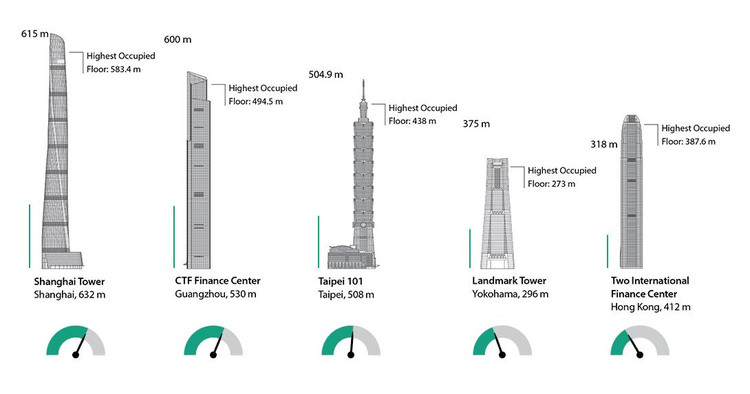
The targeted maximum wait time in office building elevators is 20 seconds—it just feels like 2 minutes when you’re in a rush. But how quickly are the elevators actually moving?
The fastest installed elevator reaches speeds of 67 feet per second (20.5 meters per second), or 46 miles per hour (73.8 kilometers per hour) in the Shanghai Tower. Not only does the Gensler-designed Shanghai Tower boast the fastest elevator, but also the longest continuous run of 1,898 feet of the 2,073-foot tower (578.5 of 632 meters), as revealed in a recent study by the Council on Tall Buildings and Urban Habitat (CTBUH). At these speeds, you can reach the 119th floor in 55 seconds.
What are the best construction materials and products on the market? Which are the most popular? Thanks to the activities of our readers, we're beginning to find some answers to these questions. Combining the use of two ArchDaily tools, many of our readers have saved their favorite architectural materials and products—directly from our catalog—into their personalized My ArchDaily folders.
We have investigated the data from the first 6 months of 2017 to identify and share the most popular products from our catalog with you. What do these products have that make them so popular? Would you apply them on your next project?
https://www.archdaily.com/879228/the-15-most-popular-architectural-materials-and-products-of-2017AD Editorial Team