One of only two projects completed by Le Corbusier in the Americas—the other being the Carpenter Center for the Visual Arts in Cambridge, Massachusetts—Casa Curutchet is located in La Plata, Argentina. Commissioned by the surgeon Dr. Pedro Domingo Curutchet in 1948, the four-story residence includes a small medical office on the ground floor. The form of the building echoes traditional Latin American courtyard houses while also exemplifying Le Corbusier's five points of architecture.
https://www.archdaily.com/876672/explore-le-corbusiers-only-south-american-project-the-casa-curutchet-with-a-virtual-walkthroughAD Editorial Team
In response to the overwhelming growth of cities and neighborhoods in China, architects from Atelier Archmixing’s Shanghai office, have developed a series of proposals that seek to return value to sensitive interior spaces and improve the user’s quality of life through design.
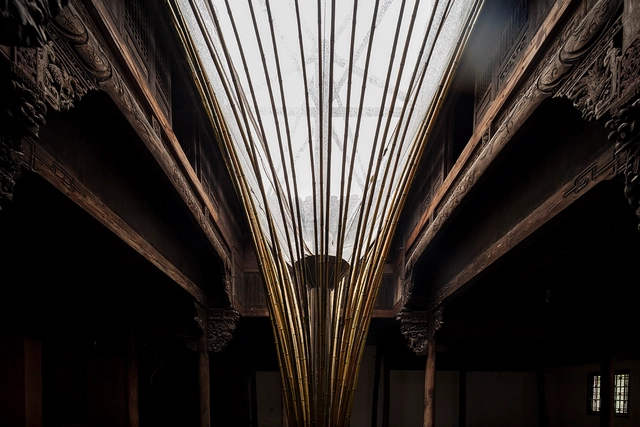
The project consists of an interesting light fixture; a bamboo structure similar in shape to an umbrella, that lets natural light and fresh air into the building.
A design by C-re-a.i.d. for a Maasai village in northern Tanzania, is a morphological response to the imposed need to settle, using sustainable, local and accessible materials to redefine its construction culture.
The project is built by a series of earthbags and glass bottles that in addition to generating private and comfortable spaces, allow a quick and easy construction.
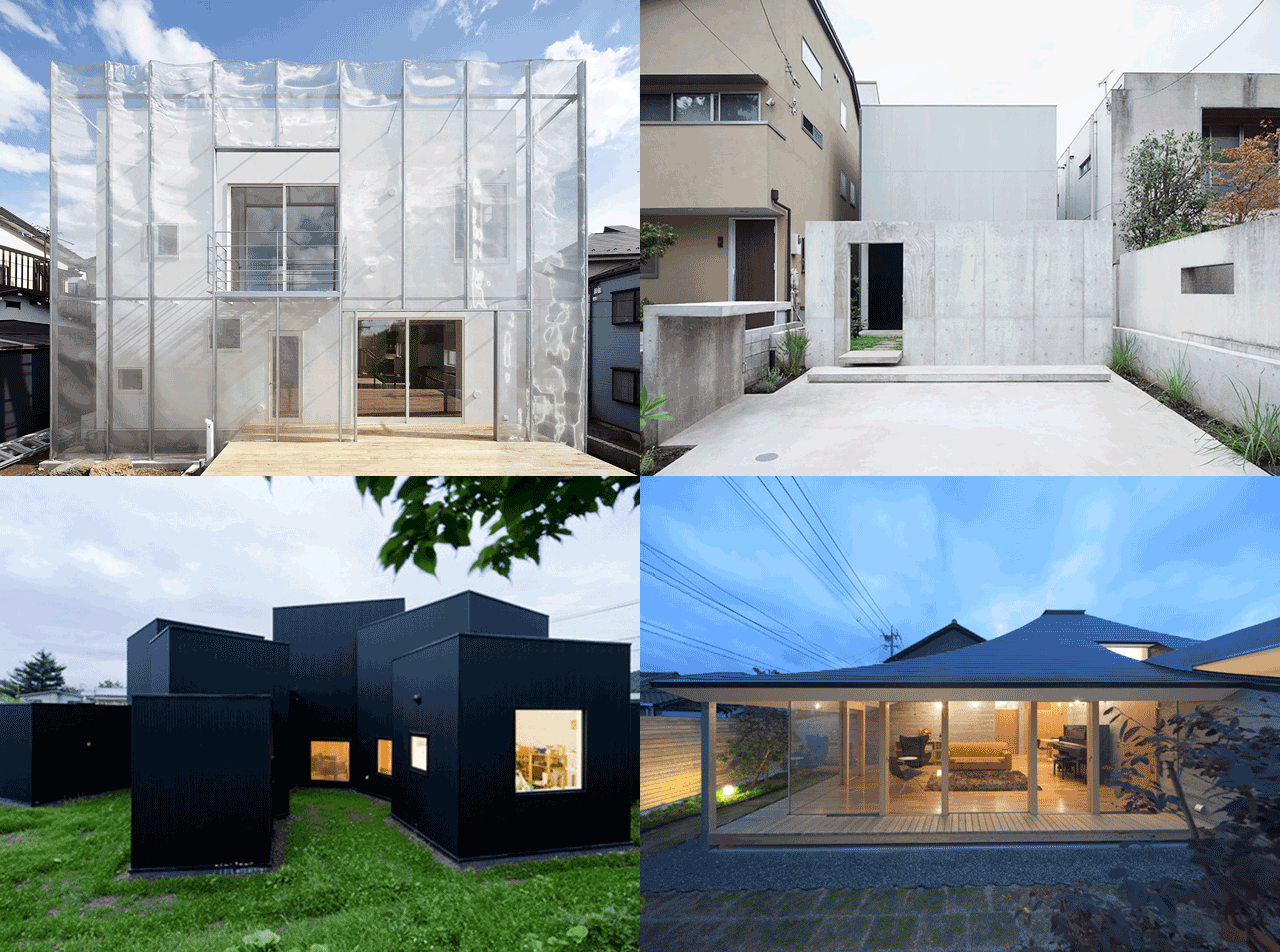
Contemporary Japanese homes are a balance between the country’s traditional values of organizing spaces and architectural innovation that is constantly on the move. They challenge the norms of how to occupy places, pushing the envelope for what it means to have a minimal, “micro-living”. Through experiments small and smaller, residential projects in Japan shed new light on how we go about our daily routines and rituals at home and question urbanites on what we can do with the space we have.
For this reason, we’re inspired to go through our archives and bring out 10 projects that bring out new perspectives on Japanese architecture, be it aesthetic, functional or atmospheric.
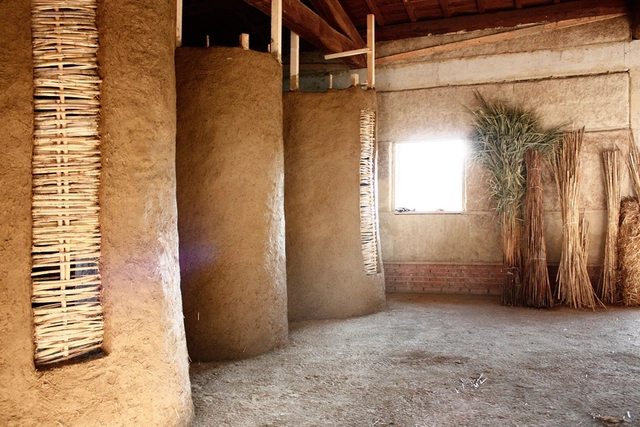
In a 12-day workshop, Building Trust International and Terraepaglia joined the Ciuffelli Agricultural Technical Institute in Todi, Italy, with the aim of exploring a series of construction techniques with raw soil. In addition to producing earth bricks and rammed earth structures -in collaboration with experts such as Eliana Baglioni and Pouya Khazaeli-, a curved wall was erected with a wooden structure and a cane framework, on which a massive layer of earth and straw was spread.
The activity generated a series of internal spaces as a kind of laboratory, to show the construction methods and the materials in situ.
The concept of heritage is often associated with something that has had value in its past and, for that reason, deserves to be preserved. In the case of architecture, we want our built environment to tell our history and to remain untouched in time, often without considering the real use and meaning of the building in the present. We ask ourselves: Does a building still have value if its use is obsolete?
Despite the fascination that we have with ruins, sometimes conversion or rehabilitation is a better, more contemporary alternative to conservation. By doing so, it is possible to introduce new innovative materials, which, rather than take away from the original structure, can actually add even more value to architectural works. It is also possible to convert spaces that were originally designed to accommodate certain functions into spaces that admit new uses relevant to the present.
To conserve a building without updating it or rethinking its functions can lead to wear and tear, freezing it in time and preventing it from adapting to an ever-changing society.
To illustrate this theme, we searched our archives and selected someof the best architectural interventions in historic buildings. Check them out below.
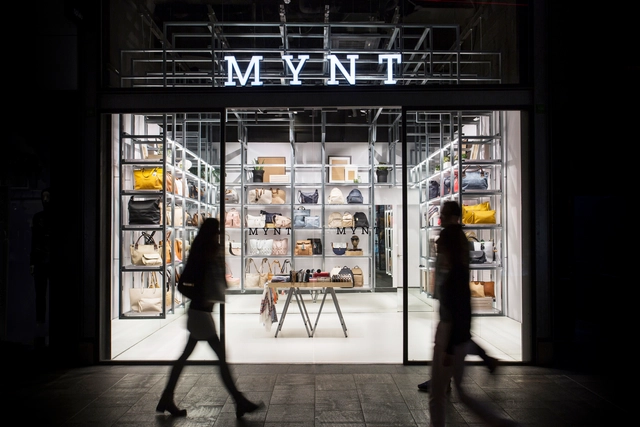
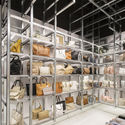
The premise for this design was to create an iconic space, with a concept adaptable to any property and versatile when exposing the product. It should also be a design that could be quickly built and at a moderate cost.
To reach this goal, DearDesign has designed an open store with a structure that, despite its rigid and orthogonal look, solves flexibility in terms of product display. The design of the store is based on a three-dimensional grid inspired by the Fibonacci sequence, which creates a variable rhythm in a permeable volume, ordering the space by generating niches to exhibit the product along its perimeter.
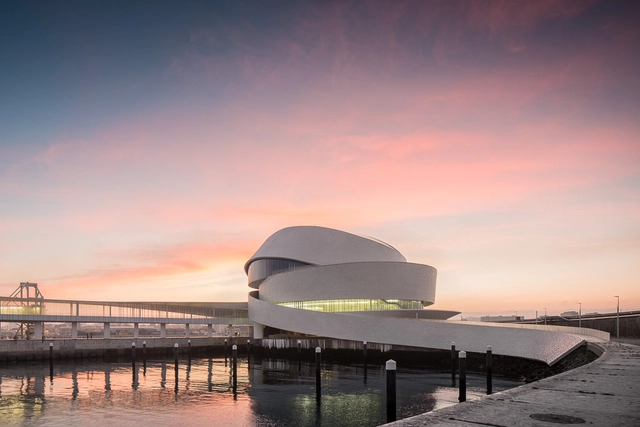
The strategic definition of a new cruise terminal had a double objective: improvement of the commercial efficiency and a better urban integration. In this photoset, Fernando Guerra captures the many sides of the Leixões Cruise Terminal, a project that won the 2017 Building of the Year Awardsin the "Public Architecture" category.
Get to know all the facets of this building below.
Like architecture, food has a way of making us feel a sense of time and place. The act of eating together is ingrained in our human rituals surrounding spaces and how we inhabit them. The space that shelters us during our meal can be bustling or intimate, but nevertheless contributes our memories there, and the experience of eating at a good restaurant goes far beyond the food served in it. For it to be truly immersive, everything is thought of - from the shade of timber to the shape of your knife when you sit down to eat.
We’ve gathered 10 examples from our archive of beautiful restaurants worth a visit – check them out below:
Creative, expressive, visual, a little bit edgy – tattoos convey many of the same qualities we as architects strive to achieve both in designing buildings and crafting our own personal identities. Whether it’s a small geometric motif or a full-back masterpiece, a tattoo is an immediate statement of who you are and what interests you.
Luckily for architects, the subjects of our affections just so happen to also make great source material for tattoos, from your favorite Miesian plan to a simple city skyline to the elaborate facade of a gothic cathedral.
Here, we’ve rounded up 118 of the most impressive architectural tattoos from across the internet and from submissions by our own ArchDaily readers. Each tattoo has its own story to tell (one reader even shared that his tattoos were inspired by scars obtained through model making mishaps).
Feeling inspired for some ink? Check out the list below!
https://www.archdaily.com/875208/118-impressive-architecture-tattoo-designsAD Editorial Team
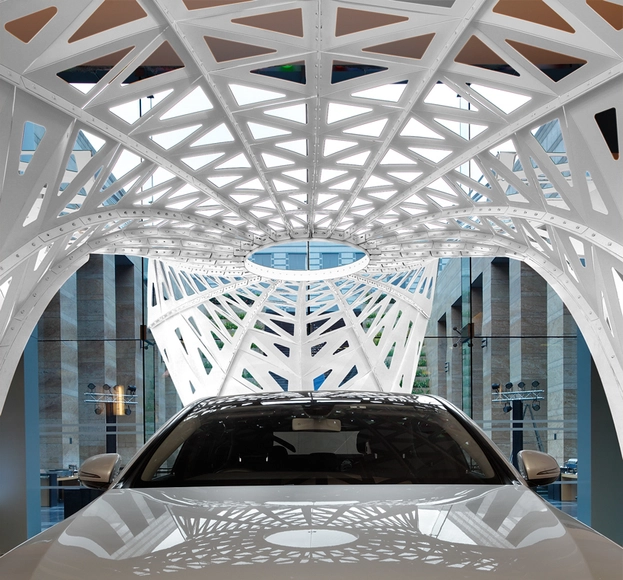
The geometric design of the 'Protostar Pavilion' for the launch of the new Mercedes-Benz E-Class is a morphological response associated with the iconic brand logo: a three-pointed star.
The project is a removable metal pavilion, made up of a series of folded aluminum plates that besides generating a light structure, allow for a quick and easy construction.
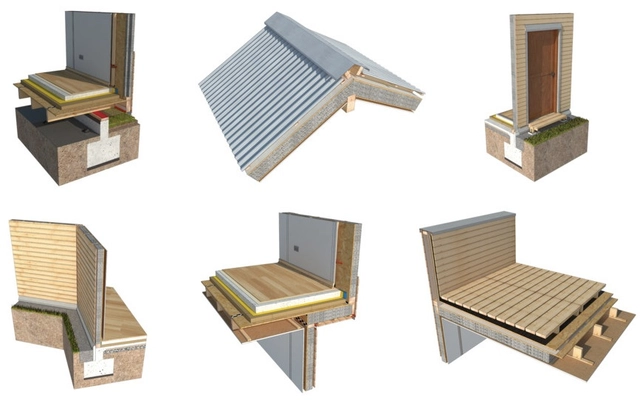
Developed by the POLOMADERA Program at the University of Concepción, the 3D Building Construction Solutions Catalog is a free tool that helps users design construction details for lightweight wooden structural systems.
Though created with the intention of meeting new standards soon to be implemented nationally in Chile (and therefore in Spanish), the catalog was developed jointly with international experts from the Wood Construction Institute at the Holzbau Institut in Germany, and thus incorporates best practices that are applicable around the world.
The catalog allows users to find and download different construction solutions in wood, with details categorized under Foundations, Mezzanines, Doors and Windows, Partitions, Roofs, and Terraces.
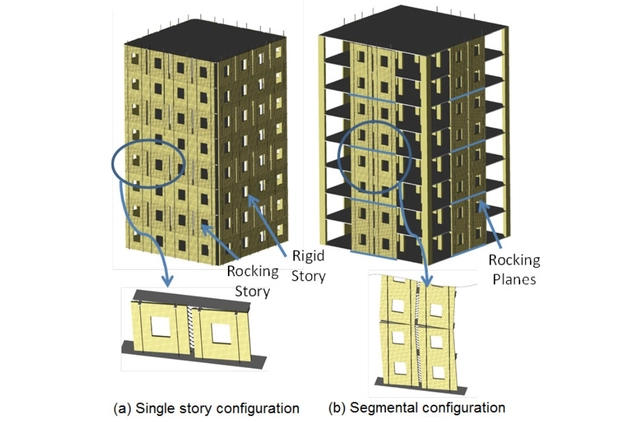
Two Rocking CLT Wall Configurations. Image Courtesy of reThink Wood
With the aim of raising awareness and expanding knowledge about the advantages of wood in the built environment, reThink Wood has created an online library that collects a series of articles, reports, studies and videos that can be freely accessed right now.
Here we have 5 outstanding resources related to seismic design and performance, which can help you solve this issue on your next project.
https://www.archdaily.com/872425/learn-about-seismic-design-of-wooden-buildings-with-these-online-resourcesAD Editorial Team
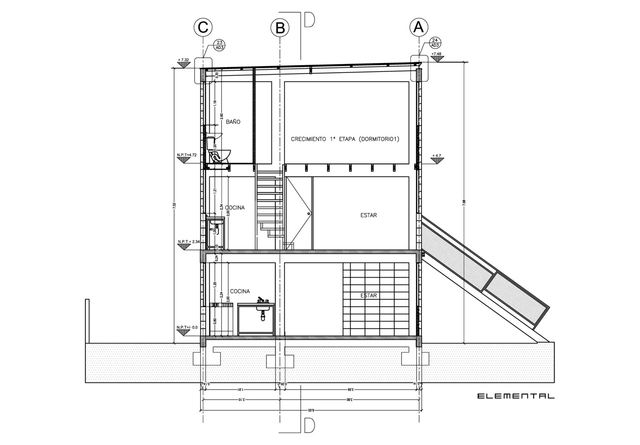
Good location, harmonious growth over time, concern for urban design, and the delivery of a structure that has "middle-class DNA" are the key points of the ABC of incremental housing, developed in detail by the Chilean architects ELEMENTAL. It's a question of ensuring a balance between "low-rise high-density, without overcrowding, with the possibility of expansion (from social housing to middle-class dwelling)."
Following this line of action, the office has released the drawings of four of the projects carried out under these principles, to serve as good examples of design which have already been implemented and proven in reality. However, despite making them available for free consultation and download, the architects emphasize that these designs must be adjusted to comply with the regulations and structural codes of each locality, using relevant building materials.
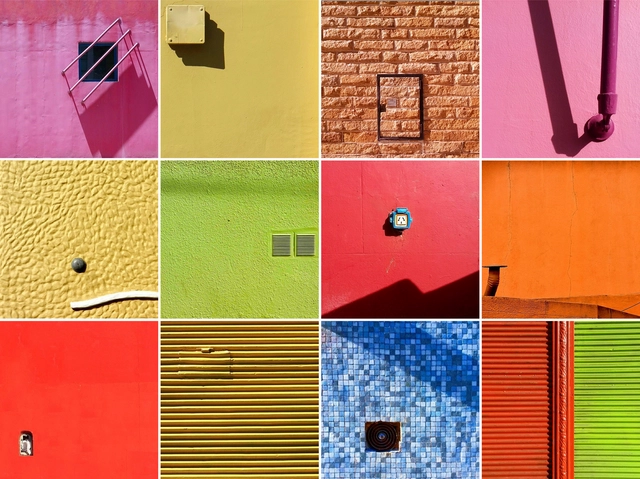
The textures, colors, and details, captured by @hernanmat in these minimalist photographs, show the vibrancy of the patterns and elements characteristic of the local, traditional and popular architecture of Argentina.
By photographing and compiling all these elements into one place, the collection becomes in a way a reflection of the different components of Argentine architecture that occupy the collective memory.
Check out below a stunning selection of minimalist photographs by @hernanmat.
First Place XVIII CAP 2014 Contest, Social Housing of Average Height / USACH. Courtesy of Team 160
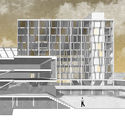
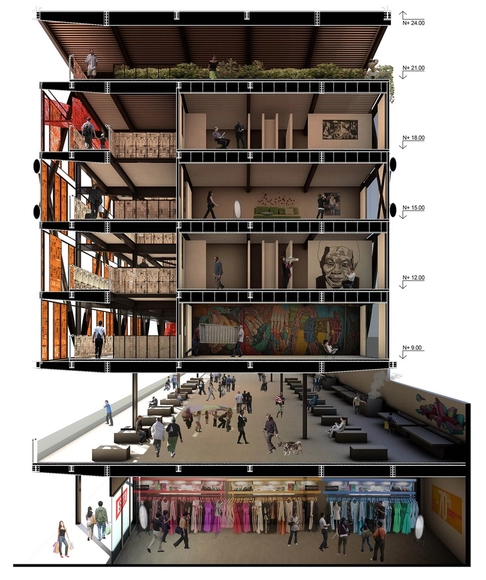
The perspective section is an increasingly popular form of architectural representation, one that is most commonly used in architectural competitions since it allows a technical drawing to be mixed with an image, a section which allows one to easily express the qualities of the space designed in a two-dimensional drawing. Below, we have put together a selection of impressive perspective sections ranging from a realistic aesthetic to a line drawing by hand.
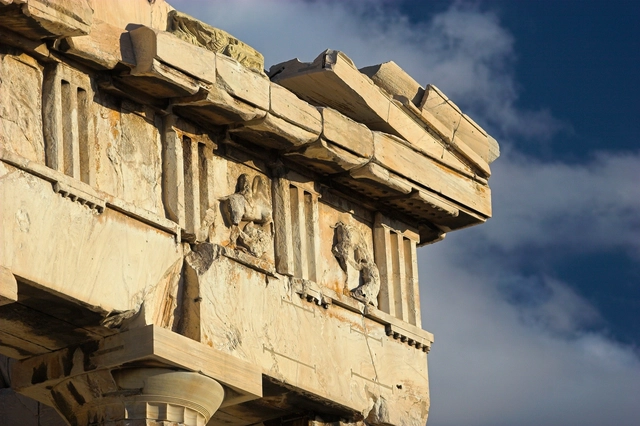
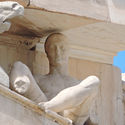
The Parthenon, unquestionably the most iconic of the Ancient Greeks' Doric temples, was built between 447 and 432 BC. Located on the Acropolis in Athens, for many architects, it is one of the first buildings we analyzed when beginning our studies. Designed by Ictino and Calícrates, it displays a unique repertoire of architectural elements that can be fully appreciated individually, or for the role they play in forming a complete and magnificent whole.
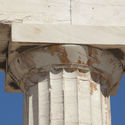
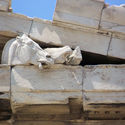
Simply described, the 69.5 x 30.9-meter building is erected on a stylobate of three steps, with a gabled roof raised upon a post and lintel structure formed by Doric columns—17 on its sides and 8 on each end—which support an entablature composed of an architrave, a frieze, and a cornice. On each gable were triangular pediments with sculptures that represent the "Birth of Athena" on the East and the "Contest Between Athena and Poseidon" on the West.
Take a look at some of these elements in detail, through this set of high-resolution images.
Want a new home project to obsess over? We’ve got you covered. Stove, check. Fridge, check. Work surface, 3-4 inches below elbows - depending on what standards you use. The kitchen stands as one of the oldest typologies in mankind. From primitive fire pit to the sleek minimal surfaces we see cropping up online, it has gone through several overhauls in its long life. Nowadays its elements are consistent on an international level – so we can assemble them as quickly as possible, and even build them ourselves. In the search to rethink the kitchen space, sustainable wood manufacturer Arauco partnered up with Chilean architect Felipe Arriagada to create a simple and low-cost DIY proposal. The project is a series of a partnership between Arauco and leading designers to remodel and share ideas about relatable, down-to-earth design at home.
Check out the drawings and steps below:
We have listed all the materials you need for this easy DIY.
















.jpg?1496953485 "Courtesy of Sebastián Bravo, Miguel Casassus and Raúl Pacheco")