The scape Landschaftsarchitekten office was founded in Düsseldorf, Germany in 2001 by Matthias Funk, Hiltrud M. Lintel, and Rainer Sachse. The firm primarily works through a young and committed team in cooperation with urban planners, architects, ecologists, and communication designers, mainly on the planning of urban landscapes. Current projects range from master plans for entire city districts to object plans for parks, pedestrian zones, squares, and streets, to detailed planning of their own street furniture systems. One of these projects was for The Viega Group, an internationally active family business in the field of mechanical and plumbing technology for sanitary and heating systems. A new seminar center is currently under construction at their headquarters in Attendorn, and Vectorworks Landmark was used to implement the landscape architecture through a BIM process.
https://www.archdaily.com/932811/how-a-landscape-architecture-firm-integrates-3d-bim-workflowsSponsored Post
Forward-thinking architectural firms, infrastructure consultancies, and interior design businesses are increasingly leaning on real-time architectural visualization to explore, evaluate, and present designs. By affording clients and project stakeholders the opportunity to experience future spaces in interactive and immersive environments, real-time technology provides a compelling immediacy that 2D drawings cannot.
V-Ray is an incredibly powerful renderer — but it’s also remarkably easy to use. The number-one* 3D renderer used in architectural visualization is battle-tested and industry-proven, used daily to realize world-class products, buildings and much more. And if you like to spend the majority of your time being creative but still crave the highest quality images possible, V-Ray can help you easily and speedily render everything from your quickest concepts to your largest and most detailed 3D models.
What’s more, it works seamlessly with SketchUp’s versatile 3D modeling tools while also being built with a full set of creative tools for lights and materials. The best part, perhaps, is that you don’t need to be a rendering expert to get great results with V-Ray. This collection of six, simple, quick-start tutorials will help you learn how to use V-Ray Next for SketchUp — and give your renders a boost in no time at all.
The landscape around the built environment can make all the difference in a project. Natural elements that are integrated into architecture or designed to compose it make a huge difference in the way we experience space. Therefore, designing landscape projects is no simple task. To bring some references for compositions with nature and other elements that help to configure a place, we have gathered fifteen contemporary Brazilian projects that explore simple solutions and the ones that expose the exuberance of the country's tropical flora.
This month ArchDaily is exploring the topic of work, demonstrating how businesses can benefit from a good quality space: employee comfort, creativity stimulation, rest areas, brand image improvements, new talents attraction. Inspired by these topics, we selected fifteen contemporary Brazilian projects that illustrate different scales and ways of working to inspire this type of program.
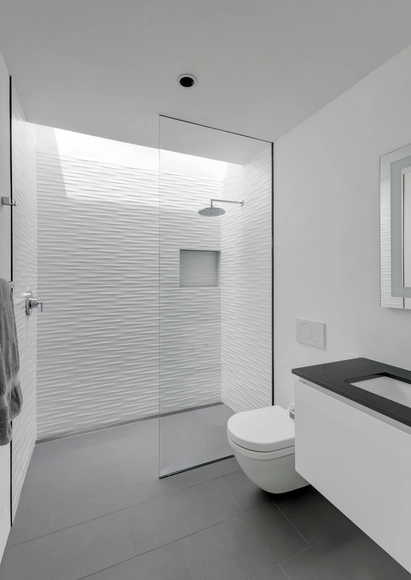
Because it doesn't include a bathtub, or require doors, screens, or curtains, the walk-in shower often makes bathrooms appear larger, cleaner, and more minimalist.
However, some precautions must be taken when designing them. Most importantly, the shower cannot be left completely open, even if it appears to be at first glance. Most designs incorporate a tempered glass that prevents water from "bouncing" out of the shower space, subtly closing the area. When this transparent division doesn't have a frame, the appearance of fungi due to accumulation of water and moisture becomes less likely.
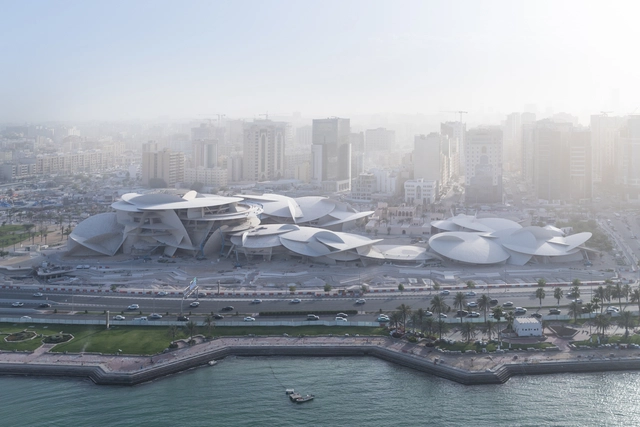
The winner of the Wolf Prize in 2005 and the Pritzker of 2008, French architect Jean Nouvel has attempted to design each of his projects without any preconceived notions. The result is a variety of projects that, while strikingly different, always demonstrate a delicate play with light and shadow as well as a harmonious balance with their surroundings. It was this diverse approach that led the Pritzker Prize Jury in their citation to characterize Nouvel as primarily "courageous" in his "pursuit of new ideas and his challenge of accepted norms in order to stretch the boundaries of the field."
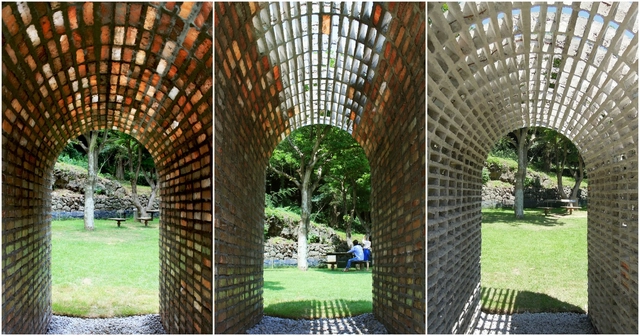
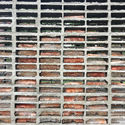
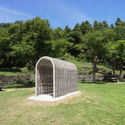
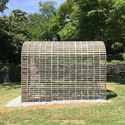
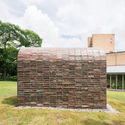
Sometimes known as the “Island of the Gods,” Jeju Island in South Korea is characterized by its volcanic rock, stunning waterfalls, and warm, tropical climate. Here, life is integrated with nature and the architecture is in harmony with the landscape. Dissolving Arch, a weather-specific installation by stpmj, responds to the island’s tropical environment. The structure began life as a solid brick vault, which then slowly dissolved in the hot and rainy periods of Jeju to produce a light, porous skeleton made of the remaining mortar which connects people with nature.
Designing a home will always be the true challenge for an architect. With these projects, the architect needs to fulfill the user's wishes, while simultaneously reinvent new ways of living the day-to-day. Therefore, it is no surprise that residential works are the most popular project category on ArchDaily.
We've recently passed the halfway point of 2019, and already, we've published more than 1,000 houses, offering projects with a variety of scales, contexts, and typologies. An immense diversity of possibilities that showcase the creativity of architects and serve as a great source of inspiration for those seeking references for their own residential project.
In the list below, you'll find the houses that arouse the most interest in our audience. Check out the 50 most popular homes of 2019 (so far).
https://www.archdaily.com/921425/the-50-best-houses-of-2019-so-farArchDaily Team
Building Information Modeling (BIM) technology allows the design process to be organized in a structured and disciplined manner by keeping the design, model, and documentation of each project in the same file. Whether through ArchiCAD or Revit, offices increasingly migrate to this type of tool for the assistance they provide to architects. Here, we selected ten works, of different scales, that were made through BIM software.
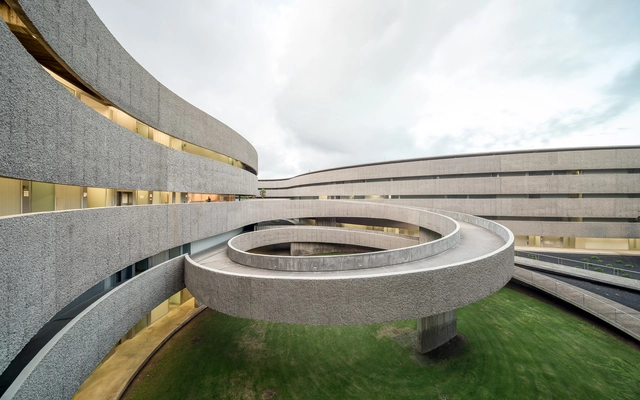
Ramps have become synonymous with accessibility because they are often designed to enable access for people with impaired mobility, however, in many cases, they also end up becoming the guiding concept for various projects, by introducing a different rhythm to the building. Here, ten different ramps were selected to illustrate the ways in which they address circulations in response to different contexts.
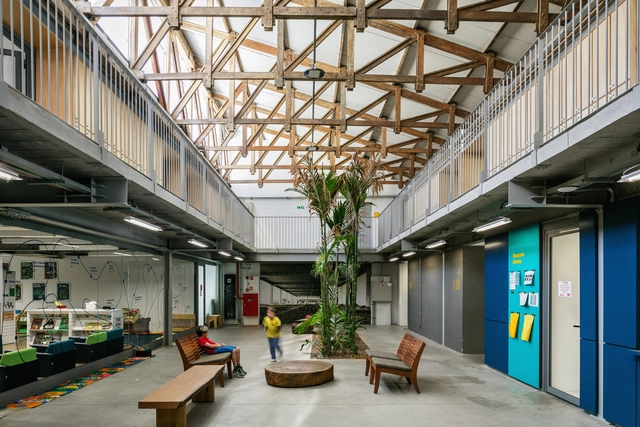
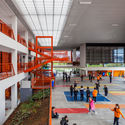
The key to a good education lies not only in good books and the teacher's didactics. The learning environment which students attend also has a great influence on their education since the requirements for acoustic, thermal and luminous comforts, or even landscaping, directly influence the behavior and attention of the students. In Brazil, school projects can vary widely from the private sector to the public sector, yet in both cases, it is possible to find high-quality solutions.
The perception of space and the way a building is perceived within its surroundings are always primary concerns when designing an architectural project. In order to meet these interests, a graphic intervention project can become a great ally to an architect, turning the building into a landmark which allows passers-by to interpret it more clearly.
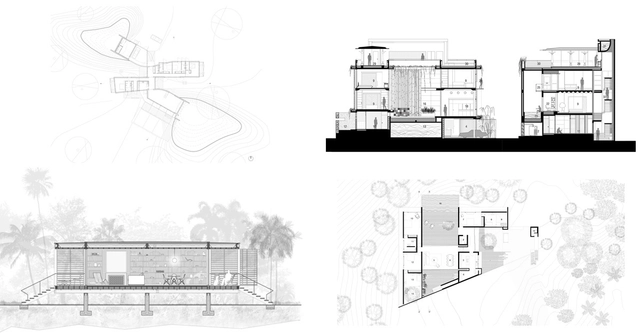
Anyone who enjoys architecture and Netflix has certainly already watched 'The World's Most Extraordinary Homes,' in which architect Piers Taylor and actress Caroline Quentin travel the world visiting homes that stand out in some way. Many times, when watching the show, architects may question and wish to carefully examine the drawings of each project, which is why we have gathered a selection of houses that appear on the show. Learn even more about the conception of each home, providing a panorama that helps understand a bit more about how residential architecture can be perceived in different places around the world.
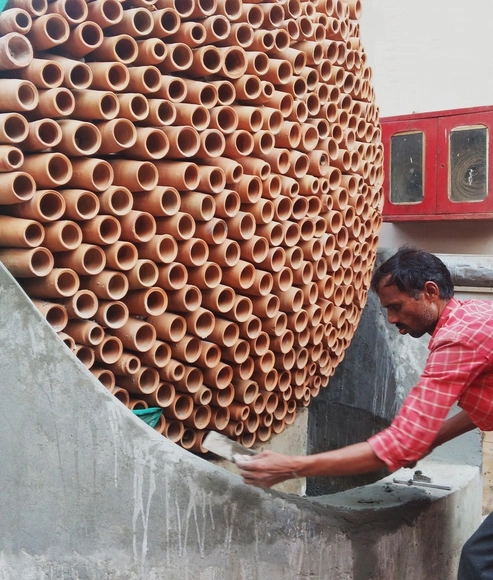
This installation is a bespoke attempt to simplify and reinterpret the concept of air-conditioning, understanding that standardized solutions may not be universally applicable given the constraints of cost and surrounding environment. Using computational technologies, the team at Ant Studio has reinterpreted traditional evaporative cooling techniques to build a prototype of cylindrical clay cones, each with a custom design and size.
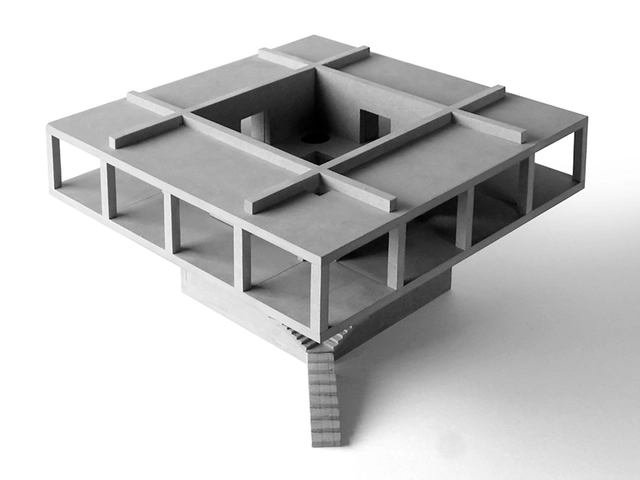
Physical models have, for centuries, been a highly-effective way of explaining an architectural idea, allowing the audience to experience a concept in a plan, section, elevation and perspective all at once. However, a model can communicate so much more if you deviate from traditional cardboard materiality. If you want to express the monolithic massing of your latest scheme, or its expressive texture, then a model of plaster or cement may capture so much more than a digital rendering ever could.
Creating a concrete model is profoundly engaging, as it forces us to follow a methodology similar to that of large-scale construction: make a mold / formwork, mix the cement or plaster with water, and then pour. When done correctly, the resulting model could stand as an architectural sculpture in its own right.
Below, we have rounded up concrete models from the ArchDaily archives, giving you the inspiration to set your concrete model ideas in stone.
Sketches are the first inkling into the design process of an architect, a way of observing and investigating a project’s development or even representing solutions for it. Through an architect’s sketches, one can better understand how a specific design move mirrors echoes throughout an entire work. Here, we have compiled sketches by Pritzker Prize winners - designers who have been awarded the highest recognization in the field of architecture - offering diverse techniques that can certainly inspire your next freehand experiment.
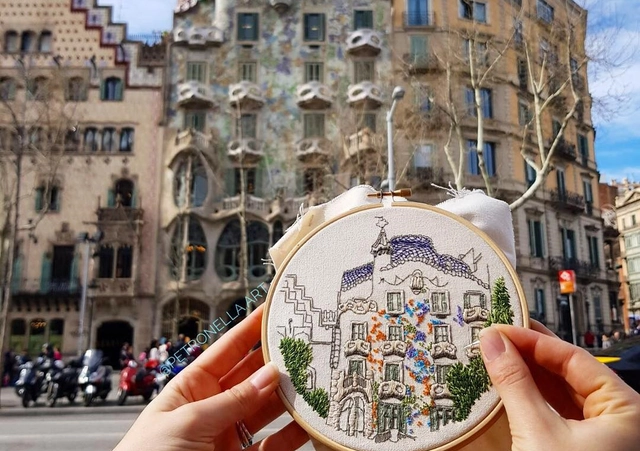
Elin Petronella and Charles Henry record the architecture and urban landscapes of European cities on vibrant, colorful, and even monochromatic embroideries. Classical Danish buildings, the bohemian streets of Paris, Lisbon's cable cars, and even the iconic Casa Batlló de Gaudí in Barcelona are some of the locations illustrated in the duo's work. See more of the textile artists/couple's work on Instagram: @petronella.art and @_charleshenry_.









CopyrightsMurrayFredericks.jpg?1439374362 "One Central Park. Image © Murray Fredericks")