Daniel Libeskind has been selected among two other renowned artists to design the Ohio Statehouse Holocaust Memorial in Columbus. The 18-foot tall memorial brushed stainless-steel memorial will be punctuated by the six-pointed Star of David and accompanied by a 40-foot walkway with words etched in limestone.
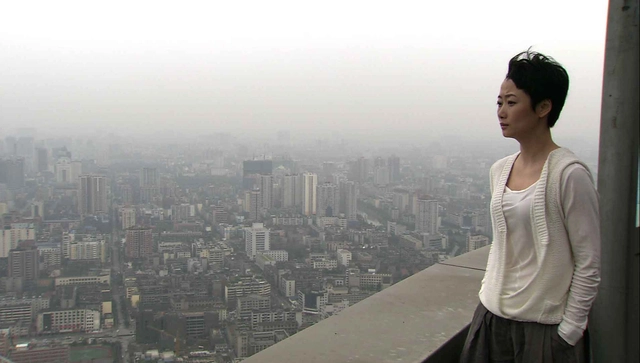
By the acclaimed director Jia Zhangke, 24 City cannot be considered a documentary, since actors perform in most of the scenes; however, this Chinese film realistically shows the dissociation between the rapid urban development and a population that seems to be victimized by globalisation.
The film is focused on the workers at Factory 420, a complex designed and deployed by the government for military purposes and used as a factory for producing and repairing mechanical elements for the army. This whole area became a city in itself, housing generations of factory workers. When the space is converted to 24 City, a complex to accomodate hundreds of luxury apartments, the entire site is demolished. 24 City tells the workers' stories in the midst of this transformation.
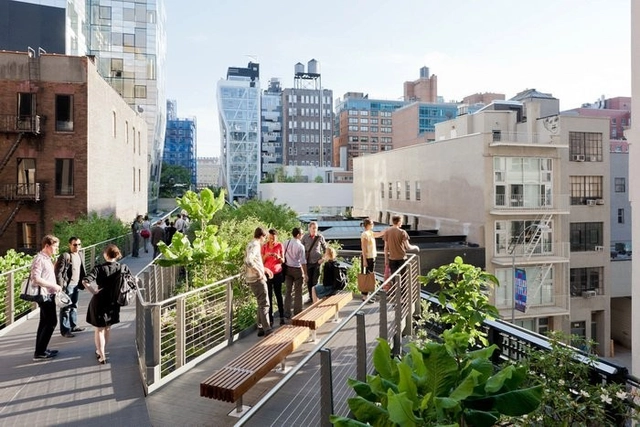
How should we consider these kinds of mono-functional cities and what could/should be their futures? Let us know in the comments below.
Architecture is inseparable from planning, and the huge challenge for the current generation is the growth and shrinkage of cities. Some cities, mainly in the Southern Hemisphere, are growing at exponential rates, while former global hubs in the northern are turning into countrysides. In the south, populations are still growing a lot, while populations are dwindling in Europe, Russia and North East Asia. The dream of the Bilbao effect was based on the hope that there might be a quick fix to both of these problems. Well, there is not.
A decade ago, few people even recognized this was a real issue and even today it is hardly ever mentioned in a political context. As a politician, you cannot say out loud that you have given up on a huge part of the electorate, or that it makes sense for the national economy to favor another part. Reclaiming the agricultural part of a nation is a political suicide issue whether you are in Europe or Latin America. And investing in urban development in a few, hand-picked areas while other areas are desolate is equally despised.
The one person, who is consistently thinking and writing about this problem, is Rem Koolhaas, a co-founder of OMA.
When Christopher Hawthorne, architecture critic for the Los Angeles Times, gives a bad review there is the sense that he is essentially dismantling a building, chipping its façade apart, like breaking down some charade in defense of the public’s honor. Like a hired killer he disappears the architecture, but at the same time heightens its visibility in the culture.
This ability, to provoke in such ways, is precisely why Thom Mayne would like to bar Mr. Hawthorne from taking a crack at reviewing the new building he and his firm, Morphosis designed for the firm’s new offices.
On a recent tour of the new digs, Mayne, as reported in The Architect’s Newspaper, was overheard saying, “There are no good writers in Los Angeles” and “All local writers are horrible.” To add further insult, he wants a science writer to cover it. That should be a short review.
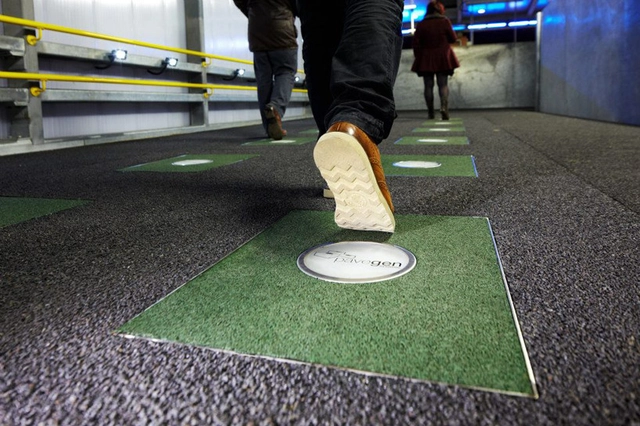
The potential to generate energy is hidden in many places, from skyscrapers to ski-slopes. But new research is showing that a potent source of energy is hiding right beneath our noses, or feet to be more specific.
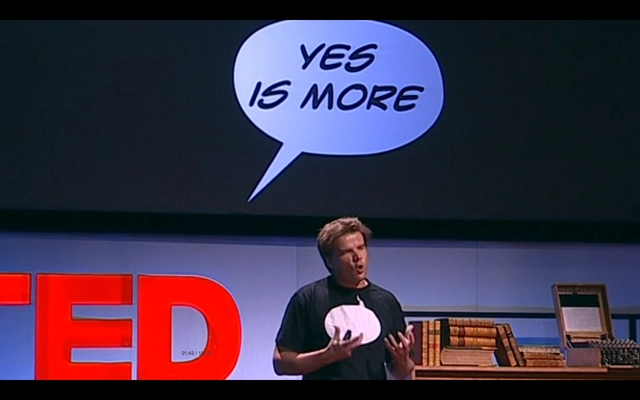
What has the internationally awarded Bjarke Ingels Group (BIG) to do with Friederich Nietzsche and Charles Darwin? Quite a lot, according to founder Bjarke Ingels, who has created a powerful mixture of Nietzsche and Darwin as the philosophical foundation of BIG’s architecture.
Read Anders Møller's fascinating article on BIG's unusual philosophy, after the break...
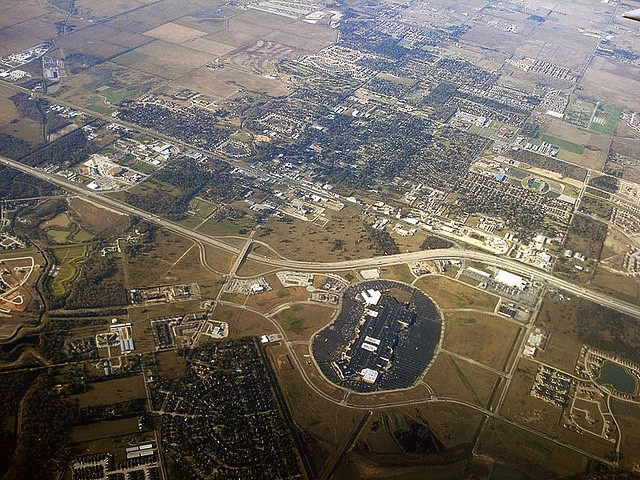
Houston, Texas; Flickr User JoeInSouthernCA; Licensed via Creative Commons
Despite the romantic notion about cities that develop organically have a rich diversity of form and function, we cannot overlook the deadly side effects of negligent city planning. As Christopher Hume of the Toronto Star points out, last month's tragic fertilizer plant explosion in West, Texas is a grim reminder that planning has a time and place and its ultimate utility resides in the initiative to protect residents and make for healthier communities. The tangle of bureaucracy associated with planning, zoning and land use regulations can give any architect or developer a massive headache. In some cases, the laws are so restricting that diverging from bulk regulations becomes very limiting.
This year, the LampLighting Solutions 2013 celebrated its 5th version. The awards are organized by LAMP, an architectural technical lighting company, specialized in, advising on and designing efficient solutions adaptable to any project by way of innovative and competitive products and services.
Lamp Lighting Solutions Awards 2013 closed its registration period with record on all the previous editions, with a total of 608 projects submitted from 52 countries and 61% internationalization.
Image of Thomas Jefferson Memorial courtesy of shutterstock.com
This blog was written by Doug Wingall, the President of HDR Architecture, for the AIA Blog Off on the theme “What does architect as leader mean to you?” It was originally published on HDR Architecture's blog BLiNK.
Architects and designers are trained in school to be creative and critical thinkers. We are shaped and molded into being the purveyors of ideas that can have a positive influence not only on the built environment, but society in general. By the very skills and talents which architects and designers possess, we are inherent problem solvers.
In fact, one of our country’s greatest politicians, Thomas Jefferson, believed that architecture embodied the soul of his new country–a building was a metaphor for American ideology, the process of construction equal to the task of building a nation.
So why aren’t there more architects and designers working on the national and global stage to solve pressing social, environmental and economic challenges? Currently, lawyers comprise 37 percent of all U.S. senators and nearly 24 percent of all U.S. congressmen. Banking and business occupations account for 20 percent of the Senate and 22 percent of the House. According to the AIA, in the last 50 years, only one architect has served in a national capacity: U.S. Congressman Richard Swett, who represented New Hampshire from 1990 to 1994.
Why aren’t there more architects on a national or global leadership level influencing the policy that ensures positive change?
The architecture that sunk the architecture school. Thom Mayne's $111 million New Academic Building. Via Wikipedia
Beginning in 2014 The Cooper Union for the Advancement of Science and Art (known more commonly as Cooper Union), the famed New York City college, will start charging tuition.
For more than 100 years, Cooper Union, which includes a prestigious architecture school, has been “free” (full-tuition support to all students). As such it has always stood apart, charting its own path and following its own independent mission. That Cooper Union is now dead.
For Cooper Union to have survived it would have had to remain simpleminded. And I mean this in the most flattering way.
Wang Shu receiving his Pritzker Award in 2012. Oddly, his wife and co-partner, Lu Wenyu, was not acknowledged.
The Pritzker Prize had idealistic beginnings: recognising achievement within architecture, a profession that had long lost its status in public opinion. Pritzker 'seamed' this fragmentation, celebrated the architect and broadcast this stellar contribution to society, as a creative, a singular author whose uniqueness set him/her apart from a field of practitioners.
The Prize has since assumed a role of gatekeeper to the 'starchitect' it once helped define. While it is inspiring that architecture as a profession has reaffirmed its status and cultural significance, The Pritzker places itself on an archi-centric proscenium, running the risk of being consumed by a synthetic reality within the profession. If Pritzker and other similar models of recognition are to evolve, they must illuminate widespread transformations in practice and emphasise the changing of the guard within the profession.
Firstly, Denise Scott Brown should be recognised retrospectively. Opinion does not change facts.
Read more about the (d)evolution of the Pritzker Prize, after the break...
London is engrossed in a vigorous debate over recently unveiled plans for the South Bank Centre, the cluster of Brutalist concrete buildings on the River Thames including the Queen Elizabeth Hall (QEH) and Hayward Gallery.
Today, the Centre has as its neighbour one of the city’s biggest tourist attractions – The London Eye – and this, with the addition of retail and other leisure-led developments in and around the South Bank, has refocused both commercial and cultural attention on the complex.
Last month, British architects Fielden Clegg Bradley Studios (FCBS) unveiled their vision for a “Festival Wing” on the site, focussing on the QEH and the Hayward Gallery. It isn’t the first time an architect has been asked to look at these buildings in recent decades. However, it is the most likely to come to fruition.
Read more about the Southbank Centre and its future development, after the break...
ArchDaily’s Architecture App Guide will introduce you to web and mobile apps that can help you as an architect: productivity, inspiration, drafting, and more.
A year ago we introduced you to The Morpholio Project a web and mobile app based portfolio, created by architects, for the entire creative industry. A few months later they released iPad App: Morpholio Trace, a layered drafting tool that gained traction among architects and designers. This feature was just the beginning of what evolved into Morpholio 2.0 (free download from the App Store ) part of a series of new tools that turn the portfolio app into a flexible workspace where designers, architects, fashion designers, 3D artists, photographers, automotive designers, and everyone in the creative industry can interact and evolve ideas through feedback.
It builds on research into human-computer-interaction to deliver innovations like a tool for image analytics called "EyeTime" and virtual "Crits" where collaborators can share images, and comment on each other’s work via notes or sketches. Human behavior data-mining is essential to offering these forms of powerful feedback, letting you know how your followers are interacting with your work.
Learn more about the 7 new tools Morpholio 2.0 offers to the creative world:
Architectural discourse has gradually become incoherent with the social and ethical needs of the contemporary city. With the relationship between theory and practice strained, lack of social relevance in design is ubiquitous. Practising architects frequently regard theory as esoteric and non-transferable, whilst many theorists do not manifest their ideas into reality and build. With the connection gripping the precipice by its fingers, this paper is conceived; written to persuade, motivate and encourage that there is real value in instigating ideas put forth in this paper. Concepts proposed are not only applicable to the city of Lincoln but are relevant and adaptable to all cities. Inspired by the architecture which has not yet manifested, it hopes to ignite the spirit needed to eradicate social inequities in urban design.
As Albert Einstein said: “If the facts don’t fit the theory, change the facts”. In order to palpably grasp an understanding of what it is truly like to be physically disabled in Lincoln, I rented a wheelchair for one day to see for myself whether the facts fitted the theory.
Read more of Sophia Bannert's prize-winning story, after the break...
Imminent domain has a new justification and it's called the Olympic Games. Once again, the anticipation of the Olympics brings to light the slew of human rights violations that are permitted by countries as they prepare to host the games. So what is the real cost of hosting the Olympic Games? We posed this question on ArchDaily last year in regards to Rio de Janeiro's pick for hosting the 2014 World Cup and 2016 Olympic Summer Games. http://www.archdaily.com/214726/rio-de-janeiros-favelas-the-cost-of-the-2016-olympic-games/ And here we are again, looking at the controversies that surround building the site of the 2014 Winter Olympics in Sochi, Russia which has been preparing for the games for six years now since it won its bid in 2007. If Brazil's practices with the favelas struck a nerve with human rights groups, Sochi's is sure to spark more controversy. Every time the International Olympic Committee sits down to choose the next host city, cities all over the world jump at the opportunity to impress, hoping that they will be chosen for the global celebration of human feats and accomplishments. As spectators, we are assured that cities can only benefit from being chosen to host the events. They bring tourism, new architectural projects, and global recognition. They encourage city infrastructure to develop and upgrade. They inspire measures that clean up a city, make it "presentable"; and eventually they raise the standard of living for residents. However, they also have the capacity to infringe on the rights and dignity of the very people whose land is being leased to this global event. The massive buildings that host the events have to be built somewhere, and often they are built in the disadvantaged neighborhoods that haven't the political leverage to fight against imminent domain. We've seen this happen in different versions to varying degrees, and we're seeing it now in Sochi as neighborhoods are destroyed, homes are razed, and life becomes unbearable for those still living among the construction and pollution with no means to relocate. The global community looks on in horror as reports like Anna Nemtsova's for ForeignPolicy.com (http://www.foreignpolicy.com/articles/2013/04/11/russia_s_olympic_city) reveal the treatment of citizens to make room for the infrastructure that supports the Olympics. Nemtsova gives some insight into the status of these projects and their affects on communities: The rising concrete wall (set to be 12 feet high upon completion) is about to cut off Acacia Street's view of the mountains -- and, indeed, of the rest of the world. During rainstorms, bulldozers push mud into residential courtyards, where the dirty water floods residents' basements, destroying floors and furniture. Mold is creeping up the walls in homes, filling the air with a rotten-garbage smell. Last month, Sochi City Hall filed a lawsuit against Acacia Street inhabitants who haven't been willing to demolish their own outhouses, kitchens, and water pumps that happen to be in the way of the construction of a new federal highway. But what happens here is not just a human rights issue that leaves people disenfranchised. This otherwise idyllic get-away city has been transformed by the massive construction undertaking and in some cases has become an ecological disaster as well. Greenpeace an World Wildlife Fund have both expressed concern over the construction that is poisoning the lakes which are a crucial ecological site for migrating birds. And community protest and activism in regards to their own condition has gone unregistered by President Putin, according to Nemtsova. The Atlantic (http://www.theatlantic.com/infocus/2012/12/sochi-2014-an-olympic-preview/100422/) posted some progress photos from the construction late last year. These images are bittersweet. On the one hand they show growth, construction, progress and the majesty and grandiosity that we associate with this celebration. On the other hand, we see photos of demolished, scattered rubble, and construction sites where there once were neighborhoods. It's sad to think that this global celebration has so many casualties. Is this something that was always the case, the unmentionable part of the Olympic Games? Or has it become more acceptable to bulldoze neighborhoods for the sake of the games and declare imminent domain without regard for the people or the place? And what can we do differently next time? While the global community watches and comments, it largely turns a blind eye to these developments, permitting them to perpetuate year after year.
Inspiration is a funny thing: when you need it is nowhere to be seen, and just when you're not expecting it, it can blindside you in the least convenient of places. Here's ten inspirational TED talks for architects (in no particular order) from people with broad and unique views on architecture. Some might enlighten, educate or even enrage you - at the very least they should get those creative juices flowing a little better.
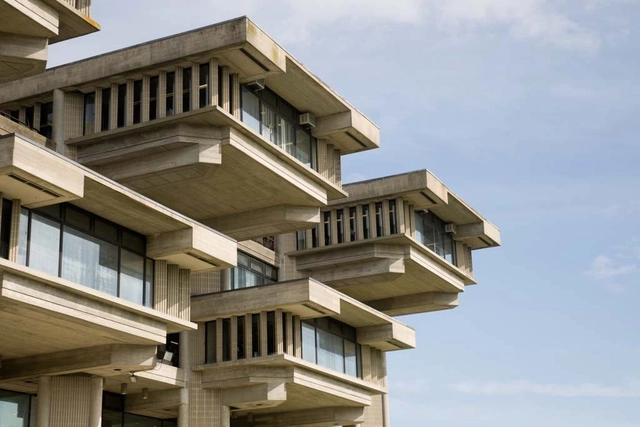
Last Sunday James S. Russell, architecture critic for Bloomberg News and a former editor for Architectural Record, mused on his personal blog about the possible influence Paul Rudolph’s Brutalist University of Massachusetts campus in Dartmouth may have had on Dzhokar Tsarnaev, the younger of the two Boston Marathon bombers who was also a student there.
Mr. Russell describes the campus as “a gigantic eerie, dozen-building concoction of grim ribbed-concrete hubris….” This is the sort of description that drives right to the heart of urban alienation. It’s Edvard Munch’s The Scream. This ability to sum up and drive the nail home is one reason he is the architecture critic for Bloomberg News. No side-stepping here.
Most parking is free - but that doesn’t mean it doesn’t have a high cost. A recent podcast from Freakonomics Radio examined parking in US cities, investigating the “cost of parking not paid for by drivers” - a cost paid not just by the government, but by the environment - due to congestion and pollution caused by people searching for kerbside parking. For example, in a 15 block area of Los Angeles the distance traveled by drivers looking for parking is equivalent to one trip across the USA per day.
One potential solution which they discuss is a San Francisco project called SF Park, which makes use of sensor technology to measure the demand for parking in certain areas of the city and adjust price according to demand. In theory, this would create a small number of empty spaces on each block and dramatically reduce the time that many drivers spend cruising for parking spaces.
Though the idea is certainly an intelligent approach to the problem of kerbside parking, unsurprisingly all this talk of supply, demand and pricing sounds very much like an economist's answer to a problem. But what can designers do to help the situation?
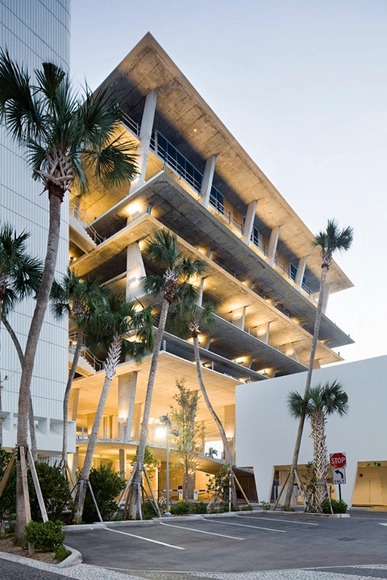
Perhaps, from the designer’s point of view, the real problem with kerbside parking and surface lots is that they are always seen as a provision “coupled with” a building or area of the city. There have been a number of attempts by architects – some successful and some tragically flawed – to make parking spaces less of a rupture in a city's fabric and more of a destination in themselves. Could these point to another way?
Read about 3 examples of parking’s past, and one of its potential future, after the break...