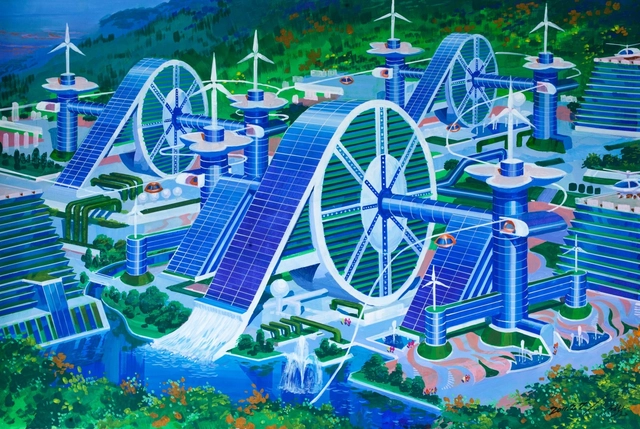
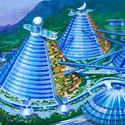
A silk co-operative clad with acres of PV solar panels, one of several illustrations exhibited at the Korean Pavilion in Venice. Image Courtesy of Koryo Tours
Originally published on Metropolis Magazine as "The Future of Architecture, According to a North Korean Architect," this interview with Nick Bonner, Curator of the North Korean Portion of the Venice Biennale's Korean Pavilion, delves into the realities of architectural work in one of the world's most secretive countries.
There's good chance you'll never step foot in North Korea, which isn't the same as saying you can't. Interest in the socialist state is increasingly high, a fact reflected by a rise in tourists eager to discover the sites and spectacles of Pyongyang. Nick Bonner, founder of Koryo Tours, has been bringing visitors to the Democratic People’s Republic of Korea (DPRK) for over two decades. He recently curated a small exhibition in the Korean Pavilion at this year’s Venice Architecture Biennale.
For “Utopian Tours” Bonner commissioned designs from an unidentified North Korean architect, asking him to envision a whole new infrastructure for accommodating larger and larger groups of tourists. The resulting handdrawn illustrations are fascinating: the future of architecture—at least in North Korea—looks a lot like yesterday's future, where tourists travel in hovercraft RVs, and workers live in ziggurat-shaped hotels inspired by mountains and trees.
Metropolis asked the trained landscape architect to give us a tour inside the present architecture scene of one of the world’s most isolated countries today.
Originally published by Metropolis Magazine as “Playing in Traffic“, this article by Jack Hockenberry delves into the relationship between man and vehicle, illustrating the complex dynamic created in New York - a city with over 2.1 Million registered vehicles. Contrary to the car-centric schemes of New York's infamous former Master Planner Robert Moses, Hockenberry argues that the city is the "negative space" while vehicles are obscured by our unconscious.
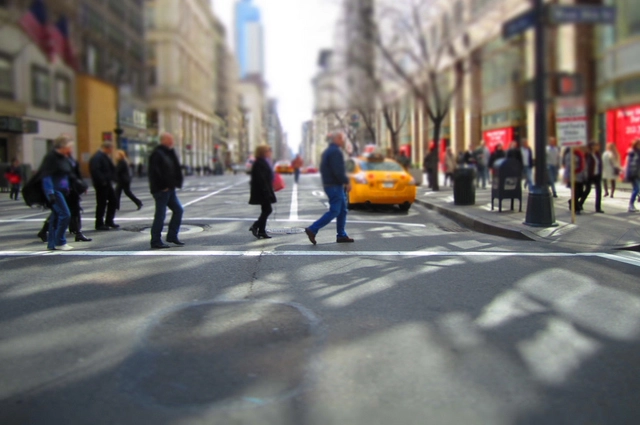
It is a curiosity of modern urban life that the more cars crowd into cities, the more they become invisible. It’s a great feature that comes standard on any model these days. Unfortunately we can’t control it from the driver’s seat—however much we would like to wave our hands and watch through our windshields as gridlocked cars disappear, liberating us from traffic imprisonment. The invisibility I am speaking about only works if you’re a pedestrian or bicyclist. The number of motorized vehicles parked or driving at any given moment on the streets of New York City is astounding. An estimated 2.1 million are registered in the city, according to the state’s Department of Motor Vehicles. Yet we never fully register them visually when we’re walking on the streets. The city is the negative space and that is how our eyes increasingly navigate urban landscapes. Everything around the cars and trucks gets knitted together by the eye and, even though the vehicles are present, we have gradually learned to ignore them unless we’re standing in the direct line of moving traffic.
As modernist architects broke free from vernacular architecture and developed a homogenized international style, many created sterile spaces and places out of touch with the decorative warmth of historical forms of human inhabitation. Negative reactions to the brutality of Modernist spaces encouraged architectural movements such as post-modernism and deconstructivism, but these never managed to usurp the rational modernist box as a dominant architectural paradigm.
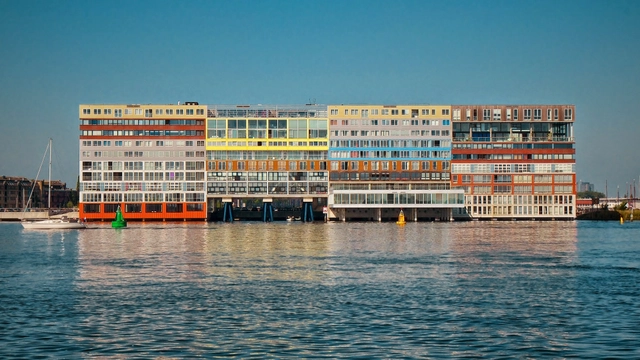
However, the intended machine-like precision of these buildings has often become unintentionally humanized over time, through the addition of curtains, coloring, or even through accidental breakage and imperfect repairs or alterations. I believe that building on the successes and failures of modernism has spawned a new and previously unclassified architectural style: Pixelism. Find out what this new phenomenon is after the break.
Wondering what to do with the last, lingering weeks of summer? There's still plenty of time for some enticing summer reading! Peruse this online collection of select books on Architecture, chosen from academic publisher Routledge's titles on themes of Professional Practice and Sustainable Architecture, and available in their entirety for free throughout the month of August.
Including compelling and notable works, these books tackle relevant and significant contemporary issues facing the design world today. See what's available after the break.
ArchDaily has partnered with CEMEX, a global leader in the building materials industry, to bring you an industry perspective into the latest advances that are relevant to architects. In this installment, we explore the role concrete plays in the development of forms in architecture.
Like splicing DNA, specific physical traits can be selected depending on a project’s needs. Adjusting the mix or adding exotic materials to concrete can make it waterproof or sponge-like; it can change its acoustic properties, generate energy from footsteps or even clean pollution from the air. Concrete is amazingly versatile. It can even used like ink in giant 3D printers to print buildings.
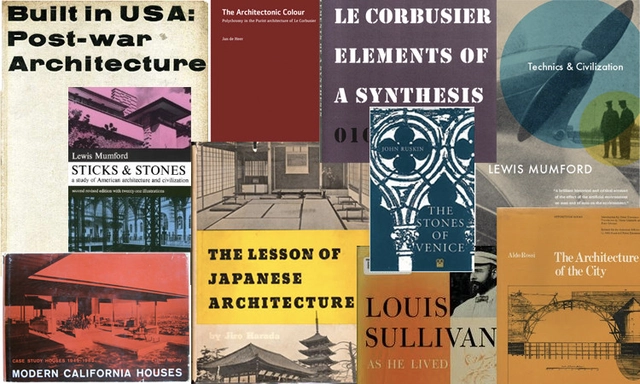
If you don't have access to an architecture library (and even if you do), sifting through shelves can take hours. Buying books can be even more painful — for your wallet, at least. Instead, why not browse this list of 25 books that are all free and easily accessible online? Some are well-known classics of architecture literature, but we hope you find a few surprises as well.
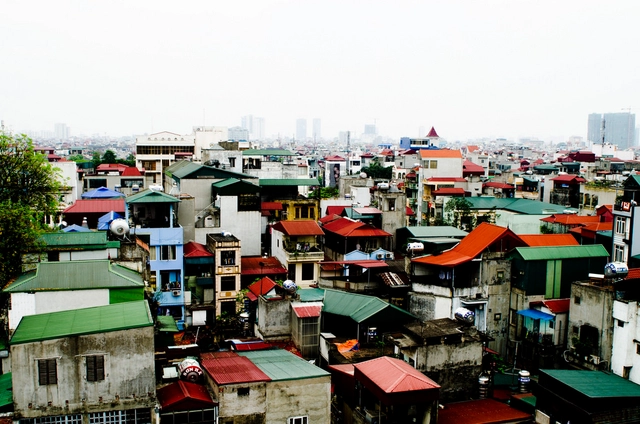
As the tide of urban migration sweeps across the developing world, cities experience an overpowering pressure to provide basic services such as electricity and sewage treatment to an enormous amount of people building illegal shacks on city outskirts. When they fail, the slum is born - but is it possible for a city to expand without slums? In Hanoi, Vietnam, officials hope to answer this question, with a number of tactics that have led to a "culture of semi-legal construction." Read this article in The Guardian to learn how Hanoi manages to curb slums and provide a basic standard of living to its poorest inhabitants.
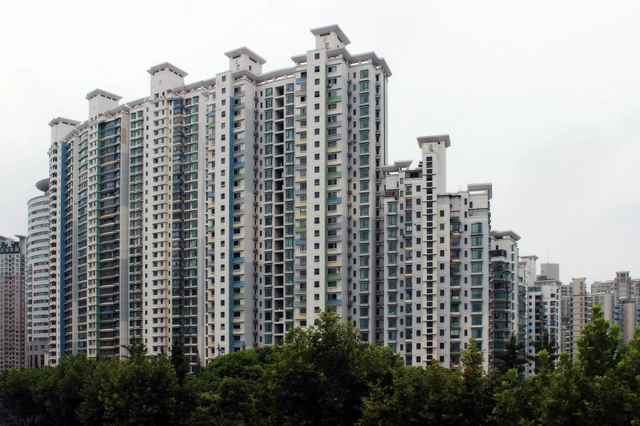
The world is looking at the urban machine of Chinese cities, at the newly founded theme-cities and at the new urban economic investment areas around the cities. The buildings are repetitive, the areas are sometimes uninhabited, but the thing that leaves urban planners, architects and the public amazed is that these buildings are often completely sold out even before they are completed.
To buy these freshly constructed residences takes money, and over the last three decades the Chinese economic miracle served precisely to grow the per capita income. The reform of the economic system in 1978 was the driving force that triggered the mechanism of capital production. The reform led to millions of people migrating to the cities from the underdeveloped west of the country in search of higher salaries and a well-founded hope of revolutionizing their economic existence.
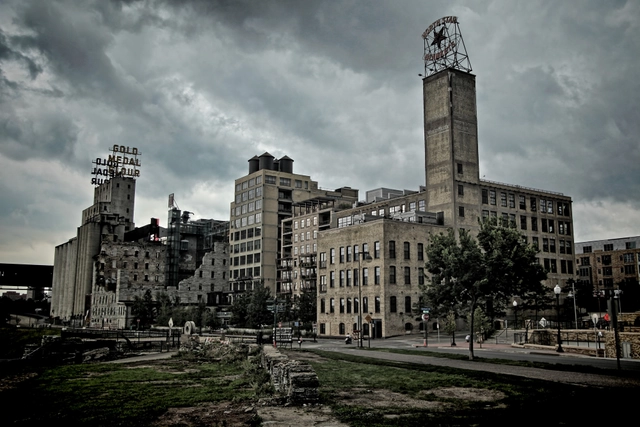
Historic mill city ruins in downtown Minneapolis. Image Courtesy of Flickr CC License / Joey Lax-Salinas
Lately, architects are sharing an increasing captivation with ruins. As our technologies for envisioning the buildings of the future become ever-more accurate – enabling us not only to walk through, hover over, and inhabit walls, but also to calculate exact quantities of materials, structural load capacities and costs – our fascination for ruin, a process that is governed by laws of nature and time in a manner that is spatially unpredictable and rarely uniform, has also seen a rise in popularity.
Blogs such as Ruin Porn, Abandoned America and Architecture of Doom draw from a recent sub-genre of photography, identified as ‘ruins photography’ or ‘ruin porn’. While buildings can go into decay for many reasons, these images tend to focus on urban decay, especially in cities such as Detroit, Chicago and Berlin, which saw a surge of industrialization in the last century that has since dwindled.
https://www.archdaily.com/537712/beyond-ruin-porn-what-s-behind-our-obsession-with-decayShayari De Silva
Architecture students are constantly beset by questions concerning where they want to work, and for what type of firm - and these two questions often boil down to a decision concerning the size of the firm they want to work for. This article, originally posted on Arch Shortcuts thankfully makes this difficult choice a little easier. In it, blog Co-Founder Udit Goel reviews the pros and cons of big firms and small firms, including compensation, expected working hours, and responsibilities. Read the full article, after the break.
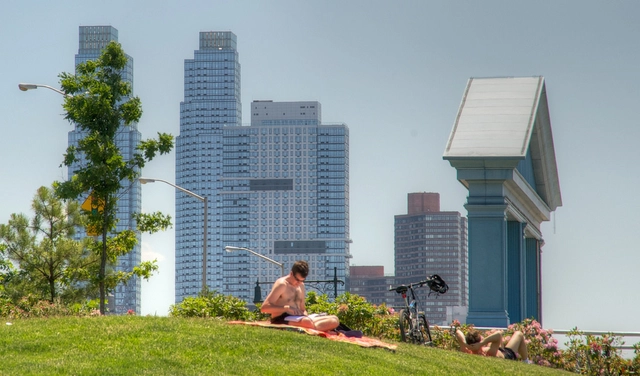
Contrary to popular belief, the most visible aspects of cities - new, shiny buildings and crowds of people - aren't really why people around the world are drawn to city life. Curious about the overwhelming trend toward global urbanization, design firm Sasaki surveyed 1,000 people in Boston, Chicago, New York City, Austin, San Francisco and Washington DC to discover the most beloved elements of cities. Finding differences across regions and between generations, this article on Fast Company explores the humble and often surprising reasons we adore city living. Read the full article for more.
Developed by Hannah Ahlblad, a recent graduate of Wellesley College cross-registered at MIT's School of Architecture + Planning, this article explores the potential of merging bamboo and concrete, harnessing the strengths of both materials to create a sustainable, durable and affordable material for use in developing countries. Hannah’s project was created in conclusion to the semester-long emergent materials elective taught by Professor John E. Fernández, Director of MIT’s Building Technology Program.
In the rapidly developing economies of East Asia and Latin America, urban architecture often seeks to combine the local heritage with the prestige of Western contemporary form and practices. The materials used in urban areas of these growing cities follow the steel, glass, and concrete technology used elsewhere. Usually, emerging materials research looks at the structural properties and applications of materials under scientific development. Less consideration has been given to ancient building materials and their interaction with today’s engineering.
San Francisco architect Chris Downey is changing how design is employed for people with disabilities and redefining how architects can approach accessible design. In this article by Lamar Anderson on Curbed, we learn about how Downey has developed his own design methods and utilizes his rare skillset to draw attention to what architects often miss when designing for the public.
Architect Chris Downey is standing next to a pile of Sheetrock, balancing a white cane in the air like a tightrope walker's pole. The week before, construction had begun on a new office for the Independent Living Resource Center of San Francisco, or ILRC, a nonprofit community center for people with disabilities. Downey holds the cane up to approximate for the center's executive director, Jessie Lorenz, how the reception desk will jut out at an angle from a concrete column. Lorenz takes a step, and a pile of pipes on the floor clatters. "I don't know what's over there," says Downey. Lorenz giggles. "I hope I didn't break anything," she says. Lorenz regains her footing and touches the cane. "That makes sense," she says. "It's almost like we're funneling people into this part."
https://www.archdaily.com/536298/how-a-san-francisco-architect-reframes-design-for-the-blindLamar Anderson
Architects are woefully underrepresented in literature. According to Jay Wickersham, author of this article originally published in Architecture Boston, there are very few books that accurately portray designers without sensationalizing or glossing over their craft. He does, however, point us towards some exceptions: works of fiction that come close to grasping what the study and practice of architecture is all about. Read the full article, along with these recommendations, after the break.
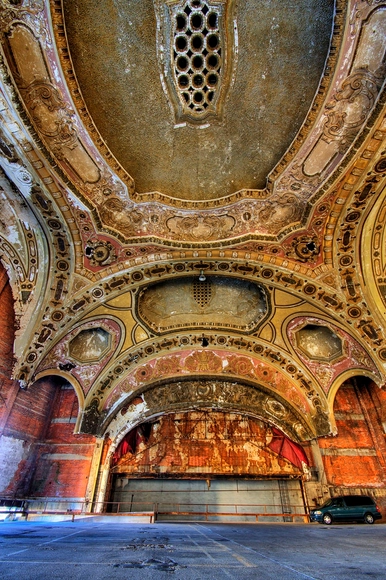
Originally posted on the Huffington Post's Home Section as "How a Historic Movie Palace Became America's Most Unusual Parking Garage," this article tells of both the history and the possible future of the Michigan Theater - once one of Detroit's most opulent nights out, but now a crumbling (albeit oddly magnificent) parking garage. Emblematic of the city's rapid decline, it turns out the recently-purchased Michigan Theater may also be a symbol of the city's regeneration.
An inventor's workshop. A movie palace. A rock club. A car park. A skate park. The backdrop for Eminem videos. Now it's one of America's strangest parking garages, but a peek inside the Michigan Theatre reveals why it's remained a landmark -- and has a unique story that explains a lot about the importance of preserving cities' historic architecture.
The former theater is attached to the Michigan Building, a partially occupied office tower, and might look familiar to some who have sought out urban decay photos. There's something radically visceral about cars parked in the garage under the crumbling but ornately decorated ceilings of the site that in its heyday hosted legends like the Marx Brothers, Frank Sinatra, Louis Armstrong and Doris Day.
Read more on the theater's unusual, inspiring story after the break
We will be publishing Nikos Salingaros’ book, Unified Architectural Theory, in a series of installments, making it digitally, freely available for students and architects around the world. The following chapter outlines architecture’s connection to biology, and how biology influences our perception of form. If you missed them, make sure to read the previous installments here.
The idea of a biological connection to architecture has been used in turn by traditional architects, modernists, postmodernists, deconstructivists, and naturally, the “organic form” architects. One might say that architecture’s proposed link to biology is used to support any architectural style whatsoever. When it is applied so generally, then the biological connection loses its value, or at least becomes so confused as to be meaningless. Is there a way to clear up the resulting contradiction and confusion?
Biomimicry is quickly emerging as one of the next architectural frontiers. New manufacturing processes such as 3D printing, coupled with the drive to make buildings more environmentally sustainable, have led to a wave of projects that are derived from natural phenomena or even constructed with biological materials. A recent example of this trend is “Hy-Fi,” this summer’s MoMA PS1 design that is constructed of organic and compostable eco-bricks. Other projects such as MIT Media Lab’s Silk Pavilion have taken biological innovation a step further by actually using a biometric construction processes - around 6,500 silkworms wove the Silk Pavilion's membrane. “Animal Printheads,” as Geoff Manaugh calls them in his article "Architecture-By-Bee and Other Animal Printheads," have already proven to be a viable part of the manufacturing process in art, and perhaps in the future, the built environment as well. But what happens when humans engineer animals to 3D print other materials?
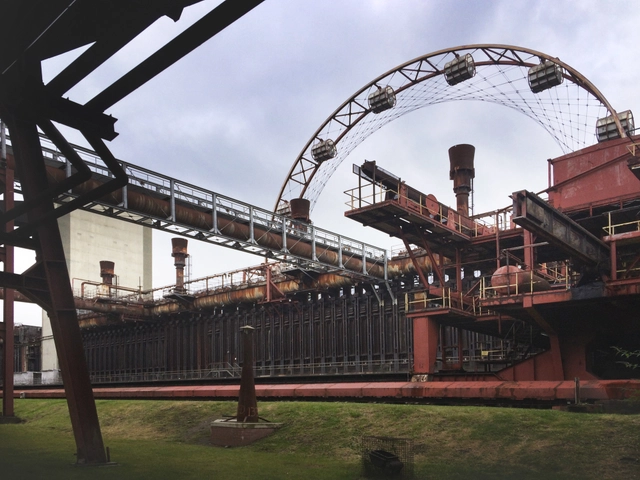
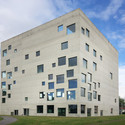
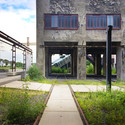
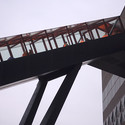
Derelict urban landscapes and abandoned spaces have always attracted adventurous explorers, searching for a peek into the world of a fallen industrial dystopia. That desire can be fulfilled by a visit to the Zollverein complex in Essen, Germany: once Europe’s largest coal mine, Zeche Zollverein was transformed over 25 years into an architectural paradise. Contributions by Rem Koolhaas, Norman Foster and SANAA are included in the 100-hectare park; overwhelming in its complexity, the estate includes rusty pipes, colossal coal ovens and tall chimneys, inviting over 500,000 people per day to gain an insight into the golden age of European heavy-industry.
Join us for a photographic journey through this machine-age playground, after the break…










.jpg?1407535828)