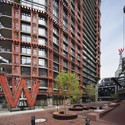
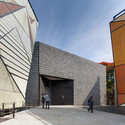
Officially opened in 2010, the Woodward’s Redevelopment project designed by Vancouver based Henriquez Partners Architects and situated in the city’s Downtown Eastside (DTES), was a contentious proposal from the time of its inception, and has continued to be so in the almost five years since its completion. Yet as the large-scale mixed-use complex, and its role in the community, nears the first of many milestone anniversaries, it offers us a chance for critical reflection and allows for perceptions and understandings to be gathered and assessed.
What has made Woodward’s an interesting case study, however, is the project’s attempt to act as a model for responsible development with respect to the regeneration of its surrounding urban and community context. Yet there has also been much criticism, with fears over rapid gentrification and claims that it has displaced some of the community’s most at-risk residents. For managing partner Gregory Henriquez, however, it was seen as an opportunity to introduce a place of inclusivity into the neighbourhood and as a chance to “share a portion of the wealth created in real estate development to support the greater good.”
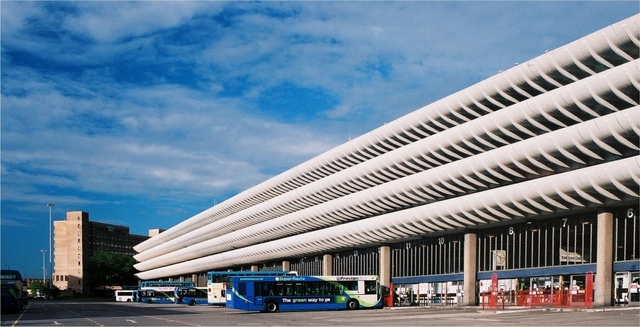
In the UK, the commissioning of buildings is in crisis. The government and the industry as a whole is short-sighted, putting too much emphasis on function and too little thought into what makes for a long-lasting, and in that respect sustainable, building.
What is it that prompts a person to own a classic car or a family to continue to use old silver when both involve so much hard work? Why not buy a new car or use stainless steel cutlery? By convention these possessions have reached the end of their natural life, they require careful maintenance and in many cases they don’t function as well they might - they are obsolete. Their continued use requires a conscious commitment - time and money - on the part of their owner. But then, in time, this responsibility stops being a burden and instead becomes a cause for satisfaction and enjoyment.
It is a question that could be asked of those who commission and use buildings.
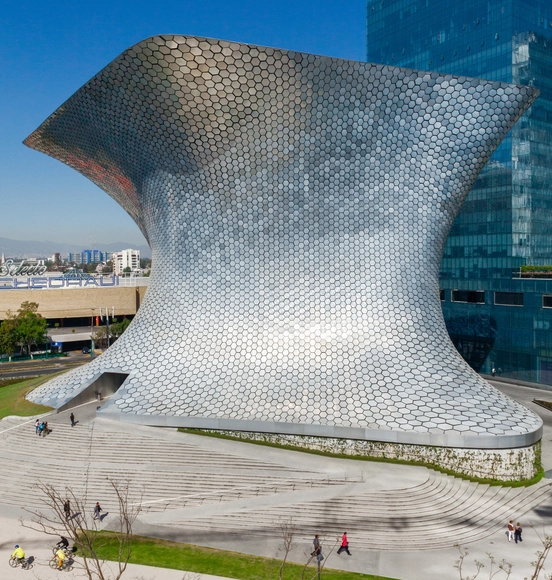
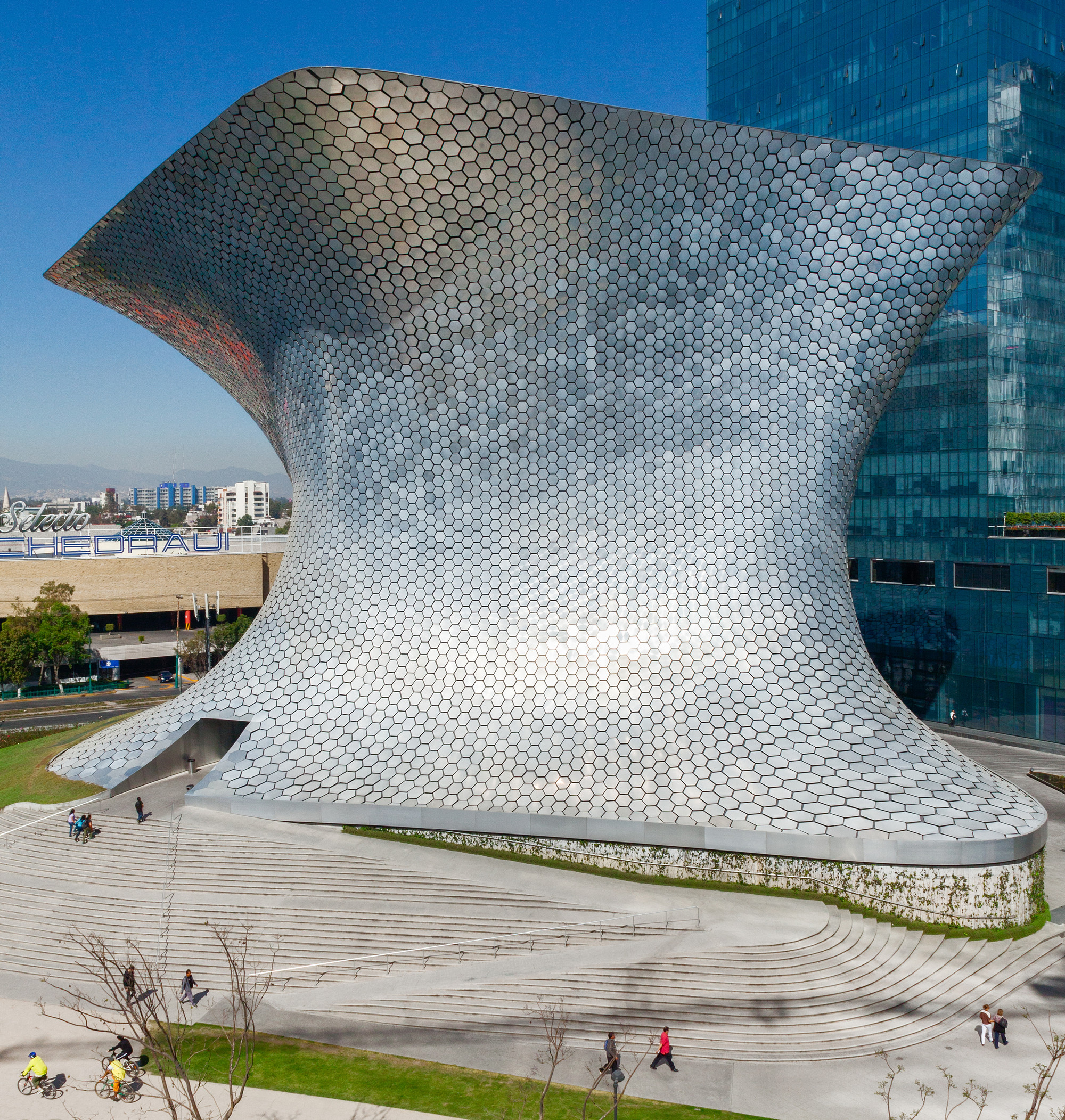
On a recent trip abroad, architect and urban planner José Castillo was struck by a conversation with Mexico’s tourism attaché in Asia. Mexican tourism, the attaché remarked, has changed; it was the ancient pyramids and sandy beaches of the country that once drew visitors to it. Today however, architecture and design—and food—prevail.
The issue of food may be of little wonder. Mexican cuisine has indeed become more popular than ever in both the high and low ends of the culinary spectrum, and food in general is not only what one eats for dinner but also a hobby and an obsessive conversation topic. Yet for local design to come to the same level of acclaim and reputation is, at any rate, quite astonishing. It may be, though, that food and architecture are not so far apart. These are both highly creative and productive professions, as well as ones with a rich history, a theory, and many layers of tradition.
In their first collaboration together as writer and director, John Hughes and Christopher Columbus produced Home Alone (1990). This quintessential Christmas film is a prime example of a “movie home” -- a home that is made iconic and famous with its appearance in a popular film.
The film concerns itself with Kevin McCallister (Macaulay Culkin), a young boy whose family accidently leaves him home alone after leaving for a vacation. In this small suburban town, on Christmas, their home is targeted after a string of successful break-ins in the neighborhood. The McCallister Residence as a result becomes the central space where the majority of the action in the film occurs.
The production used an actual home for the setting of the film. The home’s location is 671 Lincoln Avenue in Winnetka, Illinois, north of Chicago. The majority of the interiors were filmed on location, including most of the first floor, while several rooms were recreated and filmed on a sound stage. Interiors visited the location in July 2014.
This year there was a cultural shift that saw landscape architecture and its practitioners achieve an unprecedented level of visibility and influence.
This year the single most notable development came courtesy of the New York Times architecture critic Michael Kimmelman who wrote: "Great public places and works of landscape architecture deserve to be treated like great buildings."
Landscape architecture and architecture on equal footing. Let that sink in.
https://www.archdaily.com/577280/2014-a-great-year-for-landscape-architectureCharles A Birnbaum
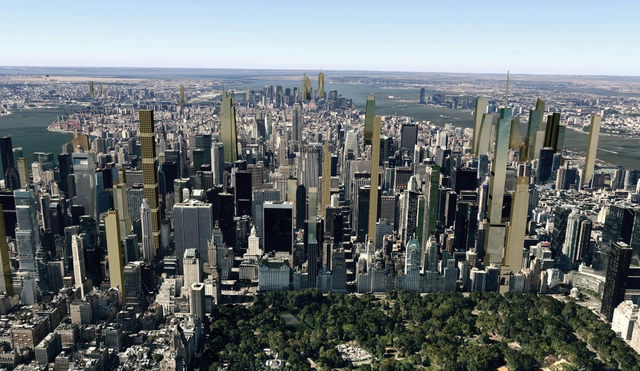
View above Central Park looking south towards “Billionaire's Row” towers, with Midtown towers in background and various Financial District and Downtown Brooklyn Towers in far background. Image Courtesy of CityRealty
What would a city owned by the one-percent look like?
New renderings for CityRealty get us part way there, illustrating how Manhattan may appear in 2018. The defining feature will be a bumper crop of especially tall, slender skyscrapers piercing the skyline like postmodern boxes, odd stalagmites, and upside-down syringes. What they share in common is sheer unadulterated scale and a core clientele of uncompromising plutocrats.
https://www.archdaily.com/577034/why-new-york-shouldn-t-be-a-city-for-the-one-percentJoshua K Leon
The Smart Cities concept is linked to highly "liveable" cities such as Vancouver superseding more recognizable cities in our collective consciousness. Image Courtesy of SFU
I had a sinking feeling as I was listening to the talks by these prominent figures in the field of smart cities because the city used to be the domain of the architect, and now, frankly, they have made it their domain. This transfer of authority has been achieved in a clever way by calling their city smart – and by calling it smart, our city is condemned to being stupid. Here are some thoughts on the smart city, some of which are critical; but in the end, it is clear that those in the digital realm and architects will have to work together.
A revolution is occurring in street design. New York, arguably the world’s bellwether city, has let everyday citizens cycle for transport. They have done that by designating one lane on most Avenues to bicyclists only, with barriers to protect them from traffic.
Now hundreds of cities are rejigging to be bicycle-friendly, while in New York there is a sense that more change is afoot. Many New Yorkers would prefer if their city were more like Copenhagen where 40% of all trips are by bike. But then Copenhagen wants more as well. Where does this stop?
Architecture institutions and architects are outraged by the Norwegian Government plans to demolish a unique part of Norwegian and international architectural history. Called the Y-block for its Y-shaped plan, the building in the Government Quarter in the centre of the Norwegian capital of Oslo was designed by the Norwegian architect and pioneer inventor Erling Viksjø in the 1950s together with the “H-block” or Highrise (1959) and was completed in 1969. The building is internationally well known for the extraordinary craftsmanship of its sandblasted concrete and the famous Pablo Picasso murals, “The Fishermen” and “The Seagull”.
To celebrate the first anniversary of our US Materials Catalog, this week ArchDaily is presenting a three-part series on "Material Masters," showing how certain materials have helped to inspire some of the world's greatest architects.
Le Corbusier's love affair with concrete, evident in a number of his nearly 75 projects, began early. Having already designed his first house, the Villa Fallet, at the age of just 17, in 1907 the young architect embarked on a series of travels throughout central Europe on a mission of artistic education. In Paris, he apprenticed at the office of Auguste Perret, a structural rationalist and pioneer of reinforced concrete, followed in 1910 by a short stint at Peter Behrens' practice in Berlin. These formative experiences initiated a life-long exploration of concrete in Le Corbusier’s work.
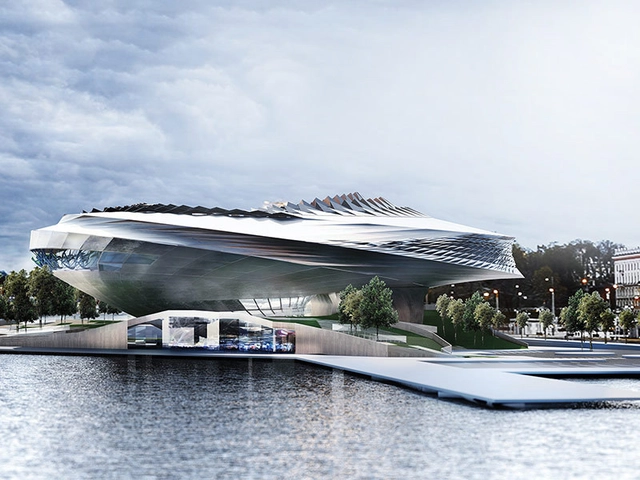
GH-6750399503. Image Courtesy of Malcolm Reading Consultants
The following analysis of the Helsinki Guggenheim competition entries was contributed by Federico Reyneri, partner at LPzR associates architects, and his research team.
Architects have always pushed the limit, often experimenting with forms and technologies unavailable in their time. In the last 20 years, we experienced a small revolution in thinking about spaces and embracing complexity, as computers started to show their real power. Since Gehry’s Guggenheim came to life in the mid nineties, nothing has been the same: free forms emerge everywhere from the dreamland to reality (often becoming someone else’s nightmare). Before this computer technology, except for the realm of the mind and clay modeling, real control over complexity through technical drawings was too hard a game for us ordinary mortals but eventually, in the last 10 years or so more powerful and cheaper computers and even cheaper software, capable of astonishing parametric-generated design elements, came out. Since then, new generations of designers have started to set free mind-blowing ideas, showing the world amazing computer generated pictures. Some architects even started to build them.
But how widespread is parametric design technology? How does it influence architecture worldwide? We started to analyse the Guggenheim Helsinki Design Competition, the largest architectural design competition in world history.
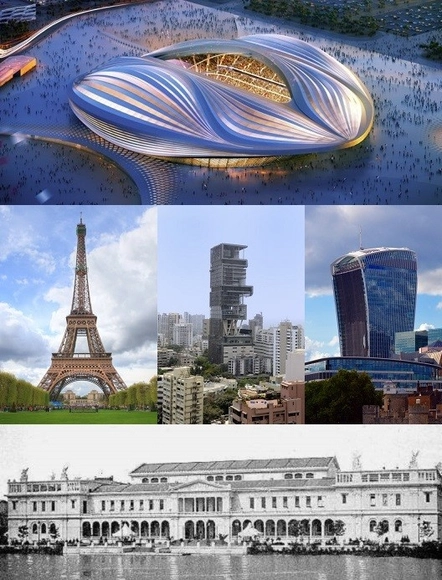
The criticism surrounding Al Wakrah has prompted us to look far and wide for the world’s most debated buildings. Could Al Wakrah be the most controversial building of all time? Check out ArchDaily’s roundup of nine contenders after the break.
Find out which buildings top our controversial list after the break
If there is one thing that will make you crave a nap, it’s a Thanksgiving feast. To help you through the post-meal hangover, we have complied some images of our favorite nap time retreats from Pinterest. Relax, enjoy and thank you for being an ArchDaily reader.
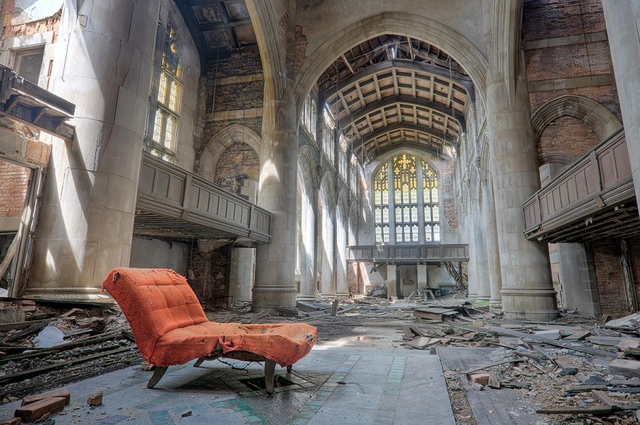
The internet has been good to fans of "ruin porn," providing them with a platform for sharing images and even coining the phrase, courtesy of a well-known Detroit blogger in 2009. However, the phenomenon isn't actually as new as most people believe. In this article, originally published on 6sqft as "Before There was 'Ruin Porn' There was 'Ruin Value'" Diane Pham expands on the idea of the connection between ruins and architectural value (recently discussed on ArchDaily in an article by Shayari de Silva), delving into the concept's surprising history.
In the hierarchy of “things the internet likes”, we’d argue that ruin porn sits wedged somewhere between Buzzfeed quizzes and cats. Images of decaying architecture conjure up unsettling feelings of tragedy and loss, but somehow manage to grip us with its intangible beauty. Whatever the cause for this may be, the thrill and enjoyment we get from looking ruin porn is palpable.
The term ‘ruin porn’ is said to have been coined by blogger James Griffioen during a 2009 interview with Vice magazine in which he criticized photographers who scouted down-trodden Detroit for provocative photos. While ruin porn is the trend at hand, decades before its arrival there was something called ‘ruin value’.
Nobody doubts that, in large measures, 20th century modernity has been brought to one’s living room by the media. Sure, toasters and mass-produced carpets have offered a sense of domestic modernity fostered by ever-more accessible technologies. But newspapers, the radio, and TV sets have delivered the sense that one was immersed in the long revolution happening outside. Drawing from popular media, Martha Rosler’s “House Beautiful: Bringing the War Home” series (1967-1972) gave this idea a poignant visual expression. If newspapers carried home modernity’s many conflicts and tensions, life-style magazines completed the picture with alluring visions of how to make yourself and your environment become “modern.”
When it comes to public space, many assume that while truly public space is always good, "privately owned public space" is always bad. However, in this article originally published by Metropolis Magazine as "A Plaza is No Guarantee of Democracy," NBBJ's Carl Yost argues that the distinction is not so binary. As architects, it's our job to smooth over the difference between the two, while we're at work - but most importantly while we're not.
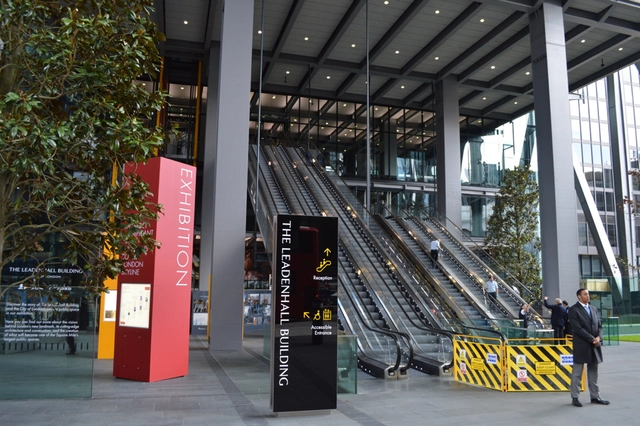
The past few months have seen the opening of high-profile projects with contested public space. The Leadenhall Building, London’s “Cheesegrater,” rises above a public plaza that the Financial Times called “problematic,” with “an astonishing array of defensive measures to make it clear that while it may be open to the public, it is still ours” (that is, the landlord’s). In New York, the World Trade Center plaza has taken fire from critics, both domestic and international, who chafe at restrictions on visitors’ behavior.
It evokes the debate over “privately owned public space,” or POPS, that arose during Occupy Wall Street, when protesters camped out in Zuccotti Park, a Lower Manhattan plaza that is privately owned by Brookfield Office Properties yet must remain open to the public. Many rightly pointed out the restrictions that POPS pose to free speech and assembly, when owners can evict people they consider unwelcome.
Every two years Audi hosts the Audi Urban Future Award (AUFA), which challenges cities from different parts of the world to investigate future mobility trends and come up with innovative solutions. This year AUFA selected Mexico City, Boston, Berlin and Seoul to participate in the challenge and respond to the question: how will data shape mobility in the megacities of the future? These four groups were asked to create a vision for how their city could use data in a strategic way, taking into consideration innovative energy solutions, sustainability, feasibility and the potential for their ideas to be implemented in other cities.
Mexico City’s team took home first place with their “operative system for urban mobility,” which centered around a data platform that cities can use to structure their urban traffic planning. Their system was also based around the idea that citizens themselves can become “data donors” and use the system to make informed decisions on how they move about the city. The team was comprised of architect and urbanist José Castillo, researcher Carlos Gershenson and the city government’s experimental lab “Laboratorio para la Ciudad.”
Learn more about the winning project after the break.
What does it take for a 22-year-old art school drop-out to start a lifelong professional relationship with "the greatest American architect of all time"? Originally published by Curbed as "How a 22-Year-Old Became Wright's Trusted Photographer," this article reveals that for Pedro E. Guerrero, it took some guts and a lot of luck - but once they were working together this unlikely pairing was a perfect match.
When Frank Lloyd Wright hired Pedro E. Guerrero to photograph Taliesin West in 1939, neither knew it would lead to one of the most important relationships in architectural history. Wright was 72 and had already been on the cover of Time for Fallingwater. Guerrero was a 22-year-old art school drop-out. Their first meeting was prompted by Guerrero's father, a sign painter who vaguely knew Wright from the neighborhood and hoped the architect would offer his son a job. Any job.
Young Guerrero had the chutzpah to introduce himself to the famous architect as a "photographer." In truth, he hadn't earned a nickel. "I had the world's worst portfolio, including a shot of a dead pelican," Guerrero said later. "But I also had nudes taken on the beach in Malibu. This seemed to capture Wright's interest."