Last month, ArchDaily had an opportunity to speak with Akshat Nauriyal, Content Director at Delhi-based non-profit St+Art India Foundation which aims to do exactly what its name suggests—to embed art in streets. The organization’s recent work in the Indian metropolises of Delhi, Mumbai, Hyderabad, and Bengaluru, has resulted in a popular reclamation of the cities’ civic spaces and a simultaneous transformation of their urban fabric. Primarily working within residential neighborhoods—they are touted with the creation of the country’s first public art district in Lodhi Colony, Delhi—the foundation has also collaborated with metro-rail corporations to enliven transit-spaces. While St+Art India’s experiments are evidently rooted in social activism and urban design, they mark a significant moment in the historic timeline of the application of street art in cities: the initiative involves what it believes to be a first-of-its-kind engagement between street artists and the government.
The Destruction of the Temple of Solomon, by Maarten van Heemskerck. From Freemasonry and the Enlightenment, by James Stevens Curl (Public Domain). Image
In a world in which the "happy" architectural image feels all-pervasive, the British architect and academic Dr. Timothy Brittain-Catlin reveals its darker side suggesting why, and how, we might come to celebrate it. You can read Brittain-Catlin's essays on British postmodernism here, and on colorful architecture, here.
"Contemporary buildings celebrate openness, light and free-flowing movement," says the President of the Royal Institute of British Architects (RIBA) in the March 2017 issue of the Institute’s journal. This is what at my school we call an "announcement", rather than a statement of fact. Indeed, all architects and architecture students hear these words all the time. But are they true? Should they be?
Fairy Tales 2017 Competition Winner: Last Day / Mykhailo Ponomarenko. Image Courtesy of Blank Space
When you’re used to the grind of architecture school, breaks can hit you like rain on a warm day—cool at first, but terribly annoying soon enough. While the first few days breeze past as you catch-up on lost sleep and binge-watch Game of Thrones, you realize before long that you’re going insane with nothing to absorb all your new-found energy.
This is where architectural competitions come in handy. They provide a constructive outlet while being deeply engrossing, thus keeping you from hopelessly refreshing Youtube to see if Buzzfeed uploaded a new video. Also, the fact that you’re no longer constrained by the direction of your studio-leader or school program enables you to experiment creatively. With diverse international competitions running at any given time, you can take your pick, depending on your individual interests and the amount of time you want to devote. However, the sheer number of available competitions can be deeply confusing as well. Here we shortlist seven of the most prestigious annual architectural competitions open to students:
We love construction details! That's why this week's photos highlight the art of the synthesis of materials and the varied photographic products we can obtain by looking closer. Photographers like Joel Filipe, Marie-Françoise Plissart and Adria Goula, give us precise and beautiful exposure to wooden joints, steel structures, concrete details, curtain walls and more.
Aggravated by limited upward mobility and a dire housing crisis, LA County’s homeless population has shot up 23 percent to nearly 58,000 in the past year alone, according The Los Angeles Times. Their increased visibility recently guilted voters into passing (by a two-thirds majority) a sales tax increase (Measure H) and a $1.2 billion bond initiative (Measure HHH) to provide housing and amenities. With the city now better financially equipped to tackle the problem, a new issue arises: what to build?
In #donotsettle’s latest video, architects and vlogging provocateurs Wahyu Pratomo and Kris Provoost provide breathtaking footage of one of Shanghai’s most curious projects, M50. The 300,000-square-meter Heatherwick Studio building is an undulating mass of mixed use urban topography.
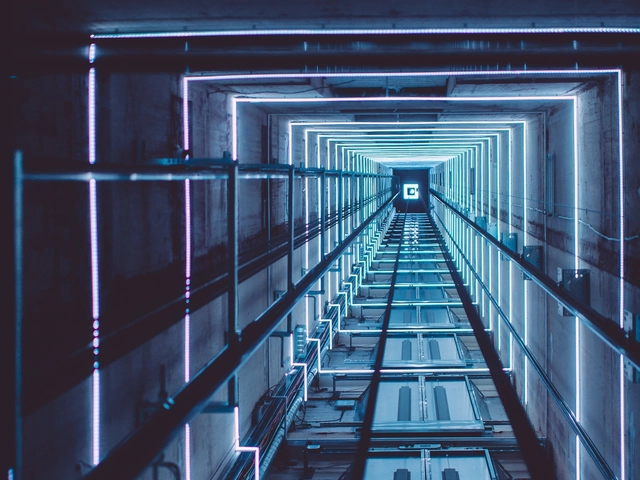
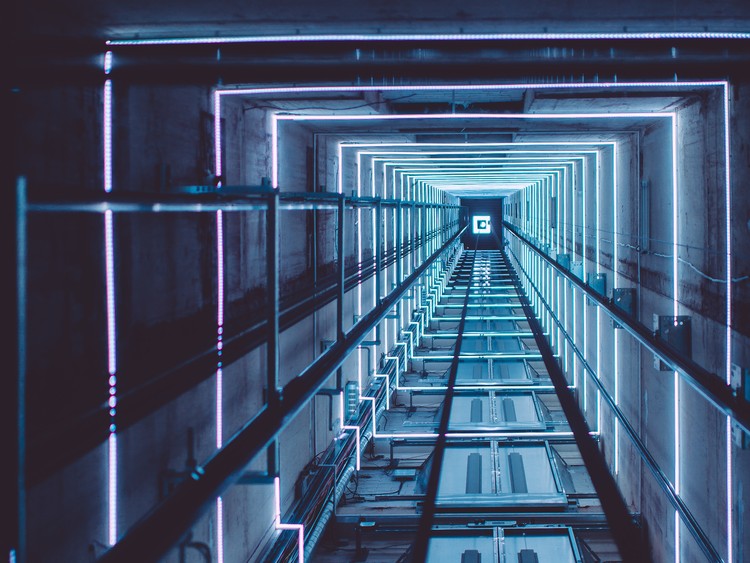
Elevator rides may offer an uplifting experience in the literal sense, but while they are indispensable in modern buildings, users face extremely compact spaces which are designed to fit effectively into buildings. Awkward looks at the floor or past other people’s faces reveal our discomfort with the elevator’s crowded anonymity. Couldn’t a more spatial experience lead to a more exciting journey? Flat screens and projections are starting to be included in elevators, but these are just the beginning of a revolution in the atmospheres created during vertical transportation.
As we know, architects are inveterate travelers. They like to see, understand, and capture the details of their favorite works. For this reason, at ArchDaily we believe that every architect should carry a 360-degree camera with them to capture and share their experiences across the world. Below are five reasons why.
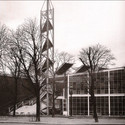
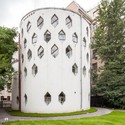
Best known for the Rusakov Workers’ Club and his own house, Russian architect and painter Konstantin Melnikov (August 3rd, 1890 – November 28th, 1974) has only recently received his due, now more than forty years after his death. He spent much of the twentieth century shunned by the Soviet architectural establishment, having refused to capitulate to the increasingly conformist (and classicist) prescriptions of Stalinism. As a result, he was forced to end his career only a decade after it started, returning to his other avocation as a painter and leaving in his wake only a precious few completed works.
Still from "Ghost in the Shell" (2017) directed by Rupert Sanders. Image Courtesy of Strelka Magazine
In this article, originally published by Strelka Magazine and translated into English by Alexandra Tumarkina, Anton Khitrov sits down with Julia Ardabyevskaya to analyse the urban environment and spectacular world that the blockbuster movie Ghost in the Shell creates.
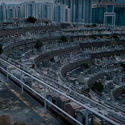
Ghost in the Shell, a new sci-fi blockbusterstarring Scarlett Johansson, is based on a 1992 manga comic and a more famous 1995 anime adaptation. In the film, humans are presented as obsessed with high-tech prosthetics, spending vast amounts of money on “self-improvement”. The story proceeds to show that the next step for humanity will be complete robotization; this new generation of human machines is represented by the movie's heroine – a female cyborg with an organic brain but a synthetic body. The action takes place in a futuristic city in which almost every surface is covered in holograms the size of a skyscraper, each and every one an advertisement.
As a culture, we spend 90 percent of our time indoors. Architecture sustains our way of life; it supports our very being; it defines our life experience. But it also connects us to the world outside of our windows and doors. However, certain geographical locations provide challenges when it comes to designing spaces that foster interaction between inside and out. While some architects may work around these conditions, Peter Brachvogel, AIA, and Stella Carosso—principals of the Pacific Northwest architectural and urban design firm BC&J—have been known to utilize the local habitat within their design.
For a discipline that thinks of itself as learned, scholarly research eludes the architectural profession. This is a long standing problem. “Failure,” John Ruskin wrote in his 1848 introduction to The Seven Lamps of Architecture, “is less frequently attributable to either insufficiency of means or impatience of labor, than to a confused understanding of the thing actually to be done.”
Roughly 150 years later, Harry Nilsson—surely singing to architects—opined in his song, Joy that if you’re unable to find the answer to a question, you may not have a question worth asking (and probably don’t have a problem worth solving). In between Ruskin and rock and roll, is William Peña, the author of the architectural programming guide, Problem Seeking, who nearly a half-century ago wrote that “you can’t solve a problem unless you know what it is.”
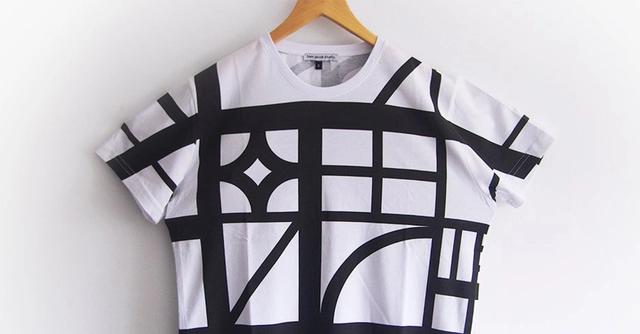
Sam Jacob Studio harbours a long-held fascination with Half-Timbering. In this essay, Jacob examines the historical, cultural, and aesthetic roots of the style.
It’s fair to say that “Mock Tudor”—that black and white facade treatment—has a less than glowing reputation. Take these sneering lines from John Betjeman’s Slough, for instance:
It’s not their fault they often go / To Maidenhead / And talk of sports and makes of cars / In various bogus Tudor bars.
(Perhaps those very same bars that Martin Freeman’s character in The Office notes have “a sign in the toilet saying: Don’t get your Hampton Court”.) “Mock Tudor” is often accused of “bogus”-ness, of lacking authenticity, of fakeness, and many other types of architectural sin.
Seniority is infamously important in the field of architecture. Despite occasionally being on the butt end of wage jokes, the field can actually pay relatively well—assuming that you’ve been working for a couple of decades. Even Bjarke Ingels, the tech-savvy, video-producing, Netflix-documentary-starring provocateur and founder of the ultra-contemporary BIG isn’t a millennial; at 42 the Dane is a full nine years older than Mark Zuckerberg.
As a result of this, it's common to lead a rich and complex life before finding architectural fame, and many of the world’s most successful architects started their careers off in an entirely different field. If you haven't landed your dream job yet, you may find the following list of famous architects' first gigs reassuring.
Architectural Adventures, a travel program from the American Institute of Architects (AIA), is the premier travel provider for architecture, art, and photography enthusiasts, as well as intellectually curious travelers. The program offers a variety of small-group tours specializing in the exploration and appreciation of some of the world’s most remarkable architecture, all while enjoying a destination’s culture, food, and traditions.
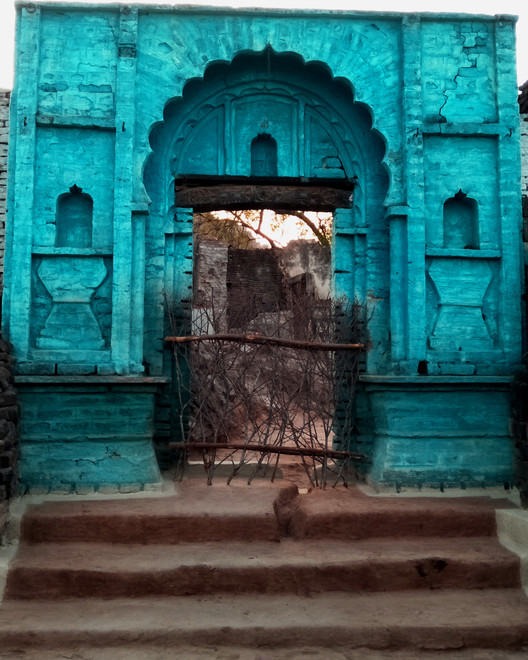
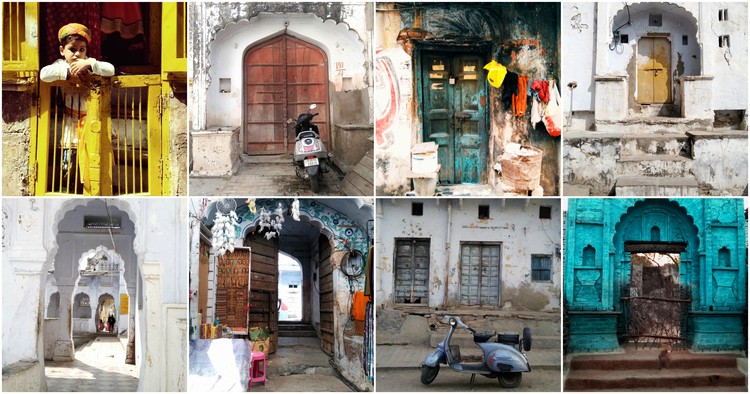
The door: despite being one of the most fundamental architectural elements, the immense significance these portals hold in architecture and culture can hardly be questioned. Historically, empires erected gigantic gateways to welcome visitors and religious shrines installed doors with ornate embellishments to ward off evil just as contemporary governments have built arches to commemorate important events.
In this photo-series, however, architect Priyanshi Singhal directs her focus to doors in a humbler vein—those of homes and hole-in-the-wall shops. Armed with her camera, she travels through narrow winding streets in age-old Indian towns and villages—characterized by their mixed land-use—as she studies and documents the inherent relationship between architectural tradition, culture, and a people. A door and its chaukhat (threshold) hold deep spiritual meaning in India’s traditional vastu shastra system of architecture. Furthermore, Singhal’s work provides us a brief glimpse of the imprint that the vagaries of time, community and economy have left on India’s historical urban fabric.
The following photo set by Fernando Guerra focuses on the Galician Center of Contemporary Art, a project by Portuguese architect Álvaro Siza Vieira.
Located in the Spanish city of Santiago de Compostela, the Galician Center for Contemporary Art was developed in 1993. Its declared horizontality and respect for the surrounding buildings and the urban structure are configured in the most remarkable gestures of this project. The solid and austere volumes form the boundaries of the area to the streets, with subtractions that make it accessible. The center has several permanent and temporary exhibition rooms, auditorium, library, cafeteria and administrative rooms.
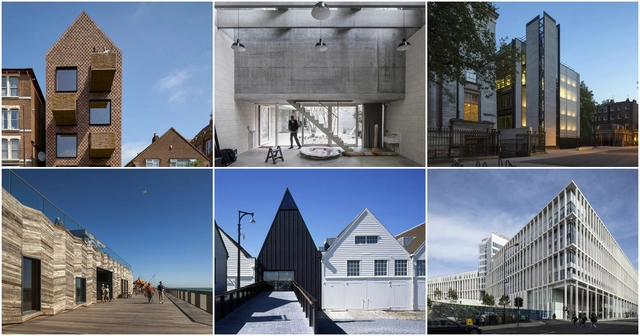
The 2017 winner of the UK’s most prestigious architecture award, the Stirling Prize, will be announced on October 31. Leading up to the main event, The Royal Institute of British Architects (RIBA) has released its list of the six shortlisted buildings, a collection that has left many critics scratching their heads. What the list left out seems to be as noteworthy as what was included, and while critics’ opinions on individual buildings differ, they seem mostly united in finding the overall list uninspiring and underwhelming. Read on to find out what they had to say.





__Anpu_Varkey___photo_by_Akshat_Nauriyal.jpg?1501258835 "Gandhi Mural by Hendrik Beikirch and Anpu Varkey, Delhi. Image © Akshat Nauriyal")






























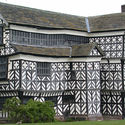
.jpg?1501324422 "Anne Hathaway's Cottage, England. © <a href=\"https://en.wikipedia.org/wiki/Tudor_architecture#/media/File:Anne_Hathaways_Cottage_1_(5662418953).jpg\">Wikimedia Commons user Tony Hisgett</a> licensed under <a href=\"https://creativecommons.org/licenses/by-sa/2.0/\">CC BY 2.0</a>. Image Courtesy of Tony Hisgett")