Working life as an architect is notoriously difficult. Unreasonable demands from clients, be they about budget, deadlines, or design (not to mention uncompromising personal standards) make the job tough, particularly as architecture continues to be seen as a product. And while it's no reason to accept low (or unequal) pay, troubling mental health, or any of the myriad issues architecture seems beset with, architects anywhere will tell you: you do it because you love it.
https://www.archdaily.com/901160/this-week-in-architecture-labors-of-love-from-the-hedonistic-to-the-homegrownKatherine Allen
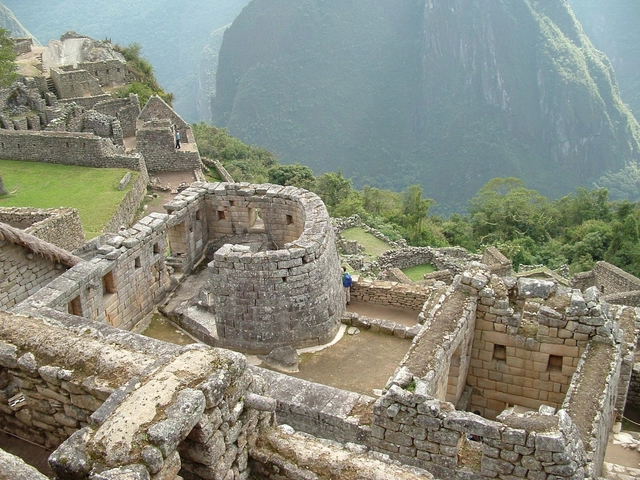
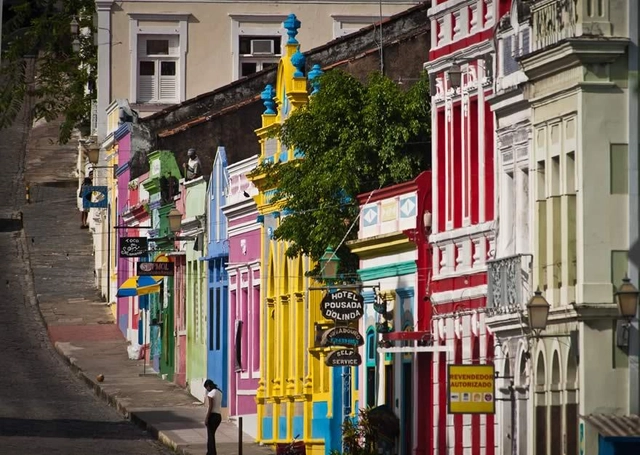
On August 17th, Brazil celebrated its National Heritage Day. Created in 1998 to honor the historian and first president of IPHAN (National Historic and Artistic Heritage Institute), Rodrigo Melo Franco de Andrade, who would have turned 100 years old. This date aims to reinforce the recognition and appreciation of the country’s cultural heritage.
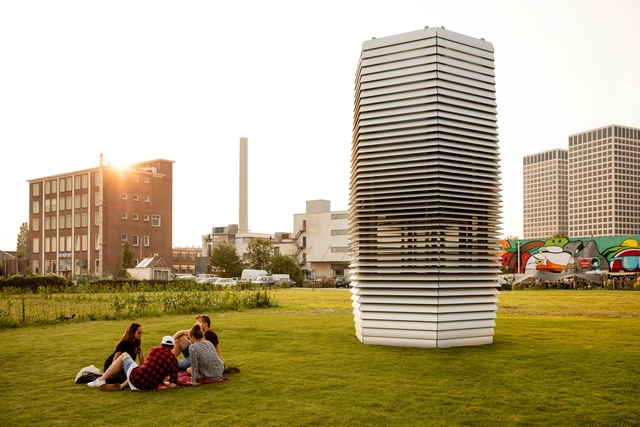
Courtesy of Studio Roosegaarde. ImageStudio Roosegaarde's Smog Free Tower
In Metropolis Magazine's latest - and last - installment in their annual design cities review, the focus is not on output or culture but on cities themselves as the point of inspiration. For the designers surveyed, these were the cities that made their hearts beat a little faster; the ones that remained in their minds and wormed their way into their work.
https://www.archdaily.com/901153/the-top-10-inspirational-design-cities-of-2018-as-revealed-by-metropolis-magazineKatherine Allen
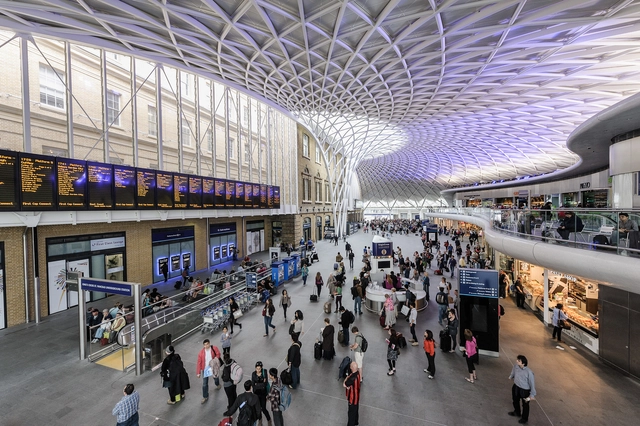
Courtesy of Flickr user Andrew Stawarz. ImageKing's Cross Station Concourse / John McAslan + Partners
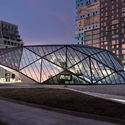
In Europe, Asia and much of the developed world, high speed rail is convenient and accessible. Whether for business or pleasure, travelers are served by an efficient and extensive rail network that connects passengers to the desired destination on time and with relatively little effort. Although these train systems can travel as fast as 350 kilometers per hour, speed is not the only important factor. Rail stations in Europe, for example, are an integral part of the historic urban fabric. These facilities are often perceived as civic destinations that play a fundamental role in the mobility system, providing a wide range of services for the larger collective; shopping,entertainment, commercial and civic uses are often paired with transit services as new stations are built and historic stations are retrofitted.
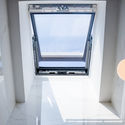
Casa FOA is one of the most important exhibitions for architecture, interior design, landscaping, and industry in Latin America. Chilean architects SUMATORIA were selected to represent their country in the 'Emerging Design of Miniature Housing,' or the Tiny Home, a living space of only 15 square meters (equivalent to the size of a container module).
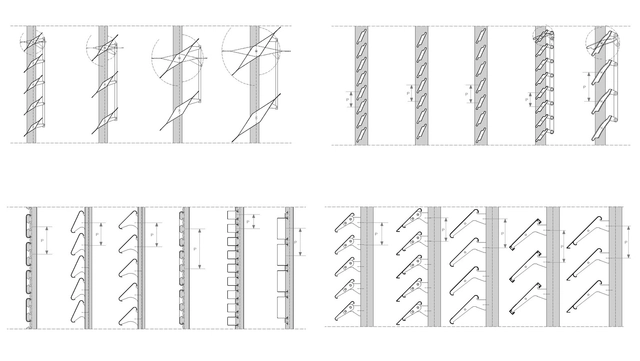
During warm summer months, buildings must maintain an adequate and comfortable temperature for the users of the space. Blinds or solar screens are an effective solution in projects that have large glazed surfaces, thus reducing the temperatures generated by direct sunlight.
Below, we have selected 6 Spanish projects that creatively use louvers and shutters in their facades.
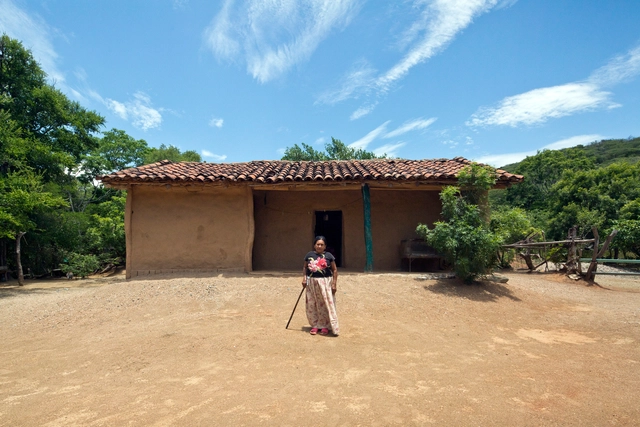
Traditional Mexican housing is being transformed by a number of factors, namely the urbanization of rural areas, the disruption of public information, the loss of the environmental consciousness, and housing policies that downplay the importance of traditional means of construction in favor of more industrial methods -- the likes of which generate false aspirations that redefine the concept of a dignified living space.
This is driving the loss of both tangible and intangible national heritage, namely the architectural values developed by the native peoples of the country over the centuries. In other words, it's not only the architectural heritage at risk of disappearing but also the centuries of knowledge built from everyday living spaces and their relationship with the territory that they inhabit.
https://www.archdaily.com/900830/mexicos-traditional-architecture-is-disappearing-this-project-is-seeking-to-keep-it-aliveMariana Ordoñez y Onnis Luque
In Le Corbusier's 5 points of architecture, he advocates the inclusion of flat roofs hosting roof gardens, providing valuable outdoor space for the inhabitants of the building in order to replace the ground lost to the construction of the building. But while this acknowledgement of outdoor space was important for people, Le Corbusier's sculptural concrete roof gardens were little consolation to the non-human flora and fauna that were displaced by his works.
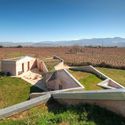
Recent improvements in our understanding of ecosystems and the environment, as well as a better scientific understanding of the needs of plants, have changed this dramatically. In the past few decades, green roofs and living roofs have exploded in popularity, and now adorn every kind of building--from small private houses to the gigantic surface of Barclay's Center in Brooklyn.
We've collected together some excellent examples of these living roofs, including the structural detailing that makes them possible. Read on for 17 spectacular green roofs that achieve environmental benefits including reduced stormwater runoff, and reductions in energy use and the heat island effect.
In the current iteration of our digital age, Instagram is king in the social media. Boasting 1 billion (yes, with a "b") active monthly users, if you are a business and not on Instagram, you are missing out.
Given the visual nature of the platform, architects and designers have flocked to the platform, using it to market their work, promote new ideas, and even pull in commissions. Other aggregator accounts use the platform to find and foster new talent, creating an entirely digital architectural community that is open to all.
Faced with the challenge of designing homes on terrains with steep slopes - or in compact urban contexts that do not allow much variation in plan - several architects have experimented and proposed split-level homes to enhance the use of space, allowing, among other things, interesting visual perspectives.
These variations can be seen in numerous examples published on our site. Below, we have selected 50 examples that can help you in your next project.
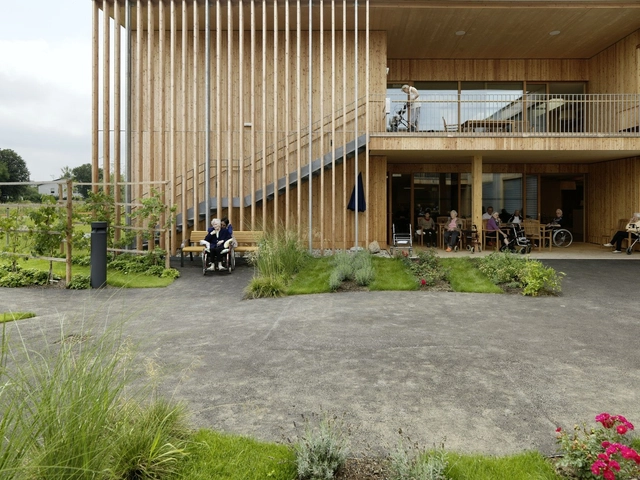
The population’s aging phenomenon is occurring worldwide. We say phenomenon because all population pyramids are reversing, which means birth rates are steadily decreasing over the years, and at the same time, life expectancy has been increasing. Thus, the elderly population is growing at a faster rate than children.
According to IBGE (Brazilian Institute of Geography and Statistics), in 2017 there were more than 30 million people over the age of 60 in Brazil (14.6% of the population). To understand this growing demographic, let's take a look at other countries' statistics. Mexico's total population is about 28 million, the size of Australia's and New Zealand's combined population. We are talking about a demographic the size of a country.
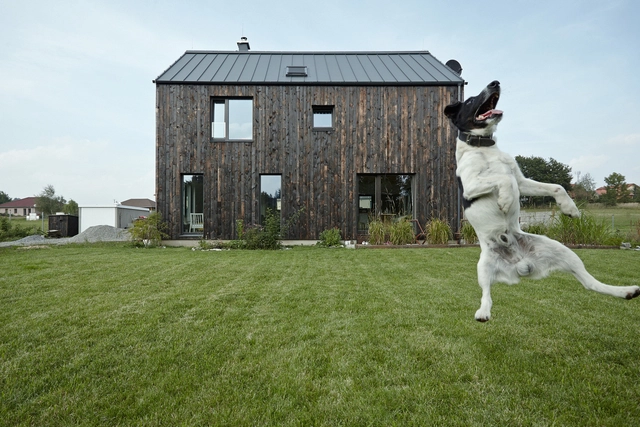
Are you a cat or dog lover? At ArchDaily we know that you're as big an animal lover as we are. They inspire us, keep us company, and in the case of architectural photography, give us an idea of a structure's scale. We previously made a collection of photographs starring cats and architecture, and we could never forget our dog-loving readers. We bring you a collection of photographs where dogs take center stage.
With a clean and elegant appearance, sliding doors improve the lighting and ventilation of a space.
They also provide several advantages when it comes to design: they frame stunning views and emphasize nature. On the other hand, when using them as an enclosure it is possible to generate a greater fluidity between the interior and exterior spaces, creating an illusion of a larger space.
If you are looking for ideas on how to incorporate sliding doors into your project, keep reading on for 23 impressive examples.
A collection of stones piled one on top of the other, dry stone is an iconic building method found just nearly everywhere in the world. Relying solely on an age-old craft to create sturdy, reliable structures and characterised by its rustic, interlocking shapes, the technique has deep roots that stretch back even before the invention of the wheel. Its principles are simple: stack the stones to create a unified, load-bearing wall. But the efficient, long-lasting results, coupled with the technique’s cultural significance, have lead to continued use and updated interpretations all the way to contemporary architecture today.
The use of concrete in construction is probably one of the main trademarks of 20th century architecture. Concrete is composed of a combination of materials which when mixed with water solidify into the shape of the container where it is poured in. In this sense, it is the container or the ‘moulds’ who rule the outcome. The reuse of molds for casting concrete is a technique used to replicate and control the production of concrete elements or buildings. Architects and designers have used/created diverse types of molds and casting techniques to explore the limits of the material.
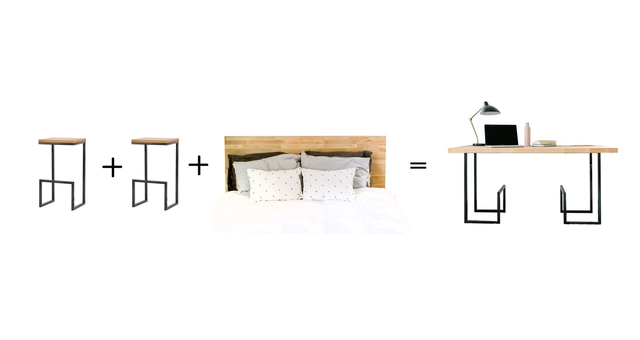
A table and a bench. A coffee table and a mirror? Perhaps it’s a stool and a cutting board.
This is not a furniture identity crisis, it’s Varia, a six-piece, mix-and-match furniture collection that can create over 25 pieces of furniture, saving money, space, and time. The creators, Jamie and Laura Kickstarted their project after Jamie found herself constantly moving from one place to another, and in need of versatile material instead of having old, unnecessary furniture pieces. With just a couple of lightweight metal frames and solid hardwood accessories, the collection is ideal for compact urban living and can be transformed into different furniture pieces in no time.
In brief, this is Varia, and it is pretty much anything you want it to be.
Varia's Kickstarter ends on August 31, support Jamie and Laura's project here.
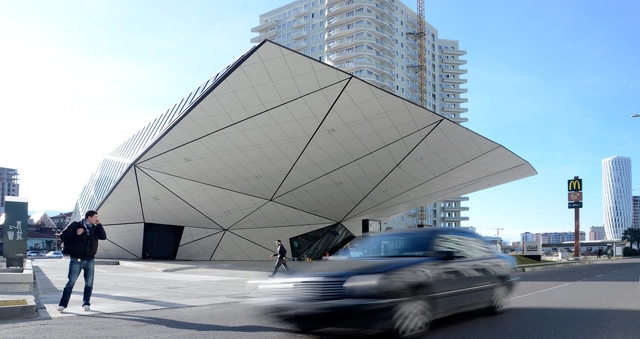
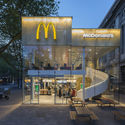
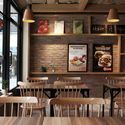
Some restaurants don’t need a review to get attention. You might know them for their longevity, their presence, or even just their advertisements. But most importantly, whether it’s their grand luminous logo, or the building’s prominent architecture and color palette, these franchises are more or less the same (the menu, the music, the interior design…), wherever you are, be it London, Lima, or Lahore.
Recently, however, a few of these places have begun to shift away from the “architectural stamp” that they use in all their branches, hiring design firms to rebrand their restaurants - and by extension, their image. This bespoke approach can result in outposts that are atypically site-specific, understated, and individual. For users, it may be a point of curiosity; a reason to revisit what you think you already know. For the brand, it's an attempt to cater to evolving tastes (culinary and otherwise) without having to alter the core product.
Videos
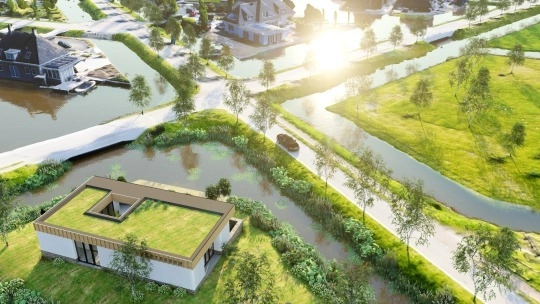
Courtesy of Studio Aaan. ImageNesselande Project with context made from this drone-to-3D workflow
While working in 3D-visualization software such as Lumion, features such as OpenStreetMap (OSM) and satellite ground planes can provide some context for your design. They are suitable options for quickly building urban or rural environments relevant to your project’s location, but they’re also limited. For instance, OSM only provides rough building shapes, rendered white, and the satellite maps are flat, often outdated, and the resolution is too low for client visualization.
https://www.archdaily.com/899196/how-to-use-a-drone-to-create-a-detailed-3d-context-modelPjotr van Schothorst, Lumion



.jpg?1534865234&format=webp&width=640&height=580)
.jpg?1534865165 "Cortesía de Sumatoria")


.jpg?1534865234)




.jpg?1543806823)


.jpg?1543808237)