If you haven't seen Respect, I highly recommend it. The Liesl Tommy-directed biographical film based on the life of American singer Aretha Franklin visually takes us back to the 1960s through a successful set work. Here, Production Designer, Ina Mayhew had the job of creating a series of locations where color palettes undoubtedly evoke more than emotions: Her suburban home from her childhood in Detroit, the sassy jazz clubs of New York City, her luxurious Upper West Side apartment, and finally her ultramodern home in Los Angeles.
What is an architecture critic? And what makes a critic in the 21st century? Throughout history, critics were the select few who were chosen to describe and evaluate architecture while we waited for their rave reviews or disappointments before we validated our own opinions. Their thoughts and words became design canon and heavy-handedly shaped our profession. This mindset and culture only further contributed to the idea that architecture is an “elitist” practice where a few set the rules and the rest must learn them. While architecture will always have named critics, just as other forms of art and culture have theirs, there’s recently been a push for architecture to transform itself into a profession that designs for the masses and is equally critiqued by the masses.
All over the globe, countries are facing a housing crisis. United Nations statistics put the number of people who live in sub-standard housing at 1.6 billion, and 100 million of the world’s population are without a home. As conflicts and climate change forces refugees to move to new countries, and as housing prices around the world continue to rise, cities are having to grapple more and more with how to provide safe and affordable housing for their residents.
At Architects, not Architecture, we believe it’s safe to say that almost everyone who has studied architecture in the last 50 years has come across The Salk Institute designed by architect Louis Kahn. While it does not always reflect in their works, our speakers have shared their little stories on how this modernist gem built in1963 played a role in their life. And since we just started our second Virtual World Tour on October 13th, 2021 we thought we’d share a few stories from last events.
https://www.archdaily.com/970564/how-louis-kahns-salk-institute-influenced-a-generation-of-architectsAbhinav Thakar / Architects, not Architecture
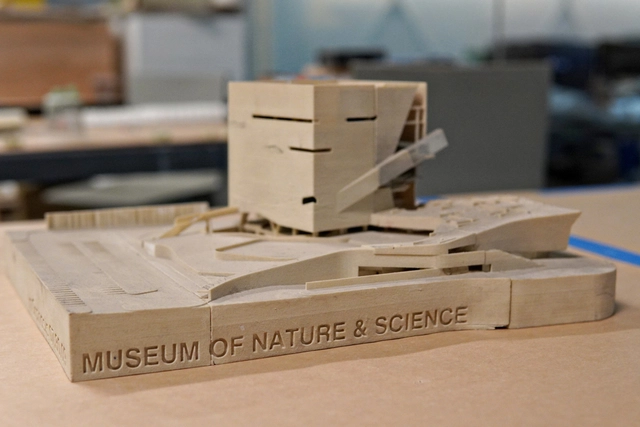
Models are useful to architects for all sorts of things, from the earliest parts of the design, all the way to marketing a building after it's built. But, what is it about models that makes them such an important and powerful tool? And, how do different architecture firms incorporate them into their own and unique design process? This video explores these questions by surveying three firms: Morphosis, MVRDV, and Herzog and de Meuron. Often firms have model shops and dedicated model teams who are responsible for everything from early design decisions to critical client presentations and even marketing the building. We hear from the folks who work in these model shops and breakdown how the three case study firms approach models in their own unique way.
Urban environments are in a constant process of social evolution, political and economic transformation. Attached to the idea of urban renewal is gentrification, a complex phenomenon circumscribing a variety of issues, from the improvement of the built environment and strengthening the local economy to displacement and demographic change. On the one hand, redevelopment means revitalizing neighbourhoods, improving the built environment and infrastructure and boosting the local economy, and on the other hand, gentrification drives up property prices and cost of living, forcing out low-income communities. Is the displacement of local communities a "collateral damage" of urban development? Does redevelopment intrinsically drive gentrification, and can urban environments be revitalized more ethically?
In this Editor's Talk edition, editors from Argentina, Lebanon, Brasil, Chile, Tanzania share their views on gentrification.
The word “furniture” derives from the Old French, forneture, which means the act of supplying, from fournir. But it is only in the English language that this word is used to refer to elements of the house such as chairs, tables, shelves, etc. French and other Romance languages, as well as German, use variants of the word meubles, which derives from the Latin mobilia, meaning "things that move." While the English spelling impels a meaning of utility, languages that take the Latin root “mobilia” bring to the word a sense of freedom and possibility. But furniture does not always carry this versatility and flexibility in its creation, and generally, staticity and monofunctionality better characterize the furniture we know. The Gregory seating system is an example of how furniture can provide functionality, but also combine beauty and flexibility.
Argentina is positioned in the extreme south and southwest of South America and given its extension, it has a multiplicity of climates and differences in the incidence of sunlight. These conditions led many architecture professionals to think about pergolas to generate transitional spaces between the interior and exterior of the homes that allow meeting the needs of its inhabitants by creating shaded, meeting and resting spaces in the open air.
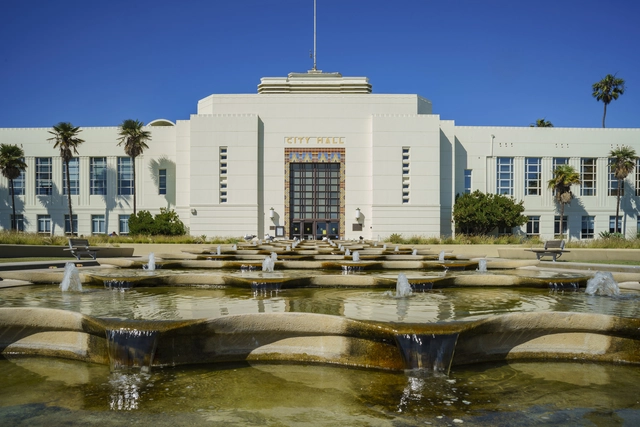
On a recent day in Santa Monica, California, visitors sat in the shaded courtyard outside City Hall East waiting for appointments. One of them ate a slice of the orange she’d picked from the tree above her and contemplated the paintings, photographs, and assemblages on the other side of the glass. The exhibit, Lives that Bind, featured local artists’ expressions of erasure and underrepresentation in Santa Monica’s past. It’s part of an effort by the city government to use the new soon-to-be certified Living Building (designed by Frederick Fisher and Partners) as a catalyst for building a community that is environmentally, socially, and economically self-sustaining.
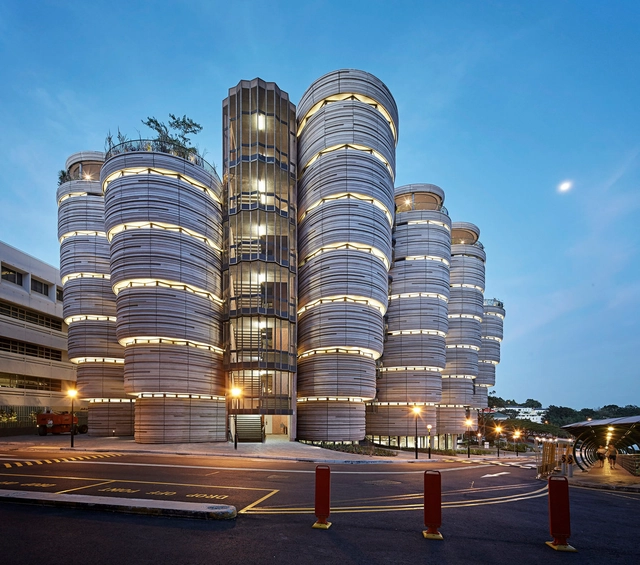
Singapore has emerged as a global design center. As a city-state and island country in Southeast Asia, the Lion City is home to a new class of high-rise buildings, gardens and iconic landmarks. While the design world is familiar with structures like the Safdie's Jewel Changi Airport or OMA's Interlace, Singapore has also built a range of new public and civic buildings alongside extensive land reclamation projects.
After over a decade curating the best architecture, at ArchDaily we know that no one builds alone. Shaping our built environment demands close collaborations and partnerships between architects, designers, and hundreds of other professionals committed to each project. This is why it is time to recognize and highlight the best collaborators responsible for delivering the best architecture, while we continue delivering valuable knowledge related to the different disciplines within our community.
ArchDaily Professionals is an initiative that focuses on all of the collaborators involved in the architecture and construction process, who participated and are credited in the projects we curate.
In Metropolisthis week, author Annie Howard explores Chicago's Architecture Biennial, which opened to the public on September 17th, showcasing a series of 15 site-specific interventions. Arguing that "a tour of the Damen Silos and a celebration of the Wall of Respect show a biennial struggling to achieve longer-term engagement with the city it calls home", the editor questions how much work is needed in order to make the city fully usable to its residents.
https://www.archdaily.com/971003/understanding-the-available-city-at-the-chicago-architectural-biennialAnnie Howard
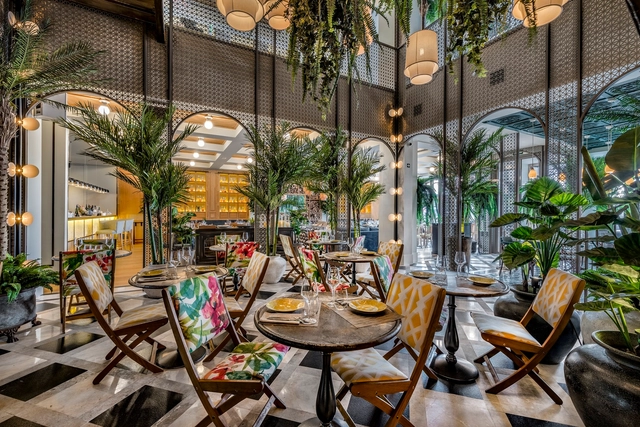
Renovating a space for a gastronomic purpose can be one of the most interesting challenges for an architect, due to the freedom of design that tends to characterize these projects. It allows us to play with cladding materials, lighting, and furnishings to create unique spaces that are both attractive and functional for both the restaurant team and the diners.
We dived into our project library to select 5 restaurants that took advantage of their renovations and complexities to create distinctive spaces, presented by ICEX e Interiors from Spain.
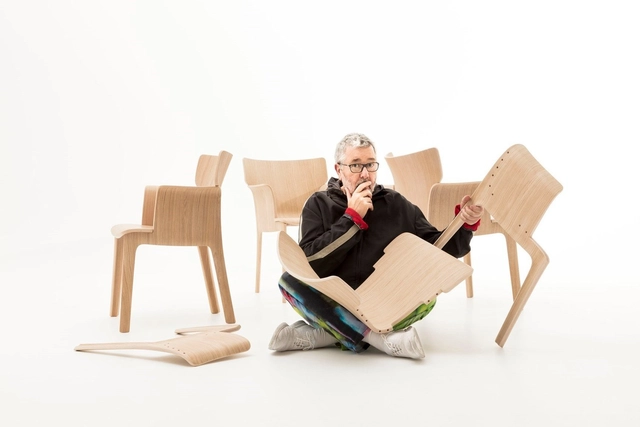
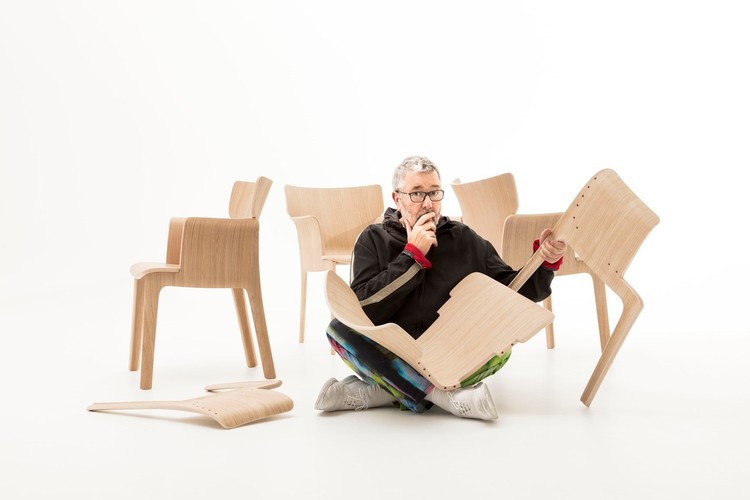
Believing that a creator has a duty towards society, Philippe Starck, is a multifaceted designer whose projects span across many disciplines. From architecture and interiors to industrial and furniture design, Starck’s portfolio is always, as he puts it, “focused on the essential”, and “must improve the lives of as many people as possible”. Author of Alessi’s famous lemon squeezer, he is known for pushing the boundary of design in everyday objects.
With 10,000 creations, completed or yet to come, Philippe Starck is a pioneer in “making things in the way of ecology”. In fact, ArchDaily had the chance to meet the designer at the 2021 Salone del Mobile, to discuss his design approach and visions as well as hislatest plywood creation for Andreu World.
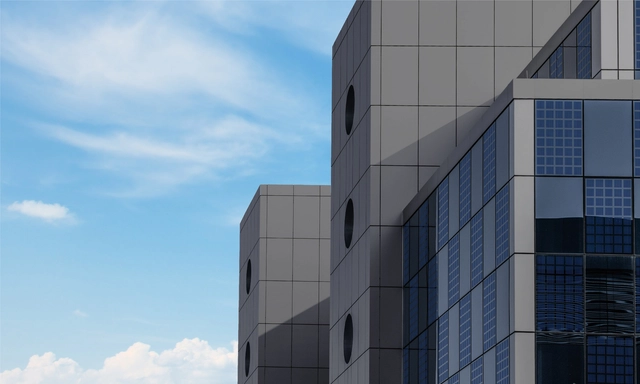
Solar technology has enormous potential, but it has been underutilized. To get an idea of just how underutilized it is, consider that every 24 hours the amount of sunlight that hits the Earth could provide energy for the entire planet for 24 years. Of course, it is necessary to collect it properly, through photovoltaic systems. With the climate crisis increasingly present in our daily lives, causing growing concerns about obtaining energy from renewable sources and reducing carbon emissions, using the sun's possibilities to generate clean energy seems to be a path of no return. But there are still some difficulties that reduce its use, such as obtaining economical solar products, aesthetics, availability of these products, regulations, and even installation issues.
Building-integrated photovoltaics, or BIPVs, offer the design and construction industry solutions to typical challenges that hinder adoption of solar energy. Below, we list the main challenges of incorporating solar energy into projects and how they can be overcome.
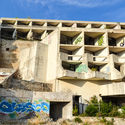
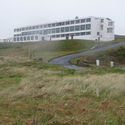
Within the Andes Mountains, the San Pedro Hot Springs is a place to press pause and contemplate, which interrupts a transnational highway between Chile and Argentina. Although these natural pools became a public landmark within the route, they eventually fell over time into a state of abandonment and deterioration as a result of the constant seismic movements in the region.
In response to this situation, Chilean architect Pia Montero sought to highlight the baths for her built-project thesis at the University of Talca in order to consolidate it as a landmark of tourist potential and symbol of the territorial identity of the Maule Region. Moreover, the project is a wake-up call to rediscover and rescue the value of the natural and cultural heritage of the area from the gradual abandonment into which it fell over the years.
The Taipei Performing Arts Centre sits amid the city’s Shilin Night Market. Lifted off the ground, so that street life spills beneath the structure, the glass-walled central cube appears light and airy. Image Courtesy of Vanceva
An honourable mention for OMA’s Taipei Performing Arts Centre celebrates the textural power of subtly shaded glass.
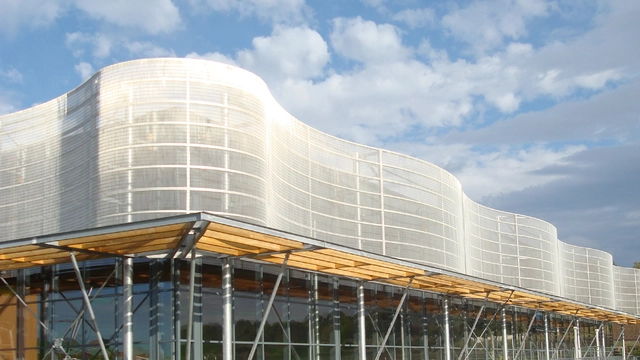
Rolling stainless steel wire mesh facade at Centre Aquatique, Vic-le-Comte, France. Image Courtesy of Haver & Boecker
From creating a new parking structure with an awe-inspiring aesthetic to retrofitting an existing building, architectural wire mesh provides versatility and durability which makes it unique from other design material options.





.jpg?1634764093)










.jpg?1634086433&format=webp&width=640&height=580)
.jpg?1634086531 "© Edgard Torres")
.jpg?1634086419 "© Edgard Torres")

.jpg?1634086290 "© Gustavo Burgos")
.jpg?1634086433)