In case you missed the memo: customisation of furniture and furnishings is one of the most significant developments in the interiors industry today. I don’t exaggerate when I say that every conversation I engage in with design brands includes a discussion around the notion of customisation – so much so that my internal thesaurus is replete with synonyms for the word, since this usually leads to me writing it a lot.
Customisation is often billed as the ultimate modern luxury, but is it for everyone? I mean, I’m all for expressing individuality in our interiors, but I’m also reminded of the paralysis I feel when confronted by a takeaway menu, stateside. When palate-pleasing involves seemingly limitless choice, which way to go? With a lack of professional culinary skills, the chance of making a wrong turn grows. This doesn’t matter so much when it’s compiling an acceptable sandwich filling, but when it’s the bones of a building or the decoration within, the choice needs to endure; it needs to be right.
https://www.archdaily.com/982461/flooring-finesse-with-a-personal-touch-beauflors-customisable-designsEmma Moore
Located somewhere between opacity and transparency, translucent surfaces allow rays of light to partially pass through them, creating a "blurred" aspect to what is seen on the other side. This is an effect widely used in art, as in the works of the Icelandic–Danish artist Olafur Eliason, for example, who works with optical illusions through light and colorful and transparent surfaces. But it is also admired by contemporary architects, such as the Japanese office SANAA, or European offices such as Barozzi / Veiga or Lacaton & Vassal, among many others.
In buildings, when using translucent surfaces with materials such as polycarbonate or glass, elements become visually lighter and highlight interiors or even the building's structure, without intruding on inhabitants' privacy. Chairs, lamps, pots: there are several everyday objects that use translucency for aesthetics and lightness. In the bathroom, however, this is not so common. Usually made of porcelain, the traditional pieces used in this space are opaque and at times are not so flexible to allow for a designer's vision.
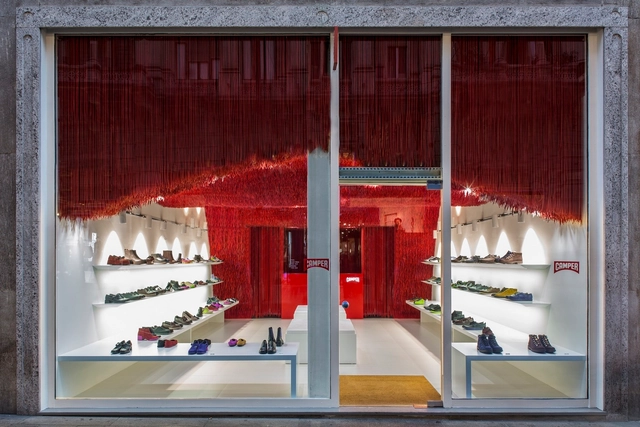
Creating a showcase is more than just displaying products, just as designing a store goes beyond a showcase. Both charges reinforce the concept of a collection, attract customers and improve a brand’s image. It is no coincidence that many architects work in the Visual Merchandising area along with graphic and interior designers, retailers, and stylists, to design a spatial experience that generates a unique narrative and brings greater customer engagement to the store.
The topic of cannabis can be rather taboo in some instances, as countries around the world have differing views on the legalization of marijuana products based on their cultural and religious beliefs. In the United States specifically, it’s been a long contended issue that each state has, for now, been left to decide on how they want to handle. Each year, more and more states (now totaling 18 and the District of Columbia out of 50), have legalized the recreational sale and use of a limited amount of cannabis, but it remains illegal on a federal level.
Today there are enormous application possibilities when it comes to textile technology, and as new developments emerge within the sector, this number will continue to grow. A current example from the world of architecture neatly demonstrates the improvements that can be realised in relation to the quality of air, work and life in general if one is prepared to explore alternative ways of doing things. The project involves a recently developed curtain-type textile facade that can not only reduce a building's solar cooling load by up to 78%, but can even gather nitrogen oxide particles from the air and convert them in an environmentally friendly way by means of a special coating.
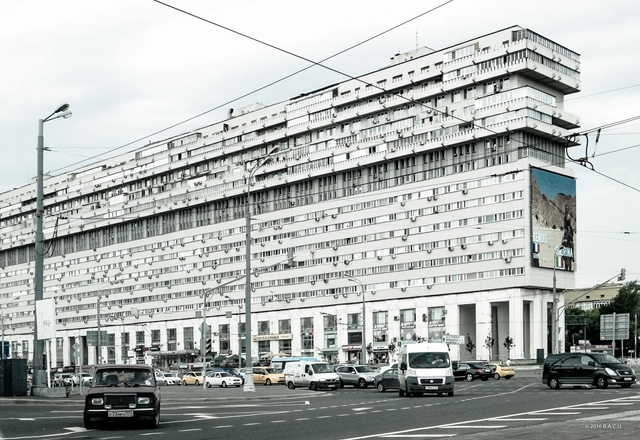
When cities grow, fuelled by an expanding population, housing becomes an essential component of the urban character of a metropolis. Across the world, housing experiments have been propagated by governments and states, with mixed results, and undoubtedly mixed opinions. The Soviet-era housing estates of Central and Eastern Europe are particularly interesting in that regard. These mass housing projects have been dismissed as eyesores and viewed as unimaginative monolithic structures. The legacy of these developments, however, is a lot more complicated than that.
At the touch of a button, the entire window front magically sinks into the ground, merging the interior with the exterior. This is the effect of the air-lux descending window, which acts not just as a glass front, but a highlight all year round that blends the indoors with the outdoors. So much so, that the descending window was awarded the German Design Award 2020 in the category "Excellent Product Design - Building and Elements".
The concept of aesthetics goes back to the Greek civilization and refers to perception through the senses. Despite being a philosophical concept, in architecture, aesthetics is used to translate architectural ideologies and concepts from the set of constructive elements, forms and materials, being intrinsically linked to the physical shape of a building and, therefore, bound to a social, economic and political context. In addition to a discussion of tastes, architectural aesthetics is a source of historical reading and analysis.
After a prolonged period known as the Middle-Ages, a growing desire to both study and mimic nature itself began to emerge, with an inclination to discover and explore the world. Between 1400-1600 A.D. Europe was to witness a significant revival of the fine arts, painting, sculpture, and Architecture. The ‘Renaissance’, meaning ‘rebirth’ in French typically refers to this period of European history, although most closely associated with Italy, countries including England and France went through many of the same cultural changes at varying timescales.
Prior to the dawn of the Renaissance, Europe was dominated by ornate and asymmetrical Gothic Architecture. Devoured by the plague, the continent lost approximately a third of its population, vastly changing society in terms of economic, social and religious effect. Contributing to Europe’s emergence into the Renaissance, the period ushered in a new era of architecture after a phase of Gothic art, with the rise of notions of ‘Humanism’. The idea of attaching much importance to the essence of individualism. The effect of Humanism included the emergence of the individual figure, greater realism and attention to detail, especially in depictions in art.
Xi'an Qujiang Art Center by Xiaoxia Wang - gad. Image Courtesy of A'Design Award and Competition
“Good design deserves great recognition”. This statement encapsulates the A'Design Award and Competition, an award for designers, innovators and companies that wish to stand out and attract the attention of the media, editors and buyers. These aspects are especially important in the world of design, where millions of products and projects are launched, and often end up being swallowed up and not receiving due recognition. To address this, every year projects are submitted to the A' Design Award with a focus on innovation, technology, design and creativity. It offers a chance for recognition, with the valuable curatorship of a renowned jury and the possibility of a successful international launch. The A'Design Award contains a series of public relations, advertising and marketing services to celebrate the success of its winners. In addition, and unlike other design awards, it is completely free of charge.
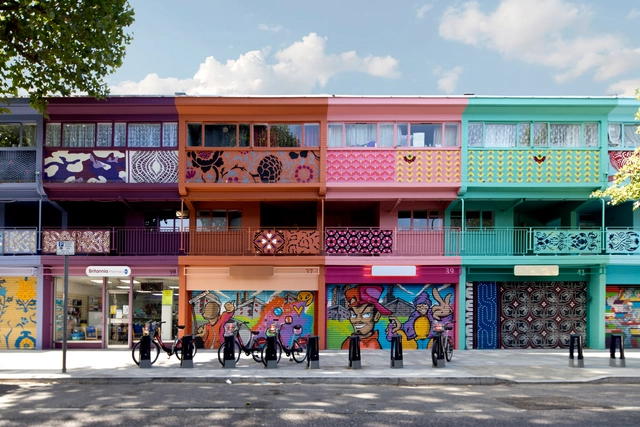
The award-winning firm based in London, England, Jan Kattein Architects, works to realize the civic and spatial opportunities that architecture presents’ with their projects establishing a social and physical legacy, achieved by embracing an open, interactive design process that responds positively to the needs and aspirations of the clients.
Allowing the process to drive each individual project, their method stimulates innovative design, seeking to add benefits through education, economic growth, cultural activity, and greater community coherence.
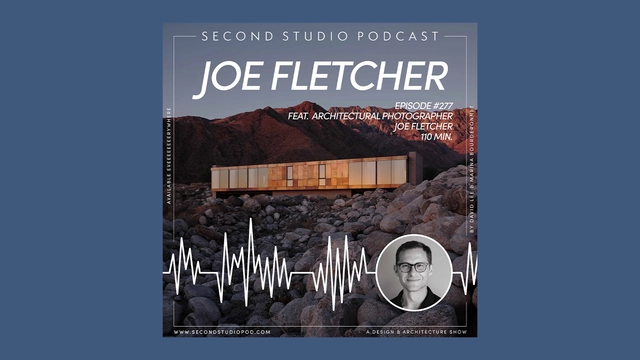
The Second Studio (formerly The Midnight Charette) is an explicit podcast about design, architecture, and the everyday. Hosted by Architects David Lee and Marina Bourderonnet, it features different creative professionals in unscripted conversations that allow for thoughtful takes and personal discussions.
A variety of subjects are covered with honesty and humor: some episodes are interviews, while others are tips for fellow designers, reviews of buildings and other projects, or casual explorations of everyday life and design. The Second Studio is also available on iTunes, Spotify, and YouTube.
This week David and Marina are joined by Joe Fletcher, Architectural Photographer to discuss his transition from painting to photography; his experience with a formalized education in photography; how an architectural photographer can influence architects and architecture; his process; the distillation of architecture through photography; why photogenic buildings are not always comfortable to be in; and more.
"The details are not the details. They make the design." – Charles Eames. Creating attractive spaces that anticipate the needs of users relies on several factors: scale, circulation, functionality, and comfort. However, the past few decades have proved that the visual appeal of a project is also greatly important, and can make or break the interior space. In this interior focus, we will explore the aesthetic side of interior design, looking at popular styles across the world and how architects and designers use elements such as color, furniture, accessories, and finishes to define their spatial identity.
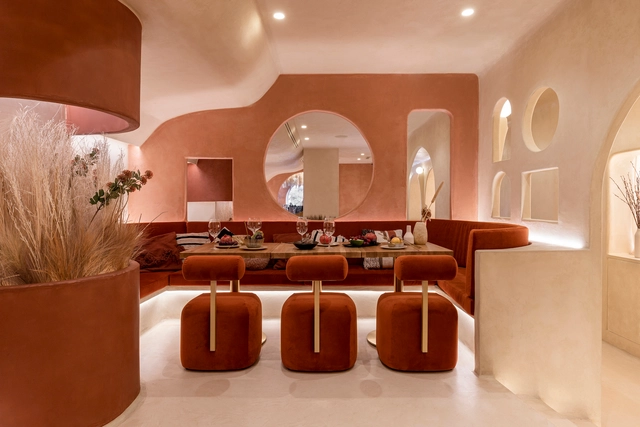
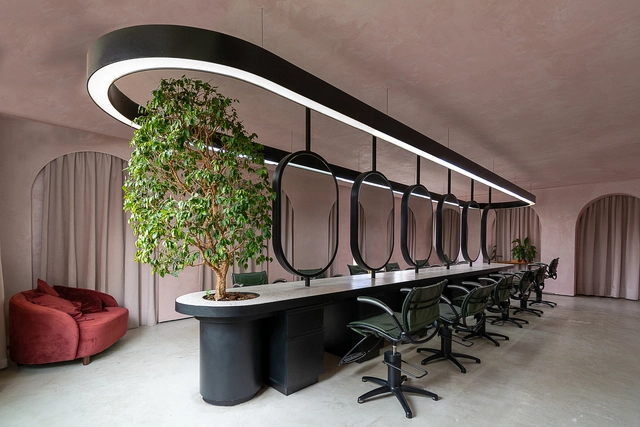
Usually, people look for a beauty salon to leave transformed. In addition to the aesthetic changes, the environment itself can trigger different sensations that change the mood of customers. That being said, some establishments hire architects and interior designers to think of ways to innovate their spaces. Relaxing, having fun, surprising, are just some of the actions that can be passed through a project that thinks about different ways to bring comfort to users.
The hands hold the weight of the entire body, feeling the rough texture of unplastered mortar on its thin membrane. Even with the whole body stretched out against the wall, it still was not possible to see what was behind it. Sweat, in a mixture of adrenaline and heat, ran down his temples, indicating the movement for a final effort, a last impulse before the imminent fall that, for a few seconds, allowed him to overcome the last row. The field of vision was then opened to a fragmented, disconnected and oddly free world. An urban power that allowed itself to be strangled by the breath of tropical vegetation while being consumed by abandonment amidst an active and dynamic city.
The new, online NYC Climate Dashboard confirms that New York City is not doing enough to meet its climate goals. What’s worse, the goals don’t measure up to the challenge citizens face. A growing consensus among scientists says the world has only until the end of this decade to avert catastrophic climate change. Here in New York, the biggest contributions to greenhouse gasses come from our buildings and our driving. As an architect and urban designer, John Massengale shares what he believes the world is missing and some significant changes that the world can make for the sake of future generations.
Cooking and architecture parallel one another. Combining ingredients to make a whole, both processes are tied to cultural context, creativity and meaning. While we can understand how cultures have changed over time by looking at how their cuisine has changed, the same can be said of architecture. In both cases, the end products are based around human interaction and are brought to life through experience.
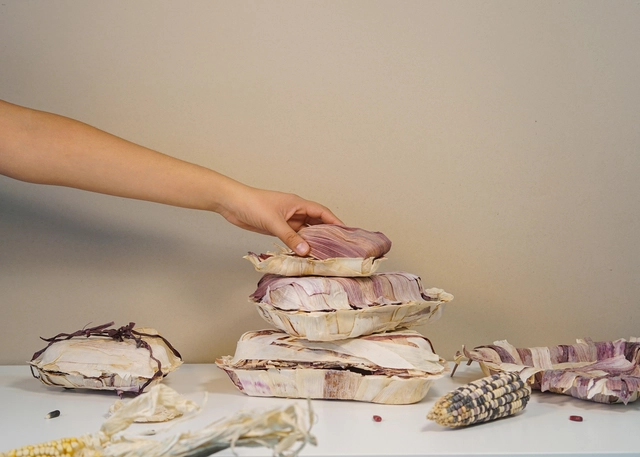
As part of the 14-day design festival that took place in Mexico City, SPACE10 presented the exhibition "Deconstructed Home", with the intention of taking it to different places in Mexico. Five designers were convened and through six intensive weeks of design research and experimentation, they identified and explored new possibilities and uses for the biomaterial of their choice.






.jpg?1653161266&format=webp&width=640&height=580)