Architecture, with all its practitioners, academics, and theorists, have long been exploring utopic ideas with hopes of turning them into something concrete for the sake of a better world. But as the world heads towards an even greater polarization than it currently has, the architecture practice found itself having to adapt to the current systems of the planet, constrained by its ever-growing conditions. Slowly, practitioners realized that utopia can not truly be seen as the ideal solution, and needed to be readapted or morphed with other concepts for it to actually work. DETAIL's latest monograph BIG. Architecture and Construction Details / BIG. Architektur und Baudetails, a rapport between BIG’s imaginative, unbuilt utopias and functional, built architecture, explores 20 projects from the firm's workshop.
Being square sucks! At least, that's what the trends of 2022 tell us. The report carried out by Pinterest points out the curved design as the future of decoration, whether in objects or even from architecture. For that reason, we looked for Brazilian residential projects that trace curved walls in their designs. The reasons are the most varied and the results offer a unique composition: as an architectural party, to contrast with the orthogonality of other walls or to create unique spaces.
Western aesthetics is based on the mathematical analysis of an object's formal structure, using classical beauty laws such as balance, symmetry, and the golden mean. Eastern aesthetics differ in that, as it emphasizes intuitive experience, such as "white space" in traditional Chinese painting, through emotional communication with the "imagery" to produce a certain "Conception." The contrast between reality and emptiness allows the viewer's imagination and feelings to flourish, allowing them to realize "showing the breadth of heaven and earth even in a square inch place."
America’s housing crisis is a longstanding problem. But recent reports of private hedge funds buying up detached houses and townhouses is likely to make an already difficult situation even worse. When hedge funds purchase such properties, those homes are not likely to come back on the real estate market. They are gone for now—and probably for the long term.
https://www.archdaily.com/983096/how-private-equity-is-making-the-housing-crisis-even-worseR. John Anderson
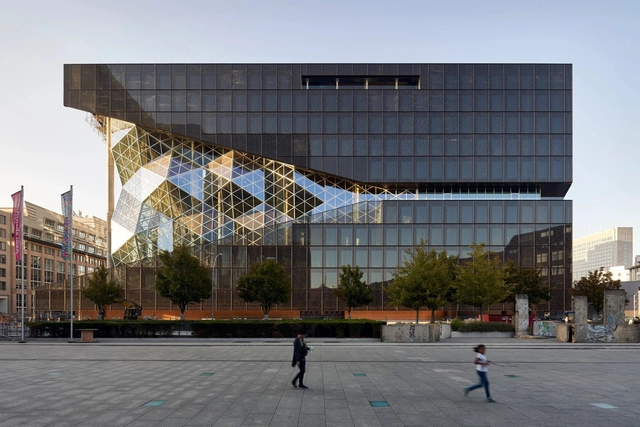
Berlin is a city defined by an eclectic mix of style and a rich history. It's built environment has been dramatically shaped by a series of municipal construction programs, and in turn, a past of extensive demolition, planned residential areas, and diverse new cultural projects. Combined with influences across Europe, Berlin's contemporary architecture showcases new ideas on building concepts, forms and facades.
Open BIM is an acronym referring to Open Building Information Modeling and is a universal approach to the collaborative design, realization, and operation of buildings based on open standards and workflows. It is an initiative of buildingSMART and is supported by many leading software vendors in the building industry.
It defines methods for the object-oriented description of buildings using open data formats that facilitate integrated project delivery. Open BIM provides a common language for the exchange of information within a multidisciplinary project team.
In the history of architecture the concept of beauty has always been linked to different factors that represent, mainly, the values of society in a given period. The zeitgeist is certainly crucial to these definitions, so something that was once considered beautiful in the past is likely to be given another connotation nowadays. In this sense, aesthetic preferences in architecture seem to be linked to symbolic references implicit in the construction itself and in its relation with the world. They are preferences that express convictions, ideologies and positions, as well as moral, religious, political feelings and, of course, class status symbols.
Whether in a compact studio in Hong Kong or in a Michelin-starred restaurant, kitchen design requires special attention in order to make the act of preparing food a pleasant experience; with adequate space for all necessary functions and without the need for useless movements. The theory of the “golden triangle” or “kitchen work triangle” was conceived 100 years ago but remains valid and helpful in the definition of layouts and the organization of functions. Basically, the three main elements of the kitchen should be located at each end of the triangle: the sink, the refrigerator and the stove, with their respective functions in cleaning, storage and cooking. According to its principles, each side of the triangle must be between 1.20 and 2.70 meters long, and the perimeter should not be less than 3.96 meters or more than 8 meters.
Of course, it is not always possible to have the ideal dimensions and proportions to implement this type of kitchen, especially when we take into account the increasingly lean dimensions of contemporary environments. Nevertheless, there are various ways of making everyday operations more efficient even in tight kitchens. Below is a selection of items and products that can increase the space and efficiency of kitchens, without having to add even one square meter to them, straight from the comprehensive Architonic catalog.
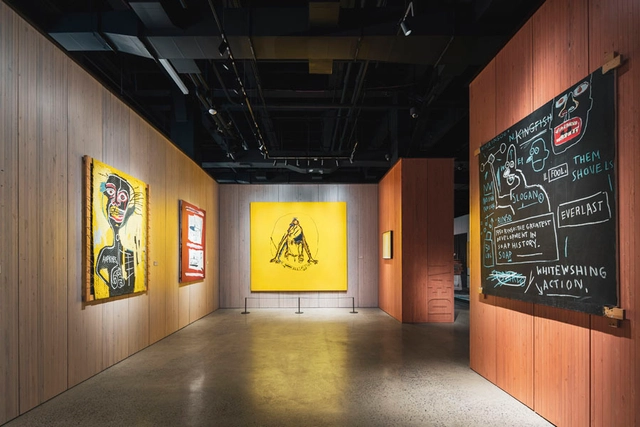
Immense fame, especially when left behind by a deceased artist, may lead to a hierarchal understanding of their legacy—leading one aspect to overshadow other crucial dimensions of their life and oeuvre. Brooklyn-born Jean-Michel Basquiat’s meteoric recognition as an artist and a cultural influence throughout the 1980s led to his energetic mind-map-like paintings being acquired widely by museums and private collections alike, in addition to being mass-marketed in a variety of products, such as fast-fashion clothing and New York-related souvenir items. Basquiat: King Pleasure, a new exhibition organized by Jean-Michel’s sisters, Lisane Basquiat and Jeanine Heriveaux, breaks down the myth surrounding the late artist’s legendary rise from the gritty streets of 1980s New York to a rarely-achieved artistic success.
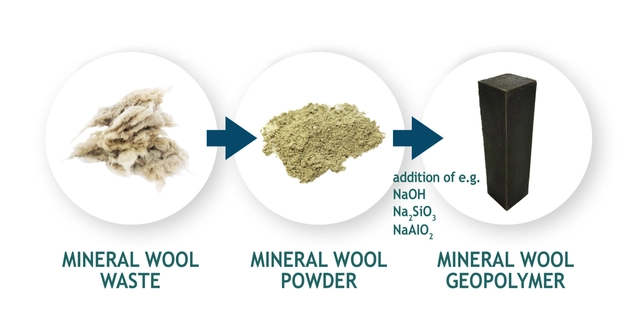
When approaching the process of recycling building materials, there are a number of obstacles to achieving a comprehensive and effective result. First, careless demolition can make the process very complex, as products with different recycling products are often mixed. In addition, not all materials can be efficiently recycled or processed, as many still need expensive or overly complex processes. But the construction industry, being a huge contributor to waste production and greenhouse gas emissions, has also developed multiple new technologies to improve its practices. This is the case of the WOOL2LOOP project, which seeks to solve one of the biggest challenges in applying a circular approach to construction and demolition waste.
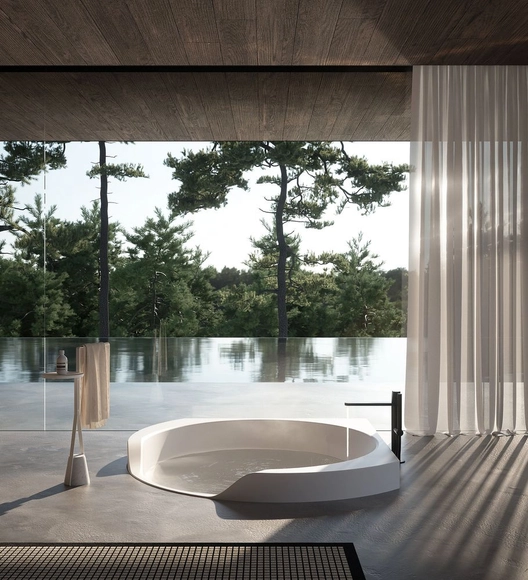
Throughout the years, bathrooms have been viewed as purely functional spaces strictly programmed for hygiene and privacy. Becoming smaller and more practical, the utilitarian, space-saving shower stall has often been considered the norm, pushing the bathtub into obsolescence or as an additional luxury for those with extra space (and money). Recently, however, as lifestyle changes driven by the pandemic have placed wellness as a top priority, the notion of the bathroom as a sanctuary has really taken hold. Contemporary bathrooms have thus been reimagined, shifting towards open spaces of relaxation, comfort and recuperation. And tubs – with their inherent meditative nature – have returned to the spotlight.
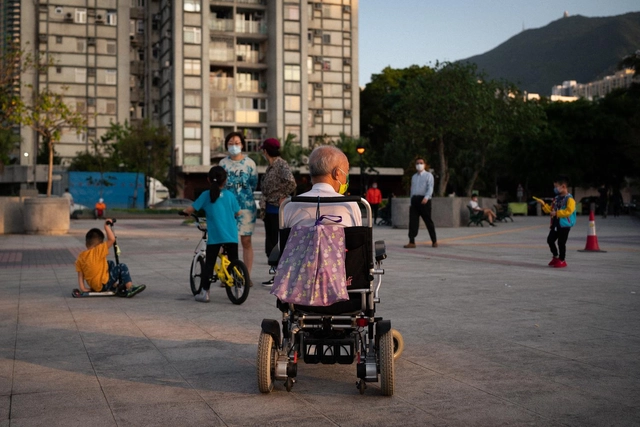
Cities with disabilities are those that present spaces and environments that impede or make it difficult for citizens to access, participate and interact, regardless of any loss or abnormality related to their psychological, physiological or anatomical structure or function. I invite readers to, with me, change the focus of the approach on disabilities, transferring to cities and built environments the inability to meet in a dignified and effective way the diversity of abilities and capacities inherent to human beings.
Located amidst the vegetation, almost invisible to those who see it from the street, a jewel of modern Brazilian architecture is hidden in the São Paulo neighborhood of Jardim América. Casa Zalszupin, designed in 1960 by the Polish architect based in Brazil, Jorge Zalszupin, combines traces of local modernism with influences that the architect brought with him from Europe, notably Scandinavian architecture. In a recent photo series, Paul Clemence sought to capture through this house, "the architect's and designer's essence".
It’s an essential architectural element, one we tend to immediately take note of when we look at buildings new to us – the roof. The roofs that shelter the buildings we see in our cities today are diverse in their typology. Flat roofs are a common sight in the city centers of urban metropolises, hip roofs are a popular choice for dwellings around the world, and the gable roof is arguably the most common of all, a roof type popular in stylized depictions of what a standard house looks like.
We are still at the dawn of the Metaverse, the next wave of the Internet. The current “mainstream” Metaverse platforms serve as experimental containers to host the wildest dreams of virtual worlds where we are supposed to unleash the imagination. However, from a spatial design perspective, they have so far been lame and ordinary. Without the constraints in the physical world, how do we draft the urban blueprints in the metaverse? I believe metaverse planners can find inspiration from Italo Calvino’s Invisible Cities, in which he revealed a poetic and mathematical approach to “urban planning” in the imaginary worlds.
The following applies to all creative disciplines: truly unique, high-quality works of design are almost always the result of certain favourable constellations. This is just as true for directors and musicians as it is for architects and designers. Because great creative ideas can often only be realised in a team, in cooperation with collaborators.
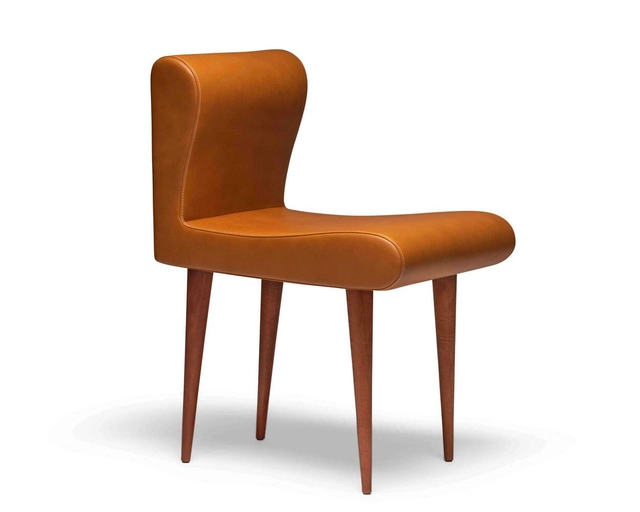
Two years ago, the young Swiss singer, violinist and composer Chiara Dubey released an album entitled 'Constellations'. A starry sky adorns the cover – so here, too, it's about a special interaction that is under a good star. But how, you might now ask, do we get from album covers to a company that makes furniture?
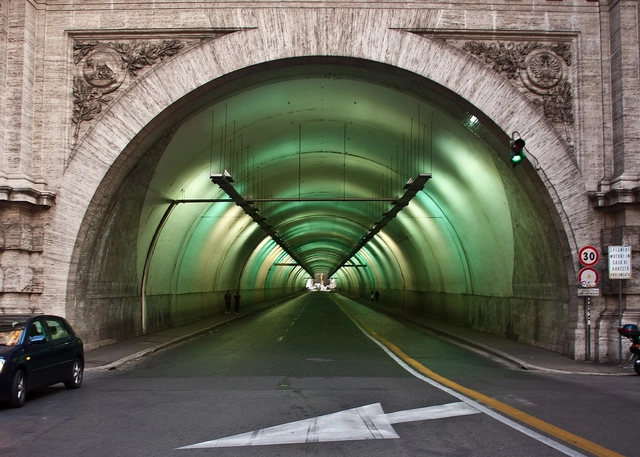
Umberto I Tunnel in Rome. Photo: Andrés Nieto Porras from Palma de Mallorca, España, CC BY-SA 2.0 , via Wikimedia Commons
Smart buildings are more and more on the agenda. For their elaboration, some materials have been developed to meet specific objectives during their use without the need to be operated by any person or equipment. Self-maintenance, cleaning the air, working with the comfort of space, energy efficiency, are just some of the benefits that can be achieved by adopting them.
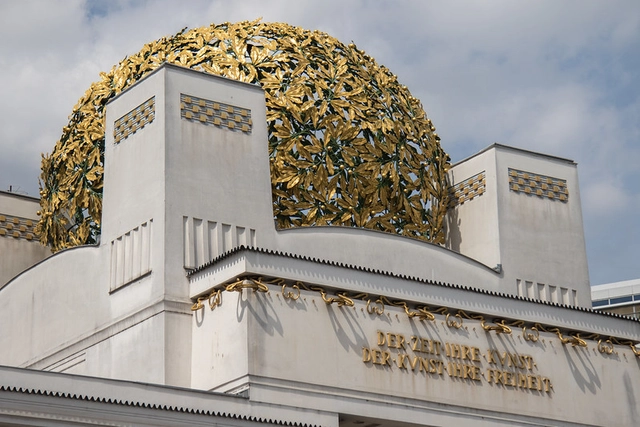
All architecture movements throughout history spur from shifts in society that demand a new style that better reflects the way that technology has advanced the practice and how people express their political, religious, and moral beliefs and practices. While some shifts occur over a period of several years, others are experienced as a sudden revolt. The Vienna Secession was undoubtedly the latter. At the end of the 19th century, a group of artists and architects aimed to explore what art should be as it pertained to filtering global influences in a way that could introduce new modernism.













.jpg?1654151626 "© Ivane Katamashvili")




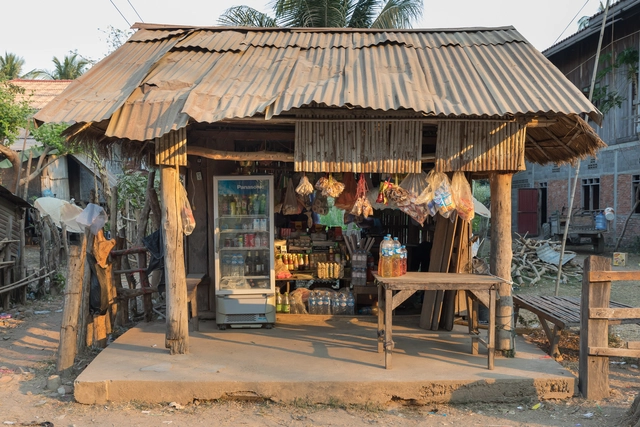
.jpg?1653990029 "Khayelitsha Township - Cape Town. Image © Olga Ernst under the Creative Commons Attribution-Share Alike 4.0 International license.")