At the beginning of 2022, curator Lesley Lokko announced the title of the 18th International Architecture Exhibition – La Biennale di Venezia: “The Laboratory of the Future.” The theme’s intention is to highlight the African continent as the protagonist of the future, a place “where all these questions of equity, race, hope, and fear converge and coalesce,” in the words of the curator. As the fastest urbanizing continent, Africa is viewed as a land of potential, but also of challenges, where matters of racial equity and climate justice are played out with a significant impact on the world at large.
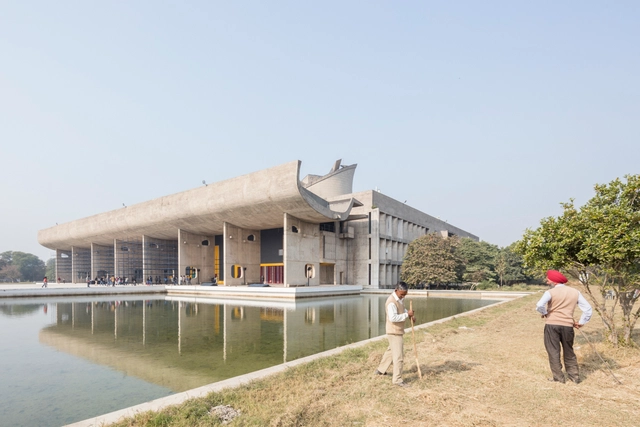
Yet in the late 1950s, another laboratory of the future was taking shape, one where the novel ideas of Modernism produced grand monumental designs and complete urban structures at an unprecedented scale: India. In the search for a modern and democratic image, the newly independent country welcomed Western architectural masters such as Le Corbusier and Louis I. Kahn and entrusted them with a wide range of commissions, from the urban layout of Chandigarh and its major governmental buildings to universities, museums, and smaller scale domestic projects. The result is a mixture of cultures, influencing one another to unexpected results.
Architects often face the challenge of effectively communicating their designs to clients, as architectural design is a complex process that involves numerous technical details and decisions. Current methods of presenting architectural designs, such as 2D drawings or renders can be limiting. In addition, clients may not have the same level of understanding of architectural concepts and may find it difficult to envision the final outcome leading to misunderstandings, delays and costly revisions.
To overcome these challenges, architects have increasingly turned to Virtual Reality (VR). However, the limitations of most Virtual Reality software to show photorealistic designs without requiring complicated VR setups has been a challenge.
Small homes are a common reality in many urban areas around the world for various reasons. These homes made up of small houses or compact apartments, have become increasingly popular due to the shortage of land and high housing prices in urban areas. Although their size may be limited, contemporary architecture practices focus on intelligent designs to maximize available space and offer comfort to their inhabitants. They often offer efficient layouts, with multifunctional areas that adapt to needs. In addition, some of them integrate innovative design and furniture solutions to optimize space and provide additional storage.
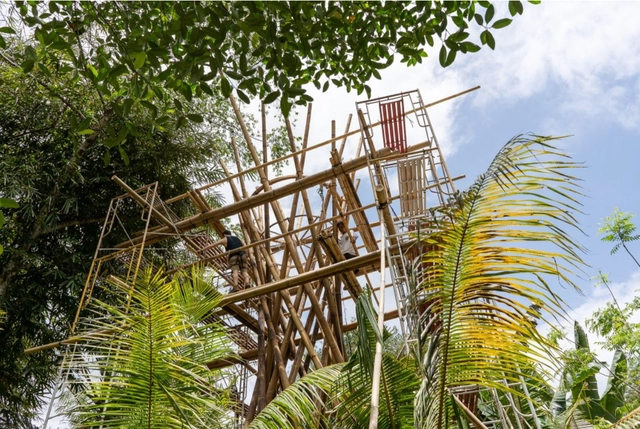
Contemporary bamboo buildings may initially appear overwhelming to the novice observer. Yet, as you learn more about the structural logic of these inspiring edifices, you'll quickly realize that most employ one or a blend of the structural systems we're about to explore. The mystery unravels, transforming what once seemed complex into a clear composition of simple concepts. This article shines a light on four commonly employed structural systems in bamboo construction:
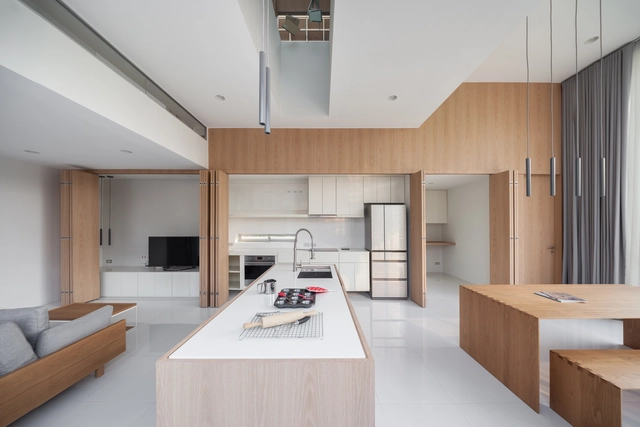
While the kitchen is a ubiquitous part of almost every home—and, in many cases, is considered symbolic of domestic living entirely—it can also take up precious space, produce visual clutter, and detract from the minimalist aesthetic of an otherwise sleek, modern home. For some homeowners, the solution is simply to keep the kitchen clean and organized at all times. But for some innovative contemporary architects and their clients, the solution is to design a compact, concealable kitchen that can quickly and easily be shuttered out of view. Below, we discuss several examples of hidden kitchens, as well as some common techniques and strategies for designing them.
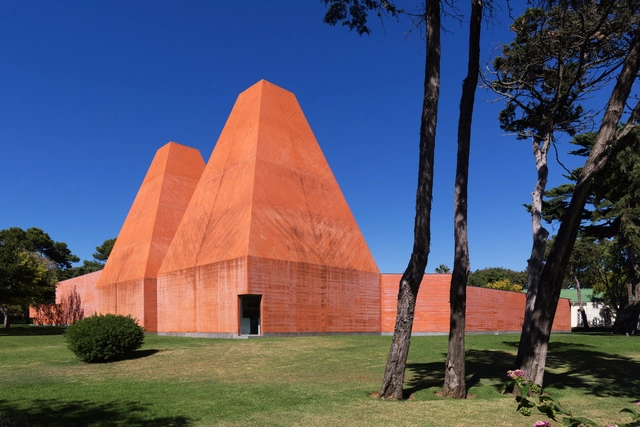
Preserve, disseminate, and create cultural expressions. When we visit museums, galleries, libraries, and various cultural centers, we understand other worldviews. This is how we broaden our subjectivity and empathy and gain new knowledge. In Portugal, a country with a millennial history that crosses various cultural layers, from food to the arts, there is constant investment in equipment that helps share and reinforce its past and present. And, as expected, architecture is fundamental to lace these narratives.
Can current design and manufacturing technologies be incorporated into vernacular and traditional construction techniques? On the IE University campus in Segovia, a group of researchers from IE University, Princeton University, and the University of Bergamo built an unreinforced masonry structure called innixAR that demonstrates how digital technologies can enhance craftsmanship. This pavilion explores the intersection between the latest augmented reality (AR) innovations and 4D funicular design to allow vault craftsmen to build masonry structures without the need for physical guides and costly temporary molds.
The Media Architecture Biennale 2023 (MAB23) takes place June 14-15 (online) and June 21-23 (in-person) in Toronto, Canada. The event, which features keynotes, roundtables, and awards, aims to offer a platform for communities of research and practice concerned with media and the built environment. MAB23 will bring together students, academics, and professionals from architecture, art, design, urban planning, media and communication, urban informatics, and public policy to share new ideas and shape this evolving field.
Italian architect and architecture historian Paolo Portoghesi, the first director of the Venice Architecture Biennale, passed away at the age of 92 in Calcata, Italy, as reported by the organization today, Tuesday, May 30.
Videos
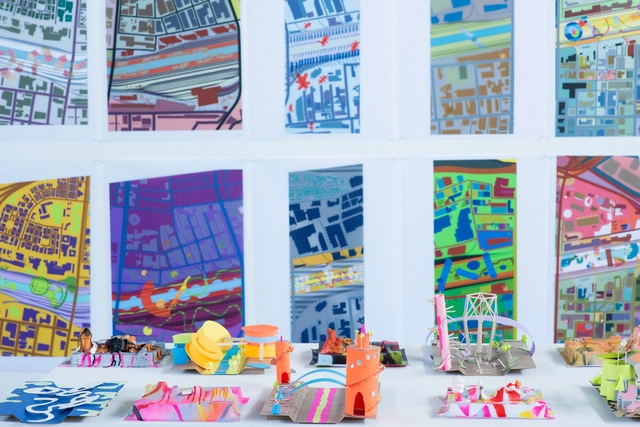
Physical models from the City Block project. Image Courtesy of SCI-Arc
Introducing high school students to their potential future careers is key in helping them to envision how the next years of their lives may be. With an immersive four-week summer program, Design Immersion Days (DID) gives an insight into design and architecture experimentation to high school students. Aiming to inspire their curiosity about architecture, the program’s proposal integrates the introduction of basic design knowledge and critical thinking skills, as well as familiarizing them with the wider architecture and design culture of Los Angeles.
Known for their innovative approach, SCI-Arc is characterized for encouraging their students to take the lead in reimagining the limits of architecture. Through their Youth and Summer Programs, they start building connections –both locally and internationally– with those interested in a future inside the discipline and provide them with design tools and architectural thinking.
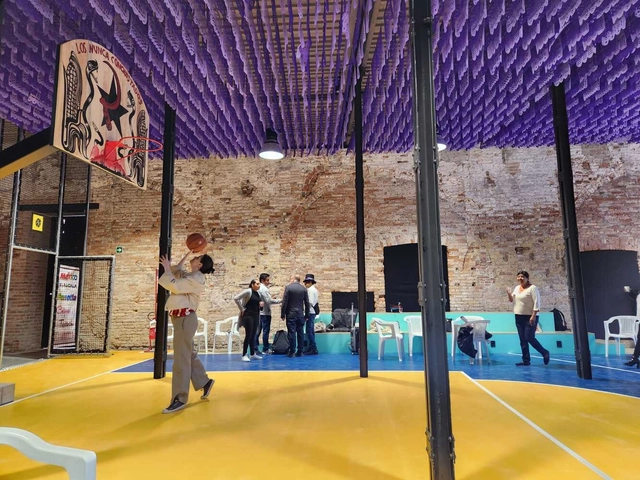
On Thursday, May 18, the Government of Mexico, through the Secretariat of Culture, celebrated the inauguration of the Mexican Pavilion at the 18th International Architecture Exhibition of the Venice Biennale 2023, with the proposal "Utopian Infrastructure: The Campesino Basketball Court". The pavilion, which had an investment of 9,059,600 pesos, aims to invite dialogue and play to engage in conversations about the topics that concern the world of architecture in relation to various aspects of social, cultural, and political life.
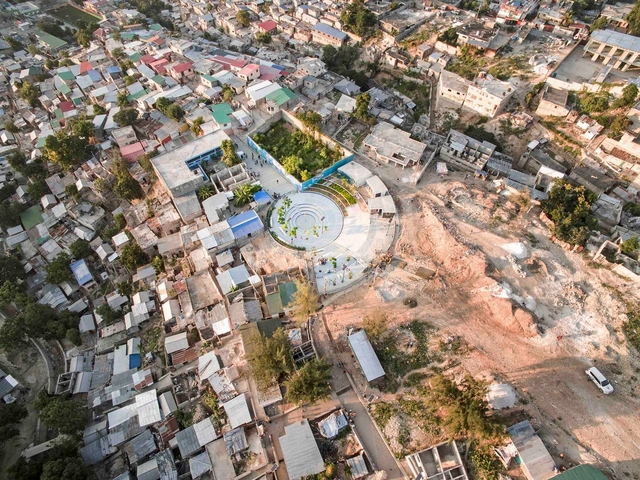
Architecture reconciles the sense of belonging and dignity of space. In addition to designing residential or cultural facilities, addressing public space in communities that inhabit vulnerable areas is also urgent and necessary to provide a dignified infrastructure that provides quality of life for the population. Therefore, we have gathered seven interventions in marginalized territories that show the potential for transformation from the space itself.
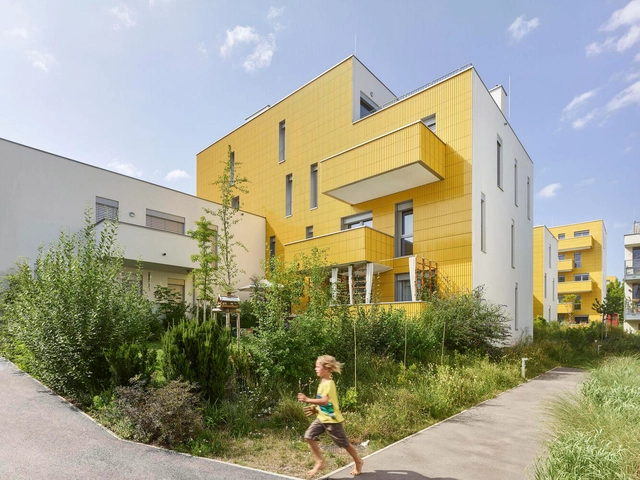
There’s a lot of undeserved stigma surrounding social housing. Although many projects start off well enough with shiny ribbon-cutting photoshoots, the cameras move on and investment tends to dry up, and maintenance cut. A lack of suitable green spaces follows – due to low-maintenance, and eventually results in forgotten, isolated communities, eventually spiraling down the plughole of ghettoisation.
Although easily blamed, the architecture of high-rise social housing blocks is not the cause of the problem, but can instead be part of the solution. Building up instead of out still offers a sensible route through both the current housing and social crises – sharing space and resources.
Moreover, these four projects from across Europe show, integrating social housing developments around accessible courtyards of sustainable green space helps bring and keep communities together.
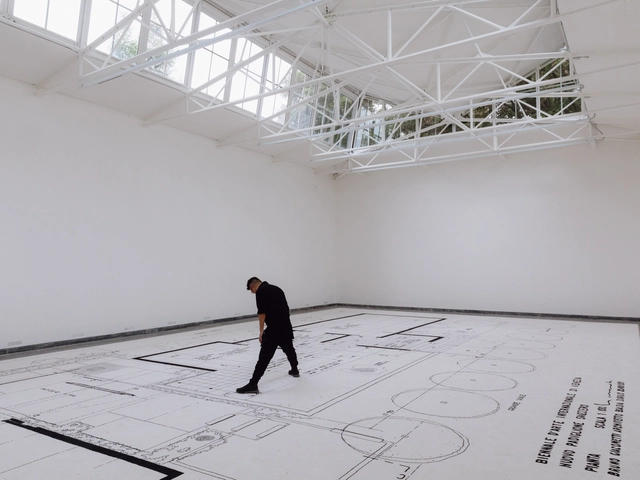
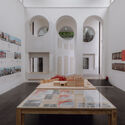
Taking a broader perspective on architecture, the exhibition shifts its focus towards the discipline rather than just the profession. It’s not “about building buildings per se”, explains the curator to ArchDaily. Instead, it seeks to question our conventional understanding of architecture, and with that, architectural exhibitions. The 2023 Biennale is a laboratory in every sense of the word, a global platform of experimentation, and a space to explore new ideas in the absence of spaces that allow us to do so. "It borrows its structure and format from art exhibitions, but it differs from art in critical ways which often go unnoticed", states Lesley Lokko in her initial statement.
Videos
Albert Park House / Nicholas Murray Architects. Image Courtesy of FritsJurgens
Episode five of Opening Up features Albert Park House and showcases Steel Window Design's fusion of modern elegance and timeless design. This architectural gem captures contemporary living while honoring heritage with meticulous attention to detail.
Whether it is the landscape and nature surrounding a plot of land or the desires and needs of his clients, for São Paulo architect Gui Mattos, the development of an architectural project is always a process of dialogue and exchange, built together with a series of other elements. After graduating in 1986 from the Faculty of Architecture and Urbanism of Santos (FAU Santos), he has led his architecture firm since 1987, which today has more than 40 employees.
The origin of interior courtyards dates back several years, serving as a means of shelter, security, and protection, while also aiming to achieve comfort and well-being through exterior elements. In contemporary housing, a wide range of possibilities is deployed, capable of accommodating various uses and activities that foster the relationship between the interior and exterior environment. Furthermore, notions of energy efficiency, thermal regulation, ventilation, and natural lighting are incorporated, among others.
Cities are a canvas for architectural creativity and the dynamism of urban life. In recent years, they have taken on an additional role: that of living laboratories for innovative architecture and urban design. International cities have become experimental grounds for architectural technology, sustainable practices, and human-centered design principles to be tested and refined. This paradigm shift has not only transformed the physical aspects of urban environments but has also redefined the relationship between architecture, community, and the built environment.