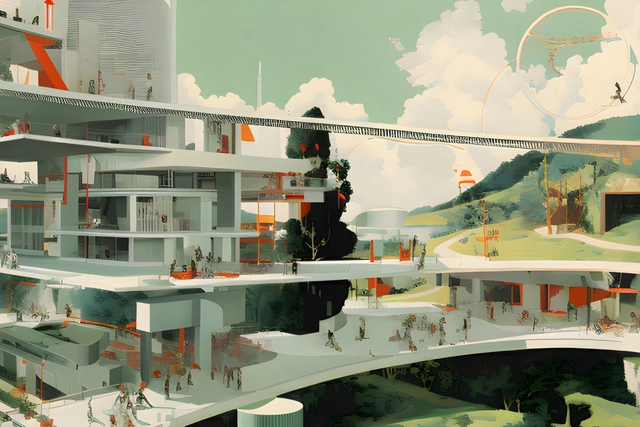
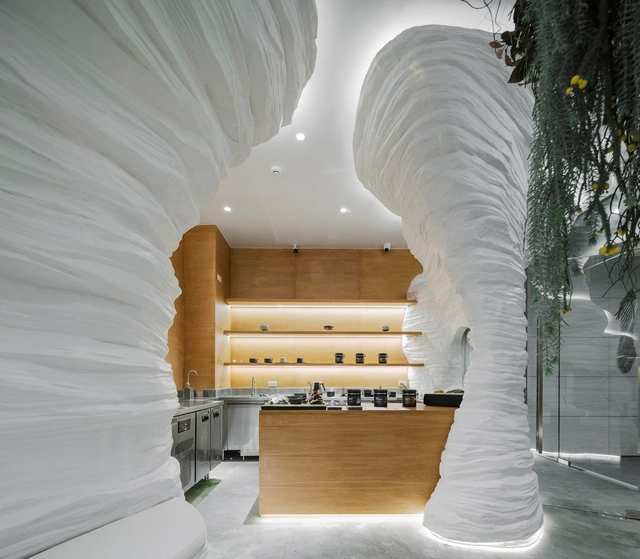
Maximalism is an artistic movement that stands in stark contrast to minimalism. While minimalism famously preaches "Less is more," maximalism embraces the opposite mantra of "More is more."
Within the broader context of the postmodern movement, which encompasses the social and aesthetic shifts occurring after World War II, maximalism can be characterized by its rejection of rigid values and rules. Instead, it celebrates imprecision, embraces diversity, blurs the lines between reality and fantasy, encourages spontaneity, and champions freedom of expression.
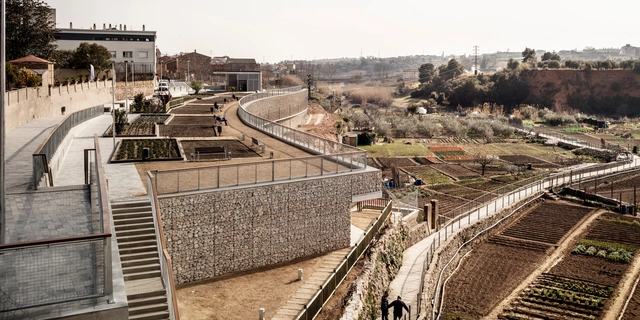
Increasing in both size and number, cities worldwide are experiencing accelerated growth. With green land regularly lost to either urbanization or its effects – such as rising sea levels or natural disasters – and expanding populations meaning more mouths to feed, the farming and agricultural industries are in crisis. Viewed by many as the solution, vertical farming is the practice of stacking layers of crops atop each other, using humanity’s latest design and engineering tech to grow more with less space.
More traditional horizontal farmland, however, does more for the environment than simply growing our food. The open-air green spaces often serve as natural habitats, air filtration, and temperature control for the surrounding area. By stepping up the concept of vertical farming into the world of architecture, we can bring all the goodness of the farm, straight to our doorstep.
Each year, the Trust for Public Land (TPL) issues its ParkScore, which ranks the park systems of the 100 most populated cities in the U.S. This year, the organization also explored the positive health outcomes of top-scoring cities, looking at more than 800 innovative programs and practices that integrate park and healthcare systems.
https://www.archdaily.com/1007296/urban-parks-should-be-a-greater-part-of-the-healthcare-systemJared Green
Welcome to West Hollywood and to episode 9 of Opening up. Talking through his passion project is Denis Devin Donner from the Los Angeles-based company Rudin Donner Design. This transformation started with a mansion lacking a defined entrance and reached its culmination with a gate that frames a beautiful view.
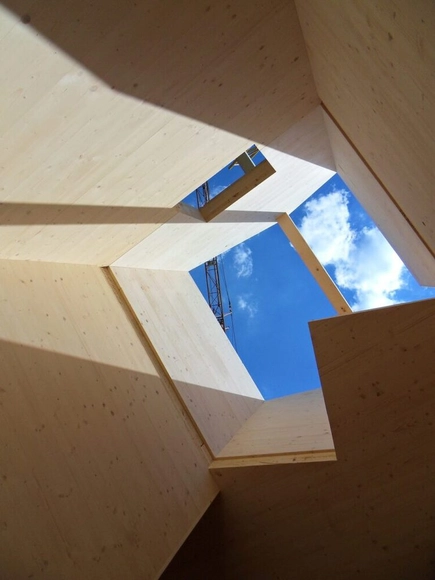
The growth of the world's population has led to an increase in housing and building construction around the globe. Considering that today the construction industry is responsible for 40% of the planet's CO2 emissions, and according to the Chilean Chamber of Construction, by 2035, Chile will need housing for 2.6 million people, it is necessary to guide this sector toward an environmentally friendly alternative. The answer to this challenge can be found in nature itself, where there are various efficient and sustainable construction solutions. Such is the case with wood: a noble and renewable material capable of capturing CO2 and contributing to a better environmental future.
Today, thanks to technological advances, engineered wood or laminated wood, composed of layers of structural wood oriented perpendicularly to each other, has positioned itself as a trending construction material worldwide, and Chile should not be the exception.
Ahmadreza Schricker is an architect whose journey was shaped by his work with Herzog & de Meuron and his time with the well-renowned OMA. His studio ASA North, is well known for its award-winning adaptive reuse of the Argo Contemporary Art Museum & Cultural Center, a former distillery that was awarded at the 2020-2022 Aga Khan cycle. It is a testament to the work ASA North does, bridging gaps between past and future, traditional and contemporary. The interview also goes beyond ASA North, looking into its sister company, ASA South. Based in the virtual world, ASA South challenges conventional boundaries and reimagines architectural practice in the digital age.
In this Barcelona guide, we have rounded-up the architecture of probably the best known and most influential architect from the beginning of the century in Spain, Antonio Gaudí. Gaudí spent most of his life in Barcelona and the city boasts the largest concentration of his works in the world. His style is unique, often imitated but never matched.
The Second Studio (formerly The Midnight Charette) is an explicit podcast about design, architecture, and the everyday. Hosted by Architects David Lee and Marina Bourderonnet, it features different creative professionals in unscripted conversations that allow for thoughtful takes and personal discussions.
A variety of subjects are covered with honesty and humor: some episodes are interviews, while others are tips for fellow designers, reviews of buildings and other projects, or casual explorations of everyday life and design. The Second Studio is also available on iTunes, Spotify, and YouTube.
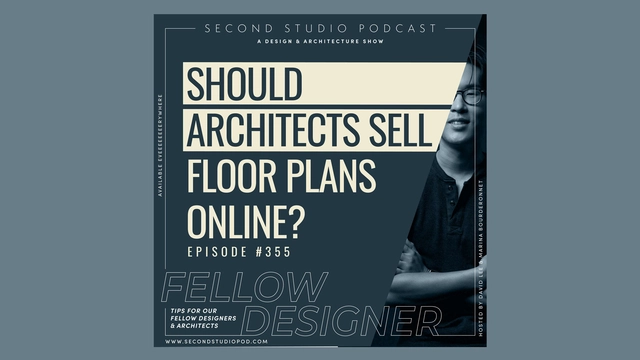
This week David and Marina of FAME Architecture & Design discuss whether or not architects should sell their floor plans online. The two cover the financial benefits of selling plans, making good floor plans accessible to more people, the downsides of selling partial services, quality concerns, the future of the profession, prioritizing speed and efficiency in design, why architects are often not used on projects, and more.
https://www.archdaily.com/1007008/the-second-studio-podcast-should-architects-sell-floor-plans-onlineThe Second Studio Podcast
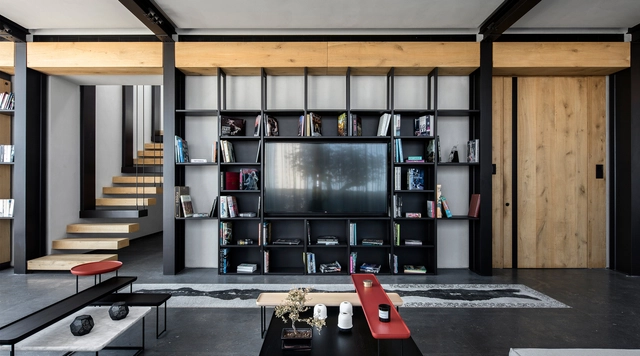
There are a series of multiple factors to take into account when deciding where to place a TV, including —but not limited to— the dimensions of both the furniture and the TV, image resolution, height, design, and so on.
In this article, we share some recommendations to achieve the comfort and well-being of the users avoiding possible problems of visual fatigue or unfortunate body postures.
Tropical Africa boasts vast forests that cover 3.6 million square kilometers of land in West, East, and Central Africa. These forests provide valuable timber resources that significantly impact sectors, such as the furniture, fuel, and paper industries. However, interestingly, timber is seemingly absent in the contemporary architecture of the countries in this region. While architectural taste plays a role, the main reasons for this absence can be attributed to the wood industries' inability to meet the requirements of availability, affordability, aesthetic appeal, durability, and climatic and structural performance of timber. The wood industry in tropical Africa is mainly composed of informal and small-scale operations, focused primarily on sawing logs rather than refining wood for architectural or structural purposes. Despite this, the large number of informal enterprises in the region presents an opportunity to reshape the wood industry and utilize the local forestry resources to construct timber buildings.
While most cities around the world seek to implement more sustainable and environmentally friendly modes of transportation, encouraging new urban mobility habits in their residents, the use of automobiles still persists, occupying significant parking spaces in urban centers. Finding a way to integrate these uses, provide new spaces for their citizens, and leverage their facilities for ecological, productive, and other purposes is the challenge faced by many professionals in architecture and urban planning.
If you’ve been in the profession of architecture long enough, you come to know a certain rarified subset of fellow professionals: Those who call themselves “architects,” who have a degree, and who may even be licensed and members of the AIA, but who do not practice architecture. They simply like being an “architect.”
In the context of WWI and to address the massive housing shortage resulting from the conflict, the Dom-Ino modular structure, one of the most significant contributions of functionalism and designed by the Swiss designers Le Corbusier and Max Dubois, established concrete premises for a new vision of a lightweight structural model that optimizes the construction process. Thanks to the use of a reinforced concrete slab and column system, the Dom-Ino structure allowed for the flexible arrangement of elements in the floor plan and freed the facade from the limitations imposed by load-bearing walls.
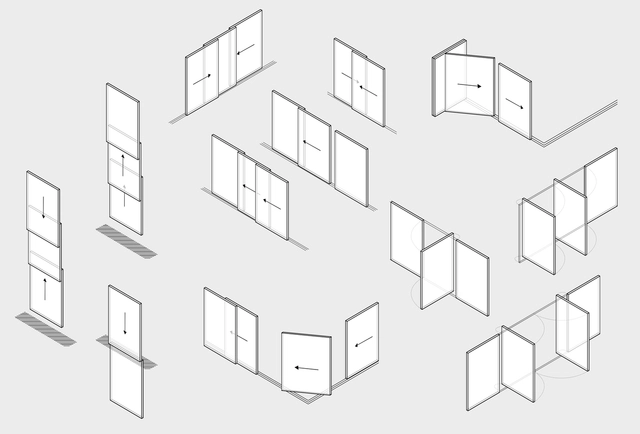
This condition prompted the creation of architectural designs that not only integrated windows as functional elements but also as compositional. Thanks to technological innovations, windows with slender framings and wider openings were achieved, as exemplified in works such as Villa Savoye and Farnsworth House. While these proposals redefined the aesthetics of architecture, the technological limitations of the time presented challenges. Nowadays, the continuous development of windows with improved technical characteristics has led to the concept of the minimalist window, which has inspired three fundamental principles derived from this concept, conceived by Vitrocsa. These principles —transparency, functional variations, and advanced mechanisms— incorporate technological innovations while simultaneously blurring spatial boundaries. Each of them plays a key role in the design of spaces and together they significantly redefine the aesthetics of buildings and interiors.
https://www.archdaily.com/1006485/redrawing-boundaries-the-three-principles-of-minimalist-windowsEnrique Tovar
cove.tool futuristic architecture designed by artificial intelligence, perfected by human creativity. Image Courtesy of cove.tool
Artificial Intelligence (AI) is poised to shape the future of architecture. As the AEC (Architecture, Engineering, Construction) industry rapidly evolves, AI matches the momentum. With these simultaneous evolutions, a burning question arises: will architects continue to be the primary creators of our built environment, or will AI dominate?
Colors have played an essential role in the history of modern architecture - from Le Corbusier's theory of polychromy to the aesthetic conceptions of the Bauhaus. However, we find ourselves at the beginning of an era where the interpretation and implementation of colors in architecture are undergoing a transformation based on their impact on the built environment.
Throughout the month, we conducted an open call to listen and learn from our readers, exploring their predictions and thoughts related to the future of colors in architecture. After reviewing an immense number of comments and opinions, it was surprising to discover commonalities regarding the importance of considering energy efficiency in color choices. Check out the main viewpoints below.
Image created using AI under the prompt: A sober and captivating visual representation of an urban environment that flawlessly captures the essence of anime and architecture. Image via DALL·E 2
World War II left a profound influence on the evolution of society, introducing significant changes in the fields of urban planning and architecture. During the 1930s, the Congrès Internationaux d'Architecture Moderne (CIAM) promoted modernism on an international scale. After the war, this architectural movement became firmly established as the dominant one, driven by the imperative of reconstruction and technological advancements. Influential figures like Le Corbusier and Alvar Aalto spearheaded this movement.
In 1959, the same year as the final CIAM meeting, Japanese architects like Kenzō Tange, Kishō Kurokawa —the designer of the Nakagin Capsule Tower—, and Kiyonori Kikutake began to explore new approaches to urban design and architecture, known as the Metabolist movement. This exploration was particularly significant in the context of Tokyo's rapid repopulation after the war and the scarcity of resources for reconstruction. Innovative concepts such as Marine City, The City in the Air, and the 1960 plan for Tokyo emerged, which proposed the city as a constantly evolving organism and emphasized the relationship between humans and their built environment. These ideas shaped the concept of "megacities" and reflected Japan's creative response to its challenging postwar situation.
https://www.archdaily.com/1007021/textures-skyscrapers-and-urban-landscapes-when-anime-meets-architectureEnrique Tovar
The window for solving climate change is narrowing; any solution must include embodied carbon. TheSixth Assessment Report published by the IPCC (Intergovernmental Panel on Climate Change) concludes that the world can emit just500 gigatonnes more of carbon dioxide, starting in January 2020, if we want a 50 percent chance of staying below 1.5 degrees. In 2021 alone, the world emitted about36.3 gigatonnes of carbon, the highest amount ever recorded. We’re on track to blow through our carbon budget in the next several years. To quote the IPCC directly: “The choices and actions implemented in this decade will have impacts now and for thousands of years (high confidence).”
When an architect conceives the opening of a space, the primary objective is to create a frame that enhances the views, optimizes the entry of natural light, and makes the most of the illumination it provides. In this context, we often seek to maximize the proportion of glass, reducing the presence of frames and profiles to a minimum, thus expressing the growing desire for perfect integration between indoor and outdoor environments. To adequately meet this demand, architects and manufacturers are constantly searching for solutions that minimize the visual obstruction caused by structures, pushing the boundaries of what is technically and statically feasible toward minimalist window frames and profiles.







.jpg?1497901399&format=webp&width=640&height=580)