Courtesy of Jeff Jordan Architects, via http://libertybridgeorg.wix.com/libertybridge
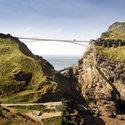
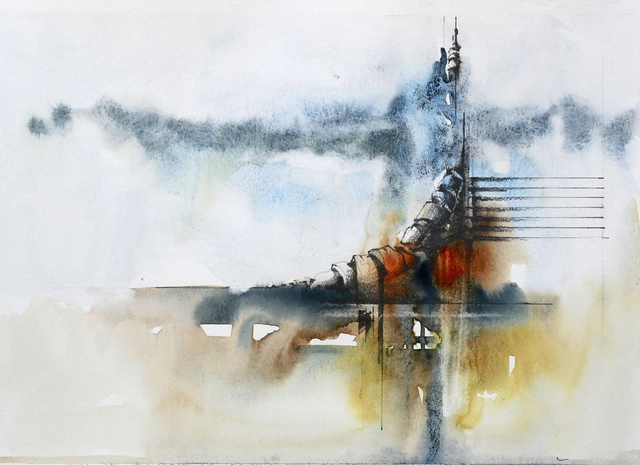
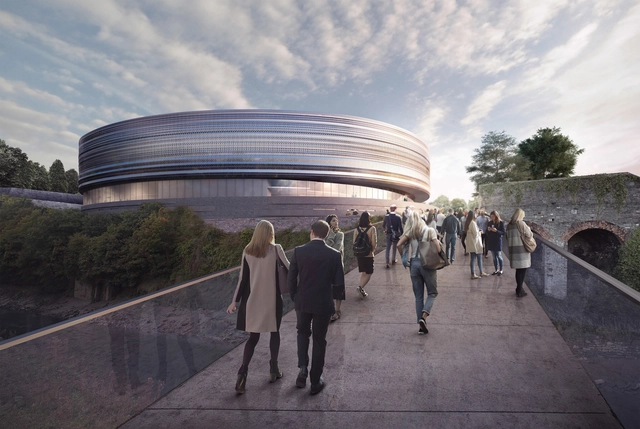
Despite being separated by only a few miles, Manhattan and Jersey City seem much further apart; the Hudson River forces commuters to take long, roundabout routes or rely on the over-worked PATH system. Inspired by a need for connectivity between the two cities, Kevin Shane began conceptualizing a new pedestrian bridge, dubbed Liberty Bridge, which would connect Jersey City to Battery Park. Read more about this conceptual proposal after the break.
At this year’s Paris Fashion Week, Switzerland-based fashion house Akris showed its 2016 Spring/Summer Collection -- an assembly of garments based on the work of Japanesearchitect Sou Fujimoto.
Akris’ creative director, Albert Kriemler, was introduced to Fujimoto by photographer Iwan Baan while working on the Université Paris-Saclay. From a stance of admiration, Kriemler was thus influenced by Fujimoto’s work: "We share a vision to create an effortless relation between the body and the environment with utmost simplicity. Sou Fujimoto is an architect who understands that we have more senses than just the eye," said Kriemler.
A group known as Architects for Social Housing (ASH) is gaining attention after stating its intention to hold a protest at the RIBA Stirling Prize Award ceremony tomorrow evening. Their protest is directed at the shortlisting of NEO Bankside, the Rogers Stirk Harbour + Partners-designed luxury apartment complex on London's south bank, which they say "has not only broken every planning requirement for social housing in Southwark, but in doing so has set a very dangerous precedent for the mechanics of social cleansing in London."
Gmp Architekten has won a competition to design the masterplan and architectural concept for the National Exhibition and Trade Fair Center in Hanoi, Vietnam. The firm’s lotus-inspired plan was one of nine competing international designs.
Buoyant Starts / Floating Homes Ltd with Baca Architects. Image Courtesy of New London Architecture
Following their selection of 100 ideas to help solve London's housing crisis last month, New London Architecture (NLA) and the Mayor of London have narrowed down the entrants to ten winners which they believe offer exemplary models for the UK capital. The selected designs range from radical architectural solutions, such as Floating Homes and Baca Architects' proposal to create 7,500 new homes in a matter of mere months by floating small abodes in London's canals, to radical economic solutions such as David Kroll's recommendation to separate the value of properties from the value of the land they occupy.
In addition to being displayed alongside the 90 other proposals in an exhibition put on by NLA, these ten projects will be presented to the Greater London Authority to be assessed for their feasibility as real-world solutions to the crisis. Together, these ten designs provide insights into potential solutions - but also the many different causes - of London's housing crisis. Read on for images and descriptions of all ten designs.
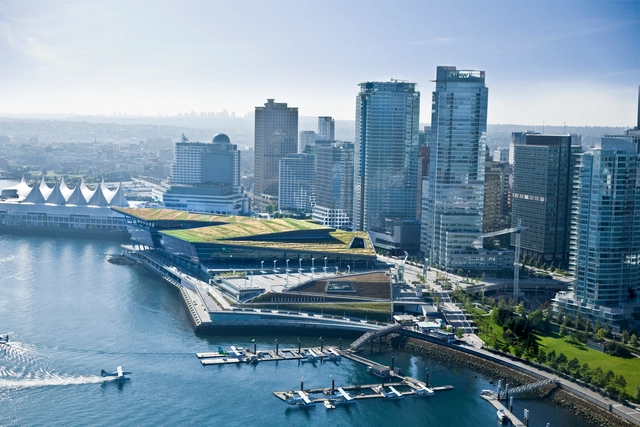
WIRED Magazine has created a list of Eight Cities That Will Show You What The Future Will Look Like in the latest edition of their design issue. In the relatively short span of time that humans have been planning cities, more and more decisions have been made that have shaped the path of new technologies and methods that will make cities better. Such projects—like new streetlights, bicycle infrastructure, and traffic-sensitive museums—highlight some of these advances in the urban lifestyle.
"The cities of tomorrow might still self-assemble haltingly, but done right, the process won’t be accidental. A city shouldn’t just happen anymore. Every block, every building, every brick represents innumerable decisions. Decide well, and cities are magic," writes Wired author Adam Rogers. Read on after the break to see how 8 different cities from around the world are implementing innovative projects.
Photographer Laurian Ghinitoiu has shared with us images of OMA's recently completed Garage Museum of Contemporary Art in Moscow. The museum project repurposed the 1960s Vremena Goda restaurant in Gorky Central Park and transformed it into a modern exhibition space adorned with Soviet era tiles, mosaics and bricks preserved from its previous life.
"The building offers a wide range of interior conditions for the exhibition of art beyond the ubiquitous “white cube,” described OMA in the project's description. Scroll down for more images of the museum by Ghinitoiu.
In a culture dominated by smartphones and Instagram, with estimates that over one trillion photographs will be taken this year alone, it might seem impossible for photographs to make and shape issues in the ways they once did. Despite this, images still steer debates with shocking resiliency and, with luck, become iconic in their own right. As architecture is synonymous with placemaking and cultural memory, it is only logical that images of the built environment can have lasting effects on the issues of architecture and urbanism. It's never been easier for photographs to gain exposure than they can today, and with social media and civilian journalism, debates have never started more quickly.
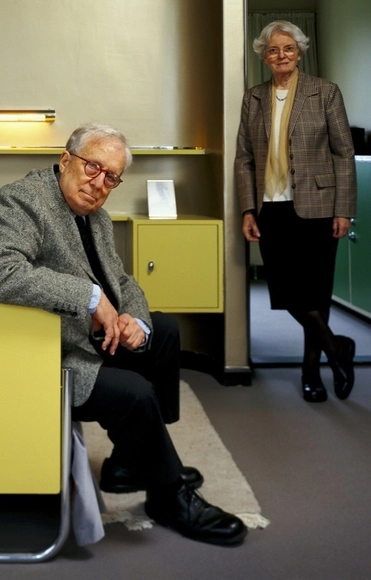
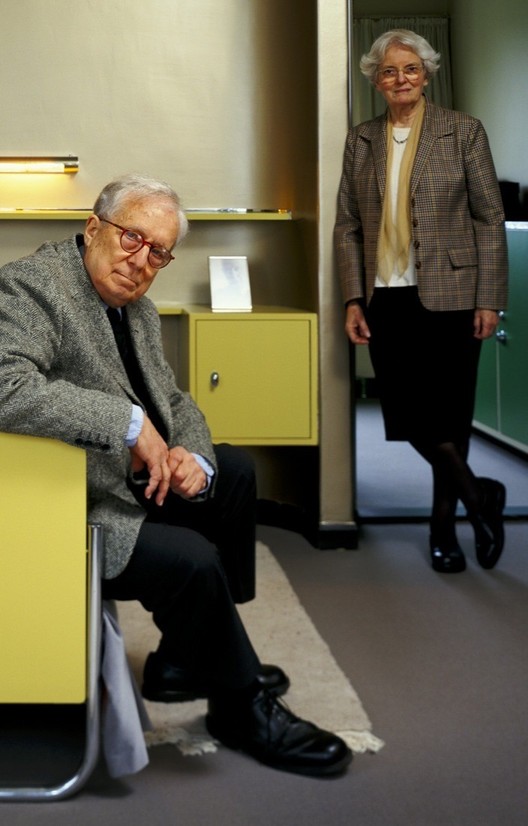
Last year, Thomas Piketty's Capital in the Twenty-First Century took the world of economics by storm. His historical analysis and critique of the capitalist system fed perfectly into the wider narrative being constructed in the wake of the global financial crisis. But what lessons does Piketty hold for architects? In an article for The Architect's Newspaper, OMA partner Reinier de Graaf examines the way that the development of architecture in the 21st century mirrored that of economics, as the design of buildings became simultaneously a symptom and a cause of trends in capital. Read the full article - including de Graaf's question for the architects of the 21st century - here.
Located in the autonomous Iraqi state of Kurdistan, Vogue Architects have won a competition to construct a new building for the Kurdistan Engineers Union in Sulaymaniyah, Iraq. The mixed-use concrete and glass tower will serve as the new hub for the Engineers Union and will become home to several engineering firms, administrative offices, a fitness centre and public space. Designed to pay homage to the land, the tower was created on principles of holiness, honesty and respect for nature.
New-Territories/ M4 has launched a Kickstarter campaign to fund MMYST, a hybrid architecture project that combines a hotel with a manufactured habitat for Swiftlets, a bird native to Thailand. Located in Krabi, the building will be used almost exclusively by backers of the project and will be set for removal in 10 years. In order to be realized, the project requires $200,000 in funding before October 25, 2015. Read more about this experimental project after the break.
Pro-Form Architects has created Rolled Table, an information booth made of flexible plywood that challenges the standard form of a table. Created for the Water and Land Niigata Art Festival, which has been held every three years since 2009, Rolled Table displays guide books and pamphlets better than an average table due to its distinct curvature and lighting system.
OMA has been selected to redevelop Washington DC's Robert F. Kennedy (RFK) Stadium campus. Lauded by the commissioners for their ability to activate public space, especially along waterfronts, OMA was also recently chosen alongside OLIN to design the city's 11th Street Bridge Park.
“One of the things we realized as we were analyzing the future use of RFK, after talking to a lot of potential users, is that there was no conceptual master plan that can be shared with the community once the ideas are put to paper,” said Max Brown, chairman Events DC - the organization spearheading the project. “We needed someone to help tell a story about what this place could be and options for use and how they’re located.”
Russian-Chinese consortium Turenscape and MAP architects was announced as winners of a major competition to redevelop the Kaban lake system embankments in Kazan, Russia. Their winning concept, “Elastic band: The Immortal Treasure of Kazan” aims to establish a "continuous system of landscapes along the bank line, which will preserve the cultural and historical memory and become a basement for future stage-by-stage development."
"The water is turning into a real living treasure and heritage of Kazan," said the competition's organizer.
Plans for Apple's newest California "spaceship" has been unveiled. Named after its bordering streets, Central & Wolfe hopes to transform a 1970s office park in Sunnyvale into a "futuristic office campus." The 19 acre site, located just five miles from Apple's main Cupertino campus (currently underway), was designed by HOK and is currently under review.
If built, it will replace nine aging buildings with a clover-like design comprised of three interconnected structures - each rising six stories.
This fall, reThink Wood is heading to Washington D.C. for Greenbuild - the world's largest conference and expo dedicated to green building. If you haven’t registered already, this is your chance to win a freepass to the conference and participate in educational workshops celebrating sustainable architecture.
reThink Wood is offering a full pre-paid pass to the 2015 Greenbuild Conference & Expo ($1,050 value) to one lucky ArchDaily reader. The winner will be invited to meet with architects onsite that are passionate about sustainable design with wood in a variety of structures – including tall wood buildings.
To be entered to win, simply fill in your details in the form at the bottom of this article before Monday, October 19 at 12:00PM EST.
Architect and engineer, Werner Sobek, is urging cities to become emissions-free by the year 2020 – for all cars and buildings to be entirely powered by renewable energy. Sobek shared this goal during his acceptance speech of the Fritz Leonhardt Prize in July 2015, saying that this goal is achievable, but only with the full support of automotive and construction industries. Although seven leading, industrialized nations have agreed to de-carbonization by the end of the century, Sobek believes that that would be too late. Read more about Werner Sobek’s vision of the future after the break.