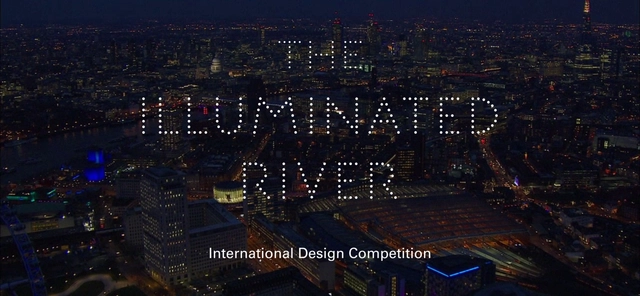
The Illuminated River Foundation has announced a shortlist of six firms that will compete to design a new permanent light installation along the Thames River in London. From a pool of 105 teams (made up of 346 different firms), the winners were selected based on experience, past projects and team composition. The six finalists will now continue on to develop lighting schemes for the Westminster, Waterloo, London and Chelsea Bridges, as well as a design masterplan for the 17 iconic London bridges between Albert and Tower.
Continue reading to see the list of six finalists.
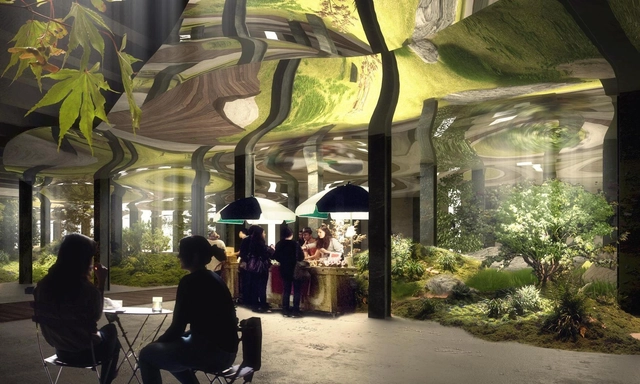
While most cities strive for a sustainable level of urban density, there are limitations at play that can restrict the amount of upwards growth. In Mexico City, for example, height restrictions guide the growth outwards rather than upwards, and often the preservation of historic low-rise architecture halts expansion plans. In an attempt to mine the possibilities for alternative expansion, Kurt Kohlstedt from 99% Invisible has presented a round-up of the different ways in which architecture can instead grow below the ground surface.
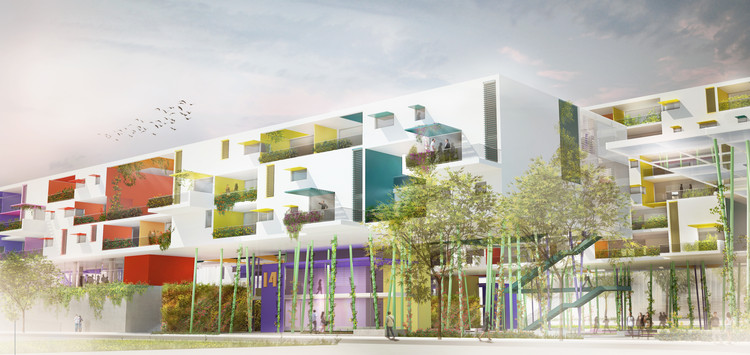
Designed for the MOLEWA (Mount Lu World of Architecture) competition, Liaisons is a residential project in Ruichang, China near the “Flower Ocean Garden,” one of the world’s largest flower theme parks.
Inspired by the concept of blooming, the project centers on introducing a flourishing essence to the neighborhood by analyzing floral and vegetal properties in pixels and converting them into patterns, which are applied in arrangements and spatial organization principles.
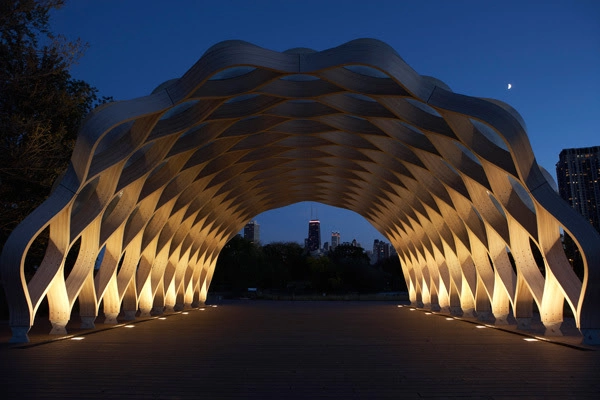
Studio Gang has been selected to design next year’s installation of the Summer Block Party at the National Building Museum in Washington, D.C. The temporary exhibition will be the latest in the Museum’s annual series, after this year’s ICEBERGS by James Corner Field Operations, and previous installations like Snarkitecture’s The BEACH in 2015, and Bjarke Ingels Group’s BIG Maze in 2014.
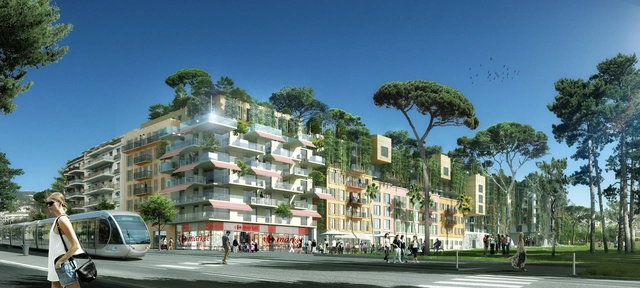
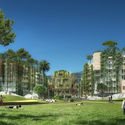
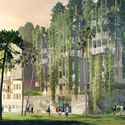
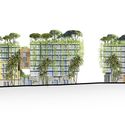
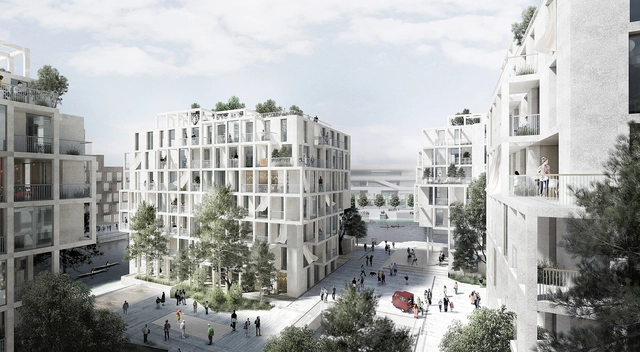
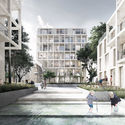
Maison Edouard François, in partnership with ABC Architectes, has won the competition for the requalification of the former Ray Stadium into housing, landscaped gardens, shops, sports facilities, and parking, beating other competing firms like Herzog & de Meuron and Rudy Riciotti.
Located in Nice, France, the project aims to provide its swiftly growing neighborhood with a “new green lung” by mimicking the form of a vegetated hill and incorporating elements of classic Niçois architecture like white stone and wood. The reinvented stadium becomes a bridge between the urban and natural landscapes, linking new constructions of the Boulevard Gorbella with the new Ray Park.
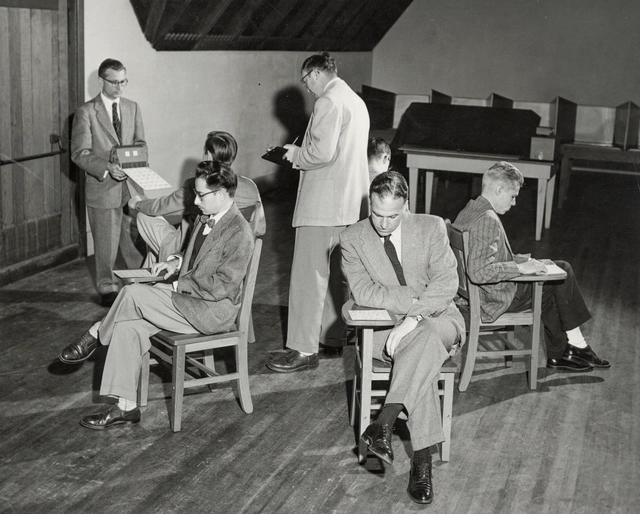
via 99% Invisible. Image Courtesy of f Institute of Personality and Social Research, University of California, Berkeley / The Monacelli Press
In two intriguing new podcasts, the team over at 99% Invisible uncovered some never-before-heard audio and forgotten secrets about elements of architectural history. In the first, The Mind of an Architect, producer Avery Trufelman explores the audio archives of the Institute of Personality Assessment and Research (IPAR), where a study undertaken in the late 1950s mapped the personalities of prominent architects. Eero Saarinen, Philip Johnson, and Richard Neutra were among the study group, and the data came to some interesting conclusions about the role of ego and the presence of creativity.
In the second, Photo Credit; The Negatives of the Bauhaus Sam Greenspan explores the misattribution of credit for some of the most prolific images of the Bauhaus. Taken in the 1930s by German photographer Lucia Moholy, the historic images paint one of the clearest pictures of life at the Bauhaus. In the turmoil of the war, her negatives were lost, and absorbed by the school's collection, denying her the credit she deserved.
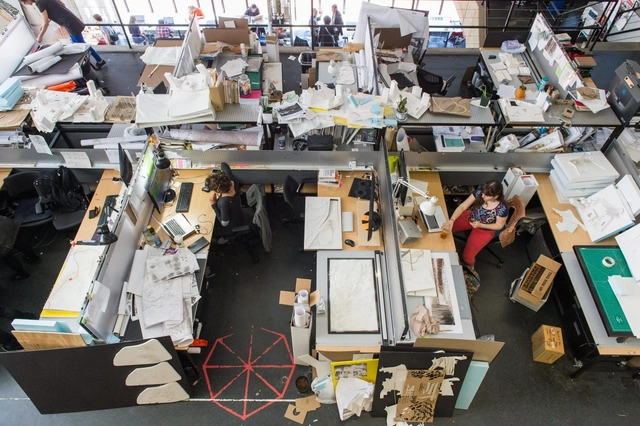
With schools around the country starting back up again, it’s time for the latest edition of DesignIntelligence’s yearly rankings of the Top Architecture Schools in the US for both undergraduate and graduate programs. This year, CEOs, managing partners, and human-resource directors from more than 2,000 firms were asked to list the 10 programs from each category they felt best prepared students for success in the profession of architecture.
This information, along with detailed accounts on the best programs that teach skills in design, computer applications, sustainability and construction methods & materials, factored into the creation of the 2017 rankings. In addition, over 2,785 students were polled on the quality of their program and their plans for post-graduation. The two top schools, Cornell for undergraduates and Harvard for graduates, were once again named the best programs to attend, according to the study.
Read on to see the list of the top 10 undergraduate and graduate programs in the US.
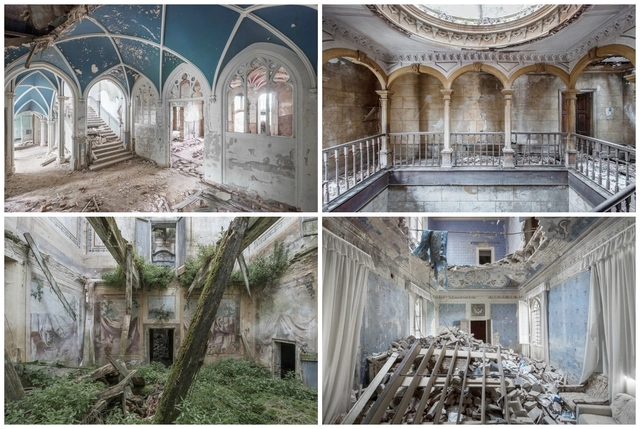
Architectural photographer Mirna Pavlovic has an obsession with abandoned places. For her, their appeal lies in their ability to exist on a different temporal plane from the rest of reality – both impossibly ancient and frozen in the present.
“They are never truly dead, yet never really alive,” Pavlovic explains. “Precariously treading along the border between life and death, decay and growth, the seen and the unseen, the past and the present, abandoned places confusingly encompass both at the same time, thus leaving the ordinary passer-by overwhelmed with both attraction and revulsion.”
For her latest series, Dulcis Domus, Pavlovic trekked over fences and past “no trespassing” signs to capture the once-glorious villas, palaces and castles of Europe that have now been left to decay, slowly returning to the Earth that existed before them. Through photography, Pavlovic attempts to highlight social issues through an aestheticised approach, allowing viewers to “see with fresh eyes what lies beneath those spots that we pass by on the street.”
Continue reading to see a selection of photographs from the series – hover over the images to see where each villa is located.
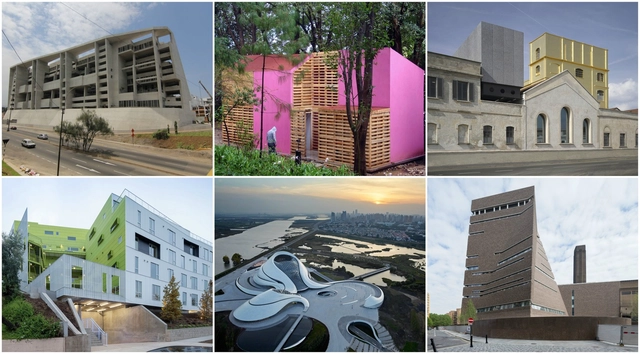
DETAIL Magazine has announced the winners of the DETAIL Prize 2016. This year, the jury selected five projects from a pool of 337 projects from 42 different countries by looking for “realizations in which the overall design concept and the detailing were brought together in a coherent way.” The winners were noted for being “future-oriented, innovative and pioneering projects from different disciplines that have outstanding architectural and technical qualities.”
This is the seventh edition of the biennial award, which aims to “strengthen architecture in public debate, strengthen the role of architects in public, and strengthen networking among architects, industrialists, developers and politicians.”
The award, now in its ninth year, “celebrates design that promotes or delivers change, enables access, extends design practice or captures the spirit of the year.” Nominees are selected in six categories, including Architecture, Digital, Fashion, Graphics, Product and Transport. An exhibition on the projects will be on display from 24 November 2016 – 19 February 2017.
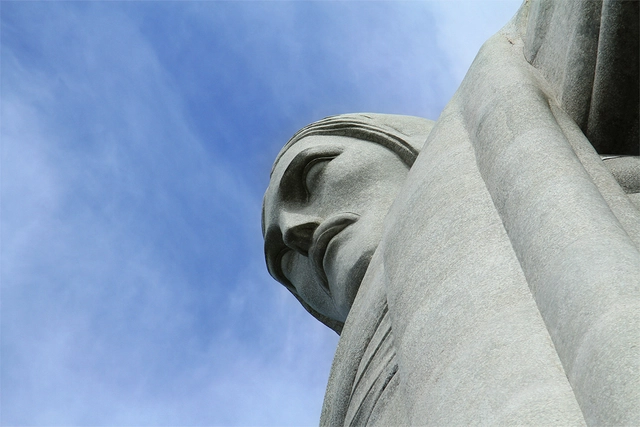
Just over a week ago in beautiful Rio de Janeiro the Olympic Games, the world's largest sporting event, came to an end. The Games, as well as the FIFA World Cup, have been a driving force for the city over the last six and a half years. In the wake of the frenzy caused by the much-anticipated event, Rio will have the Paralympics, which will take place between the 7th and 18th of September. But then what?
The word "legacy" being associated with major world events is nothing new. We see it used a lot when referring to the Olympics and the World Cup, and it’s come up time and time again in recent years when we look at the lasting effects these events have had on host cities like Barcelona (1992), Athens (2004), Beijing (2008) and London (2012). Essentially, the issue revolves around some fundamental questions: Who are the major beneficiaries of the "legacy" of the Olympic Games? Were the huge public investments worth it? Will there be any improvement for the general population? Can the equipment that was built be adapted for everyday use?
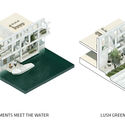
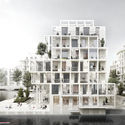
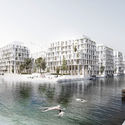
TREDJE NATUR, AART Architects, and Arup have teamed up for a competition proposal to redesign Kronløbsøen, an island development marking the transition between port and city in Nordhavn, Copenhagen. Composed of 30,000 square meters of housing, six water-rooms, a houseboat colony, harbor bath, and multi-story underwater parking, the project aims to create an island celebrating all aspects of harbor life.
Taking into account the local port’s spirit, scale, material palette, and history, Kronløbsøen is “composed of eight porous monoliths shaped by physical connections, visibility, and microclimate, creating the optimal conditions for housing and urban life.”
Although societies have transformed through the ages, wealth never truly seems to go out of style. That said, the manner in which it is expressed continually adapts to each successive cultural epoch. As a consequence of evolving social mores and emerging technologies, the ideal of “luxury” and “splendour” sees priorities shift from opulence to subtlety, from tradition to innovation, and from visual ornamentation to physical comfort.
AD Classics are ArchDaily's continually updated collection of longer-form building studies of the world's most significant architectural projects. In these ten examples of "high-end" residences, which represent centuries of history across three separate continents, the ever-changing nature of status, power and fine living is revealed.
A feature Instagram users have spent years longing for is finally here: Zoom. Just released today, the update to the iOS app finally will allow you to pinch to zoom in on photos and videos, just like you can in most photo viewing apps (no more screenshotting necessary!). This means you can now get a closer look at the architectural details of your favorite buildings on Instagram, from doorways to moldings to joints. Though be warned, just because you can make it bigger doesn’t mean it will necessarily be clearer - Instagram still will only support images 1080 pixels wide.
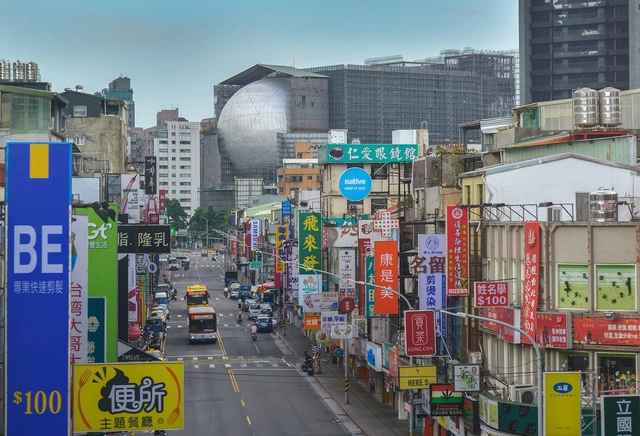
The scaffolding obscuring the facade of OMA’sTaipei Performing Arts Center has begun to come down, exposing the aluminum exteriors of the spherical Proscenium Playhouse and the Multiform Theatre for the first time. Upon completion, the experimental building will feature a looped public pathway, flexible auditoriums and unique stage environments. Construction on the building is now moving full speed ahead, with an expected opening date in June 2017.
Continue on for more images of the in-progress building.
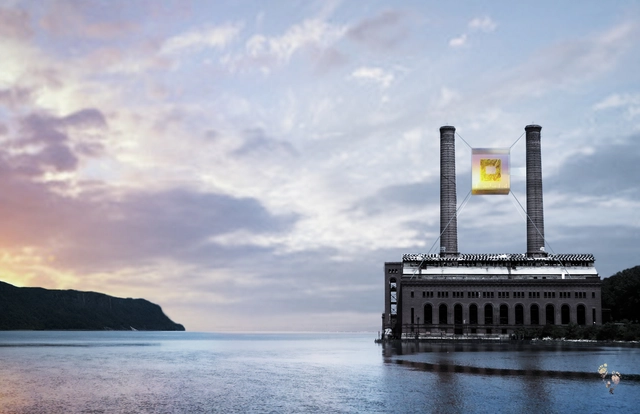
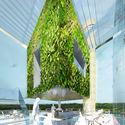
New-York-based Big Foot Developers have unveiled speculative designs for The Floating Restaurant, a glass cube restaurant that could hang between two smokestacks at the historic Glenwood power plant over the Hudson River in the Yonkers neighborhood of New York City.
With forest on the riverbank, the water below, and green space inside the restaurant, the project aims to blend architecture and nature while having a minimal impact on the view of the site.
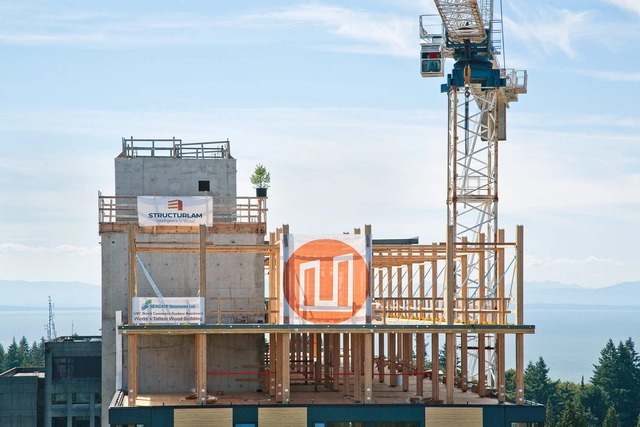
The world's tallest timber tower has topped out this week, standing 53 meters high in the Vancouver skyline. The 18 story building, designed by Acton Ostry Architects, began construction in November 2015 and has since opened the floodgates for a new wave of mass timber towers. The building, which has been erected at record speed, will house 404 students as the Brock Commons Student Residence at the University of British Columbia (UBC). Offsite-production and the careful coordination of trades saw it rise at a rate of two floors per week, with the official completion set for mid-2017.
Burning Man 2016 is underway in the temporary city of Black Rock City, Nevada – meaning for one week, thousands of festival goers will romp through the desert taking pictures of the hundreds of art and architectural installations constructed for the event. This year's theme is "DaVinci's Workshop," inspiring sculptures based off the artist's famous inventions and artworks, including a large-scale interpretation of the Vitruvian Man on a circular frame.
Read on to see some of the best structures and installations found at Burning Man 2016.










.jpg?1472236051&format=webp&width=640&height=580)


.jpg?1472236051)
.gif?1472762798)