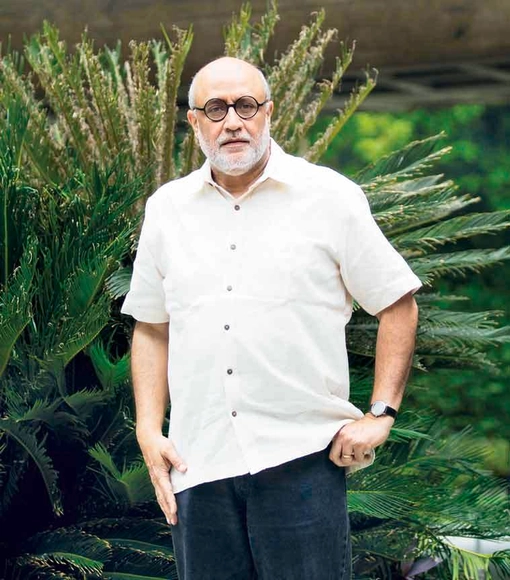
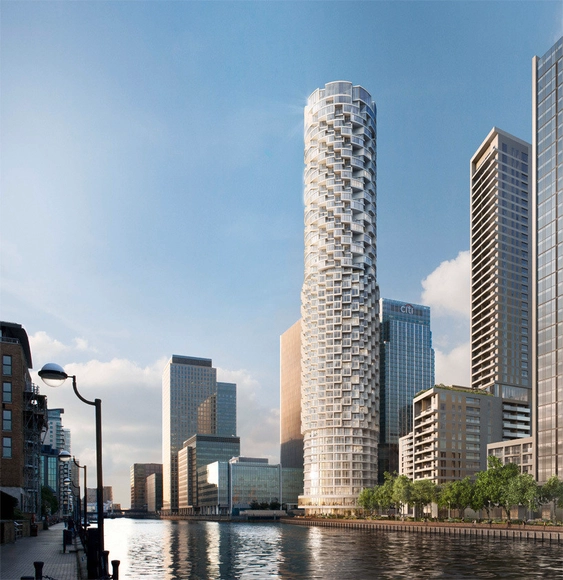
In an interview withThe Indian Express, Rahul Mehrotra—conservationist, architect and author of Kumbh Mela: Mapping the Ephemeral MEGACITY—talks to Shiny Varghese about his belief that the current notion of a 'smart city' is about "blanket replication, [which] will result in gated communities and flattening of the city, driven by infrastructure and investment." He argues that this approach "will create a form of exclusion."
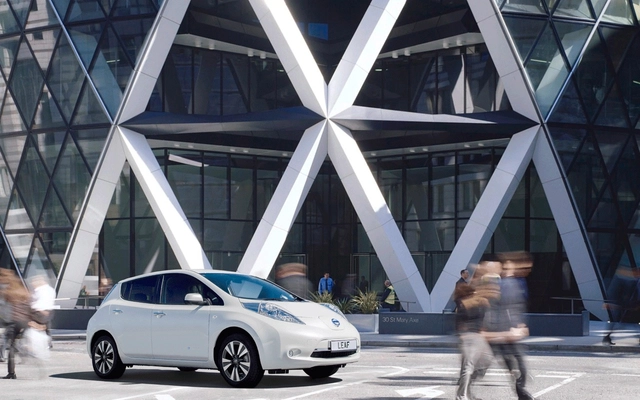
By 2020, almost one million electric vehicles are expected on the road. "It seems to be clear," says David Nelson, head of design at Foster + Partners, "that electric vehicles will be a major feature of the urban landscape." Thus, Foster + Partners has teamed up with Nissan to develop the Fuel Station of the Future.
Imagining how zero emissions technology will influence our cities, the innovative brands are centering their design on the understanding that "connected communities, autonomous drive and the Internet of things" are drastically changing our infrastructure models. Their concept is expected to showcase the benefits of a "smart electric vehicle (EV) ecosystem," harnessing the potential of battery storage and vehicle-to-grid systems.
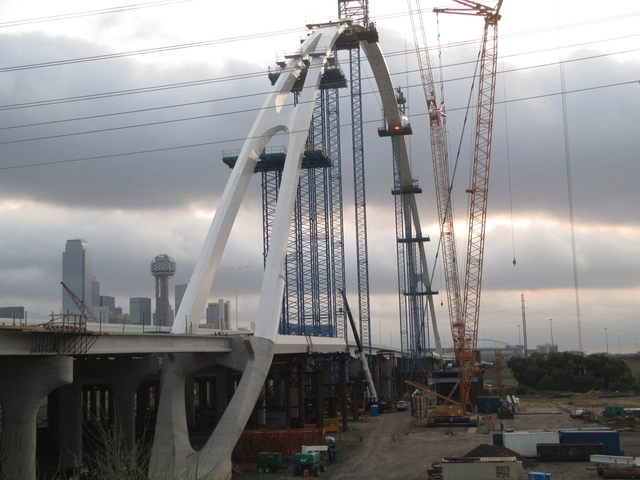
Santiago Calatrava has topped out on his second Dallas bridge - the Margaret McDermott Bridge - two years after completing the Margaret Hunt Hill Bridge. The steel arch, reaching a height of 275 feet, is the first of two that will support the 1311-foot-long bridge that is intended to provide access to pedestrians, bicyclists and cars over the Trinity River. The $113 million bridge is part of the massive $798 million Dallas Horseshoe Project that aims to alleviate traffic and enhance accessibility downtown. It is scheduled to complete by the summer of 2017.
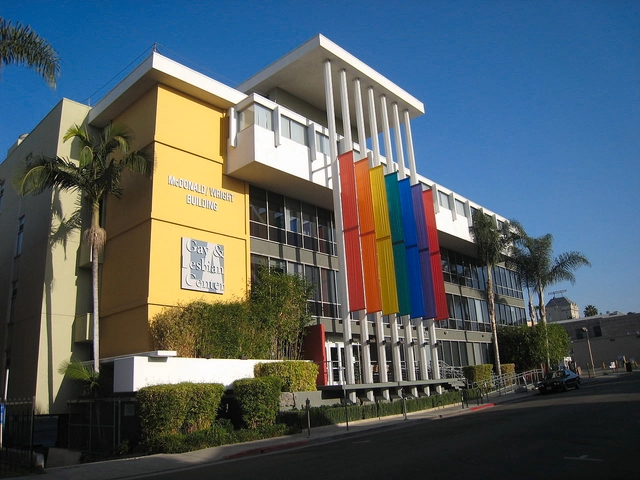
The Los Angeles LGBT Center's existing building in Hollywood. Image via Wikipedia
Leong Leong has been chosen over four others to masterplan and design the Los Angeles LGBT Center's new mixed-use site in Hollywood, California. The Los Angeles-based practice will design a new 183,700-square-foot building that, together with the Center's existing facility across the street, will form a block-wide campus that will include a unique mix of 140 affordable housing units, 100 beds for homeless youth, a new senior center and a center for homeless youth, as well as a new administrative headquarters and cultural arts center.
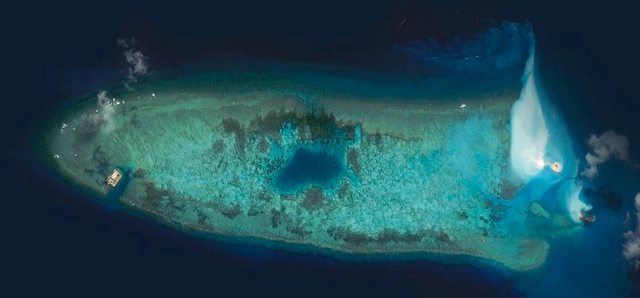
A reef in August 2014. Image Courtesy of DigitalGlobe, via the CSIS Asia Maritime Transparency Initiative, and CNES, via Airbus DS and IHS Jane’s (via The New York Times)
For a recent article in The New York Times, Derek Watkins examines "what China has been building in the South China Sea." Employing high resolution satellite imagery and diagrams, his article investigates why—and how—China have been dredging and dumping sand in a bid to construct inhabitable artificial islands. Political and diplomatic concerns aside, the article also touches upon the technical requirements necessary to reclaim land from the oceans.
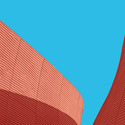
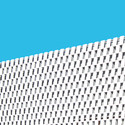
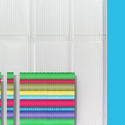
Mid-way through the 2015 Milan Expo, Italian photographer Lino Russois offering the world a fresh look at the exposition with a series of abstract images that backdrops parts of the colorful pavilions with the sky.
"The subject highlights the decontextualization of places and architectural spaces in order to alter the natural structure," says Russo, referring to these images as his second "Skymetric" series. "These places considered have in common the fact to be all completely square, regular and schematic, so achieving geometric shots in a minimalist context, where the simplicity and cleanliness reign supreme."
Over the past eight years, Make It Right has not only helped to rebuild the Lower Ninth Ward in New Orleans—the area struck the hardest by the disaster—but has also began to spread its work to Missouri, Montana, and New Jersey, with more projects coming soon. While the non-profit organization has had success in its endeavors, it has simultaneously faced a great deal of criticism.
In a recent interview with NOLA, Pitt discusses some of these criticisms, reflecting on the growth of the organization, and the changes it has made. Find out about Pitt’s evolving perspective, after the break.
For this week's edition of The Urbanist, Monocle's weekly "guide to making better cities," the team explore why being 'number two' is not always a bad thing in an episode about second cities and the ways in which they step out of their capital's shadow. From Milan to Melbourne, the team examine how and why some cities are carving their own niche in the international business and tourism markets. They also interview the Mayor of Aarhus about the challenges – and advantages – of governing Denmark’s second city.
Pier Luigi Nervi's Palazzo del Lavoro (Palace of Labour) in Turin has been devastated by fire. The unoccupied exhibition hall, originally built for Italia'61, had been undergoing renovations. As La Stampa Turin reports, the fire started on the second floor and is most likely the result of arson. A similar incident happened a few months ago, but was quickly extinguished.
The glass encased Palace of Labour is internally divided by 16 structurally independent steel roofed compartments, each supported by radial branches stemming from 65-foot-tall concrete columns.
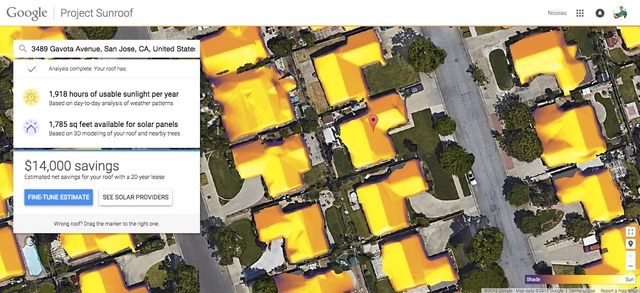
Google is in the unique position to truly understand what people want. As millions key in their questions, the search giant is actively working to provide better answers. When it comes to questions about solar energy, Google wondered, “If people are lost trying to get answers about solar, why don’t we give them a map?” And so, the tech company announced the beta launch of Project Sunroof: a tool “to make installing solar panels easy and understandable for anyone.”
In a post on Google’s Green Blog, engineer Carl Elkin addressed common misconceptions about the viability of solar energy for the average owner by saying “many of them are missing out on a chance to save money and be green.” Sunroof hopes to be the answer that gives people clear, easy to understand answers.
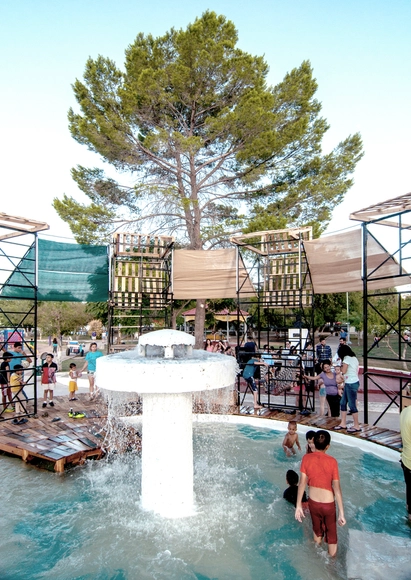
After several years spent broken and unusable, the local water source at Parque Urueta in the center of Chihuahua, Mexico, has been revitalized by the Instituto Superior de Arquitectura de Chihuahua’s (ISAD) Taller del Desierto student workshop. This year’s version of the annual workshop—called Urban SPA—has teamed up with PKMN architectures and Memela, as well as civil association Impulsados Capacidades and materials sponsor A+bien.
In an effort to create “a collective imaginary for the future,” the workshop began with initial ideas, like shaded areas for parents to drop off children for school, steps to link resting and sports areas, and bench maintenance actions. However, after neighbors voiced concerns about the park’s broken public water source, the workshop’s focus shifted towards the Urban SPA concept.
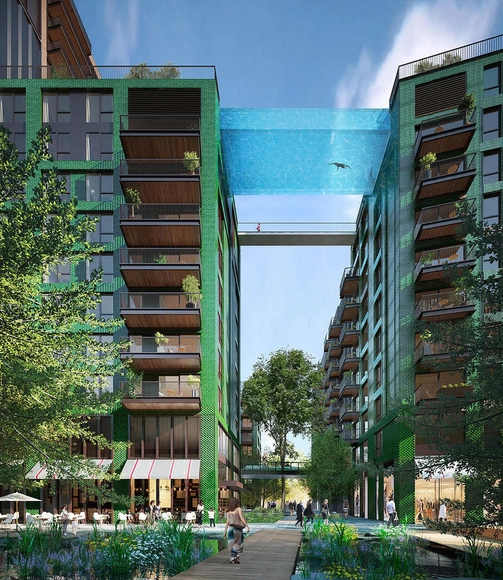
A twenty five metre long, ten storey high suspended swimming pool—dubbed the 'Sky Pool'—has been planned for the second phase of a new high-end residential development in the London district of Nine Elms, next to the new Embassy of the United States. The pool is part of two buildings, designed by London-based practice HAL and part of a complex of 2000 homes developed Ireland's Ballymore Group. The water will be held in suspension by just twenty centimetres of "structure free" transparent glass, and will connect two housing blocks together. Alongside a rooftop bar, orangery and spa, a second connection between the two is also planned in the form of a footbridge.
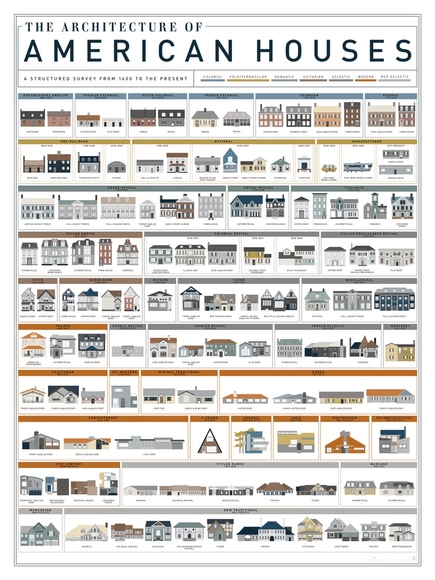
From 17th century Postmedieval English homes to the “McMansions" of the 90s, check out Pop Chart Lab's structured survey of 121 North American homes from the past 400 years. Sorted into seven major categories and 40 subdivisions, the comprehensive diagram highlights the morphology of homes throughout the US.
Each print is signed and numbered by the artists, much like the Brooklyn-based company's popular "Schematic of Structures" poster that features mankind's 90 greatest architectural achievements.
Glass can be molded, formed, blown, plated, sintered and now 3D printed. Neri Oxman and her Mediated Matter Group team has just unveiled their new glass printing platform: G3DP: Additive Manufacturing of Optically Transparent Glass. A collaboration with the Glass Lab at MIT, G3DP is the first of its kind and can 3D print optically transparent glass with stunning precision.
"G3DP is an additive manufacturing platform designed to print optically transparent glass," Oxman told ArchDaily. "The tunability enabled by geometrical and optical variation driven by form, transparency and color variation can drive; limit or control light transmission, reflection and refraction, and therefore carries significant implications for all things glass: aerodynamic building facades optimized for solar gain, geometrically customized and variable thickness lighting devices and so on."
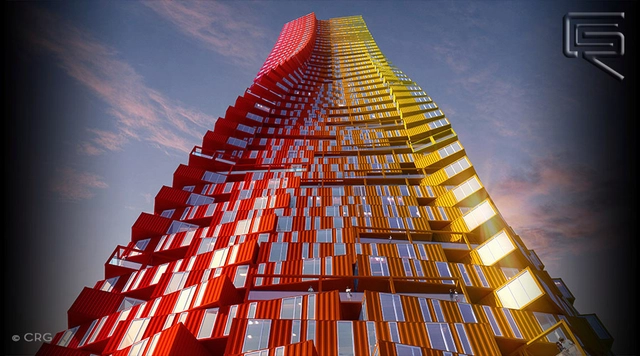
CRG Architects has won third prize in an ideas competition focused on providing temporary housing in Mumbai, India. Set with in the heavily populated Dharavi Slum, CRG's “Containscrapers” propose to house 5,000 city dwellers by stacking 2,500 shipping containers up to heights of 400-meters. If built, the radical proposal would be supported by a concrete structure and offer a range of housing options, from flats to three bedroom residences.
One of the five finalists: "An American Family Portrait" by STL Architects, Chicago. Image Courtesy of The US World War I Centennial Commission
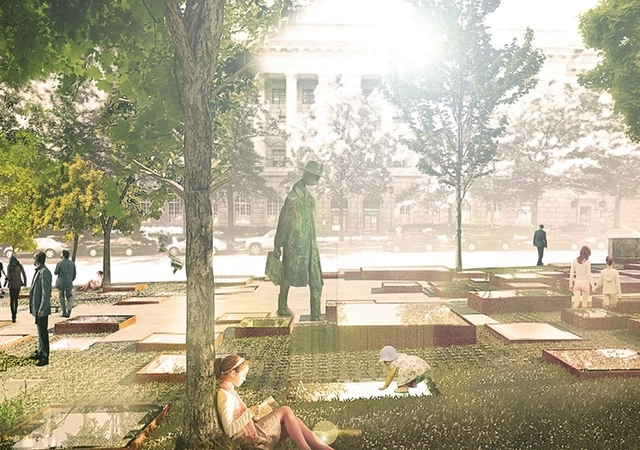
In May, the US World War I Centennial Commission launched its design competition for the redesign of the National World War I Memorial, located in Washing DC. Though some concerns about the fate of Pershing Park, which currently occupies the site, have been voiced, the competition will continue nonetheless, aiming to fulfill the Commission's stated aim "to transform Pershing Park from a park that happens to contain a memorial to a site that is primarily a national World War I memorial, within a revitalized urban park setting with a distinct sense of place."
After cycling through a first stage of entries, the competition has reached its second stage, which entails a public viewing and commentary of the top five designs, before a winner is selected in January 2016.
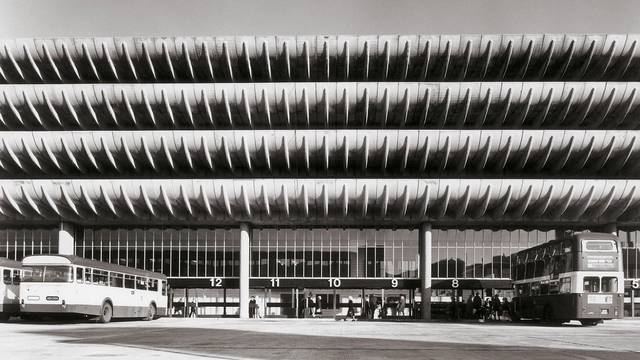
In 2013, following a number of campaigns, a 1969 Brutalist icon in the northern British city of Preston was listed. The future of this bus terminal—one of the largest in the UK and the biggest in Europe when it originally opened—was, until last month, a matter of considerable speculation and debate. This week the results of an international open-call competition for proposals transforming into a new youth centre were revealed, selecting the proposal of New York based practice John Puttick Associates as 'the best of the lot.' The 'lot', however, left something to be desired.
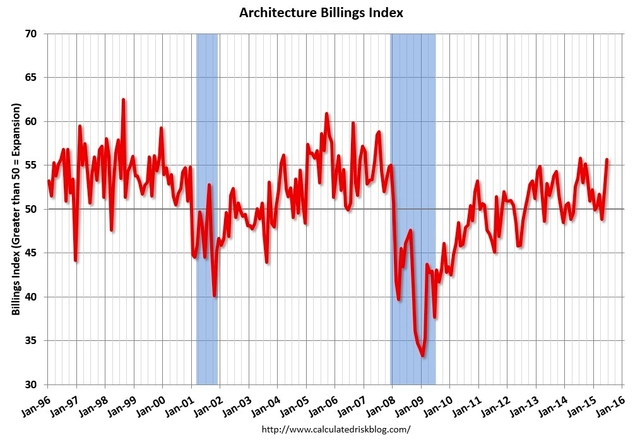
The American Institute of Architects (AIA) has reported a "healthy and sustained" Architecture Billings Index (ABI) for the month of July. Though slightly down from a mark of 55.7 in June, the July ABI score was 54.7, reflecting an increase in design serves within the US. The new projects inquiry index was 63.7, up slightly from a reading of 63.4 the previous month.
A breakdown of regional highlights and foresight from the AIA Chief Economist, after the break.
What do mathematics and your kitchen backsplash have in common? More than you might think: according to recent findings published in The Guardian, mathematicians have had a breakthrough in the world of pentagons, resulting in a new class of mathematically tiling shape. This newly discovered iteration is capable of continuously tiling a surface without gaps, unlike the majority of its similarly five-sided cousins. Known in mathematics as the most elusive tile shape due to its seemingly endless angular possibilities, the pentagon has been the focus of serious scrutiny for over a century.
With the discovery of the fifteenth type of pentagon last month at the University of Washington Bothell, we've decided to compile a list of the most eccentric and intriguing tiles currently available. Dive into the world of wild backsplashes and unorthodox ceramics after the break.
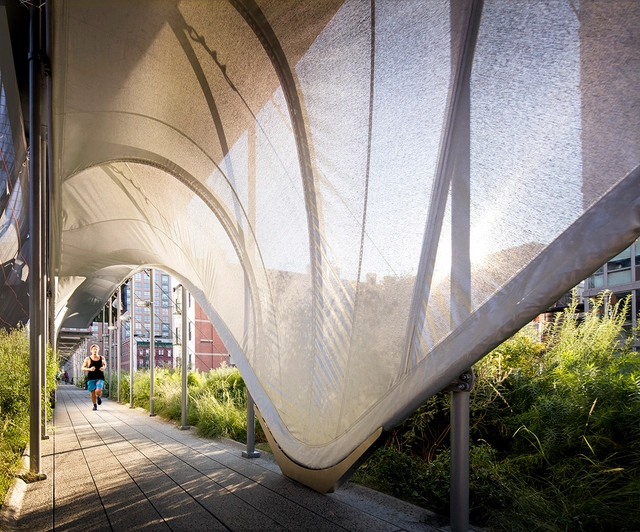
With the construction of their High Line-adjacent residential building 520 West 28th Street, Zaha Hadid Architects have constructed a temporary construction shelter to protect pedestrians in the event of any falling construction materials. However, as is often the case with Zaha Hadid designs, this is a construction shelter unlike any other, serving as a protective shelter but also as an artistic installation.
Named Allongé, the installation is "is inspired by the connectivity and dynamism of movement along the High Line," allowing visitors to the High Line to move through 34 meters (112 feet) of sweeping metallic fabric supported by a curvilinear steel frame, offering a spatial experience that foreshadows the presence of Hadid's building at the site.
The RIBA annually bestows the Jencks Award to an outstanding architect or practice "that has made a recent significant, simultaneous contribution to the theory and practice of architecture." This year the honors go to Herzog & de Meuron.
Selected by a panel of judges chaired by David Gloster (RIBA Director of Education) and which included Charles Jencks, Stephen Hodder (RIBA President and Chairman of Hodder and Partners), Julia Peyton-Jones (Director of the Serpentine Galleries) and Brett Steele (Director of the Architectural Association School of Architecture), Herzog & de Meuron will receive the award on Thursday 29 October at the RIBA in London. In addition, the Swiss architects will receive an honorarium of £1,000 and a certificate.
Since the Moda Center, better known as the Rose Garden, was built next door and became the new host of the Portland Trail Blazers basketball team, the Memorial Coliseum has been in a state of decline. Currently, the building generally only hosts infrequent concerts, as well as minor league hockey. However, Friends of Memorial Coliseum see it as much more than just an outdated venue, which is why since the building was first threatened with demolition in 2009 they've been campaigning for its preservation.
"Every picture tells a story" - at least, that's according to that great philosopher of our time, Rod Stewart. But what about the stories behind the pictures themselves? At ArchDaily we know that a great image requires not only great architecture but also a skilled photographer, so to celebrate World Photo Day we decided to find out more about the most popular images on ArchDaily. We've taken the ten most bookmarked images in My ArchDaily, and contacted some of the photographers to find out more about their images - read on to see the top ten, and to find out the stories behind six of them.
https://www.archdaily.com/772022/world-photo-day-2015-the-10-most-saved-images-in-my-archdailyAD Editorial Team