Created by the Union International des Architects (UIA)in 2005, World Architecture Day is celebrated on the first Monday of October with the aim of reminding the world about the collective responsibility of architects in designing our future cities and settlements.
This year, the UIA has selected “Architecture, Building, Climate” as the theme of the day, seeking to highlight the essential role that architecture, design and urbanism have in the reduction of greenhouse gas emissions. With international climate treaty negotiations set to happen later this year, the “UIA members, working bodies and partners will mobilize on 5 October to promote actions and solutions that apply the enormous power of architecture and urban design in coping with global climate change, one of the greatest challenges of our time.”
Through small actions architects can collectively make a big difference and create significant changes. To celebrate World Architecture Day, we have rounded up a selection of projects that have taken steps towards the challenge of protecting our environment.
https://www.archdaily.com/774798/happy-world-architecture-dayAD Editorial Team
With the participation of 96 pavilions from diverse countries around the world, the Expo Milan 2015 tackles one of the most pressing global issues -- alimentation -- through its theme “Feeding the Planet, Energy for Life.”
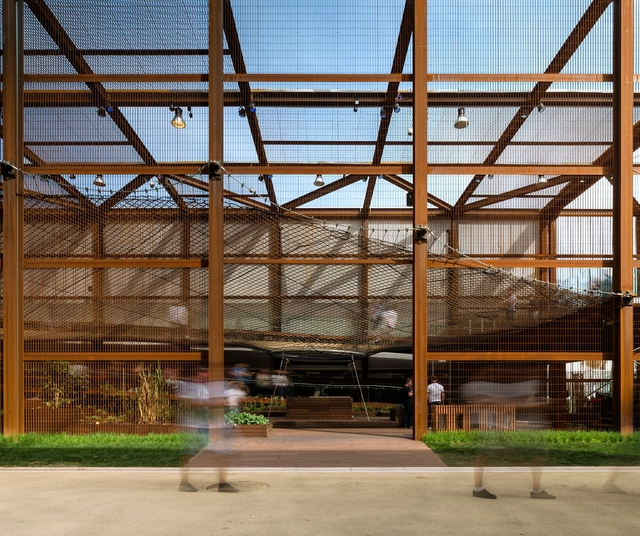
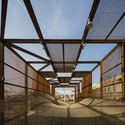
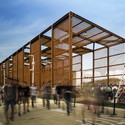
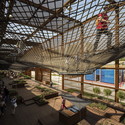
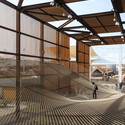
The Brazilian Pavilion, designed by Studio Arthur Casas and Atelier Marko Brajovic, was considered one of the most attractive pavilions by the thousands of visitors who have passed through the Expo so far. Featuring a large open space traversed by an elevated net on which visitors can walk, the pavilion is as “as porous as the Brazilian culture,” and creates a pathway above plants native to the country.
Below is a beautiful series of photographs of the pavilion taken by Fernando Guerra, a partner at Últimas Reportagens, along with his brother Sérgio Guerra.
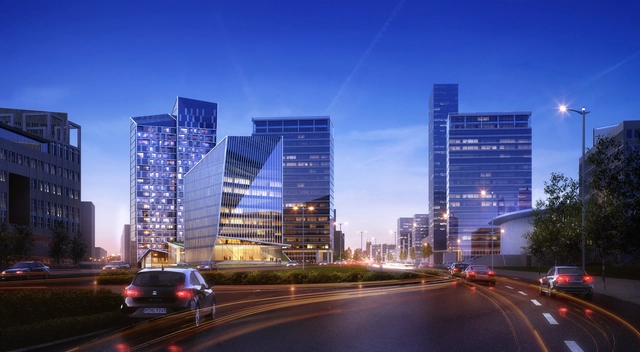
The government of Luxembourg has announced that Miami-based firm Arquitectonica has won the competition to design a major mixed-use project in Luxembourg City. Set in the new district of Kirchberg in Luxembourg, the 40,000 square meter complex design by Arquitectonica won the bid over notable names in architecture like Bjarke Ingels Group (BIG), Massimiliano Fuksas, and Neutelings Riedijk Architects.
Fogo is a small, rocky outcrop off the coast of Newfoundland, Canada, with a population of just over 2000 people. Its sub-arctic natural landscape of lakes, rivers and mountains is interspersed by eleven small settlements and has now become the scene for a collection of follies, studios and residences designed by Norwegian practice Saunders Architecture. Most recently, Fogo's rocky wilderness and contemporary architectural interest—reminiscent of the land around Todd Saunders' current home city of Bergen—has been captured in a one-hour documentary film directed by Marcia Connolly and Katherine Knight, entitled Strange & Familar: Architecture on Fogo Island.
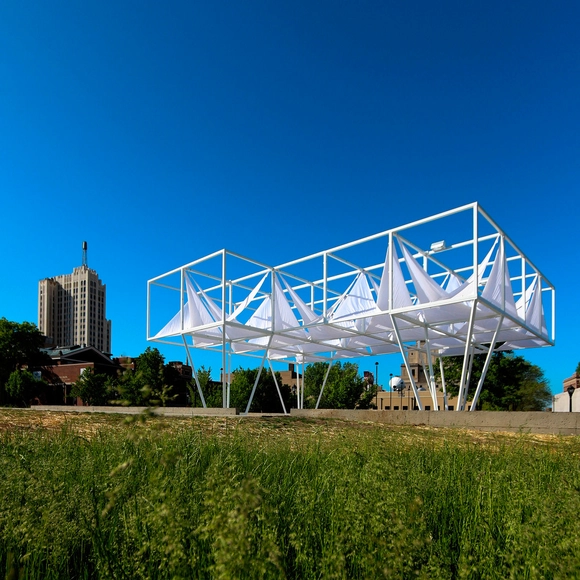
Last year's PXSTL Structure by Freecell Architecture. Image Courtesy of Freecell Architecture
The Pulitzer Arts Foundation and the Sam Fox School of Design & Visual Arts at Washington University in St. Louis are inviting architects, designers and artists to propose a temporary structure in St. Louis, Missouri,for the second cycle of “PXSTL”. The competition aims to transform an under-used lot in the heart of St. Louis’ Arts and Culture district, catalyzing creative intervention and artistic programs. Nominations will be solicited from deans of architecture, art, and design programs; editors of art, architecture, and design publications; distinguished practitioners; and directors and curators of arts institutions. Read more about this competition after the break.
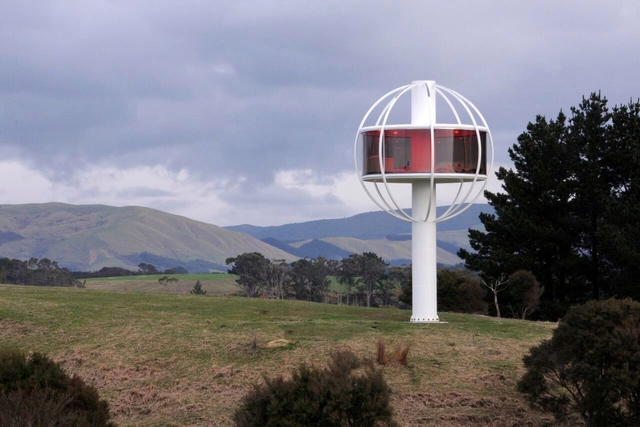
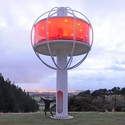
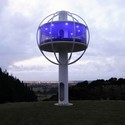
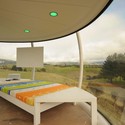
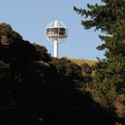
After childhood, treehouses are usually stowed away in tandem with the fantasy and adventures associated with youthful imagination. As it turns out though, there can be a wildly elaborate, adult counterpart to this early life staple. The Skysphere, a project designed by Jono Williams, is the ultimate 21st century DIYtreehouse project. Actually a small pod-like inhabitable platform attached to a steel column, it is more like the homegrown equivalent of Toronto’s CN Tower, Tokyo’s Skytree, or the unrealized Phoenix Observation Tower by Bjarke Ingels Group (BIG).
Out of 26 entries for the competition launched earlier this year, a jury of architects and media professionals selected three top prize winners and recognized seven additional films in themed categories. The winning pieces best represent the competition’s call for films that highlight the impact that architects have on communities.
Over time, people have found many different ways to fund the construction of a building. Museums for example have long benefited from the support of deep-pocketed patrons, with The Broad Museum, a permanent public home for the renowned contemporary art collection of philanthropists Edythe and Eli Broad, being the newest example in a long history of such practices. However in our ever-more-connected world - and against a backdrop of reduced government support for creative endeavors - the onus of funding seems to be shifting once again, away from the individual and towards the crowd.
As crowdfunding makes strides in all realms of innovative enterprise, including architecture, we wanted to hear from our readers about what they thought of this new opportunity for a publicly held stake in what has historically been the realm of singular, well-heeled organizations in the form of the state or private capital. Writing about the history and current trajectories of public funding, alongside a more pointed discussion of BIG’s Kickstarter for “the world’s first steam ring generator,” we posed the question: does public funding have a place in architecture, and if so, is there a line that should be drawn?
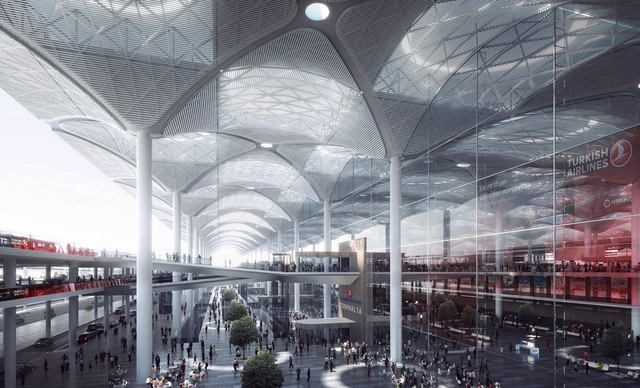
Perkins+Will has been selected to masterplan a major mixed-use development adjacent to undergoing Istanbul New Airport - soon to be one of the largest airports in the world. The 690-hectare scheme, "Airport City" will feature a "central innovation district," hotels, retail and commercial office space, logistic centers, an expo and convention center, public space, and metro and high-speed rail connections to Istanbul and beyond.
"Recognizing that water is the building block to life, the team used a ‘follow the water’ approach to conceptualize, site and construct their design," said SEArch and Clouds AO. "[Our] proposal stood out as one of the few entries not to bury the habitat beneath regolith, instead mining the anticipated abundance of subsurface ice in the northern regions to create a thin vertical ice shell capable of protecting the interior habitat from radiation while celebrating life above ground."
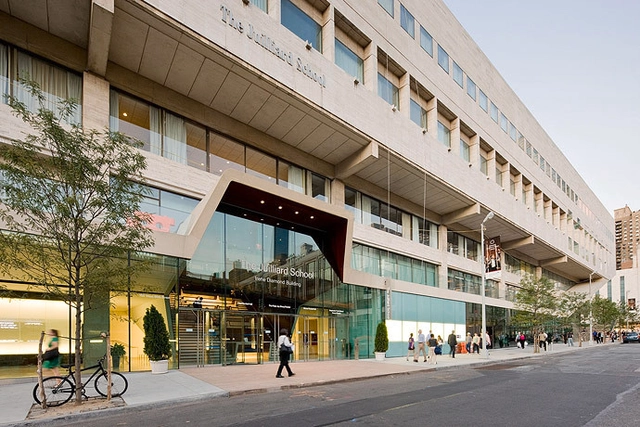
Once complete, the new school will offer a Master of Music degree from Juilliard in the areas of orchestral performance, chamber music performance, and collaborative piano; a pre-college program; an instrumental training program; adult education; and public performances and exhibits.
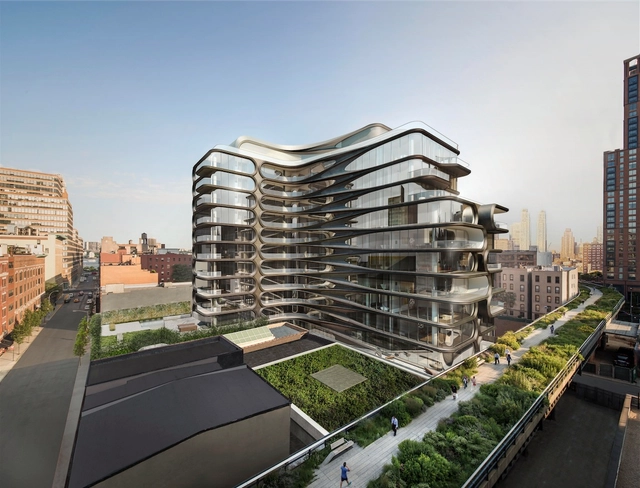
“I’ve always been fascinated by the High Line and its possibilities for the city. Decades ago, I used to visit the galleries in the area and consider how to build along the route. It's very exciting to be building there now,” said Zaha Hadid. “The design engages with the city while concepts of fluid spatial flow create a dynamic new living environment.”
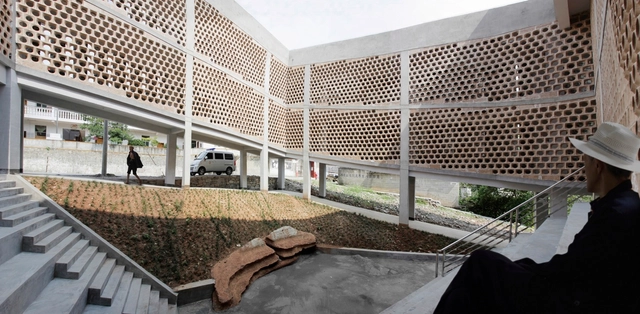
Rural Urban Framework (RUF) has been named winner of the 2015 Curry Stone Design Prize at the inaugural Chicago Architecture Biennial. Addressing China's unprecedented rural-to-urban migration, RUF has (so far) helped 18 depopulating villages throughout the country prepare for their inevitable transformation by building schools, community centers, hospitals, houses and infrastructure in a collaborative process that empowers locals.
“The work of RUF is addressing one of the most urgent current geopolitical issues, how to deal with the imbalances created by large mass migrations,” said Emiliano Gandolfi, the Prize Director. “Their work is exemplifying how architecture should establish a dialogue with the community and the environment in order to built structures that respond to their changing needs.”
Out of 97 entered proposals, six teams were originally asked to develop more in-depth concepts over the summer, but one team withdrew. The five remaining teams -- from the United States, Canada, and Ireland -- presented their designs at an open house held by the Museum.
The RIBA Future Trends Survey for August 2015 showed signs of slowing after indications of growth for architects during the summer. The RIBA Future Trends Workload Index dropped one point to +21.
East of Paris, in Seine-Saint-Denis, sits a "Babel-like" housing estate. Its otherworldly atmosphere—existing somewhere between a 'new world' utopian dream and a postmodern, neoclassical housing estate—has set the scene for two Hollywood films including Brazil (1984) and, more recently, the upcoming second instalment of The Hunger Games: Mockingjay (2015). Parisian photographer Laurent Kronental's photo series, Souvenir d'un Futur (Memory of a Future), is an homage to the senior citizens of the French capital's Grand Ensemble region — not only in Noisy-le-Grand but across the Parisian banlieue. His photographs capture a number of places and their people which, in spite of their often megalomaniacal architectural settings, have been comparatively overlooked.
See Laurent Kronental's photo series—the result of four years of visits—after the break.
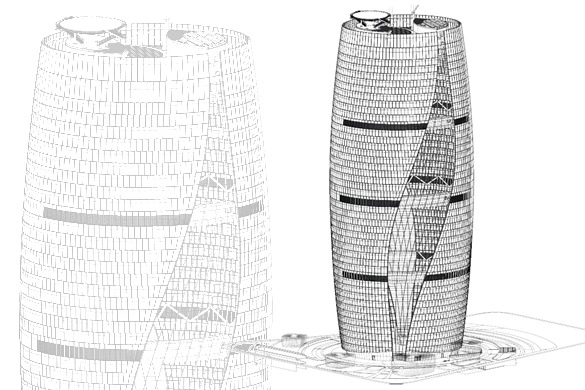
Zaha Hadid Architects has proposed an office tower in Beijing that is said to have the "world's tallest atrium." As the Architects' Journal reports, the Leeza SOHO project features a 200-meter-high atrium that extends the building's full height, visually splitting the cylindrical structure in two. If built, it will be anchored by an underground promenade that connects to a subway station below and public park to the west.
With sustainability top of the architectural agenda, one of the most pressing issues in many designers' minds is how to extend the life of buildings. While the old-fashioned methods of robust materials, adaptable structures and careful maintenance will undoubtedly play a role in this future, one of the biggest advances made in recent years has been the development of self-healing materials. In the past few years, we've seen demonstrations of self-healing asphalt, concrete and metal that could help to significantly improve the endurance of buildings - and now it seems it's the turn of plastics.
This video shows a flexible and transparent polymer created by researchers from the University of Alicante, which after being damaged can re-fuse in just 10-15 seconds to return to its original strength. According to the researchers, the material is also non-reactive, meaning it can perform this party trick even if submerged in water or other fluid - making it suitable for use in difficult environments that might prevent access for human repairs.
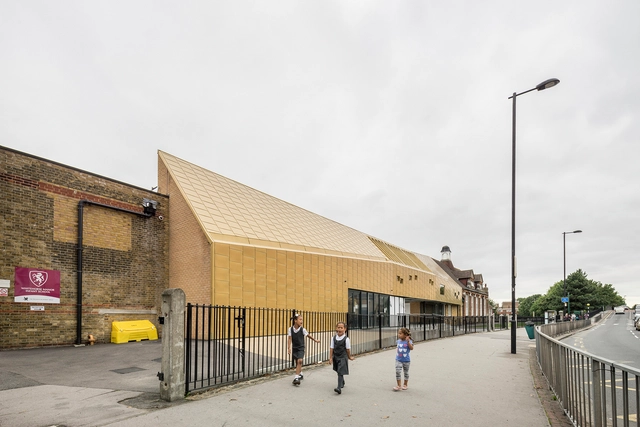
The Architectural Review has revealed the winners of its 2015 AR School Awards, which honor excellent educational design, ranging from kindergartens to universities. The awards seek to recognize “transformative, leading edge projects from around the world,” “challenging and inspiring architects to reflect more deeply on the purpose of architecture and its relationship to the wider world.”
Zaha Hadid Architects' Wangjing SOHO in Beijing has won the 2014 Emporis Skyscraper Award. Chosen by an international panel of experts from more than 300 skyscrapers, the three-tower 200-meter-tall development is the first skyscraper in China to ever win the award. The judges were impressed by its "excellent energy efficiency and its distinctive design, which gives the complex a harmonious and organic momentum."
Each year, the Emporis Award honors the world's best new building over 100-meters-tall. Read on to see the top 10 buildings honored this year.
Rafael Viñoly Architects has presented plans for a two-tower residential project in Chicago's South Loop neighborhood. The phased Crescent Heights development hopes to be home to Chicago's 6th tallest building, rising 829-feet on the south end of Grant Park. If approved, the project would be completed in three phases; the first realizing a 76-story, 792-unit apartment building on the eastern portion of the site.
The Real Estate Architecture Laboratory (REAL) have today announced a Kickstarter campaign in preparation for the launch of their flagship publication, the Real Review. Produced by an independent team of editors and designers, this bi-monthly magazine intends to "revive the review as a writing form" to a general readership within the architectural sphere and its orbital subjects.
The Real Review will be "a printed object of exceptional quality, featuring engaging texts by leading international commentators," alongside providing "a highly visible platform for emerging writers." Confirmed authors at this time include, among others, Assemble, Pier Vittorio Aureli (Dogma, AA), Reinier de Graaf (OMA), Sam Jacob (Sam Jacob Studio), and a rostra of journalists including the Financial Times' architecture critic Edwin Heathcote.
Skidmore, Owings & Merrill LLP (SOM) has unveiled their design for the U.S. Department of Energy’s Oak Ridge National Laboratory (ORNL): a 3D-printed building powered by a 3D-printed vehicle developed by ORNL. Dubbed AMIE, the project was developed in collaboration with ORNL, University of Tennessee (UT), Clayton Homes, General Electric, Alcoa, NanoPore and Tru-Design. SOM was able to take the design from concept to completion in less than a year.
Combining mobile power with energy-efficient design and photovoltaic (PV) panels, the AMIE presents possibilities for human shelter off-the-grid. Following previous work by SOM, demonstrating the use of 3D printing for complex, organic geometries, the new building combines structure, insulation, air and moisture barriers, and exterior cladding into one shell.








.jpg?1443600100&format=webp&width=640&height=580)
.jpg?1443599941 "Les Orgues de Flandre, 19e arrondissement Paris, 2014. Image © Laurent Kronental")
.jpg?1443599908 "Le Pavé Neuf, Noisy-le-Grand, 2015. Image © Laurent Kronental")
.jpg?1443599809 "Joseph, 88 ans, Les Espaces d'Abraxas, Noisy-le-Grand, 2014. Image © Laurent Kronental")
.jpg?1443599826 "Les Tours Aillaud, Cité Pablo Picasso, Nanterre, 2014. Image © Laurent Kronental")
.jpg?1443600100)



.jpg?1443463602&format=webp&width=640&height=580)


