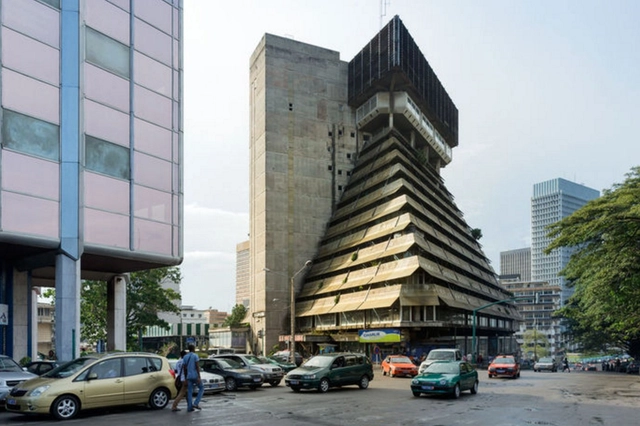
A new exhibition opening later this month at Chicago's Graham Foundation seeks to explore the complex history and legacy of modernist architecture in sub-Saharan Africa during the 1960s and 1970s. Architecture of Independence: African Modernismwill feature nearly eighty buildings in commissioned photographs by Iwan Baan, Alexia Webster, and Manuel Herz. Alongside archival material, the exhibition "imparts a new perspective on the intersection of architecture and nation-building in Ghana, Senegal, Côte d’Ivoire, Kenya, and Zambia and investigates some of the most compelling yet under-studied examples of 1960s and 1970s architecture worldwide."
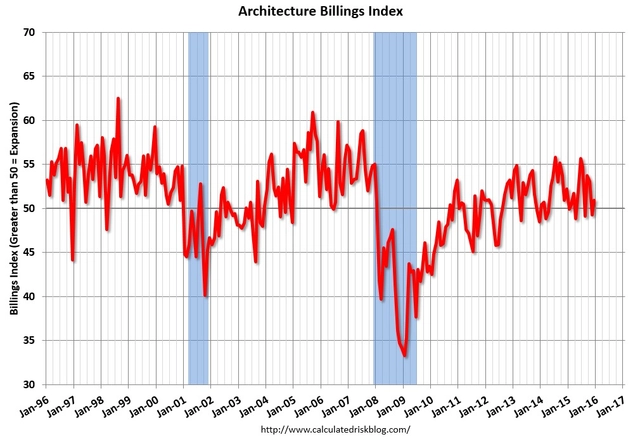
Despite a few volatile months, the US Architecture Billings Index (ABI) concluded 2015in positive terrain. The American Institute of Architects (AIA) reported the December ABI score was 50.9, up from the mark of 49.3 in the previous month. This score reflects a slight increase in design services (any score above 50 indicates an increase in billings). The new projects inquiry index was 60.2, up from a reading of 58.6 the previous month.
“As has been the case for the past several years, there continues to be a mix of business conditions that architecture firms are experiencing,” said AIA Chief Economist Kermit Baker, Hon. AIA, PhD. “Overall, however, ABIscores for 2015 averaged just below the strong showing in 2014, which points to another healthy year for construction this year.”
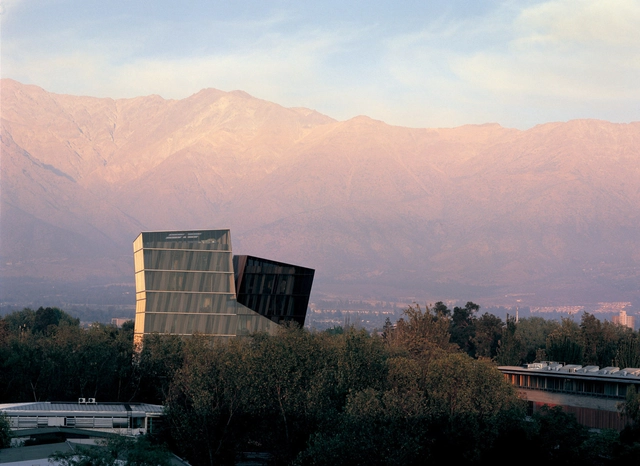
Alejandro Aravena is the first Chilean architect to ever receive a Pritzker Prize. Praised for reviving the socially engaged architect, the 48-year-old architect and executive director of ELEMENTAL has proved architecture's ability to solve pressing global issues through his diverse portfolio. Read on to see 15 projects that exemplify Aravena's contribution to architecture so far.
Since the foundation of ArchDaily in 2008, our goal has been to build a large database of projects, news stories and articles in order to give our readers the inspiration, knowledge and tools they need to do their best work. But just because our database is becoming increasingly complex, that doesn't mean that your interaction with it has to be overwhelming.
With the new design, we have sought to simplify the ArchDaily site, re-emphasizing our "less is more" motto from the last design by organizing the layout into just two main columns: one for our stream of articles and one which helps you navigate the site by suggesting related content and popular articles. In addition, our developers have updated the website technology to improve loading speeds and bring you a seamless experience on our site. Read on to find out more details about the updated site!
https://www.archdaily.com/780639/welcome-to-archdailys-new-website-designAD Editorial Team
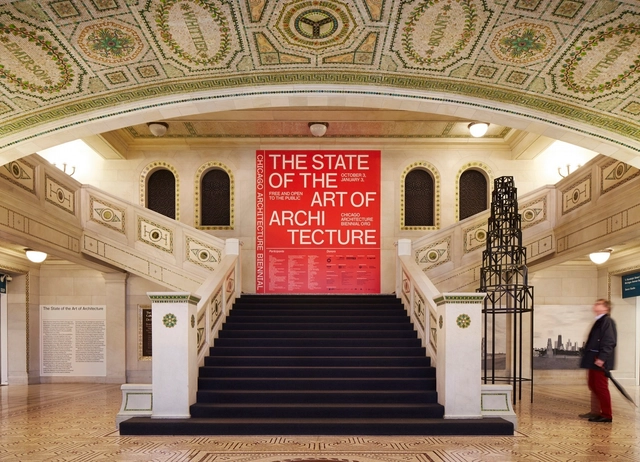
The first ever Chicago Architecture Biennial closed January 3, with over half a million visitors having attended the event. An architecture exhibition of unprecedented size on the continent, the Biennial gathered 93 projects from 120 offices from over 30 countries to discuss the “State of the Art of Architecture.” We take a look at some of the Biennial's highlights after the break.
The Nordic nations—Finland, Norway and Sweden—have reached a pivotal point in their collective, and individual, architectural identities. The Grandfathers of the universal Nordic style—including the likes of Sverre Fehn, Peter Celsing, Gunnar Asplund, Sigurd Lewerentz, Alvar Aalto, and Eero Saarinen—provided a foundation upon which architects and designers since have both thrived on and been confined by. The Nordic Pavilion at the 2016 Venice Biennale—directed by Alejandro Aravena—will be the moment to probe: to discuss, argue, debate and challenge what Nordic architecture really is and, perhaps more importantly, what it could be in years to come.
We're asking for every practice (and individual) across the world who have built work in Finland, Norway and Sweden in the past eight years to submit their project(s) and be part of the largest survey of contemporary Nordic architecture ever compiled.
Update: the Open Call for In Therapy closed on the 24th January 2016.
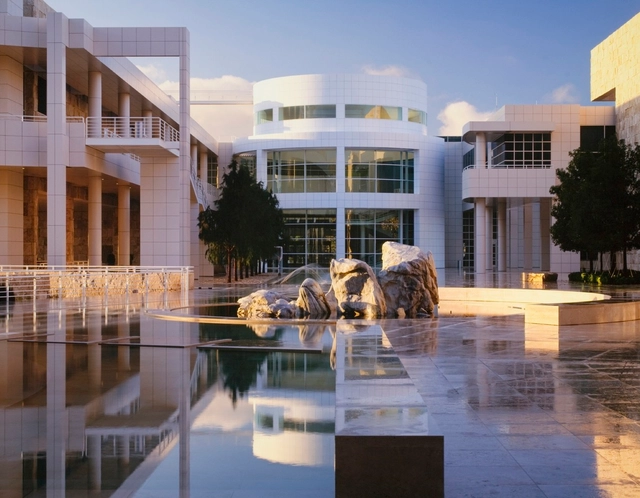
Maristella Casciato, former associate director of research at the Canadian Centre for Architecture, has been named the Getty Research Institute's new Senior Curator of Architectural Collections. Casciato is an expert on 20th century European architecture - the Institute's most sought after content - making her an ideal choice to manage GRI's expanding archives.
“Maristella Casciato is an exceptionally accomplished scholar and curator who is passionately committed to the study of architectural history and the preservation of architecture. She is the ideal steward for our tremendously significant architecture holdings,” said Thomas W. Gaehtgens, director of the Getty Research Institute.
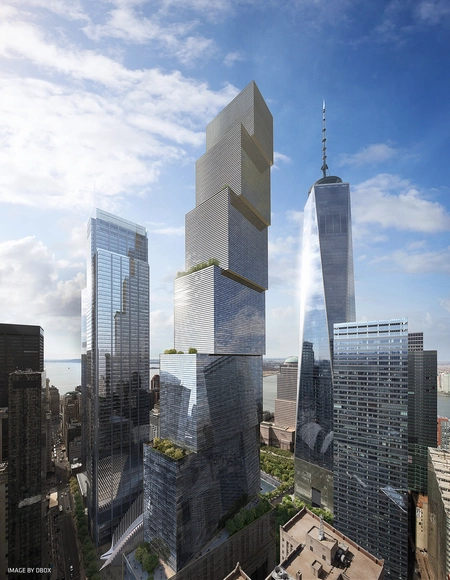
Two major tenants, 21st Century Fox and News Corp have pulled plans to relocate to the BIG-designed 2 World Trade Center - the final building planned for the 16 acre site. 2 WTC was unveiled last summer after news broke that BIG would be replacing Foster + Partners as the building's architect. According to a report on The Wall Street Journal, the two media companies based their decision on the high cost of relocating; they plan to stay in their current Midtown site until at least 2025.
The project will be placed on hold until a new tenant is found.
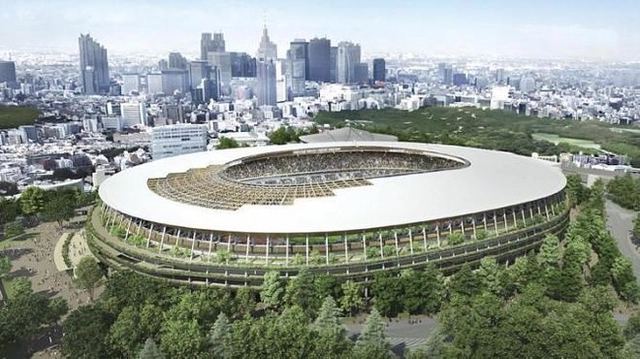
In the latest Tokyo National Stadium news, Kengo Kuma is firing back to Zaha Hadid's allegations regarding the "similarities" of the two designs by insisting that his "concept is completely different." As reported the Architects' Journal, the Japanese architect agrees there are some natural similarities due to appropriate sightlines and regulations, however the actual design and concept are radically different.
"I believe that the design by Zaha Hadid was excellent, with a unique shape and demonstration of her philosophy," said Kuma in a press conference. "When we consider the design is being created within the same land, using the same tracks and under the same laws it is natural and almost automatic that there are some similarities which will arise."
"And despite the technical details being similar, the concepts and designs are completely different," he added, referring to Hadid's "saddle-style" design and his flat-roofed proposal.
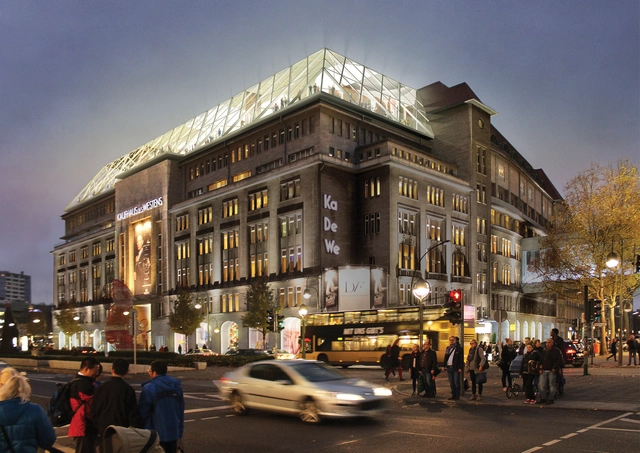
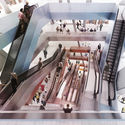
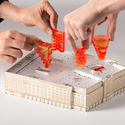
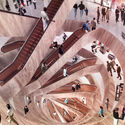
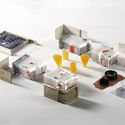
OMA has been selected to renovate Kaufhaus des Westens (KaDeWe), a historic department store in Berlin – and the biggest in continental Europe. Its giant size “makes it akin to a city: a three dimensional network of paths, squares, neighbourhoods, activitiies and views unfolding through its large extensions and providing opportunities for commercial, social and cultural encounters,” writes OMA.
To address the size, their design divides the department store into four quadrants, breaking “the original mass into smaller, easily accessible and navigable components.” Each quadrant will target different audiences and act as an independent department store. Learn more about the design after the break.
New York City's Van Alen Institute have announced four new members—Haptic Architects, Mecanoo, Studio Libeskind, and Trahan Architects—to their International Council, a platform for exchange among leading architects, designers, developers, and planners. Furthermore, Jing Liu (SO–IL), Kim Herforth Nielsen (3XN), and Raymond Quinn (Arup) have joined its board of trustees to help guide the organisation's cross-disciplinary research, provocative public programs, and design competitions.
As the first month of 2016 draws to a close, we decided to tap into our network and ask an esteemed group of architects, critics, theorists and educators to tell us what they are looking forward to this year in architecture.
What are you looking forward to in architecture this year?
https://www.archdaily.com/780498/50-architects-tell-us-what-they-are-looking-forward-to-in-2016AD Editorial Team
Following the recent completion of 432 Park Avenue in New York City, The Council on Tall Buildings and Urban Habitat (CTBUH) has announced that there are now 100 supertall (300-plus-meter) skyscrapers in the world. The majority of these skyscrapers are in Asia and the Middle East, mirroring construction trends that have emerged over the past decade. Dubai leads the rankings with 18 supertall buildings, while New York City now falls in second place with a total of seven, including 432 Park Avenue.
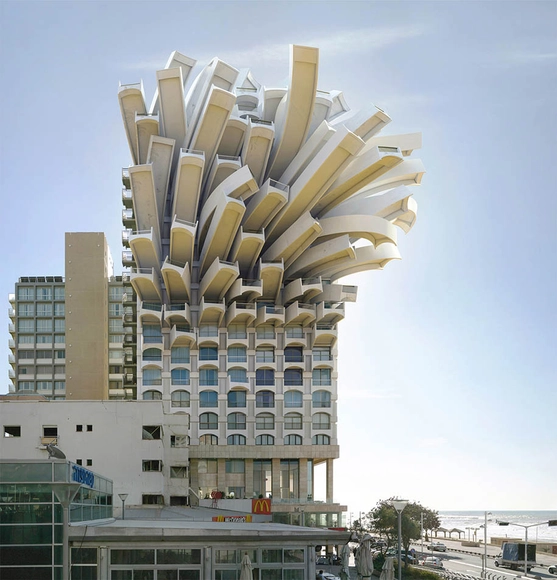
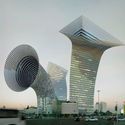
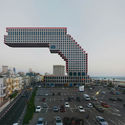
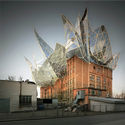
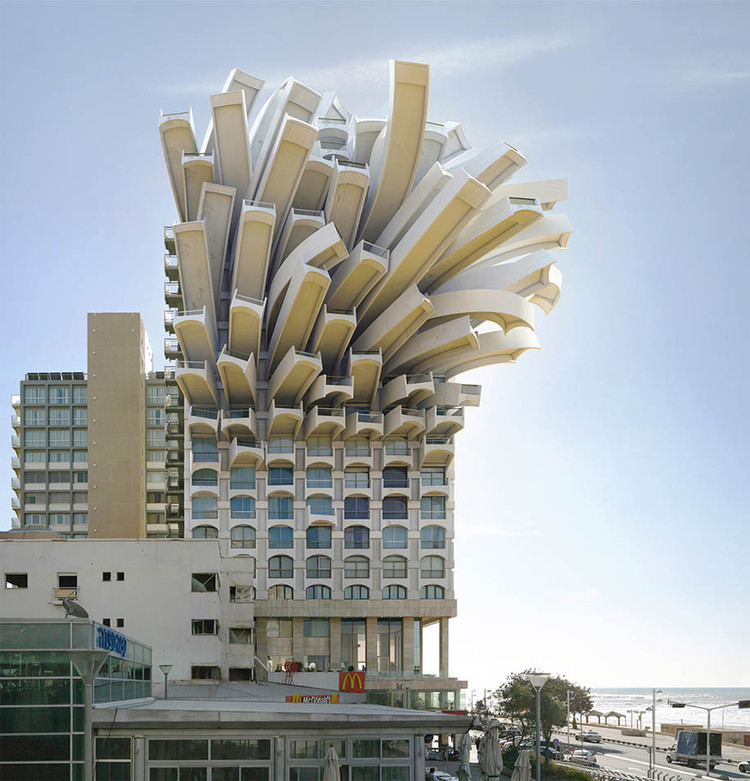
Since 2006, artist Victor Enrich has been working on his project, City Portraits, a series of digitally manipulated images that transform photos into architectural illusions.
In the latest episode of The Urbanist, Monocle 24's weekly "guide to making better cities," the team tackle the 'establishment'. From small businesses to citizen collectives, the show discovers how "championing transformative change from the ground up can be the best way to alter the status quo in our cities." Investigating how the Ministry of Space is reclaiming public spaces in Belgrade, how ordinary citizens in Vienna are welcoming refugees, and how a collective in Rio de Janeiro wants to reshape the politics of the city, the episode also explores how small businesses in London’s West End are fighting against increasing rent.
2015 Winning Entry by Jacques Gaffigan. Image Courtesy of The Knight Foundation
The John S. and James L. Knight Foundation has announced the names of the 158 finalists in the Knight Cities Challenge. The nationwide call was for innovative ideas to make the 26 communities where the Knight Foundation invests more social and vibrant places to live. More than 4,500 entries were submitted proposing a range of ideas from opening the world’s largest African American history museum in Detroit to a card game that encourages residents of Charlotte to visit new neighborhoods. The winners, who will split a prize of $5 million, will be announced in the spring of 2016.
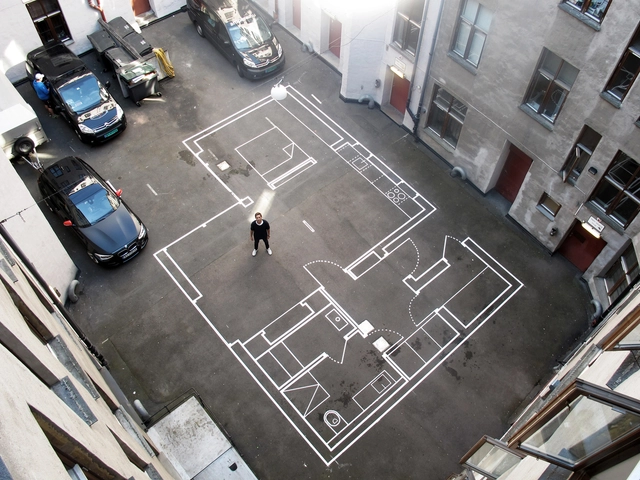
Norway based architecture studio Vardehaugen has created a series of life-sized project drawings in its own backyard. Inspired by the idea that the "bodily sensation of scale, or the notion of simply walking through a room, cannot be experienced through traditional 3D visualizations or scaled models," the 1:1 models allow for better understandings of dimensions and spatial sequences, even before the projects are built.
Architect, illustrator and cofounder of the Miniatura project, Bruna Canepahas shared with us a stunning collection of her illustrations and collages, which offer a fresh gaze onto one of architecture’s most common tools: the drawing. Beyond depicting examples of unreal architecture, her works present architecture that replaces firmitas, utilitas and venustas for complexity, wonder and irony.
From extrusions and explosions of familiar typologies to surreal and sterile atmospheres of empty spaces, we suggest three subcategories to frame Bruna’s illustrations as shown below: Houses, Cubics, and Displacements.
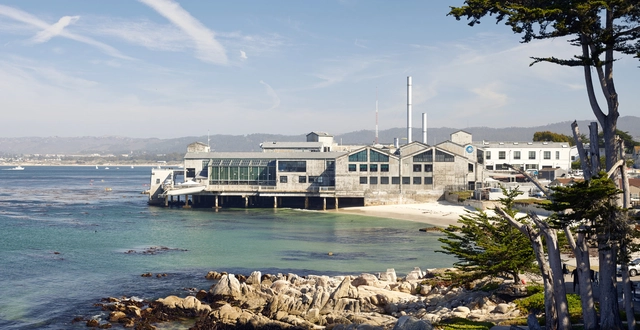
Monterey Bay Aquarium / EHDD. Image Courtesy of Bruce Damonte
The Monterey Bay Aquarium in Monterey, California, has been selected for the 2016 American Institute of Architects' (AIA) Twenty-five Year Award. Designed by EHDD of San Francisco, and completed in 1984, the Monterey Bay Aquarium is a "light-filled ensemble of diverse spaces, unique among aquariums in its interweaving of indoors and out," says the AIA. The award is presented yearly to a project that has "stood the test of time by embodying architectural excellence for 25 to 35 years."
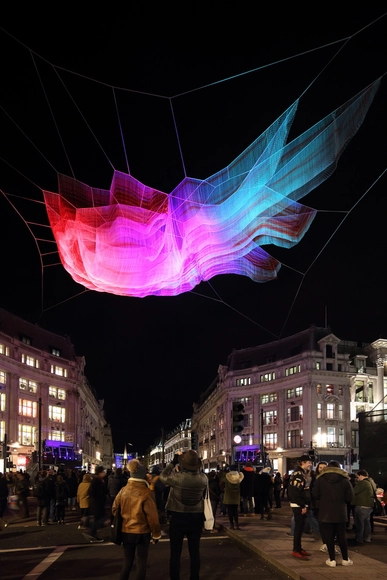
London is the latest city to host one of Janet Echelman's stunning net sculptures. Suspended 180 feet above Oxford Circus, the city's busiest intersections, the colorful floating form was inspired by 1.8 - "the length of time in microseconds that the earth’s day was shortened" as a result of Japan's devastating 2011 earthquake and tsunami.
"The sculpture’s form was inspired by data sets of the tsunami’s wave heights rippling across the entire Pacific Ocean," says the studio. "The artwork delves into content related to our complex interdependencies with larger cycles of time and our physical world. The sculpture’s net structure is a physical manifestation of interconnectedness – when any one element moves, every other element is affected."
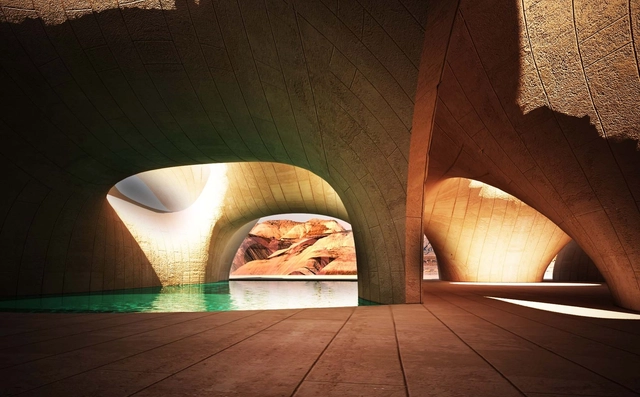
Aysu Aysoy and Roman Hajtmanek have been announced as the winners of the ArchDaily + IIDEXCanada Virtual Spaces Competition, which sought proposals for un-built, fantastical spaces. The designs were then developed into virtual spaces by Invent Dev as a part of a virtual reality exhibition at IIDEXCanada.
Learn more about both of the winners, after the break.
Based on the concept of listening to the sounds of the ocean inside a shell, STUDIOKCA, commissioned by NASA, has created the NASA Orbit Pavilion to immerse visitors in the sounds of satellites orbiting in outer space.
The traveling, nautilus-shaped pavilion provides a space in which to experience the trajectories of 19 satellites orbiting Earth. Made with 3,500 square feet of water-jet cut aluminum panels, the pavilion is "scribed with over 100 'orbital paths' fitted together and bolted to a curved framework of aluminum tubes."
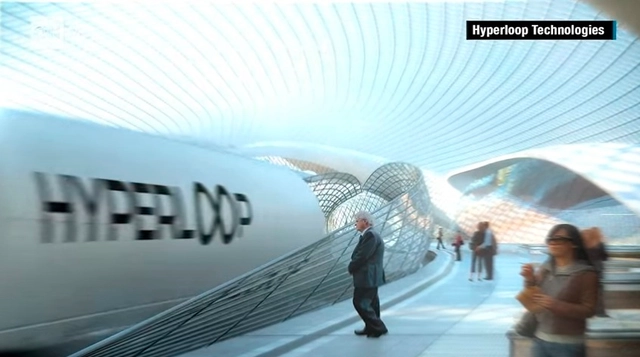
Hyperloop Technologies is starting to realize its high-speed transit system. As Tech.Mic reports, pipes for the project's first test tube are showing up in Nevada. Hyperloop was first outlined by Elon Musk in 2013 as a response to California's pricey bullet train plan that aim to connect Los Angeles to San Francisco. The ultra-fast, energy efficient Hyperloop proposes to send pods of people through a depressurized tube at speeds up to 700 miles-per-hour. It is believed that the new system could be running as soon as 2020.


.gif?1453316188)



_Macklowe_Properties.jpg?1452745763&format=webp&width=640&height=580)



_Hedrich_Blessing_(3).jpg?1452884759 "WMS Boathouse at Clark Park / Studio Gang Architects. Image © Hedrich Blessing")