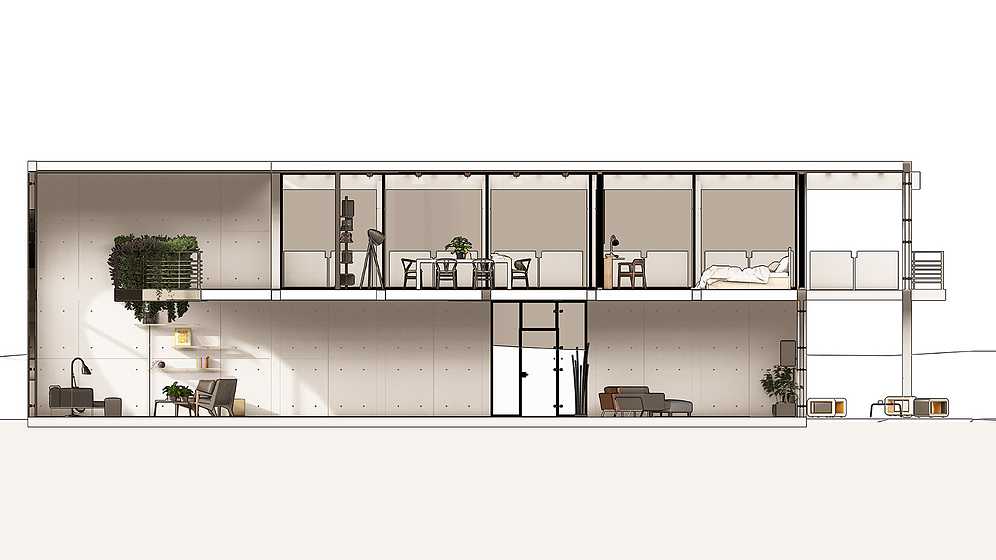
Produce personalized presentation boards that distill complex concepts into simple visual representations with a few helpful tools and effects.


Produce personalized presentation boards that distill complex concepts into simple visual representations with a few helpful tools and effects.

Could you be one of TED's first Residents? TED is offering a new space in their New York SoHo headquarters for a brand-new program: TED Residency. Searching for creative individuals who believe their work deserves more exposure and can benefit from interdisciplinary interactions, the TED team will give each resident a chance to develop their idea for four months with the support of their team. If chosen, you will be provided an office space, technical assistance, and an opportunity to present your idea in the TED theater.
Submissions are due February 24. This year's residency program will run from April 1 to July 31. Apply here!
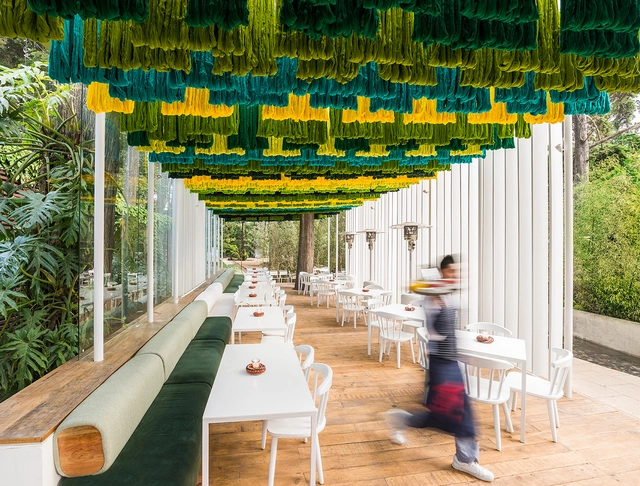
The American Institute of Architects New York Chapter has named six firms as the recipients of its New Practices New York 2016 award. Under this year's theme of "Prospect," the winners were selected for having "leveraged multiple aspects of the architecture profession, utilizing unique and innovative strategies, both in the projects and the practices they have started."
The six "promising and pioneering firms" are...
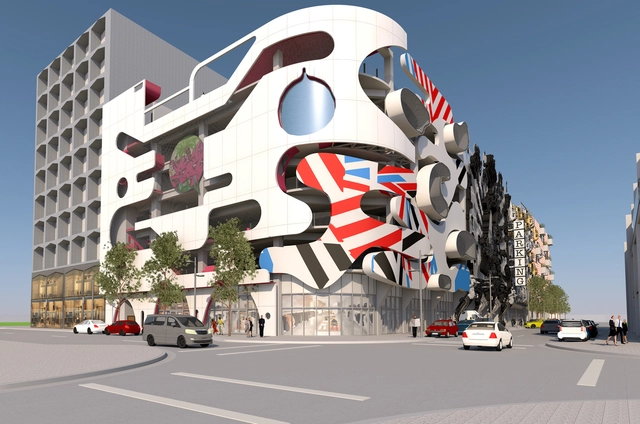
The Miami Design District, a neighborhood dedicated to innovative art and architecture, has commissioned The Museum Garage to be built as a part of Phase III of development. Curated by Terence Riley of K/R Architects, the garage will feature six different facades each designed by a different firm: Work Architecture Company (WORKac); J. Mayer H.; Clavel Arquitectos; Nicolas Buffe; K/R Architects; and Sagmeister & Walsh.
The facades will include a wall of recycled cars, a wall of traffic barriers repurposed as screens, a mural of cartoon characters mixed in with baroque details, a corner design of interlocking puzzle pieces, façade cutouts that serve as an “ant farm” which expose the activity inside, and a painting of a candle being burned at both ends.
Scheduled for completion this year, the garage will serve as a seven story mixed-use building with ground-floor retail and a garage for 800 vehicles.
Learn more about each of the facade designs after the break.
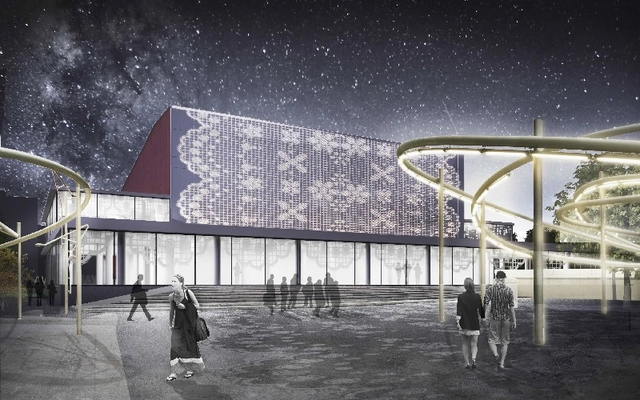
Moscow’s Chief Architect Sergey Kuznetsov has announced the winners of the Open All-Russia Competition for a Concept of Redevelopment of two modernist cinema theaters: Varshava and Voskhod. An initiative of ADG Group, in collaboration with the Committee on Architecture and Urban Planning of Moscow City, the competition awarded one winner for the Voskhod theater, and two winners for the Varshava theater. The organizer of the competition is the agency for strategic development "CENTER."
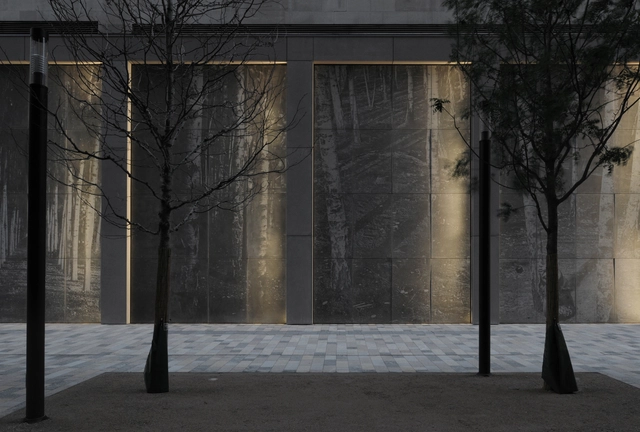
A new type of greenery has arrived in central London. Placed along the western façade of Westminster City Hall (known as Kingsgate Walk), a sprawling concrete frieze in relief depicts shimmering nocturnal birch trees photographed in forests from Beijing to London. Created using emerging technology, the relief was rendered through the concrete casting of a photograph by artist Rut Blees Luxemburg, a photographic artist and a reader in Urban Aesthetics at London's Royal College of Art. The textured surface of the frieze changes according to ambient light, creating a perplexing effect in the image from day to night.
Realized through a unique collaboration between artist Blees Luxemburg, London-based Lynch Architects and developer Land Securities as a part of Kingsgate, Silver Forest completes the major urban regeneration project for London Victoria in its new home in a public square adjacent to Westminster City Hall.
Find out more about the interdisciplinary partnership formed for Silver Forest after the break.
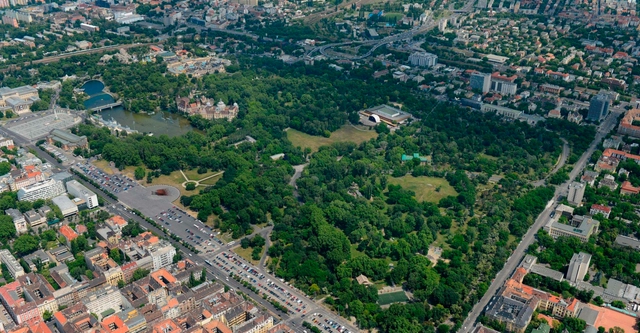
Zaha Hadid, Coop Himmelb(l)au, and OMA are some of 15 major practices that have been shortlisted in the second (and final) stage of a competition to design the new Museum of Ethnography in Budapest. The building will be one of four new museums being built in Hungary's 200-year-old Városliget (City Park) as part of the Liget Budapest project, which includes SANAA's Ludwig Museum and Sou Fujimoto’s House of Hungarian Music.
"For the first time since the foundation of the Museum of Ethnography that is, for over 140 years now, it has become possible to permanently place the museum in a building worthy for the collection, to be built specifically for this function. In addition, the construction of the new building of the Museum of Ethnography will solve another more than half a century problem: by relocating the institution, the Kúria (former Ministry of Justice) building, recently housing the museum, can regain its original function," says Liget Budapest.
The 15 finalists include:
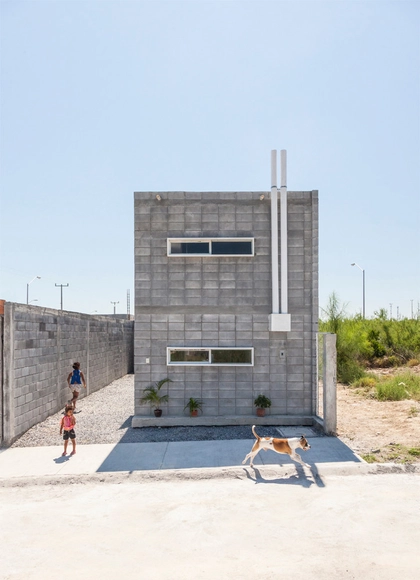
Eight practices from the US, Canada and Mexico have been selected to receive The Architectural League of New York’s 34th annual Emerging Voices award - one of the most coveted awards in North American architecture. Each recipient was selected for being a “distinct design voice” with the “potential to influence" disciplines of architecture, landscape architecture, and urbanism.
“The 2016 ‘Voices,’ each responding to distinct geographic sites and typologies, all compellingly address the relationship between architecture and place by resourcefully synthesizing programmatic invention with computational production and the craft of building,” said Program Director Anne Rieselbach.
We've all been there: it's time to write a cover letter to apply for the job you've always dreamed of, but all that you can seem to muster are tired phrases and generic expressions. Well, in walks Étienne Duval to put us all to shame. Duval, a 30-year old architect, wanted to work at BIG, with "Yes is More"-man Bjarke Ingels. And what kind of cover letter did Étienne write? A rap... with an accompanying video. It's witty, well-done and (in our humble opinion) a perfect fit for BIG.
After the video made the rounds here at ArchDaily, we had some burning questions for Étienne. Check out the video, which has racked up over 20,000 views, and the short interview below.
ArchDaily: What inspired you to create a video for your application?

The Royal Institute of British Architects (RIBA)’s Future Trends Survey for December 2015 showed a dip in UK architects’ confidence, reflecting the low number of new inquiries received by practices at the end of the year. The Future Trends workload index dropped substantially to +15 in December from +27 in November, showing a decrease in expected new projects. However, all regions in the UK, with the exception of Wales and the West (balance figure -3) and Scotland (balance figure -50), showed positive balance figures, with Scotland’s low numbers possibly related to the impact of oil price changes. The South of England was the most optimistic region with a balance figure of +30.
Congratulations to Dame Zaha Hadid who has tonight received the #RoyalGoldMedal for architecture.
Posted by RIBA on Wednesday, 3 February 2016
Zaha Hadid, who was named as the the first sole woman to be awarded the UK's highest honour for architects in her own right in 2015, received the Royal Institute of British Architects (RIBA) 2016 Royal Gold Medal at a ceremony in London yesterday. Hadid, who was appointed a Dame of the British Empire in 2012, received the Pritzker Prize in 2004. Her practice also took both the 2010 and 2011 RIBA Stirling Prizes.

In 2013, Skylar Tibbits of the MIT Self-Assembly Lab introduced a new phrase to the architectural lexicon: 4D Printing. The concept, which built on the hype surrounding 3D printing and added the dimension of time, describes materials that can be constructed through 3D printing in such a way that they later react and change shape in response to an external stimulus such as heat or moisture.
Tibbits demonstrated his idea with a composite of two materials, but now researchers led by materials scientist Jennifer Lewis at Harvard have gone one better, creating a method that produces the same effects with just one material.


Amsterdam-based SeARCH has won a competition in collaboration with Atelier Phileas and LA architectures to design a housing block in the new Paris Rive Gauche district. With each practice focused on one building, the project resulted in the combining of three interconnected high-rises united by a "green ribbon," "cut skyline" and a common expression of function projected onto the facades. Together, they offer 55 family apartments, 180 student flats, 75 middle income apartments, offices, a commercial area and underground public parking.
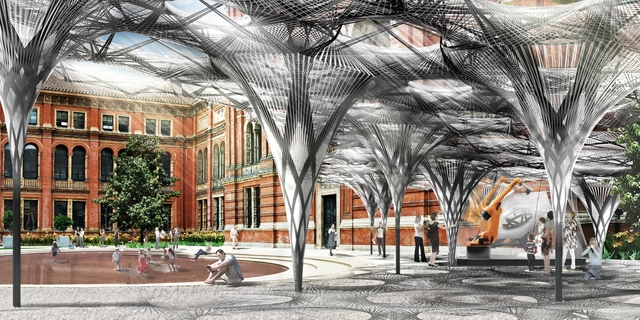
Stuttgart experimental architect Achim Menges has been commissioned to kickstart the V&A's first ever Engineering Season with a site specific, nature-inspired installation fabricated by robots. Complemented by Ove Arup's first major retrospective, Engineering the World: Ove Arup and the Philosophy of Total Design, the Elytra Filament Pavilion will be Menges' first public commission in the UK. He will work with Moritz Dörstelmann, structural engineer Jan Knippers and climate engineer Thomas Auer to complete the project.
"Elytra Filament Pavilion will explore the impact of emerging robotic technologies on architectural design, engineering and making," says the V&A. "Inspired by a lightweight construction principle found in nature, the fibrous structures of the forewing shells of flying beetles known as elytra, the Pavilion will be an undulating canopy of tightly-woven carbon fibre cells created using a novel robotic production process."
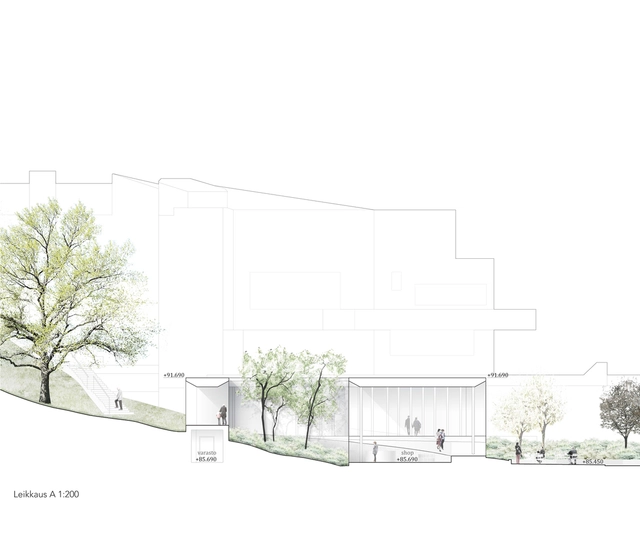
A group of young Finnish architects - Sini Rahikainen, Hannele Cederström, Inka Norros, Kirsti Paloheimo, Maria Kleimola - has won an open competition seeking ideas to "connect and integrate" two Alvar Aalto masterpieces - the Alvar Aalto museum and the Museum of Central Finland in Jyväskylä's Ruusupuisto park. With their entry, "Silmu," the winning team was selected over 689 other entries for creating a sensible proposal that met the competitions main goal - "to adapt to its worthy environment in a balanced way, and to find a natural connection with the architecture of Alvar Aalto."
“The high-end entries stand out from the rest with their clear, striking ideas and formal properties. The best things about Silmu were its atmosphere and the subtle contours. It was also seen as adding an extra, tranquil element between the Alvar Aalto Museum and the Museum of Central Finland, while further increasing the functionality of the outdoor spaces,” says Director of the Alvar Aalto Foundation Tommi Lindh.
_credit_Sergio_Grazia.jpg?1454275551&format=webp&width=640&height=580)
WoodWorks, an initiative of the Wood Products Council, has announced the winners of the 2016 Wood Design Awards. Honoring projects that “showcase the innovative use of wood as both a structural and finish material,” this year’s awards highlight the many uses and attributes of wood, “from structural performance and design versatility to sustainability and cost effectiveness.”
The Wood Design Awards are both National and Regional, with regional awards being presented at Wood Solutions Fairs across the country starting in late March.
The winners of the Wood Design Awards are:

A team of urban design students from the Harvard Graduate School of Design has won first prize in UD Shanghai’s 2015 International Student Urban Design Competition for the Shanghai Railway Station Area. Through the competition, the team reimagined the “Shanghai Railway Station, one of the city’s four major railway stations and one of China’s major rail hubs, in the context of the next round of the Shanghai Master Plan (2020 to 2040). In particular, the competition asked teams to promote walkability and smoother traffic patterns,” where the station creates a topographical gap, “and to consider thee-dimensional urban development around the station.”

Boris Brorman Jensen and philosopher Kristoffer Lindhardt Weiss have been appointed to curate the Danish contribution to the 2016 Venice Biennale. Their exhibition will centre on the theme of 'humanism', a "central leitmotif in Danish architecture," which "promotes a sense of community and expresses civic pride." Although it is top of the agenda, they state that "there is not much agreement on how, when and by what means this 'humanistic architecture' should be realised."

Grimshaw and BVN have won an international competition to redesign schools in Parramatta, a suburb in Sydney, Australia. Planned to be the state's first high-rise educational facility, the proposal combines the Arthur Phillip High School (APHS) and Parramatta Public School (PPS) into a 14-story building designed after the ‘Schools-within-Schools’ (SWIS) model - "a template which delivers learning in stages rather than via age groups."

Following an exciting week of nominations, ArchDaily’s readers have evaluated over 3,000 projects and selected 5 finalists in each category of the Building of the Year Award.
Over 18,000 architects and enthusiasts participated in the nomination process, choosing projects that exemplify what it means to push architecture forward. These finalists are the buildings that have most inspired ArchDaily readers.
This diverse group of projects hail from all corners of the globe and from firms of different sizes and style. This year's selection includes some Building of the Year stalwarts alongside a healthy selection of lesser-known and emerging practices - but most importantly, they all capture architecture's capacity to spark positive change in the environment.
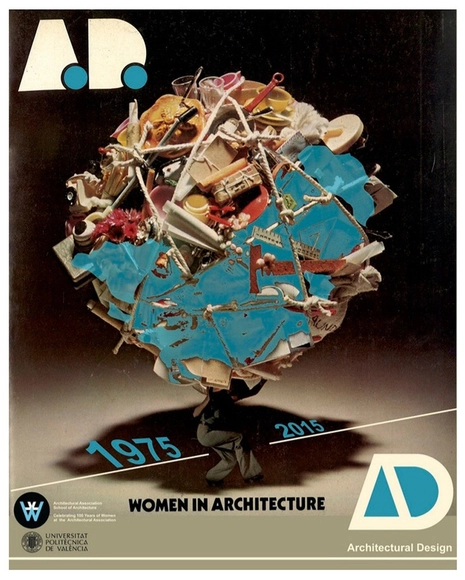
In August 1975, Architectural Design magazine published a special edition about Women in Architecture. At the time, director Monica Pidgeon sent letters to 100 architects asking what women can contribute to architecture that men can’t (and vice-versa), as well as the advantages and disadvantages of being a woman in the profession.
Now, 40 years later, a new version of the study aims to repeat Pidgeon’s initiative through an online survey with similar questions.
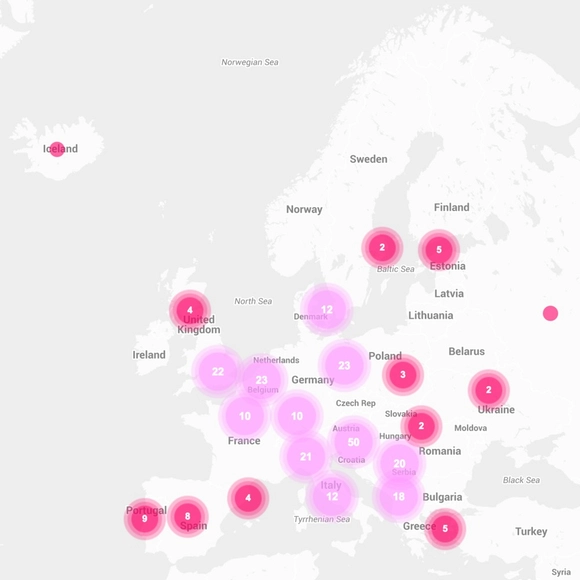
The results of the 2015 Future Architecture Call for Ideas have been announced, "revealing the critical thinking of the currently emerging generation of designers and architects in relation to the existing models that shape architecture as a discipline." Submissions presented visions "of what architecture could be, and highlighted architects and designers as initiators of change in the larger societal picture." As the first pan-European platform of architecture museums, festivals and producers, it has been designed to both bring together ideas about the future of cities and architecture closer to the wider public.
You can browse the selection after the break.
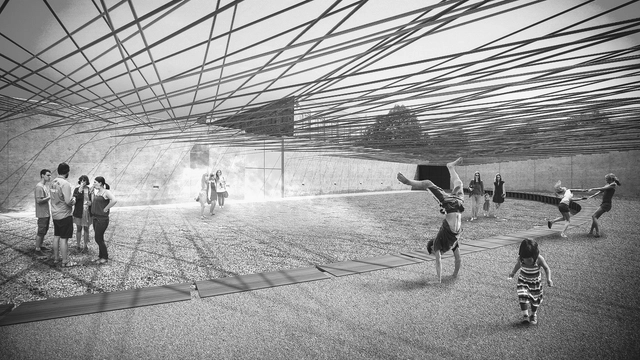
Mexico City-based Escobedo Soliz Studio has been named the winner of MoMA and MoMA PS1's annual Young Architects Program (YAP) in New York - now in its 17th edition. Selected over four other finalists, the winning project, Weaving the Courtyard is “neither an object nor a sculpture standing in the courtyard, but a series of simple, powerful actions that generate new and different atmospheres," says the architect. It will serve as a "temporary urban landscape" for the 2016 Warm Up summer music series in MoMA PS1’s outdoor courtyard.
"Weaving the Courtyard is a site-specific architectural intervention using the courtyard’s concrete walls to generate both sky and landscape, with embankments in which platforms of soil and water suggest the appearance of a unique topography," says MoMA.

A group of Massachusetts Institute of Technology (MIT) engineering students has won the first round of a competition to design transport "pods" for Elon Musk's ultra-fast Hyperloop. Selected from more than 100 other university teams, the top teams will now have the opportunity to build their pods for a trial run on the Hyperloop Test Track (now under construction) by April 2016. If successful, the pods will be able to transport up to 30 people at speeds of 700 miles-per-hour through the Hyperloop's 12-foot diameter tube.
.jpg?1454345916&format=webp&width=640&height=580)
Protestors have prompted developer Sellar Property Group to pull plans on the Renzo Piano-designed skyscraper sited in London's Paddington area. The 72-story "skinny Shard" has been harshly criticized by locals and Historic England for "blighting views" of the capital and being out-of-place, hence its popular nickname - the "Paddington Pole."
“London’s skyline is unique, iconic and loved. It has to be managed sensitively and with proper planning,” Historic England chief executive Duncan Wilson told The Guardian. “Tall buildings can be exciting and useful, but if they are poorly designed, or in the wrong place, they can really harm our cities. We trust that the revised plans for Paddington Place will take the area’s unique character into account.”