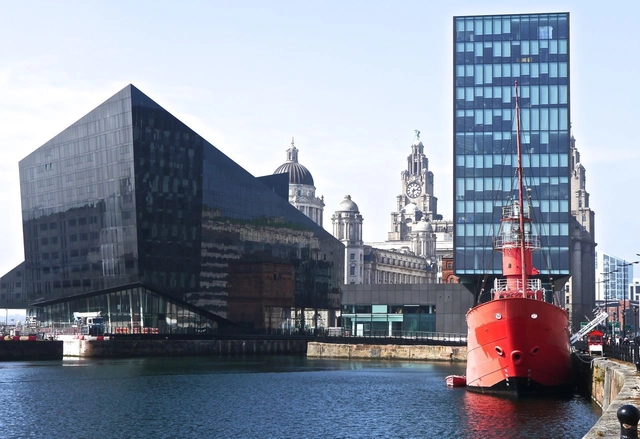
The Royal Institute of British Architects (RIBA) will open a new national architecture centre, RIBA North, in Liverpool this August. The centre will house an exhibition gallery, a conference and event space, a cafe and a shop, and aims to build upon the Waterfront location’s status as a lively cultural destination.
Today, the Museum of Modern Art in New York announced a major retrospective of Frank Lloyd Wright's work to be displayed in 2017, commemorating 150 years since the architect's birth. Opening next June, the exhibition will feature approximately 450 works spanning Wright’s career including architectural drawings, models, building fragments, films, television broadcasts, print media, furniture, tableware, textiles, paintings, photographs, and scrapbooks, along with several works that have rarely or never been shown publicly.
This video is part of a partnership between ArchDaily and the Spanish photographer Jesús Granada. Granada's stock images of the Biennale can be obtained on his website, here. ArchDaily’s complete coverage of the 2016 Biennale can be found, here; with coverage focused on the Spanish Pavilion, here.
In an interview conducted by Jesús Granada, the curators of this year’s Spanish Pavilion at the 2016 Venice Biennale, Iñaqui Carnicero and Carlos Quintáns, discuss their reasoning and intentions for the Golden Lion awarded national pavilion’s design. Titled “Unfinished,” Quintáns describes the project’s influence as “the detection of reality that we show only through photography, of what happened (in Spain) after the housing bubble, first the real estate boom and then the crisis, and how we can offer solutions thanks to the many talented architects of the many projects which have been realized in Spain and have been partially obscured.” The pavilion answers Director Alejandro Aravena’s call for national pavilions that identify domestic responses to architectural dilemmas that could be the solutions for other places facing similar issues.
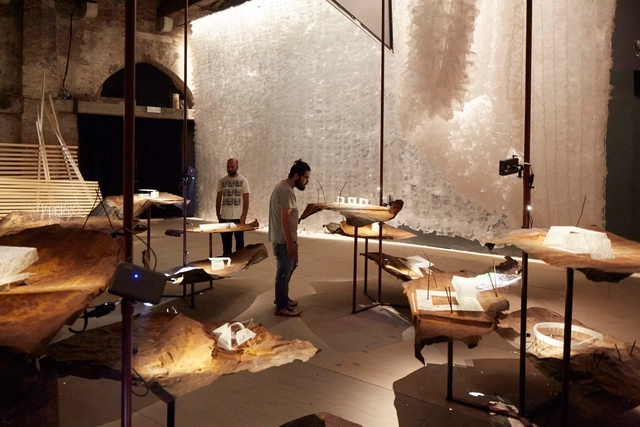
As part of ArchDaily's coverage of the 2016 Venice Biennale, we are presenting a series of articles written by the curators of the exhibitions and installations on show. Here, Arielle Blonder, one of the curators (along with Dr. Ido Bachelet, Bnaya Bauer, Dr. Yael Eylat Van-Essen and Noy Lazarovich) of the Israeli Pavilion, gives us an insight into one of the exhibited works in the pavilion: LifeObject, "a freestanding structure inspired by a 3D scan of a bird's nest." The essay was originally published in LifeObject: Merging Biology and Architecture.
A matter of resilience: LifeObject is an architectural installation, which transposes the resilient properties of a bird’s nest, through scientific analysis, into a spatial form rich with new architectural perspectives. At the core of the installation are free-form volumetric airy surfaces undulating in space that are composed out of over 1500 slender and light components, inspired by twigs; relying on tension only, they form a light-weight, porous and resilient structure. TheLifeObject combines smart, composite and biological materials in the formation of a ‘living structure’ that responds to its environment. Human presence around it triggers the opening of ‘cabinet de curiosités’, revealing a variety of innovative biological elements to visitors.
The LifeObject materializes a series of abstract ideas, preoccupations and potentials in present and future architectural field. The concepts proposed by the structure sketch alternative formal and structural languages informed by external disciplines. It hints at future applications and integration of biologically inspired materials that originate from various settings, scales and orientation.
The Solomon R. Guggenheim Museum, which opened in 1959, was controversial for being “less a museum than it is a monument to Frank Lloyd Wright.” Although Wright intended to display paintings on the curved interior walls of the central open space, the concave walls made it unworkable. Instead, the central atrium became a place for procession and the uncovering of space through movement. The continuous ramp overlooking the atrium allows people to interact from different levels.
Photographer Laurian Ghinitoiu places people at the core of his photography which perhaps explains how, in this photoset of the Guggenheim Museum to mark Wright's 149th birthday, he captured the essence and vitality of the Guggenheim Museum. While some images depict the museum’s atrium as a place for passing-by, wandering or socializing, others grasp the growing influence of photography and self-representation on visitors’ experience. Some shots also show the building in its urban context with people involved in daily life activities.
"Scrutinizing the horizon and looking for a new perspective" is what Alejandro Aravena has encouraged in the 2016 Venice Biennale, Reporting From the Front. "[He] has staged one of the most socially charged Biennales," Gillian Dobias reports, by "exploring the different ways that design can add value." In this, the first of two film reportages from the Biennale, Monocle talks to Aravena about his hopes for stimulating the debate on improving quality of life in the built environment, and tour the Central Pavilion and the Arsenale to uncover what's on show.
As reported by Nigerian news website NAIJ.com, the celebrated Makoko Floating School, designed by Nigerian architect Kunlé Adeyemi of NLÉ, has collapsed after heavy rain battered the city of Lagos. Photographs show the roof of the school still largely in tact, but sitting directly on top of the building's floating base of 256 plastic drums, as the lower levels and supporting structure appear to have failed completely.
This article has since been updated (June 8 2016) with a statement from NLÉ.
https://www.archdaily.com/789044/nles-makoko-floating-school-reportedly-collapses-due-to-heavy-rainAD Editorial Team
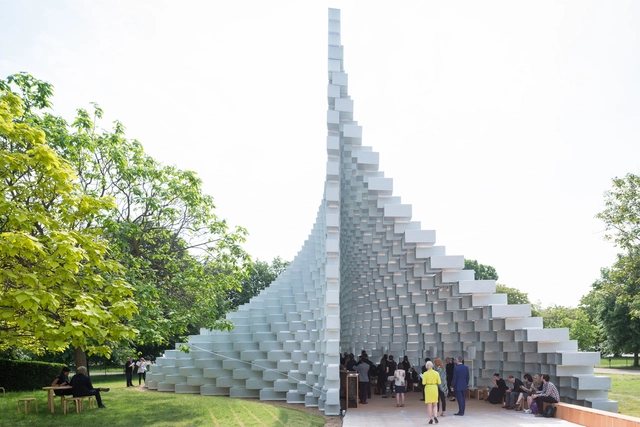
Earlier today, the 17th Serpentine Gallery Pavilionwas unveiled with a press preview ahead of its public opening this Friday. With its 13-meter tall "unzipped wall" of square fiberglass tubes, the pavilion is an impressive presence in Hyde park, standing next to the single-story Serpentine Gallery. As described by Bjarke Ingels in his design statement, the pavilion is all about its visual effects from various angles - going from an expansive, transparent rectangle when viewed from the side, and an opaque, curving sculptural shape when seen from either end.
With so much visual intrigue, the project offers plenty to be explored through photography - and accordingly, photographer Laurian Ghinitoiu was there at the opening to investigate the project's visual effects. He also captured the pavilion's neighboring Summer Houses, by Kunlé Adeyemi of NLÉ, Barkow Leibinger, Yona Friedman and Asif Khan. Read on to see the gallery.
Pezo von Ellrichshausen’s Vara Pavilion for the 2016 Venice Biennale is described by the architects as “a series of exteriors within other exteriors.” Breaking down this crypticness, what emerges is a maze-like complex of circles – ten of them – formed with steel, cement, and painted plaster, which collectively create a series of walls, but no roof, thus forming a pavilion that is open to the elements from above. The 324 square meter pavilion’s title, “vara,” refers to an imprecise and obsolete Spanish unit of measurement, that was employed during the country’s conquering of America to trace and measure cities. Each of circles of the Vara Pavilion is a diameter of the unit, ranging from two to eleven.
Courtesy of OMA, Photograph by Delfino Sisto Legnani and Marco Cappelletti
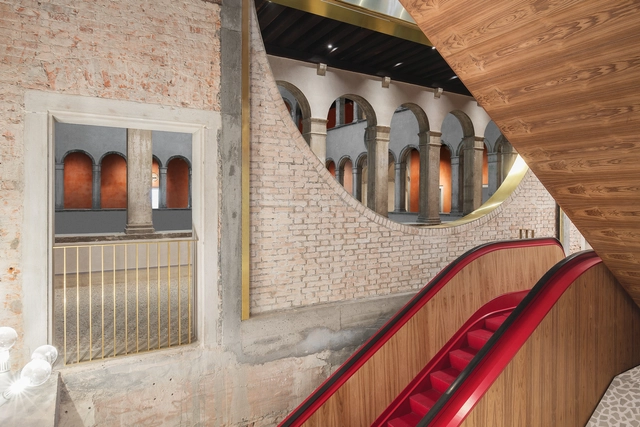
OMA’s long-awaited conversion of the 16th century Fondaco dei Tedeschi as a department store is finally complete in Venice. The project was commissioned by Edizione S.r.l., the Benetton family's holding company, in 2009, and will bring comprehensive changes to one of the city’s largest and most recognizable buildings. The Fondaco was first begun in 1228 and is located at the foot of the Rialto Bridge, across from the fish market. With many past lives, it was first used as a trading post for German merchants, later as a customs house under Napoleon, and in the twentieth century, as a post office under Mussolini. Despite numerous and radical structural changes, the building was listed as a 'Monument' in 1987, restricting further alterations.
The 2016 Serpentine Pavilion, designed by BIG, has today been unveiled at the Serpentine Gallery in Hyde Park, London. The design consists of an "unzipped wall" in which a straight line of tubular fiberglass bricks at the top of the wall is split into two undulating sides, housing the program of the pavilion. For the first time, the 2016 Serpentine Pavilion is also accompanied by four "summerhouses" designed by Kunlé Adeyemi, Barkow Leibinger, Yona Friedman and Asif Khan. The Pavilion and summerhouses will open to the public later this week, on June 10th, and will be in place until October 9th. Read on to find out more about all five designs.
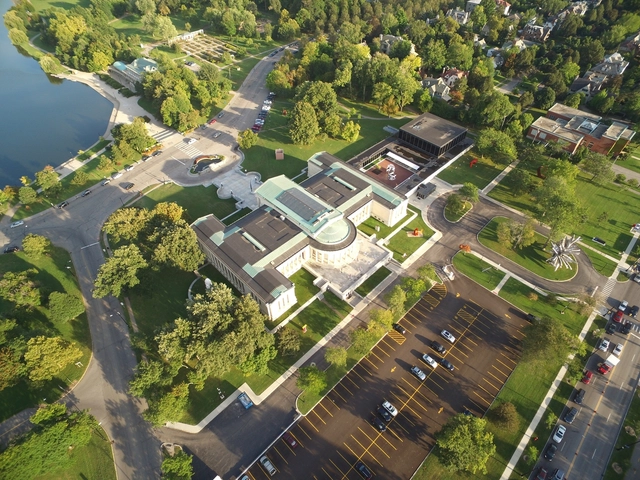
Buffalo’s Albright-Knox Art Gallery has selected OMA to expand and refurbish the historic museum and its campus. The project team is being lead by OMA New York’s Principal, Shohei Shigematsu, who will spend the next year in partnership with the museum and in consultation with the community on how to renew and revitalize the august institution. Known as AK360, the building will be OMA’s first art museum project in the United States, and the Albright-Knox’s first expansion in more than a half-century. According to the museum, the project’s name is a reflection on this being the institution’s third expansion in its 154-year history, in addition, it establishes an embrace of public feedback and the acknowledges the condition of being encircled by parkland.
Phyllis Lambert, architect and Founding Director Emeritus of the Canadian Centre for Architecture (CCA), has been announced as the winner of the 2016 Wolf Prize for the Arts. Awarded by the Wolf Foundation in Israel on June 2, the architect was cited for six decades of championing innovations in building design, for her preservation and regeneration efforts with significant historical works, and for her leadership the field of architectural research.
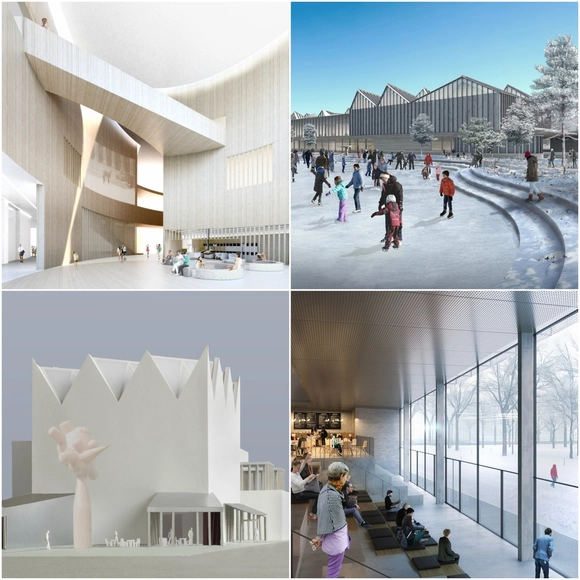
The design proposals of seven shortlisted finalists for the Latvian Museum of Contemporary Art Design Competition have been released by the competition’s organizer, Malcolm Reading Consultants. Located in the capital city of Riga, the funding for the €30 million project is a public private partnership with support from from the ABLV Charitable Foundation and the Boris and Ināra Teterev Foundation, which co-founded the Latvian Museum of Contemporary Art Foundation. The Ministry of Culture of the Republic of Latvia and the Museum’s Foundation signed a memorandum of intent regarding the museum and building on 30 October 2014. The competition, organized in 2015 with 25 first-stage participants, will announce a jury-selected winner in mid-June.
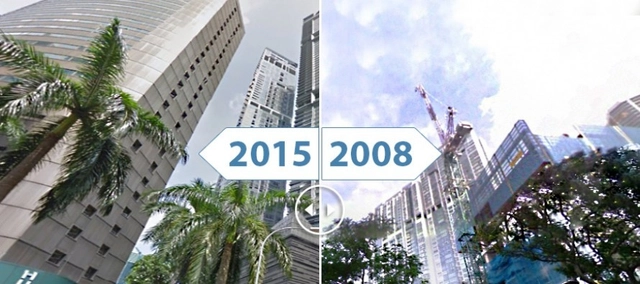
Over the past few decades, cities all around the world have undergone major changes as a part of global urbanization processes. More than fifty percent of the world’s population currently resides in cities, and by 2030, the world is anticipated to have 41 mega-cities with 10 million inhabitants or more.
With such large population growth, cities have likewise experienced unparalleled changes and development. In order to showcase the dramatic transformations of some of the world’s largest cities, like Paris, Sydney, Dubai, and Hong Kong, RENTCafe has compiled a series of Street View images that superimpose skylines of the past against what they look like today.
Find out how 42 skylines in 16 major cities have changed over time, after the break.
There is an enormous intensity of information, knowledge and ideas on display at this year's Venice Architecture Biennale, Reporting From the Front. With all the Executive Editors and Editors-in-Chief of ArchDaily's platforms in English, Spanish and (Brazilian) Portuguese in Venice for the opening of the 2016 Venice Architecture Biennale—plus co-founder David Basulto and European Editor-at-Large James Taylor-Foster, who curated this year's Nordic Pavilion—we've pooled together twelve of our initial favourite exhibitions and must-see shows.
https://www.archdaily.com/788809/12-things-you-need-to-see-at-the-2016-venice-biennale-reporting-from-the-front-selection-oneAD Editorial Team
In a recent article published by the Financial Times, architect and public speaker Michael Pawlyn delves into how biomimicry can be applied to architecture in order to solve design problems and create a more sustainable future. Even in very early examples, biomimicry has been critical in the development of architecture, for example when Filippo Brunelleschi studied eggshells to create a thinner and lighter dome for his cathedral in Florence. In a modern example, biomimicry has been utilized—through the examination of termite mounds—to create cool environments without air conditioning in warm climates such as in Zimbabwe.
Courtesy of Consejo Nacional de la Cultura y las Artes
As part of ArchDaily's coverage of the 2016 Venice Biennale, we are presenting a series of articles written by the curators of the exhibitions and installations on show.
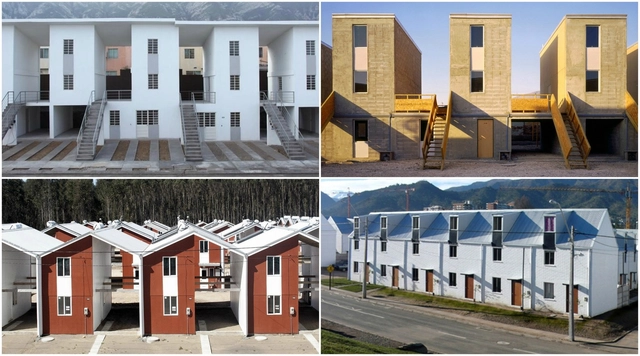
Against the tide presents the efforts of a generation of young architects who have conceived, designed, and constructed works of architecture, while also arranging their financial and contractual aspects as part of the requirements for their professional degree in architecture. All they have in common is that they belong to the Central Valley of Chile, where they have returned following their academic training to contribute to their communities, creating architectural projects which connect to a set of places where the region’s campesinos and their families can live and work.
Beatriz Colomina, Professor of Architecture at Princeton, recently gave an interview to Architect Magazine on the current exhibition of her thesis—“Playboy Architecture 1953-1979”—at the Elmhurst Museum in Chicago. Her interest in the correlation between Playboy and architecture began nearly thirty years ago with her exploration on the role of gender and architecture in the work of Adolf Loos and Le Corbusier. From there, she began to observe numerous parallels between Playboy and the world of design.
Earlier this year, we reported that 2016 Pritzker Prize winnerAlejandro Aravena announced that his practice, ELEMENTAL, released four of their social housing designs available to the public for open source use. A recent article published by Urbanisms in beta discusses what exactly “open source use” means to the architecture world, and how we may see these designs applied to projects in the future.
At the opening of the 2016 Venice Biennale, ArchDaily and PLANE—SITE had the unique opportunity to interview Carlos Quintáns & Iñaqui Carnicero and ask them about "UNFINISHED"—an exhibition that uncovers design strategies that take an optimistic view of the built environment. This idea of exhibiting architecture that revels in the patina acquired through the passage of time and that shows how architects have learned from Spain's recent economic crisis earned the Pavilion the Golden Lion for Best National Participation. The jury cited Quintáns & Carnicero's "concisely curated selection of emerging architects whose work shows how creativity and commitment can transcend material constraints."
To see the video with subtitles, make sure that the "CC" button is selected.
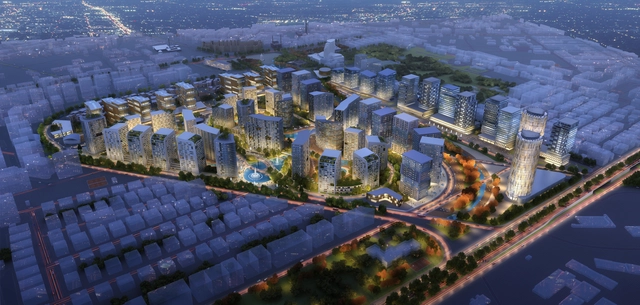
Architecture and planning firm Sabri Pasayigit Design Office has released its new master plan for the Municipality of Kayseri in the Sahabiye neighborhood of Kayseri, Turkey.
The project balances historic and modern architecture elements, with a focus on the historic castle of Kayseri as the city center point. Cultural and public buildings will be placed near this historic center, with taller buildings set farther out of the city.
Videos
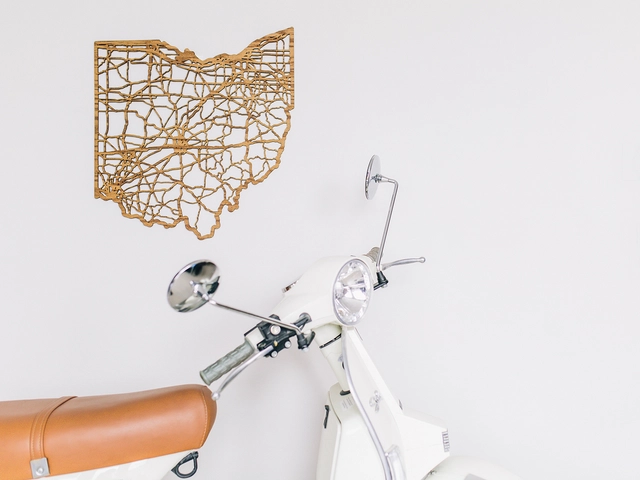
Oak State Art, Ohio. Image Courtesy of Cut Maps
Have you ever wanted to decorate your walls with old-style maps but been discouraged because they don't fit your minimal and contemporary aesthetic? Enter Cut Maps, the Virginia-based company that creates cartographic representations of cities and states using laser technologies to precisely define borders and streets. The resultant maps offer the illusion of their paper precedents, but with an otherworldly precision only possible in the digital age.
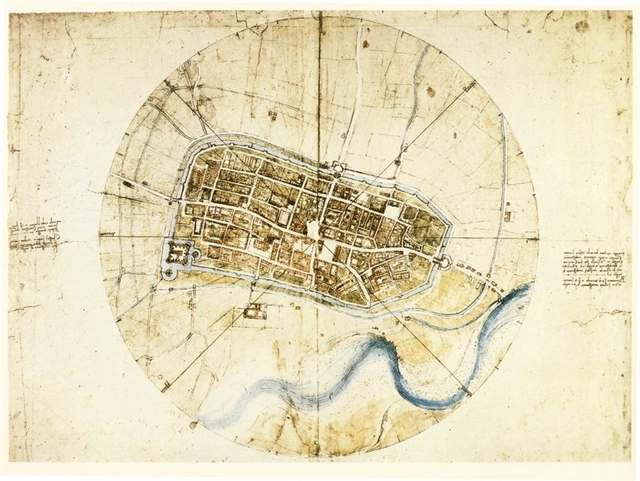
CityLab has recently published an article outlining Leonardo da Vinci's Town Plan of Imola, an "ichnographic" map from 1502, and the earliest of its kind in existence. Rather than utilizing elevations or oblique mapping methods like most other Renaissance mappers, da Vinci developed his own technique -- possibly using special hodometer and magnetic compass technologies that he invented -- to draw the city "as if viewed from an infinite number of viewpoints."


.jpg?1464784448)
.jpg?1465197488&format=webp&width=640&height=580)
.jpg?1465197680 "© Laurian Ghinitoiu")
.jpg?1465197941 "© Laurian Ghinitoiu")
.jpg?1465197911 "© Laurian Ghinitoiu")
.jpg?1465197961 "© Laurian Ghinitoiu")
.jpg?1465197488)

.jpg?1465489880&format=webp&width=640&height=580)
.jpg?1465489121 "© Laurian Ghinitoiu")
.jpg?1465489810 "© Laurian Ghinitoiu")
.jpg?1465489930 "© Laurian Ghinitoiu")
.jpg?1465489412 "© Laurian Ghinitoiu")
.jpg?1465489161 "© Laurian Ghinitoiu")
.jpg?1465488871 "© Laurian Ghinitoiu")
.jpg?1465489842 "© Laurian Ghinitoiu")
.jpg?1465489672 "© Laurian Ghinitoiu")
.jpg?1465489015 "© Laurian Ghinitoiu")
.jpg?1465489880)
.jpg?1465223729 "© Laurian Ghinitoiu")
.jpg?1465223861 "© Laurian Ghinitoiu")
.jpg?1465223840 "© Laurian Ghinitoiu")
.jpg?1465223736 "© Laurian Ghinitoiu")
.jpg?1465223799)







.jpg?1464882577 "© Laurian Ghinitoiu")
.jpg?1464882653 "© Laurian Ghinitoiu")
.jpg?1464882611 "© Laurian Ghinitoiu")

.jpg?1464971221 "© Laurian Ghinitoiu")
.jpg?1464971291 "© Laurian Ghinitoiu")
.jpg?1464971243 "© Laurian Ghinitoiu")
.jpg?1464971274 "© Laurian Ghinitoiu")
.jpg?1464971221)