


For the past couple of years, the project curators at ArchDaily have been revisiting architectural works they believe deserve a deeper look. Through an Instagram post called "Project Review", the curators describe what they consider to be the work's main attribute(s). Delving into the project's stories and the elements that make them truly inspiring, they underline what might otherwise be overlooked initiatives and study them closely, with attention to locality and context. The result is an array of diverse works, often from rural or suburban areas that have a public function or historic significance.
While a couple of houses are listed, the majority of the reviews veer towards cultural centers, libraries, workspaces, or commercial settings. Another thing to note is the fact that many of these works ended up coming in from Asia, with a few key projects from rural China. The picks are quite diverse in materiality and design language; however, they all suggest innovative architectural solutions and captivating narratives.


The curators lend their voices to those of the project architects, explaining what they think makes the intervention successful and engaging. The listed projects are just some of the yearly selections by the editors.
Related Article
ArchDaily Curator's Picks 2023: Global Projects our Curators Highlighted Through the YearProject Picks by Susanna Moreira
Social Housing Units 2104 / HARQUITECTES
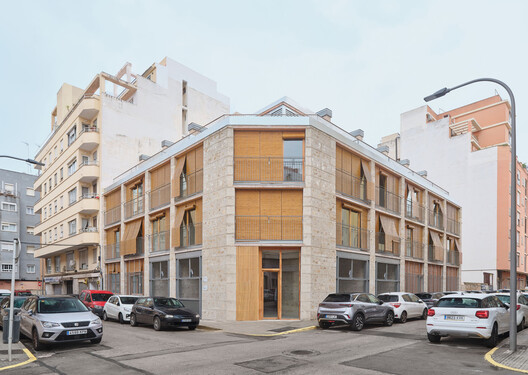
Social Housing Units 2104 is the result of an urban mining operation, as the architects themselves describe it. The reason for this is the process involved in recovering parts of the pre-existing building on the site, which had to be demolished due to the impossibility of using its structure. From then on, a process of separating this material began - while ceramic material and concrete were used for the foundations, sandstone was used to make cyclopean concrete blocks, used as the building's load-bearing walls, whose thickness decreases with each floor.
Rahmah Library / The MAAK
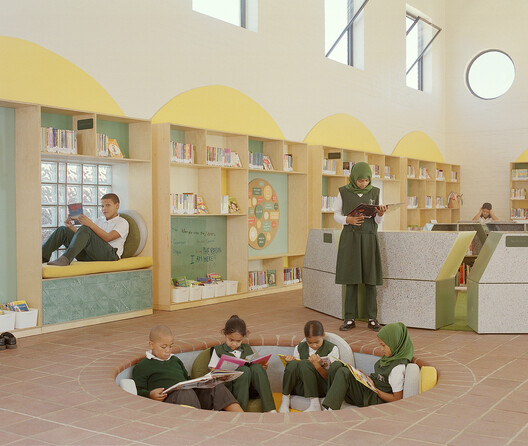
The Rahmah Library is grounded both physically and symbolically through its hyper-contextual details. Placed in an area violently reshaped by Apartheid-era forced removals, the project utilizes clay and rubble from the surrounding neighborhood to compose decorative tiles and door pushplates. Furthermore, gentle changes in level create distinct library zones that embrace different 'postures of reading' throughout the facility, from sitting to lounging, alone or in groups.
Studio-Workshop for Photographers / Roman Bauer Arquitectos
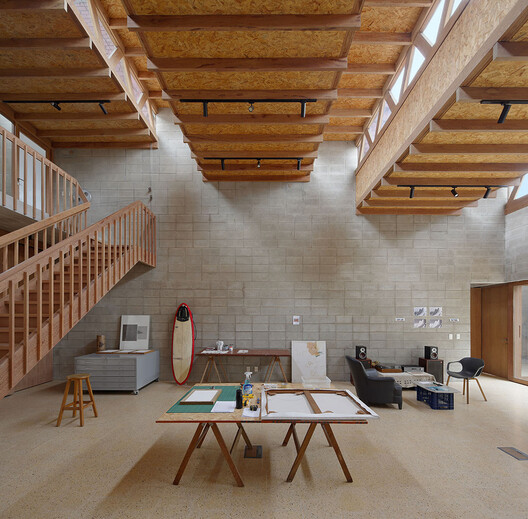
It is possible to draw parallels between the design for this workshop-studio for a photographer and the very etymological origin of the word photography: literally, "drawing with light." Through a gradual movement in the roof's height, openings for light and ventilation are created. These openings evoke the skylights, lanterns, and ceiling lights found in the heritage houses of Barranco, where the project is located.
Project Pick by Hana Abdel Latif
An Office Free in the Gaps of an Urban Village / LLC Studio
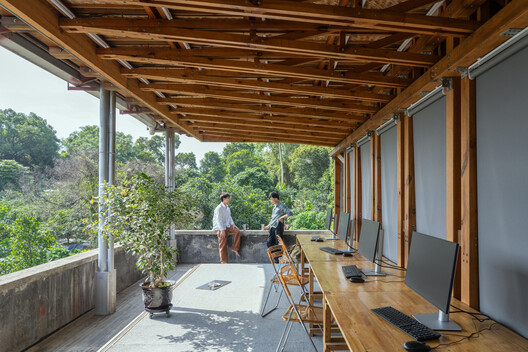
This office space is peculiarly set at the edge of an urban village. Given the growth of the area in the past years and the expansion of clans within the settlements, along with the influx of students and migrant workers, the village saw the diversification of activities, creating gaps and opportunities for design/programmatic experimentation. Thus, the creation of this workspace, with a view to year-long greenery and the beautiful sound of birds. All four walls can be opened, which allows employees to actively embrace the surroundings and heightens their sense of the passage of time as nature sounds and light shift through the day
Yongsan Francoreen HQ / JYA-RCHITECTS
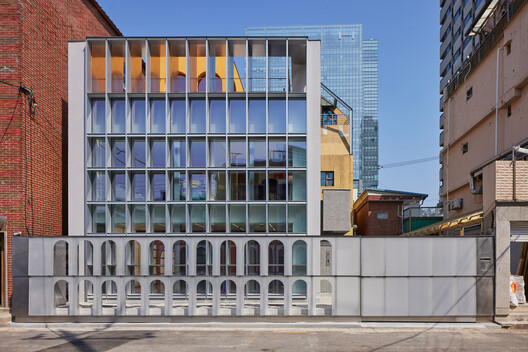
The project is a renovation of an old residence into a shop, workshop, and office for Hermes. The designers started by questioning what makes something a luxury item and gives it an allure to users. The answer was the accumulated design history and narrative behind it, no different than how architects research and adopt classical or modern architectural values in today's contemporary works. Therefore, Renaissance-era design values, which were linked to ancient Greek and Roman buildings, were adopted, mainly in terms of harmonious geometry and proportions. These were combined with a reinterpretation of modernist transparency and materials aesthetics, plus touches of the iconic Hermes orange.
Cultura Artística / Pedro e Paulo Bruna Arquitetos Associados + MLD RAI + Acústica & Sônica
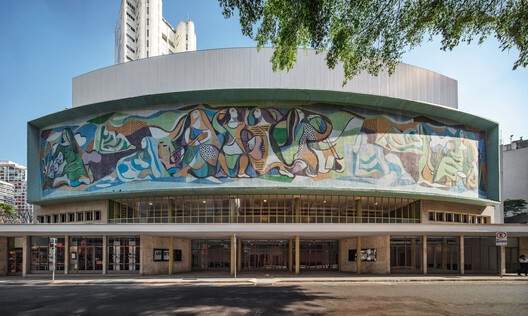
The Teatro Cultura Artìstica has a long history. Originally inaugurated in 1950, it's one of the most relevant modern cultural complexes in Latin America, with the iconic exterior wall featuring a large mural by Emiliano Di Cavalcanti. It's due to its architectural and cultural significance that it was restored and rebuilt after being almost destroyed by a fire in 2008. Only the foyers and the magnificent mural remained intact, whereas the communal areas became more open to the public during the day, housing new cultural facilities for the community, aiming to keep the block vibrant, even during non-performance hours.
Project Pick by Valentina Díaz
She Block Breastfeeding Centers for Mothers on the Move / Aangan Collaborative LLP
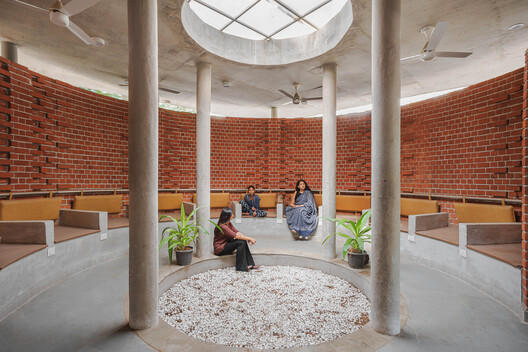
In "SHE Block – Breastfeeding Centres for Mothers on the Move," Aangan Collaborative elevates a vital yet often overlooked ritual. Instead of isolating women in dark, box-like spaces, the design embraces light and openness. Here, architecture itself mediates as the dignifying element—transforming institutional stiffness into a luminous civil sanctuary, a temple where breastfeeding becomes not a hidden act, but a shared experience of care, connection, and respect. Distributed across the city as four independent blocks, these centres open the act of breastfeeding to the urban realm, allowing women to live and move through the city while simultaneously feeding. What was once a solitary and concealed moment becomes an experience that remains private while still being sustained by a public building—one that enables presence, visibility, and solidarity among women. In doing so, the project quietly places care at the very heart of urbanism.
Li Eaves, a Flower and Plants Shop / Raw Architecture Studio
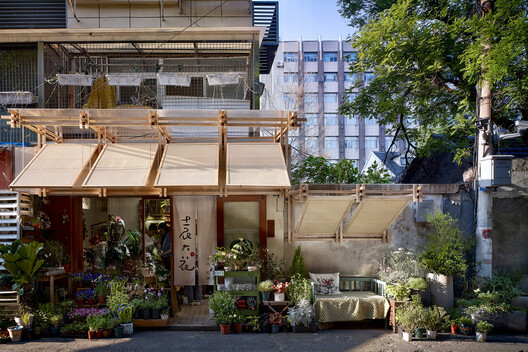
Completed in just three days, this urban micro-renewal draws inspiration from the ancient bamboo-hat pavilions that once offered shelter to travelers on rural Chinese roads. By reinterpreting this traditional form, the structure revitalizes the storefront of a plant shop, transforming the façade into a living threshold between interior and street. The new design provides pedestrians — and the plants themselves — with protection from sun and rain, offering a simple gesture of care and shelter. A modest renovation becomes, in effect, a subtle act of urban activism: a humble intervention that provides shade and refuge—an architectural gesture of quiet generosity that serves both the plants inside and the pedestrians outside, contributing an urban benefit to the street.
Project Pick by Miwa Negoro
Zapallar House Studio / Grass+Batz Arquitectos

Located on Chile's coastal strip, Zapallar House Studio is an intimate space, yet it remains open to the surrounding landscape. The elongated arcade structure creates a narrative sequence of spaces: a semi-underground atelier, a winter garden with a glass ceiling, a functional open kitchen, and a cozy living room wrapped in timber and arched ceilings. Bathed in natural light, the studio offers a sense of both openness and shelter, spacious and accessible, yet quietly protected.
Traditional House of the Future / Lidia Ratoi + John Lin
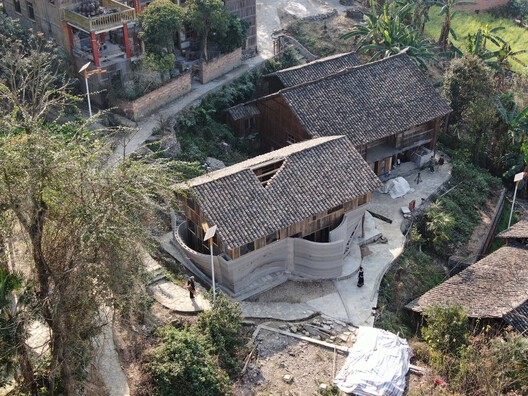
The project explores how self-builders can revitalize vernacular houses amid urbanization in rural China, presenting a participatory approach that utilizes robotic on-site 3D printing with traditional wood craftsmanship. By scanning the original house and customizing printed walls to fit its structure, the Traditional House of the Future shows how technology can democratize architectural knowledge. At the same time, it achieves a unique aesthetic by blending digital and natural materials and forms.
Project Pick by Hadir Al Koshta
African Flow Kindergarten / Urbanitree
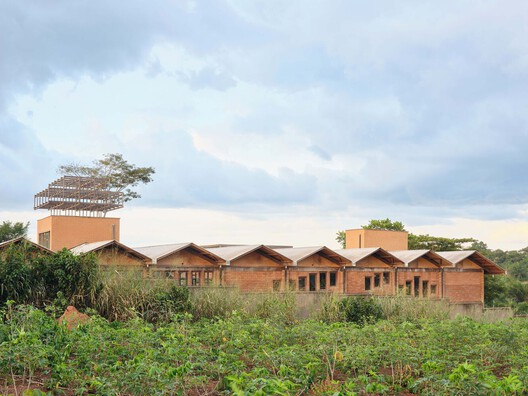
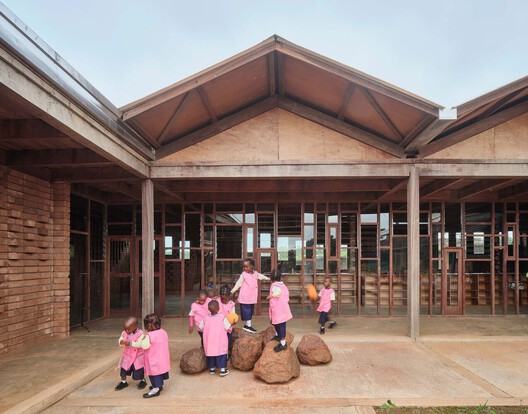
This kindergarten reimagines educational spaces by drawing on ancestral African architectural principles. The project fosters a deep emotional connection between children and their surroundings through the natural habitat. The design encourages fluid transitions between mountain, savanna, village, and forest spaces, allowing children to develop skills in varied contexts. The very playful usage of locally sourced materials like azobé wood and rammed earth bricks creates a lively and warm environment for the children. With a solar-equipped wooden water tower, the project ensures self-sufficiency and is a catalyst for building with the community.
Place Pouchet Social and Cultural Center / MCBAD architecture & urban design
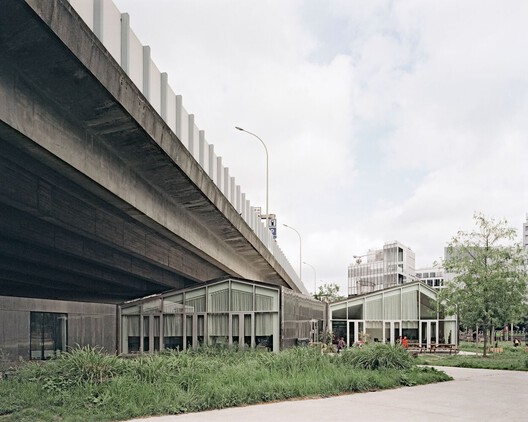
The Social and Cultural Center in Paris addresses a challenging urban environment by creating a human-scaled response to an area dominated by infrastructure. Blending urban planning with cultural architecture, the project aims to foster community connections between neighborhoods. The design concept revolves around 'living with infrastructure and nature', integrating environmental issues and providing a new civic hub. It features glass and steel construction, contributing to a contemporary architectural identity while actively working to open up the neighborhood and create a space for social activity.

This article is part of the ArchDaily Topic: Year in Review, proudly presented by GIRA.
GIRA sets the standard where architectural design meets intelligence. From the defining moments of 2025 to the innovations shaping 2026, we create smart solutions that elevate living and working environments with timeless aesthetics. Join us in shaping the future of architecture and interior design — where vision becomes reality.
Every month we explore a topic in-depth through articles, interviews, news, and architecture projects. We invite you to learn more about our ArchDaily Topics. And, as always, at ArchDaily we welcome the contributions of our readers; if you want to submit an article or project, contact us.


.jpeg)
