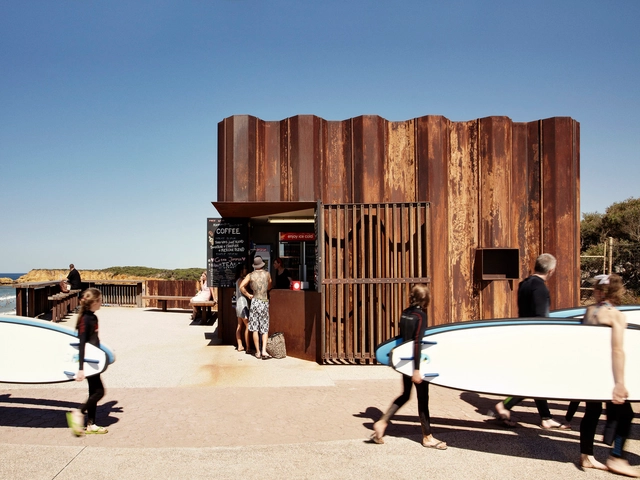
Often as architects we neglect how the buildings we design will develop once we hand them over to the elements. We spend so much time understanding how people will use the building that we may forget how it will be used and battered by the weather. It is an inevitable and uncertain process that raises the question of when is a building actually complete; when the final piece of furniture is moved in, when the final roof tile is placed or when it has spent years out in the open letting nature take its course?
Rather than detracting from the building, natural forces can add to the material’s integrity, softening its stark, characterless initial appearance. This continuation of the building process is an important one to consider in order to create a structure that will only grow in beauty over time. To help you achieve an ever-growing building, we have collated six different materials below that age with grace.
The Arch for Arch, an intertwined wooden archway honoring Nobel Peace Prize Laureate Archbishop Desmond Tutu, has debuted in downtown Cape Town, South Africa on a site near Parliament where Tutu held many of his anti-Apartheid protests.
Designed by Snøhetta and Johannesburg-based Local Studio, in collaboration with Design Indaba and Hatch engineers, the Arch for Arch consists of 14 woven strands of Larch wood, representing the 14 chapters of South Africa’s constitution. Reaching nearly 30 feet tall (9 meters), the structure invite visitors to pass through and be reminded of the location’s prominent role in their country’s history on their way to the Company’s Garden, one of the most popular public spaces in the city since its establishment in 1652.
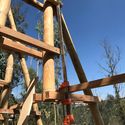
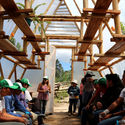
Architecture students of the American University of Beirut used an ephemeral design to approach the lack of awareness of marine biodiversity and responsible use of the coast of Tyre. The proposal consists of a lightweight and deployable structure constituting a programmatic point of meeting and information on the sand.
The project materialized with wood, metal ties and ropes, approach the possible application of light and temporary systems to generate a large social impact and at the same time minimum physical impact on the site.
https://www.archdaily.com/889286/how-a-lightweight-deployable-structure-of-wood-and-metal-can-have-a-large-social-impactAD Editorial Team
Now in its sixth year, CONNECT highlights innovative design programs at universities throughout the country. Students, under the supervision of university faculty, have the opportunity to design environments that incorporate seating and lighting installations, with the intention of offering an intimate area on the show floor where attendees can sit, relax and "connect." Exhibits will be located throughout the show floor, providing SOFA CHICAGO's international audience an opportunity to experience the innovation and creativity of future designers.
CALL FOR YOUNG ARCHITECTS: The ARCASIA Travel Prize in Architecture is the travel and research scholarship given to Young Architects of ARCASIA (40 years and under) who are members of the architect institute of their country
ARCASIA TRAVEL PRIZE 2018: KUMIKI
CALL FOR YOUNG ARCHITECTS: The ARCASIA Travel Prize in Architecture is the travel and research scholarship given to Young Architects of ARCASIA (40 years and under) who are members of the architect institute of their country. The prize aims to promote research in selected fields of study, encourage cross border education as well as foster cultural exchange between nations and institutes. Sponsored by NS Bluescope (Thailand), this year is the third year of the ARCASIA Travel Prize.
HIDA & TOKYO JAPAN: For 2018, the ARCASIA Travel Prize will enable Young Architects to travel and conduct design research in Japan
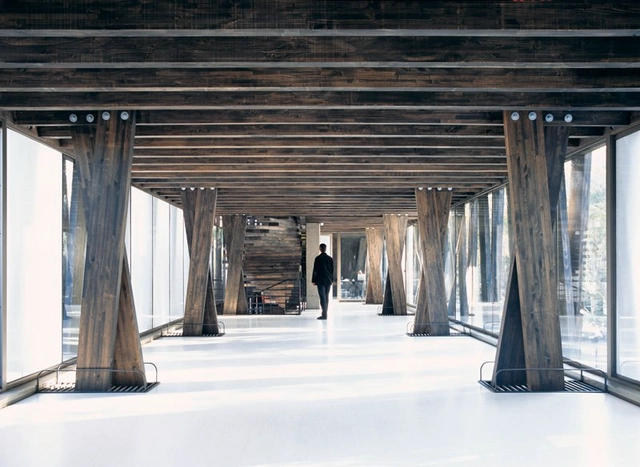
Wood is one of the oldest materials that man has used to build their homes and take refuge from the weather. Wood does not only fulfill a structural function -being highly resistant to earthquakes-, but it also provides interior thermal comfort, as well as adding a warm look and feel to a building, while easily adapting to natural environments.
Below find 21 construction sections for wood structures using the material in incredible ways.
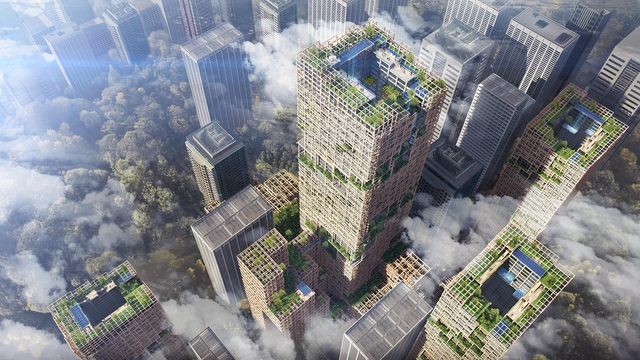
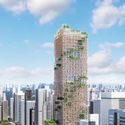
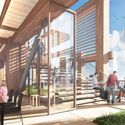
Timber tower construction is the current obsession of architects, with new projects claiming to be the world’s next tallest popping up all over the globe. But this latest proposal from Japanese company Sumitomo Forestry Co. and architects Nikken Sekkei would blow everything else out of the water, as they have announced plans for the world’s first supertall wood structured skyscraper in Tokyo.
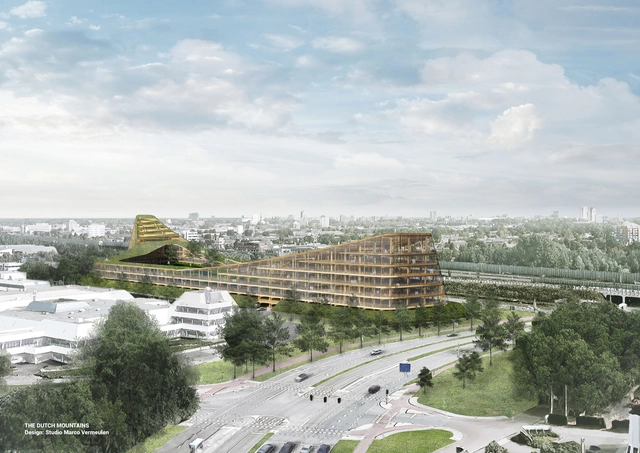
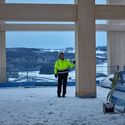
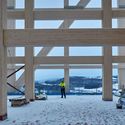
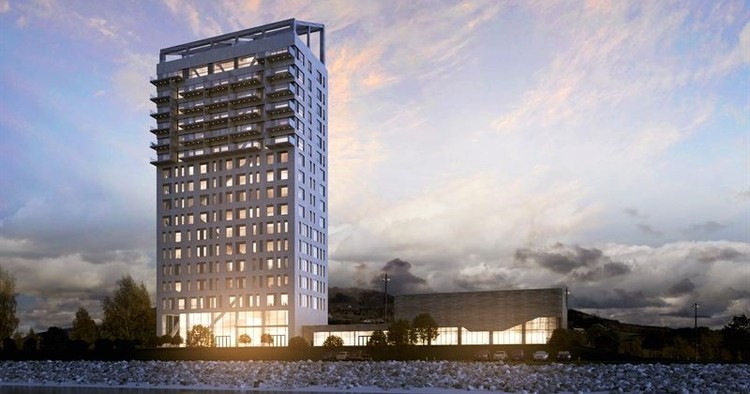
Over the last few months, we have seen a surge in large timber structures being constructed across the globe claiming to be the biggest, the tallest, or the first of their kind—for example, plans for the Dutch Mountains, the world’s largest wooden building, have recently been revealed. Contractors Moelven Limtre are one of the key drivers of this change as the perception of timber as a load-bearing material becomes more common. Their director Rune Abrahamsen is responsible for one of the current claimants of the world record for the tallest timber building, “Treet” in Bergen, at 51 meters tall. However, the contractor’s latest project Mjøstårnet is set to reach an even taller height of 81 meters.
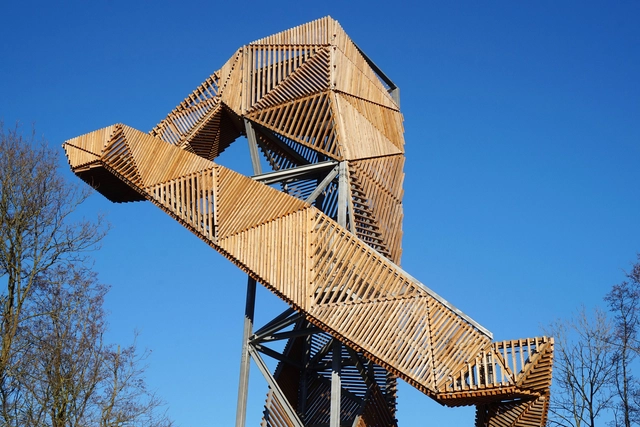
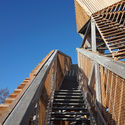
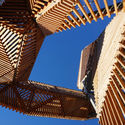
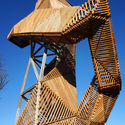
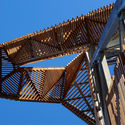
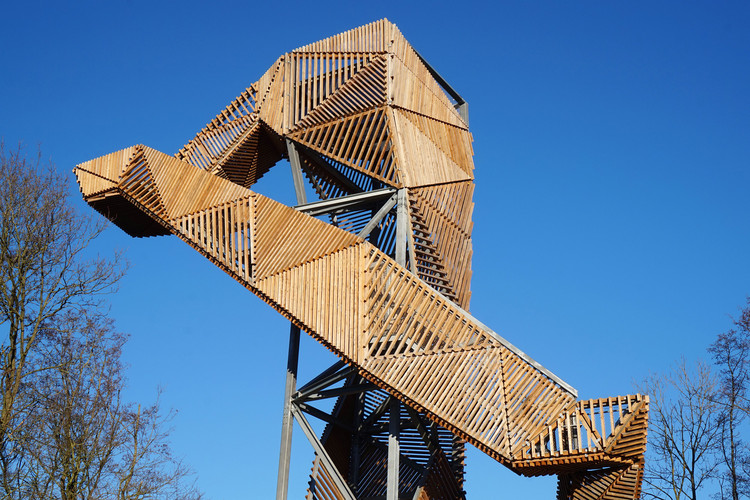
Ateliereen Architecten has proposed a metal and wood configuration for an observation tower in Peize, Netherlands. Their plan is to construct a resistant, permeable and playful structure.
The project is designed so that people climbing up the tower will have unique viewpoints. This tower is also easily assembled from screws and bolts.
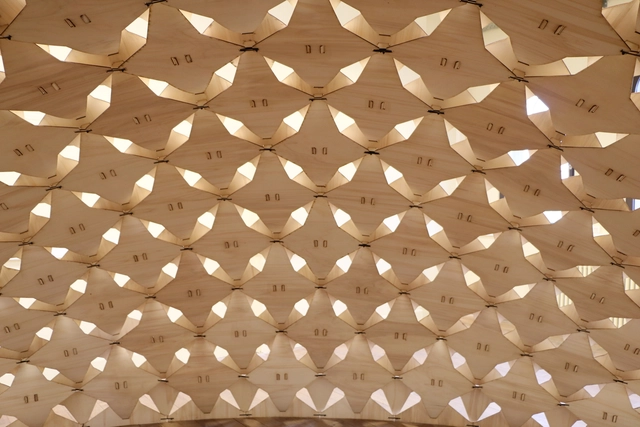
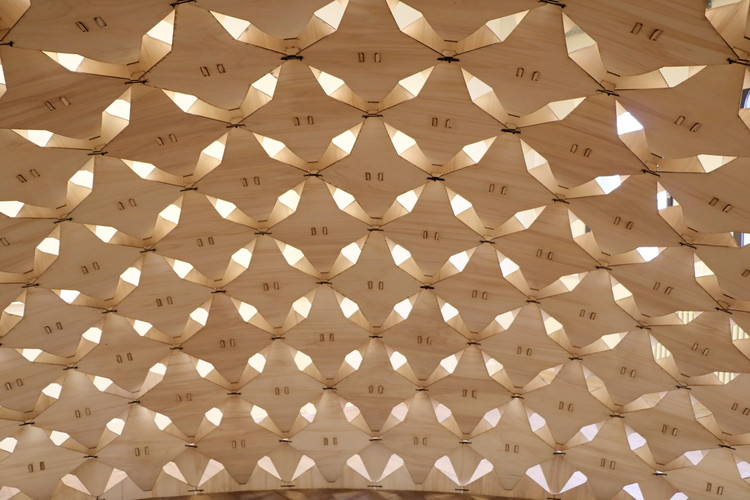
"Exoskeleton" is a pavilion that shows how Computer Aided Manufacturing can create rapid prototypes. This manufacturing process allows for real-scale construction and experimentation with limited resources.
In this project, a system of modules, designed with different dimensions, is put together with simple joints without nails or screws. This allows for different surfaces to be formed and for the pieces to be rotated and assembled at various angles and heights.
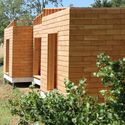
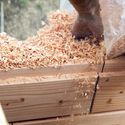
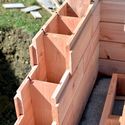
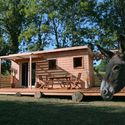
Brikawood is an intuitive and logical construction system of wooden bricks that allows the rapid construction of an entire house without the use of nails, screws or adhesives.
Each unit is totally recyclable and consists of four pieces of wood –two lateral elements and two transversal spacers– which are assembled to the general frames of the building by interlocking, achieving total rigidity when working together. The resulting structure presents thermal, mechanical, acoustic and anti-seismic properties and is designed to be used without cladding or membranes, adding only an anti-return valve specific to Brikawood, in order to increase the performance and tightness of the construction.
Update:The deadlines for this opportunity have been extended
Call For tutors : Extended till January 28
Call for participants : Ends on February 28
MEDS workshop “Meetings of Design Students” is an international workshop that takes part each summer in a different country, focusing on various issues, themes, topics and settings that will help any designer expand their expertise. It is a chance to get in touch with diverse approaches to design, different building techniques, traditions and skills. MEDS workshop is both practical and educational because it focuses not only on creative theoretical designs, but actually compels participants to execute these designs during the 2-week span of the workshop. You can apply to MEDS as a tutor or as a participant.
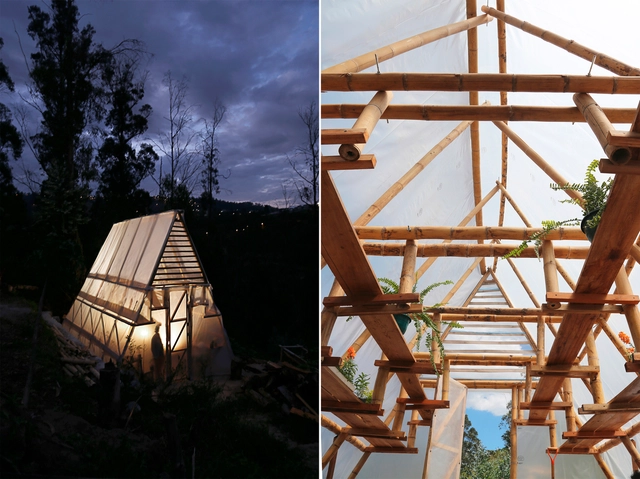
The social design from Natura Futura Arquitectura for a greenhouse in the warm subtropical climate of Nayón, Ecuador, the proposal approaches the use of local material resources in the construction of low-budget productive structures for the development of the collective.
The project, materialized with bamboo, wood and greenhouse plastic, is based on the basic geometrical figure of the triangle, proposing sectors with different levels of illumination for different types of farming.
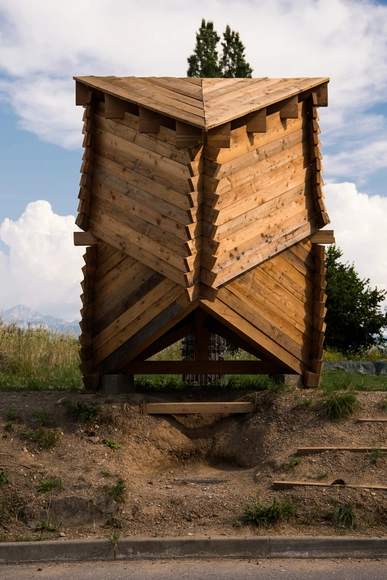
At an altitude of 2735m, architecture students at the École Polytechnique Fédérale de Lausanne (EPFL) in Switzerland have built The Bonatti Bivouac, a temporary refuge for the A Neuve’s glacier. The shelter uses the envelope as a structural object, eradicating the need for metal, screws, or nails. Informed by theoretical architect Semper, their design uses the joints to form a piece of architecture.
Plans have been revealed for the “largest wooden building in the world” to be located just outside Eindhoven in the town of Veldhoven, The Netherlands. Known as the Dutch Mountains, the complex was conceived via a multi-disciplinary partnership made up of tech companies, service providers, architects and developers, and would contain a hi-tech, mixed-use program for residents and visitors.
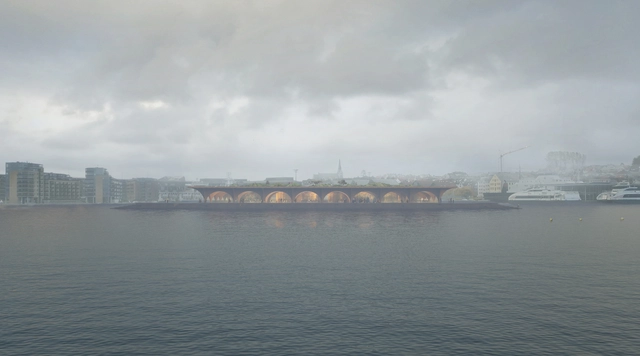
Soon the people of Stavanger, Norway will get to see the LERVIG beer brewing process at the new 11,000 square meter visitor center and brewery designed by Danish architects COBE. An iconic focal point on what was once an industrial pier, the building will offer many new amenities to central Stavanger. The brewery will be encircled by public spaces such as a harbour bath and Norway’s first west-coast ‘street-food’ market, complete with a green roof above. From these periphery spaces, guests will be able to view the brew tanks and fermentation process happening in the heart of the building.


.jpg?1520526832)
.jpg?1520526846 "© David Southwood")
.jpg?1520526821 "© David Southwood")
.jpg?1520526730 "Pictured at far right: Archbishop Desmond Tutu at the 2017 Design Indaba Conference, where the design was first unveiled. Image Courtesy of Design Indaba")
.jpg?1520526894 "The Arch is formed of 14 strands of Siberian Larch wood, a highly durable and resistant material that will weather gracefully over time, taking on the elements of its surroundings. The warmth of wood was intentionally selected to lend the Arch an intimate, tactile quality, that invites people to interact with the structure in a way that differs from the conventional materials people might expect for a memorial structure, such as concrete, steel, or stone. Image © David Southwood")
.jpg?1520526832)







.jpg?1518089499 "© CODE + Johannes Belz")