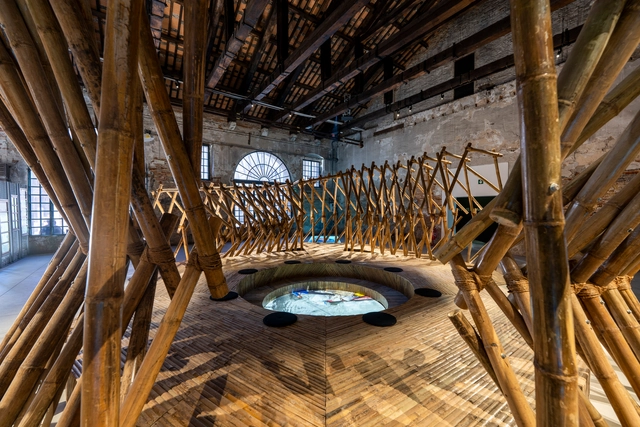
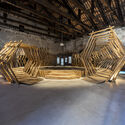
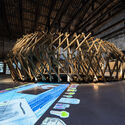
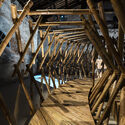
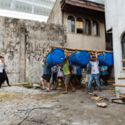
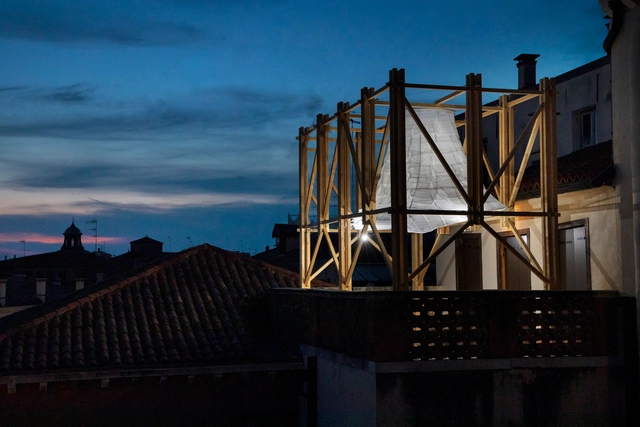
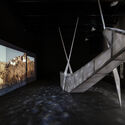
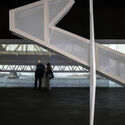
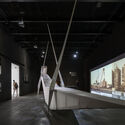
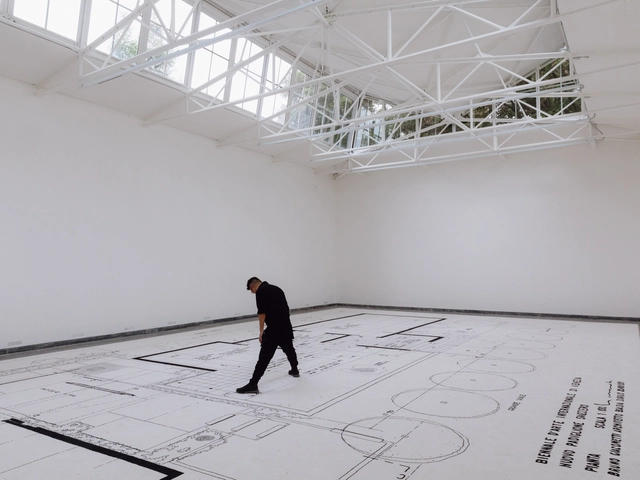
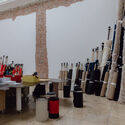
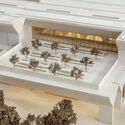
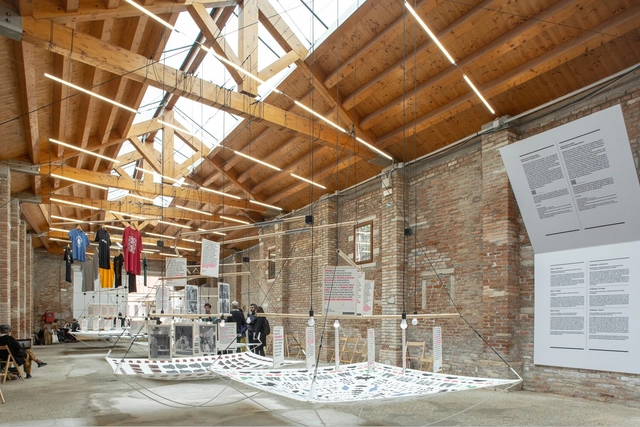
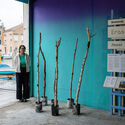
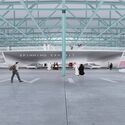
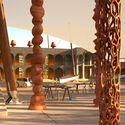
At the 18th International Architecture Exhibition of La Biennale di Venezia, The PhilippinesPavilion presents an exhibition that investigates the ecology and social implication of the Tripa de Gallina estuary in Manila. The body of water, once a mechanism for flood mitigation, has now become congested and polluted, affecting the lives of the nearby communities. The Pavilion aims to present the initiative that set out to gather and investigate the guts of the estuary and to work with the residents to find adequate and sustainable architectural solutions. Titled “Tripa de Gallina: Guts of Estuary,” the exhibition in Venice is co-curated by Architect Choie Funk and Sam Domingo and presents the work of the Architecture Collective, represented by Bien Alvarez, Matthew Gan, Ar. Lyle La Madrid, Noel Narciso and Arnold Rañada.
In parallel to this year's Venice Architecture Biennale, The European Cultural Centre (ECC) presented the sixth edition of its extensive architecture exhibition titled Time Space Existence. The 2023 iteration of the group show draws attention to expressions of sustainability in its numerous forms, ranging from a focus on the environment and urban landscape to the unfolding conversations on innovation, reuse, community, and inclusion. A total of 217 projects by established participants like Snøhetta or MADWORKSHOP and emerging players such as Urban Radicals or ACTA are currently on show through the 26th of November, 2023, at Venice's Palazzo Bembo, Palazzo Mora, and Marinaressa Gardens.
In response to climate change, the installations on show investigate new technologies and construction methods that reduce energy consumption through circular design and develop innovative, organic, and recycled building materials. Participants also address social justice by presenting living solutions envisioned for displaced communities and minorities, while others examine the tensions between the built urban environment and the nature surrounding it to identify opportunities for coexistence.
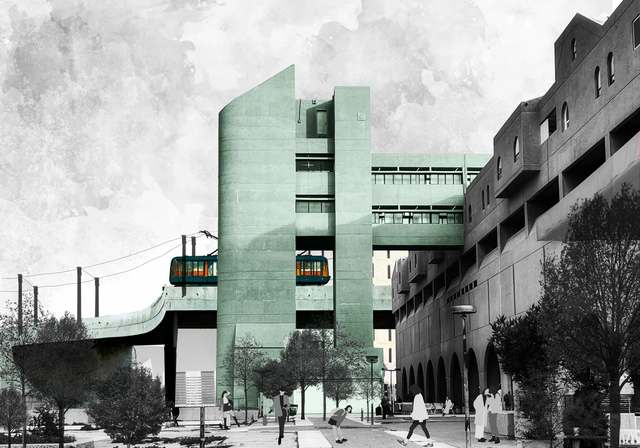
Rabab Raes Kazem, Envisioning the future of Kuwait, 2023. Collage, Print on Mylar, 42cmx29.7cm. Image Courtesy of NCCAL
The Kuwait Pavilion, titled 'Rethinking Rethinking Kuwait,' at the 18th International Architecture Exhibition — La Biennale di Venezia, delves into innovative architectural and urban design methods arising from space and time. The project is an ongoing exploration addressing the consequences of modernist urban planning, which erased much of Kuwait's historic built environment.
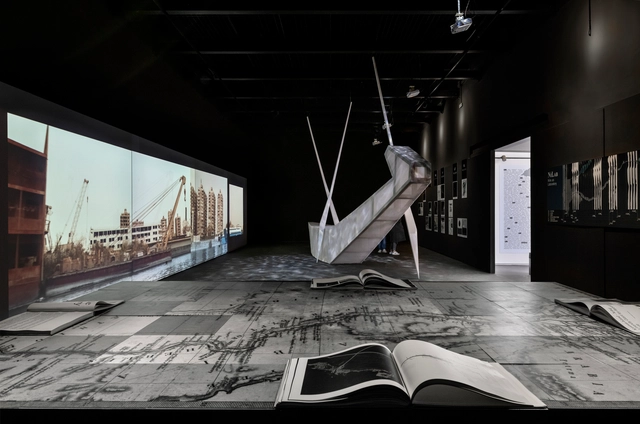
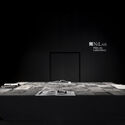
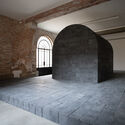
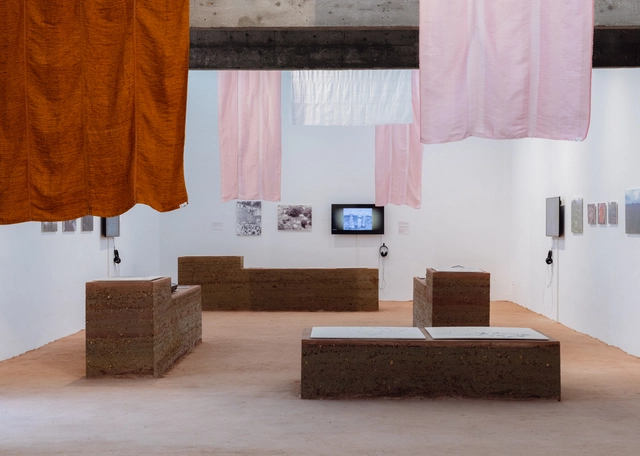
Installation at La Biennale di Venezia. Image Courtesy of NiLab
Along the longest river in the world, the Nile River, various landscapes and natural environments have been negatively impacted by interventions that do not consider the context or respect local cultures. In response, NiLab the Egyptian Pavilion at the 18th International Architecture Exhibition of La Biennale di Venezia, aims to revisit these places and highlight the value of architectural design in promoting more sustainable and culturally aware development along the river. The exhibition titled "NiLab: Nile as Laboratory", recognizes the Nile's exceptional geographical size, historical significance, and impact on natural and human landscapes, making it an ideal backdrop for reflection on contemporary issues.
Taking a broader perspective on architecture, the exhibition shifts its focus towards the discipline rather than just the profession. It’s not “about building buildings per se”, explains the curator to ArchDaily. Instead, it seeks to question our conventional understanding of architecture, and with that, architectural exhibitions. The 2023 Biennale is a laboratory in every sense of the word, a global platform of experimentation, and a space to explore new ideas in the absence of spaces that allow us to do so. "It borrows its structure and format from art exhibitions, but it differs from art in critical ways which often go unnoticed", states Lesley Lokko in her initial statement.
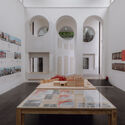
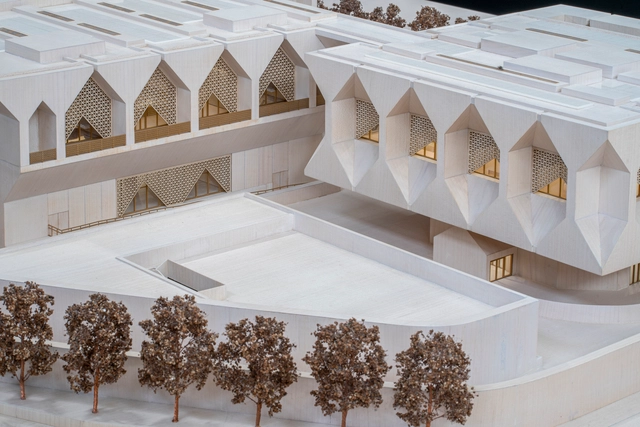
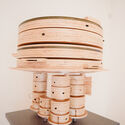
Architectural model of the new KNMA New Delhi. Image Courtesy of Adjaye Associates and KNMA
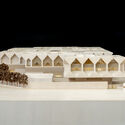
The Kiran Nadar Museum of Art (KNMA) has revealed an architectural model of its new building during the 18th International Architecture Exhibition - La Biennale di Venezia, as part of the Curator’s Special Projects, titled Mnemonic, presented at the Arsenale - Artiglierie in Venice. The building, designed by Ghanian-British architect Sir David Adjaye in collaboration with S. Ghosh & Associates as the local architect of record, is set to become India’s largest cultural center. The project is scheduled to open in Delhi in 2026.
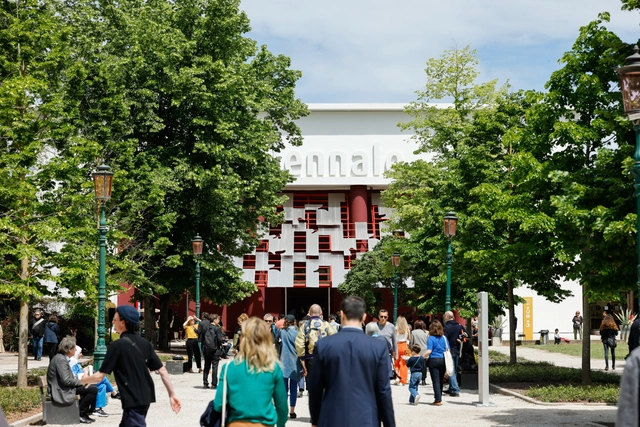
As one of the most important and visited contemporary architecture exhibitions worldwide, the Venice Architecture Biennale extends beyond the grounds of the Giardini and the Arsenale, and at Forte Marghera to engage the whole city in discussing relevant issues, challenges, and opportunities of the architectural profession. To explore more diverse perspectives of the overarching theme, “Africa: The Laboratory of the Future,” 9 collateral events have been officially announced as part of the 18th International Architecture Exhibition of La Biennale di Venezia.
The events, which are admitted by curator Lesley Lokko and promoted by non-profit national and international bodies and institutions, take place in several locations scattered around the city. They offer a wide range of contributions and participations that contribute to the diversity of voices represented at the exhibition in Venice.
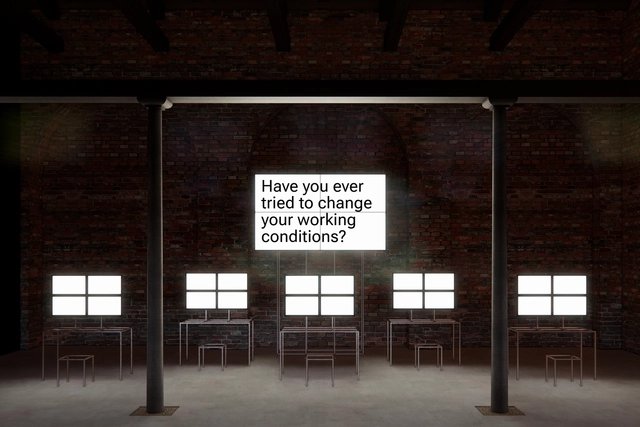
The National Pavilion of the Czech Republic presents the exhibition “The Office for a Non-Precarious Future” at the 18th International Architecture Exhibition of La Biennale di Venezia. The exhibition investigates current pressing issues faced by the architectural profession and especially by young practitioners by asking the initial question: ”How can architects design a better world if they themselves work in a toxic working system?.” The pavilion is commissioned by Helena Huber-Doudová and will present the works of exhibitors Eliška Havla Pomyjová, David Neuhäusl, and Jan Netušil. As the Czech ad Slovak Pavilion at the Giardini della Biennale is under reconstruction, the Czech Republic will exceptionally use the Arsenale in the Artiglierie section as its exhibition space. The Czech and Slovak Pavilion in Giardini will serve only as a digital hub to complement the main presentation.
Courtesy of the South African Pavilion at Biennale Architettura 2023
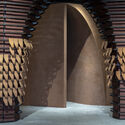
For the 18th International Architecture Exhibition – La Biennale di Venezia, the South African Pavilion explores the architectural representation of social structures through an exhibition titled “The Structure of a People.” Prior to the exhibition, the pavilion curators, Mr. Stephen Steyn, Dr. Emmanuel Nkambule, and Dr. Sechaba Maape, conducted a national architecture competition titled “Political Animals,” aimed at gathering artifacts crafted by lecturers and architecture students to represent the structures of their schools or universities. The resulting models and miniature architectures, produced by ModelArt, will be exhibited within Zone III, Political Animals, as part of the South African Pavilion.
For the 18th International Architecture Exhibition – La Biennale di Venezia, the Pavilion of Ukraine presents an exhibition titled “Before the Future,” focusing on the paradox of “building a future from a collapsing present.” The intervention reimagines two spaces, one in Arsenale and one in Giardini, to evoke protective structures that have become emblematic of feelings of safety while under threat for Ukrainian society. The curatorial team, composed of Iryna Miroshnykova and Oleksii Petrov, of the Kyiv-based architectural office ФОРМА, and Borys Filonenko, independent curator, art critic, and lecturer, set out to work with specialists from numerous fields to further explore the theme “Laboratory of the Future.”
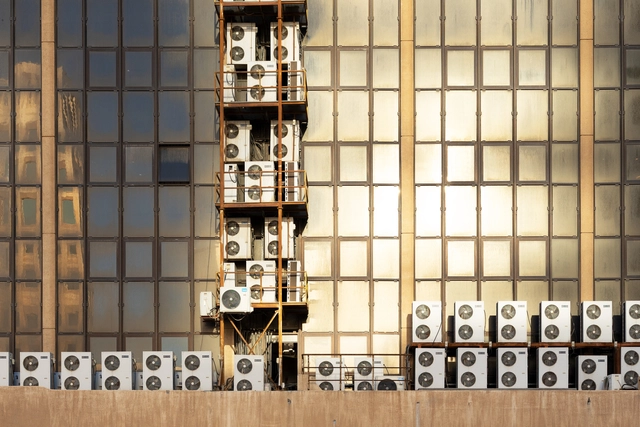
The Kingdom of Bahrain announced its participation at the 18th International Architecture Exhibition of La Biennale di Venezia with a pavilion exhibition titled “Sweating Assets.” Curated by architects Latifa Alkhayat and Maryam Aljomairi, the exhibition highlights the relationship between the extreme heat and humidity that characterizes Bahrain and the inherent need for comfort. The curators aim to show how the necessary cooling infrastructure can be maximized through adaptive means and resource management while reducing its negative impact on the environment.
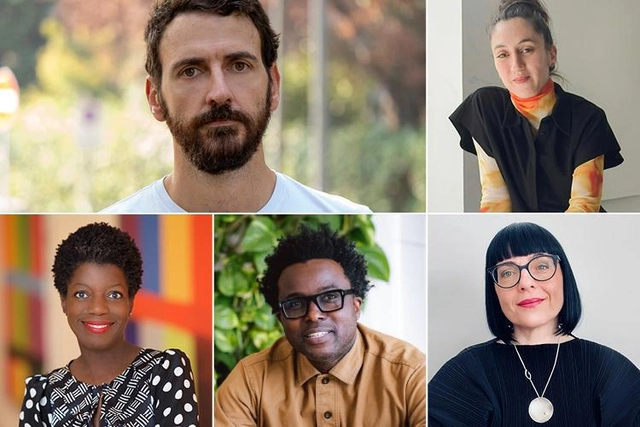
The International Jury will award the "Golden Lion for Best National Participation", the "Golden Lion for the best participant in the International Exhibition The Laboratory of the Future", as well as the "Silver Lion for a promising young participant in the International Exhibition The Laboratory of the Future". The Jury may also award a maximum of one special mention to a National Participation, and a maximum of two special mentions to the participants in the International Exhibition The Laboratory of the Future. The announcements and awards ceremony will take place in Venice on Saturday, May 20th, 2023.
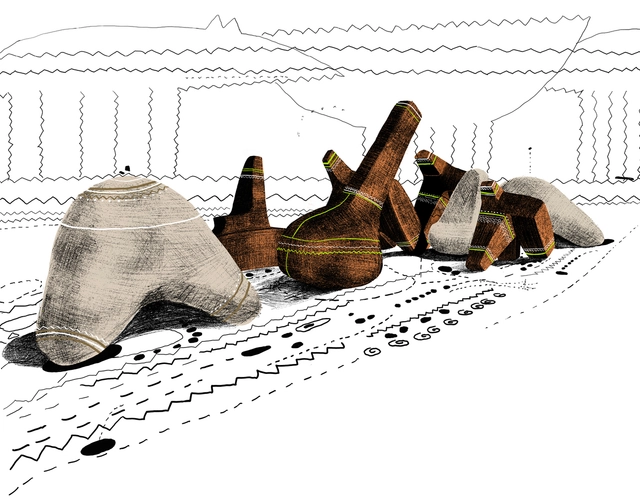
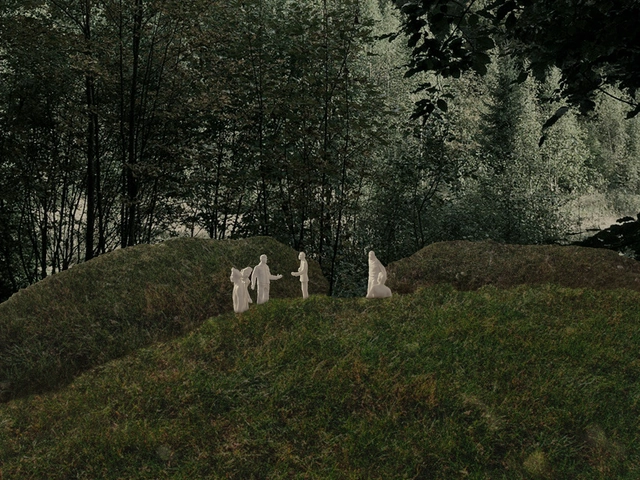
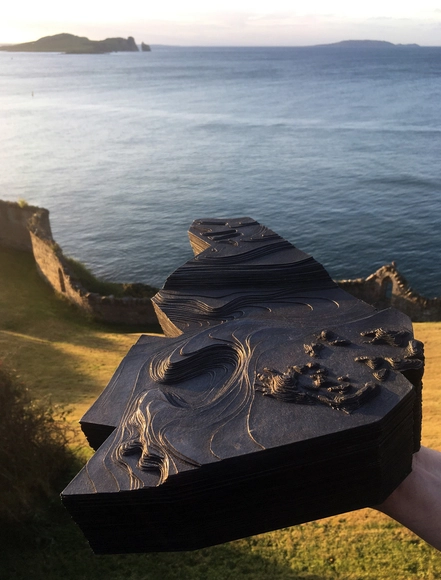
The National Pavilion of Ireland will present an exhibition titled “In Search of Hy-Brasil” at the 18th International Architecture Exhibition of La Biennale di Venezia. The pavilion set out to explore diverse cultures, communities, and experiences of Ireland’s remote islands in the search for new ways of inhabiting the world. A team of five architects has been selected as the curators of the exhibition: Peter Carroll, Peter Cody, Elizabeth Hatz, Mary Laheen, and Joseph Mackey. The pavilion will be open to the public from May 20th to November 26th, 2023; afterward, the installation will tour Ireland in 2024, bringing voices from peripheral locations into mainstream conversations around our global future.
ELEMENTAL, Herzog & de Meuron, Office for Metropolitan Architecture (OMA), Philippe Starck, and UNStudio are just a few of the internationally renowned architectural firms working with Qatar Museums to establish five new cultural facilities in Qatar. The new constructions will be overseen by Qatar Museums, tasked with maintaining and expanding Qatar's cultural assets through managing the nation's expanding network of museums, heritage sites, festivals, and public art installations.