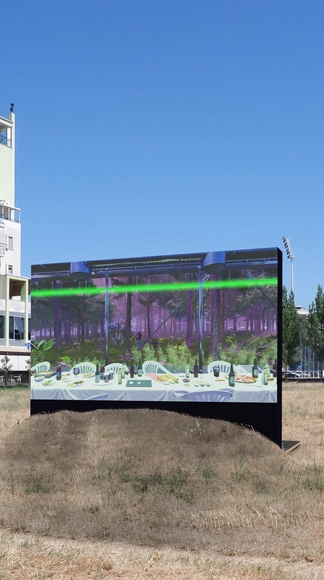
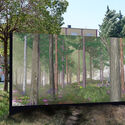
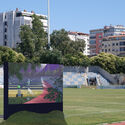
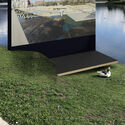
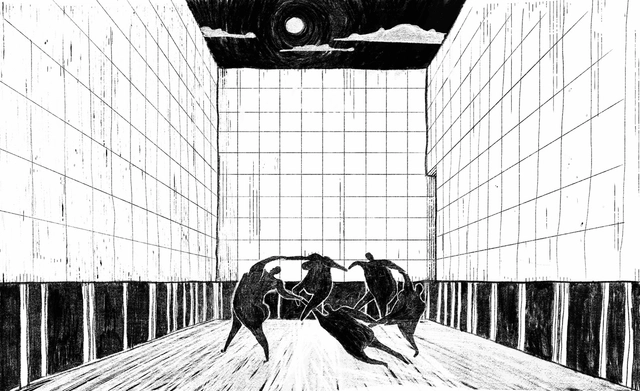
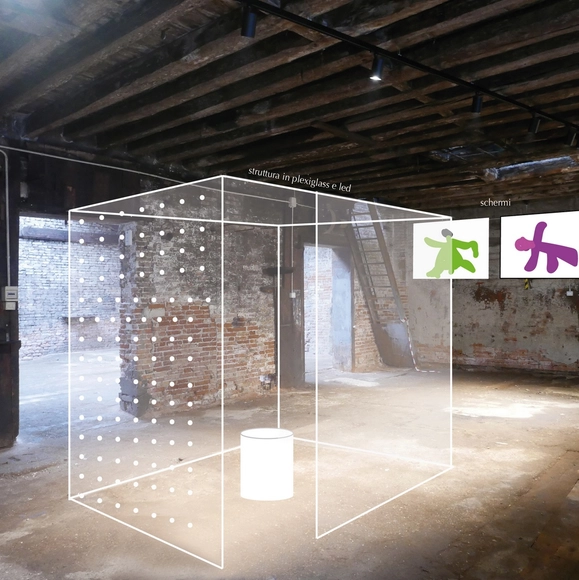
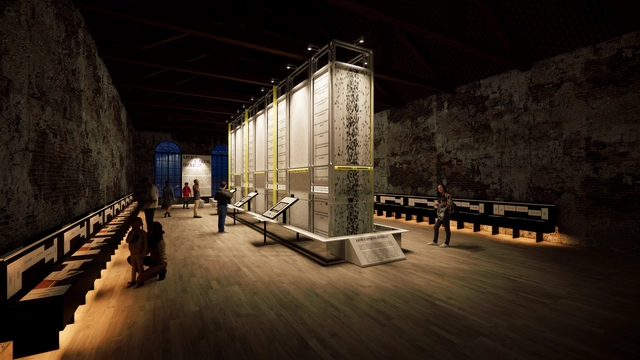
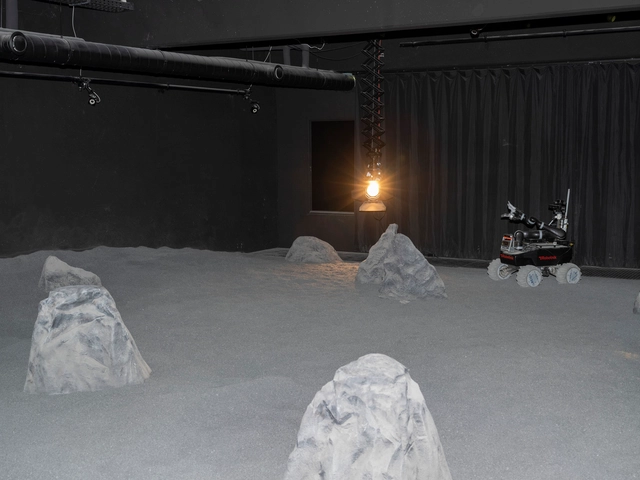
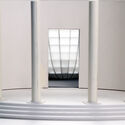
For the 18th International Architecture Exhibition – La Biennale di Venezia, The Albanian Pavilion set out to respond to the theme “The Laboratory of the Future” with the exhibition “Untimely Meditations or: How We Learn to Live in Synthesized Realities.” The project seeks to introduce and understand new typologies of civic spaces by repurposing the rendering engine as a mechanism for exploration. The curatorial team is composed of architects Martin Gjoleka, and Era Merkuri, exhibiting together with architect Ani Marku and 3D digital artist Geraldo Prendushi.
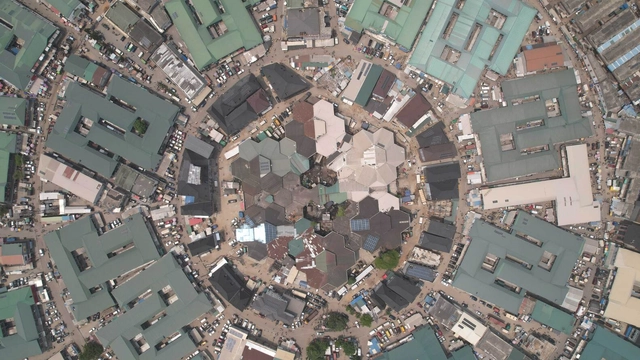
The National Pavilion of Serbia, curated by Iva Njunjić and Tihomir Dičić, has just announced its exhibition at the 2023 Venice Biennale, which explores architecture's futures, presents, and pasts through the lens of an international Trade Fair in Lagos, Nigeria, in 1977. The trade fair was a product of non-aligned cooperation between Yugoslavia and Nigeria.
The Belgian Pavilion has announced its display for this year’s international architecture exhibition - La Biennale di Venezia. Curated by Bento and Venciane Despret, “In Vivo” concentrates on investigating the architect's new relationship with resources. The display challenges our extractivist production system by identifying and designing architectural alternatives using components obtained from live organisms and the imagery that goes along with them.
Every year since its establishment in 1970, Earth Day aims to bring into focus not only the increasingly threatening effects of climate change but also highlight the effective measures and adaptation efforts that can improve the quality of our environment. This year’s event comes after a report from the United Nations’ Intergovernmental Panel on Climate Change (IPCC) in March, which presented another warning on the magnitude of changes produced by human-induced global warming and its impact on people and ecosystems. The same report does offer some hopeful prospects as well, showing that adaptation measures can build resilience, but those urgent systemwide transformations are needed to secure a net-zero future. In response to these findings, the 2023 Earth Day is focused on the theme of “Investing in Our Planet,” as an encouragement for governments, institutions, businesses, and civil society to accelerate the change. Read on to discover several citywide initiatives aligned with these objectives of building resilience and a more sustainable future through legislation, civic involvement, and innovative systems.
rendering for the Pavilion of the Republic of San Marino. Image Courtesy of Archivio Corsini
For this year’s annual architecture exhibition – La Biennale di Venezia, the Pavilion of San Marino will present the Hosting Guest project. Curated by Michael Kaethler and Marco Pierini, this intervention is an authentic co-design workshop focused on hospitality-related issues, part of an international and multi-year research project based on real places and needs. Representing the oldest Republic in the world, Artist Vittorio Corsini will participate in the pavilion with the help of a research team of students, designers, and researchers from San Marino, Venetian, and international universities.
WHEN IS ENOUGH, ENOUGH, The Performance of Measurement. Image Courtesy of Singapore Pavilion
For this year’s 18th International Architecture Exhibition – La Biennale di Venezia, the Singapore Pavilion activates discussion on new methods of measuring and evaluating the intangible and asks explicitly: how much is enough? The exhibition explores a community’s interaction with its surroundings, suggesting that they are not currently measured within the same measurable, quantifiable and gradable standards that buildings and the built environment are designed and built to. Moreover, the pavilion suggests that connecting these two pillars of city architecture, it is essential to rethink innovation in design. The exhibition asks how architects can quantify the immeasurable values of architecture: agency, attachment, attraction, connection, freedom, and inclusion.
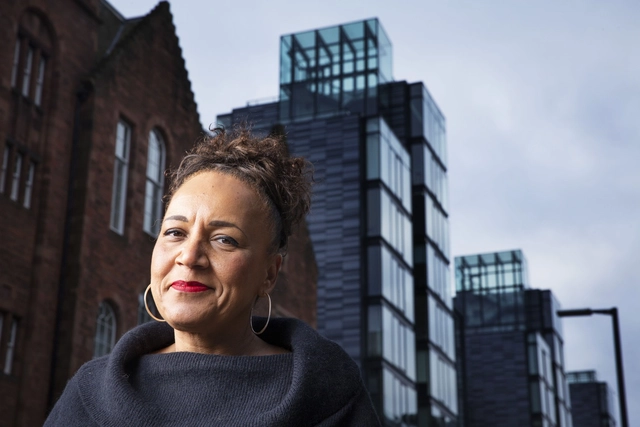
Founder and Director of the African Futures Institute (AFI) based in Accra, Ghana, Lesley Lokko, is a Ghanaian-Scottish architect, educator, and novelist. With a career that spans Johannesburg, London, Accra, and Edinburgh, she has held several teaching positions and is widely recognized in her field. Professor Lokko was appointed as the curator of the 18th International Architecture Exhibition, La Biennale di Venezia in December 2021, after serving as a jury member for the Golden Lions Awards for the previous edition of the Venice Biennale. In her first interview with ArchDaily, after she was appointed curator of the 2023 Architecture Biennale, Lesley Lokko shares insights about the preparations, the theme, and this 18th edition.
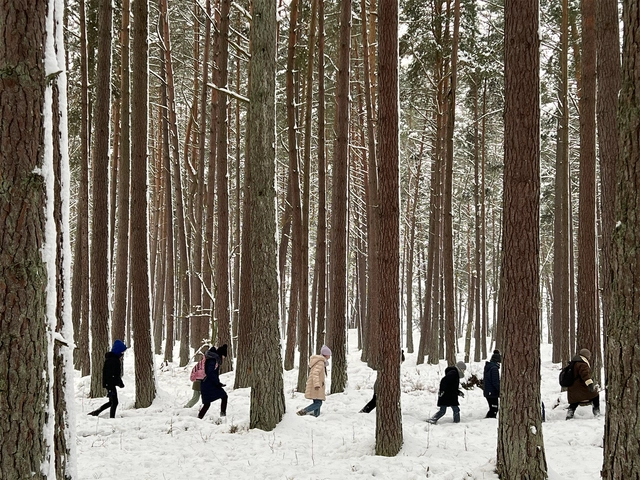
For the 18th International Architecture Exhibition – La Biennale di Venezia, the Lithuanian Pavilion will present an exhibition titled “Children’s Forest Pavilion”, curated by Jurga Daubaraitė, Egija Inzule, and Jonas Žukauskas. The intervention aims to become a playscape, acknowledging the unique perspectives through which children observe and interact with their environment. The project strives to explain the ecosystem of the forest, bringing together works and findings developed in parallel to outdoor activities held with children in the woodlands of Lithuania and Finland. Environmental educators, activists, architects and foresters will discuss the idea of forests as negotiated spaces where all actors play an important role. The Pavilion will be open from May 20th until November 26th, 2023.
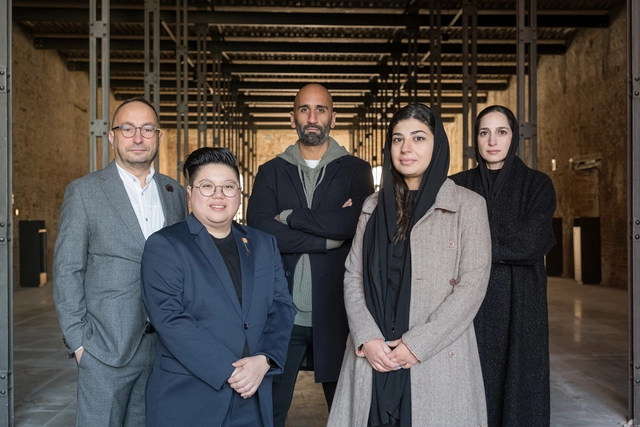
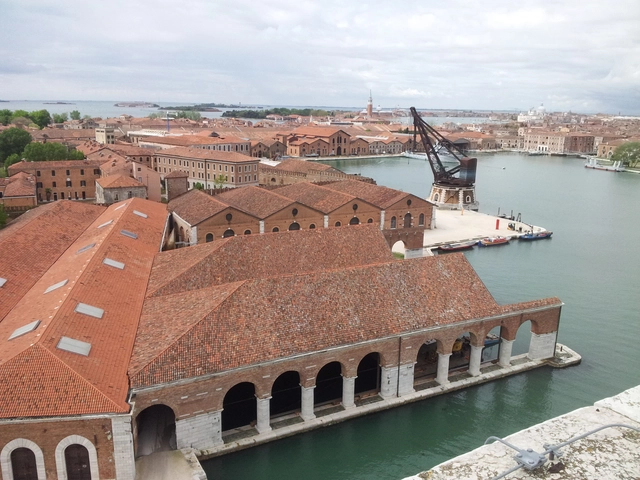
Saudi Arabia announced its participation at the 18th International Architecture Exhibition – La Biennale di Venezia, with an exhibition titled IRTH إرث,legacy in Arabic, exploring qualities of materials in relation to the Saudi landscape. The third round of participation the Saudi Pavilion will have at the International Architecture Exhibition, this year's edition is represented by architect AlBara Saimaldahar and curated by the duo Basma and Noura Bouzo. The Pavilion will be on display at the Arsenale – Sale d’Armi 2023.
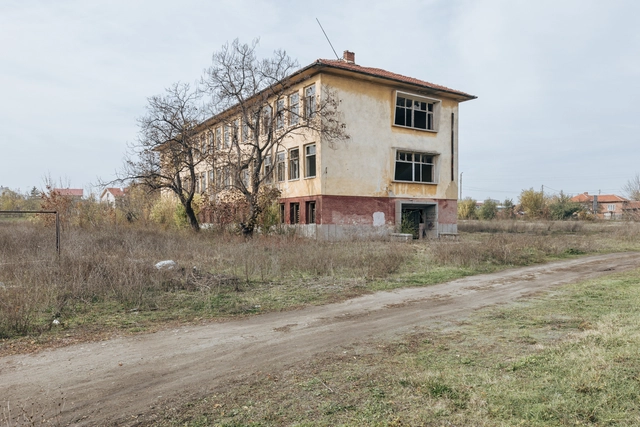
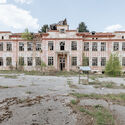
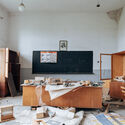
For the 18th International Architecture Exhibition of La Biennale di Venezia, the Bulgarian Pavilion will present the exhibition titled “Education is the movement from darkness to light.” Curators Boris Tikvarski, Bojidara Valkova, and Mariya Gyaurova, joined by Belgian photographer Alexander Dumarey, have chosen to focus the exhibition on the subject of depopulation, urban decline, and rural flight, expressed through the image of abandoned schools present in the country. The project was selected following a national competition organized by The Ministry of Culture, The Chamber of Architects in Bulgaria, and the Union of Architects.
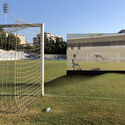
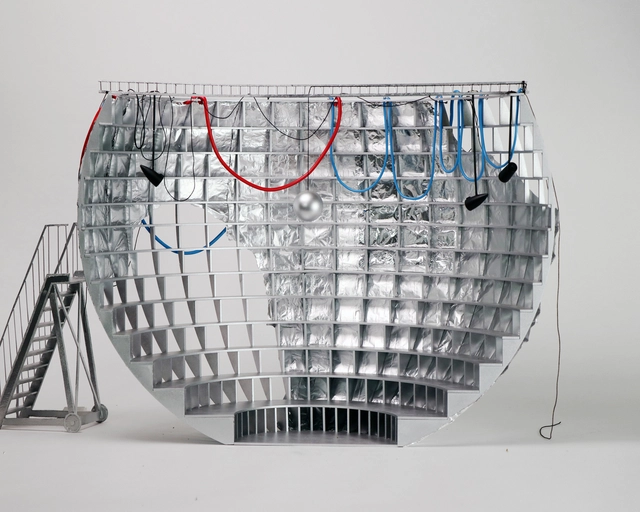
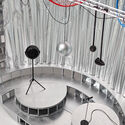
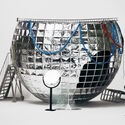
The project “Ball Theater” has been chosen to represent the French Pavilion at the 18th International Architecture Exhibition of La Biennale di Venezia. As a response to the world of thought and experiment proposed by Lesley Lokko’s theme of “The Laboratory of the Future”, the French team aims to create a place of celebration and collective experiment by transforming the pavilion into a performance space. The curatorial team is composed of Muoto, an architectural practice founded in Paris by Gilles Delalex and Yves Moreau, in partnership with Georgi Stanishev and Clémence La Sagna for the scenography, associate curator Jos Auzende, and Anna Tardivel for the programming. The pavilion will be open from May 20th until November 26, 2023.
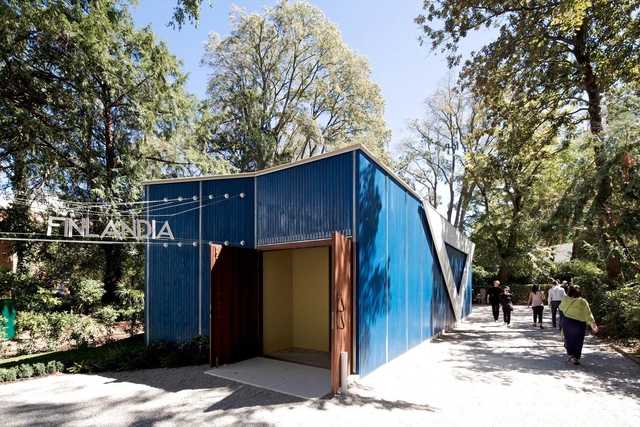
At the 2023 Biennale Architettura, Finland's Pavilion will present its exhibition Huussi, Imagining the Future History of Sanitation, which deals with the architecture of water and nutrient circulation, questioning the water toilet and Its implications for the future. "Huussi" is the Finnish word for an outhouse, a small compost toilet commonly used by Finns in rural settings and holiday homes. The exhibition, curated by Arja Renell and The Dry Collective, a group of Finnish architects, presents this typology as a starting point to finding alternative solutions to managing wastewater, inspiring professionals to start envisioning new sanitation solutions. At the core of the presentation, the exhibition questions the consequences of waste in the context of the current climate crisis the world is going through.
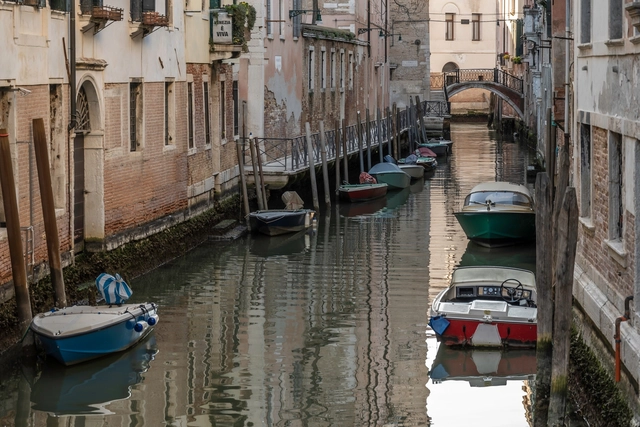
Venice, a city usually concerned with devastating floods, now faces the opposite problem: canals are starting to run dry following weeks of dry winter weather and unusually low tides. A combination of factors is believed to have caused this rare sight: lack of rain, high atmospheric pressure, and the lunar cycle producing low water levels during ebb tide. Since the canals serve as streets in the city, the phenomenon has implications beyond the disappointment of the tourists. Some of Venice’s smaller calas have dried up almost entirely, making it impossible for gondolas, water taxis, and ambulances to reach areas of the city.
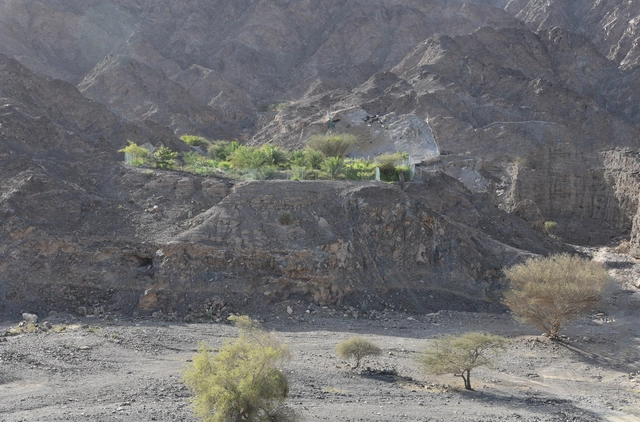
Courtesy of National Pavilion UAE - La Biennale di Venezia
Aridly Abundant is the title of the body of research being exhibited at the UAE National Pavilion at the 18th annual International Architecture Exhibition - La Biennale di Venezia. The Pavilion was curated by Faysal Tabbarah, Associate Dean and Professor of Architecture at the College of Architecture, Art, and Design at the American University of Sharjah. The exhibition explores the possibility of architectural possibilities in, with, and for arid landscapes.
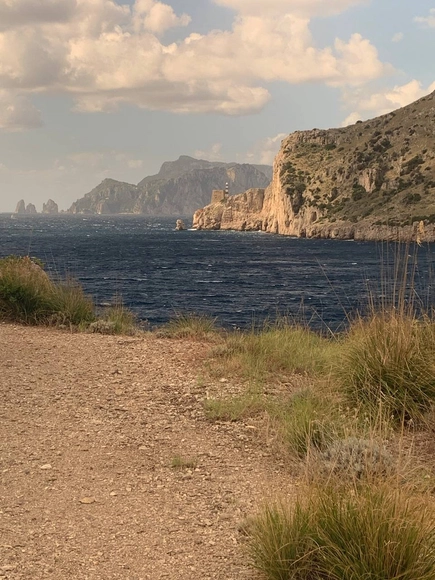
Baia di Ieranto. Image Courtesy of Fosbury Architecture
The project for the Italian Pavilion at the 18th International Architecture Exhibition – La Biennale di Venezia will be curated by Fosbury Architecture, a collective composed of Giacomo Ardesio, Alessandro Bonizzoni, Nicola Campri, Veronica Caprino, and Claudia Mainardi. Fosbury Architecture’s vision for the exhibition is based on a research practice that sees design as the result of collective and collaborative work. From January to April, leading up to the opening of the Biennale, nine site-specific interventions titled “Spaziale presenta” are set out to activate different locations across Italy.