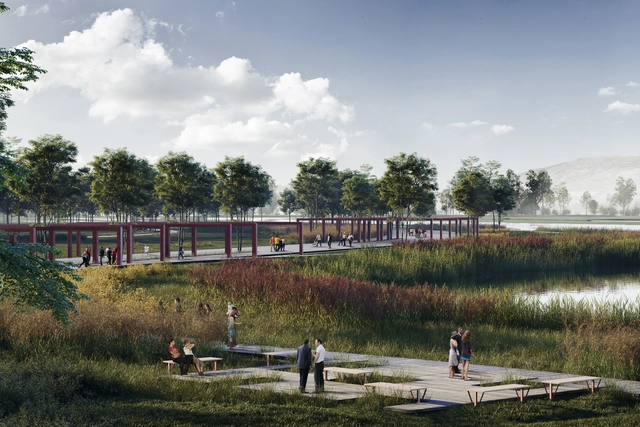
A combination of geographical features has seen the city of Sivas remain one of the greatest focal points of settlement and transit in the Greater Anatolia Region of Turkey. The region is divided in two by the Kızılırmak River, the longest river entirely within Turkey, and it has long been regarded as a barrier to unification. Due to access and safety concerns, Kızılırmak River has been separated from Sivas, perceived as something outside of the city perimeter. Now, advancements in flood mitigation have opened up the possibilities for the river to be re-integrated into the city fabric.
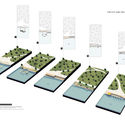
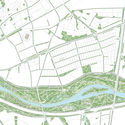
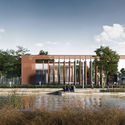
To investigate the possible role of the river in holistically reuniting the two halves of the area, the Sivas Municipality opened a competition to design a six million square meters of land adjacent to the waterfront. A scheme from a team comprised of ONZ Architects and Mdesign took an approach which equally considered the site in terms of its biological and cultural possibilities. Their design establishes the Kızılırmak River Corridor as an "ecological and recreational spine," managing the floodplain and integrating vital public program throughout.
The Schindler Global Award is back – and it’s moving from Shenzhen to São Paulo! One of the most prominent student urban design competitions is open for entries again now. The Schindler Global Award 2017 is focused on the impact and implications of current and future mobility systems in one of the most globally significant cities in South America: São Paulo.
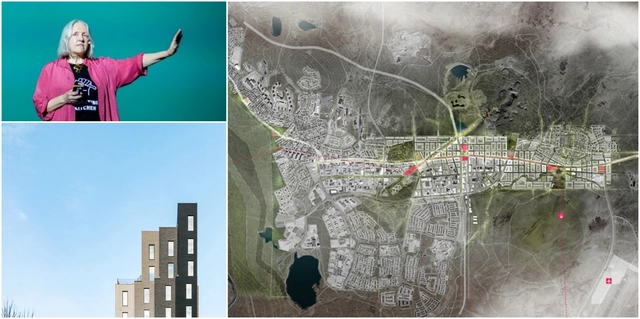
At this year's reSITE conference in Prague, speakers attended from around the globe to present differing perspectives on the challenges of migration, with topics of interest ranging from economics, to city planning to architecture. But as revealed by the following presentations, migration is a topic that requires interrogation on a number of different scales and in a number of different contexts: from the global economic focus offered by Saskia Sassen in her opening keynote lecture, to the focused challenges of designing micro-apartments shown by Mimi Hoang of nArchitects; and even to the unusual case presented by Krister Lindstedt of White Arkitekter, when a migration is undertaken not by individual people but by a whole town at once.
Cover image courtesy of Skidmore, Owings & Merrill LLP
The City of Detroit, in partnership with the Knight Foundation, seeks ambitious, multidisciplinary planning and design teams to reimagine Detroit’s commercial corridors and explore reforms to Detroit’s land use regulations.
Inspired by the principles of Lean Urbanism, the project involves modest research, design, and analysis services, spread over a six month period.
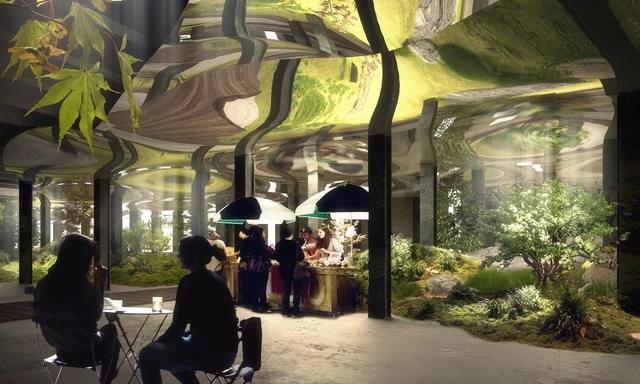
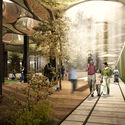
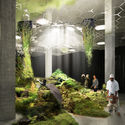
Deputy Mayor for Housing and Economic Development Alicia Glen and NYCEDC President Maria Torres-Springer have announced New York City’s first official approval of the Lowline project in Manhattan’s Lower East Side. As the first major step in making the project a reality, the approval will help to create the world’s first underground park, a community-oriented public and cultural space that will become both a local resource and an attraction for worldwide visitors.
Although the Metropolitan Transit Authority (MTA) did express interest in the space last fall, the Lowline team was awarded conditional use due its high community potential.
The latest stage of the Governors Island Park project, “The Hills,” is set to officially open to the public on this Tuesday July 19th – nearly a year ahead of schedule. Designed by internationally acclaimed urban design and landscape firm West 8, the park will feature ten acres of sloping landscapes that will provide residents and visitors with slides, art and unparalleled views of the New York Harbor.
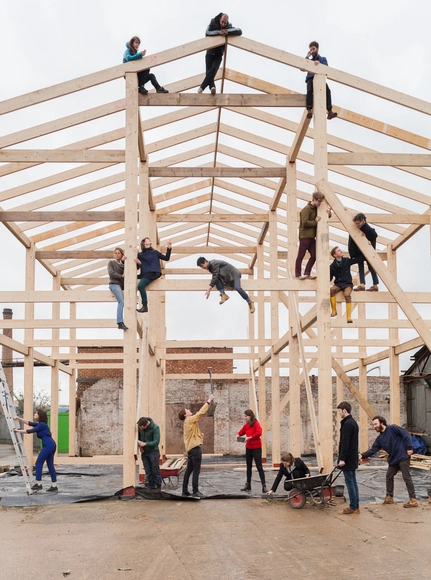
Assemble. Award winning housing artist-architects - Keynote speakers
Keynote Speakers:
Art and Architecture Collective (Turner Prize Winners), Assemble | David Waterhouse, Commission of Architecture and the Built Environment | Andy von Bradsky, Royal Institute of British | Steve Cole, National Housing Federation | Mayor of Liverpool, Liverpool City | Charlotte Harrison, Northern Housing Consortium
The role of government in ensuring social and affordable housing is complex. With budget cuts and shifts in political priorities changing the terrain constantly what the governments of our cities need are new long term ideas
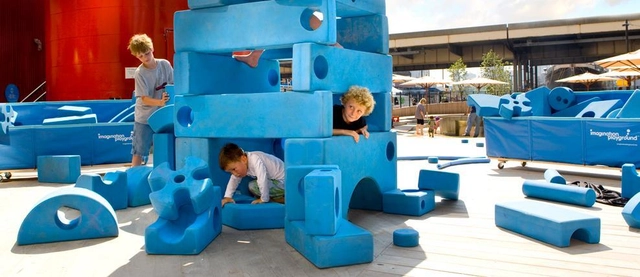
Image: Imagination Playground, New York, the Rockwell Group. Photo credit: Chris Amaral.
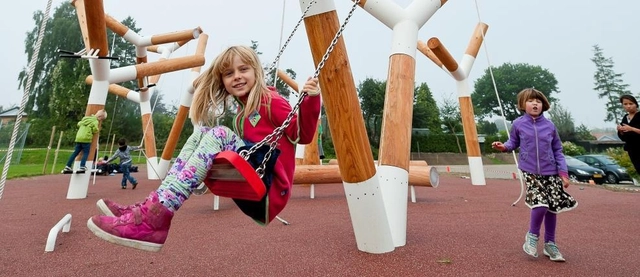
Kick start your playful summer with a panel discussion about the impact of design on childhood development! Inspired by BSA Space’s new exhibition, Extraordinary Playscapes, an array of unique panelists will consider ways to prevent barriers of play in urban areas. The conversation will delve into how play is related to design, psychology, parenting, architecture, and development while highlighting the role of designers in a more playful future. After the talk, participants will enjoy light refreshments and exclusive access to the exhibition.
Join Michael Laris and Missy Benson ASLA of Playworld as they explore the design processes of two very different urban play solutions: PlayCubes (originally designed by Richard Dattner FAIA in 1969) and PlayForm7, both featured as part of Extraordinary Playscapes, currently on view at BSA Space.
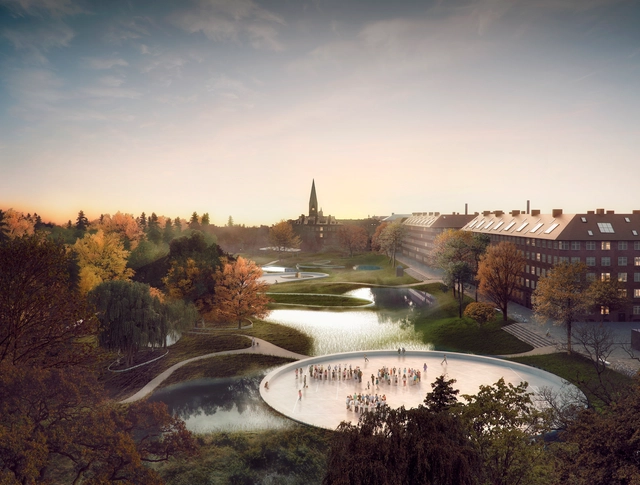
Planning and landscape firm SLA Architects and engineering office Ramboll have won an international competition to redesign Hans Tavsens Park and its surrounding area in the central Copenhagen borough of Nørrebro. The competition tasked architects with envisioning a park and streetscape that would benefit the hydrological, biological and social ecosystems of the neighborhood. The winning proposal, titled The Soul of Nørrebro, tackles the challenge by creating a system of drainage areas and an adaptable park designed to redirect runoff and contain and purify water during flood conditions.
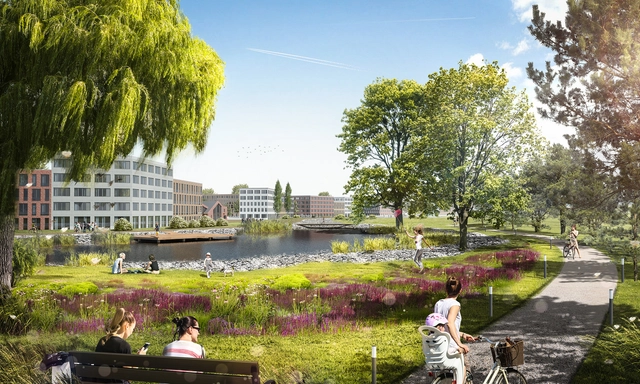
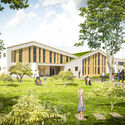
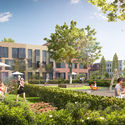
Dutch firm LEVS Architecten won an international competition to design a new residential zone near the Russian city of Kazan. The winning design encompasses the 180-hectare masterplan for the area as well as its architectural content. Along with VLUGP landscape, LEVS used a "Dutch Approach," embracing pedestrian networks, green space and "spirited architecture." The extent of the project will form its own neighborhood, titled "Machaon Valley," and is intended to be fully realized by 2025.
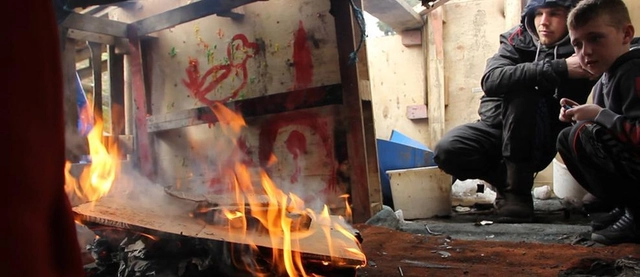
Featured in Extraordinary Playscapes, the summer exhibition at BSA Space, The Plas Madoc Adventure Playground in Northern Wales is one of the world’s newest adventure playgrounds. Fondly known as "The Land," it employs some of the play movement’s oldest "junk" philosophies.This new documentary explores a place where old tires and dumpster detritus take the place of swing sets and slides, and is “a must-see for anyone interested in play work, or play, period.” (Amy Fusselman, "Savage Park”)
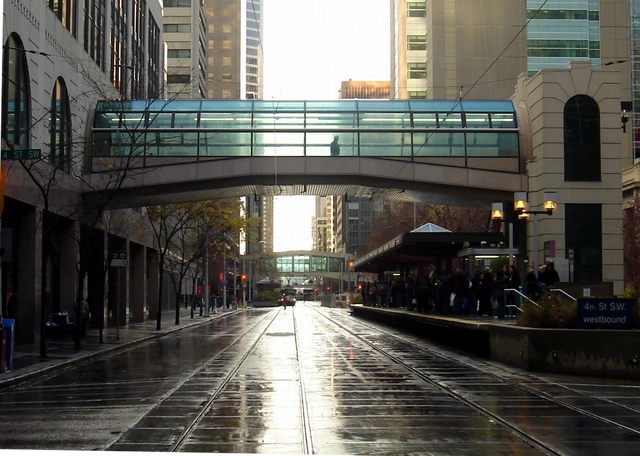
When hearing the word “skybridge” or “elevated walkway,” what often comes to mind is a narrow, glassed-in pathway perhaps crossing between two office buildings or hospital concourses; a narrow artery whose only purpose seems to be keeping people dry and away from cars as they walk from meeting to meeting. But this wasn’t always the case - in the 1960s, skyways were seen as radical urban inventions that would bring city circulation into the 3rd dimension. Championed in the United States by architect Victor Gruen, following ideals espoused by both CIAM and Team 10 in Europe, the skyway movement took hold in cities all over the world with varying degrees of success, but rarely with the fluid connections between levels originally envisioned by its designers.
Jeff Whittington, Executive Producer and Host for KERA 90.1 Will Moderate "Economics and Architecture" for Dallas Architecture Forum
Dallas Architecture Forum, a non-profit organization dedicated to providing public education about architecture, design and the urban environment, will continue its 2015-2016 Panel Discussion Series on Tuesday, May 10, 2016 with “Economics and Architecture” moderated by Jeff Whittington, Executive Producer and Host at KERA 90.1.
Husqvarna invites you to take their survey, The Future of Parks, and share your insights into how parks will look and function in the year 2030. The UN has set a goal to make cities more sustainable in the coming decades, and parks will play an integral role in making that happen. Together with students from around the world, you will help to co-create a vision of what is to come!
Image: The Pulse Park, Denmark, CEBRA. Photo by Mikkel Frost .
By examining the history and science of play—including 40 notable examples of playground design by international leading experts—this exhibition will explore how designers translate play objectives into innovative environments. Curated by Design Museum Boston, the exhibition highlights include public programs with playscape design experts, workshops for adults and children, and a Playground Passport that will promote play spaces in the neighborhoods of Boston.
At last year's Moscow Urban Forum, Charles Renfro discussed Diller Scofidio + Renfro's design for Zaryadye Park in Moscow. Located in the heart of the city, the park employs Wild Urbanist principles, which seek to emulate Russia's diverse landscapes – tundra, steppe, forest, and wetland – against a backdrop of architectural landmarks that includes the Kremlin, Red Square, and St. Basil’s Cathedral.