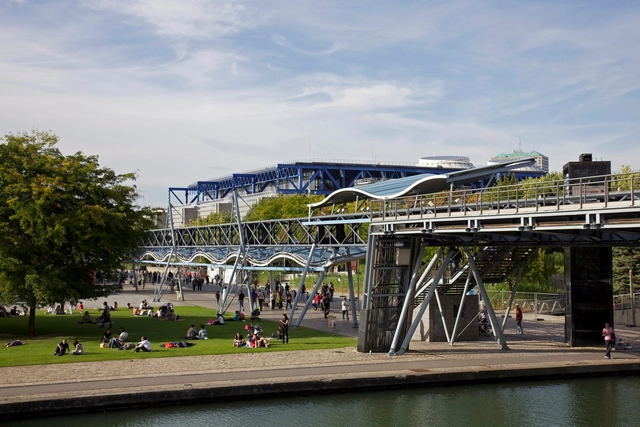
What does the Parisian park look like? For many, the answer to that question comes in the form of a painting: Georges Seurat’s ASunday Afternoon on the Island of La Grande Jatte, in which the well-dressed bourgeoisie leisurely enjoy a natural oasis on a verdant island within their industrializing city.
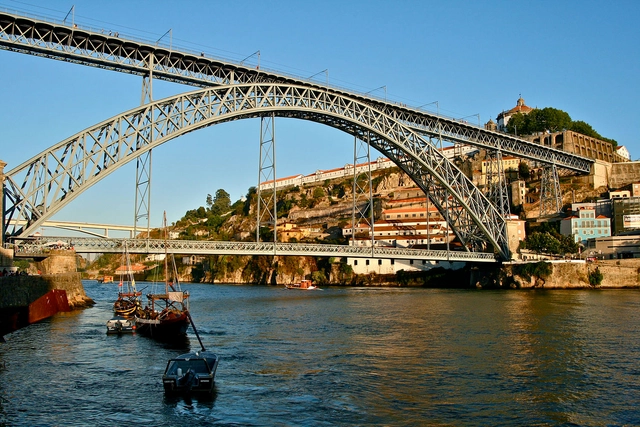
via Wikimedia. ImageDom Luis Bridge / Porto, Portugal
An unfortunate fact of the AEC (architecture, engineering, and construction) industry is that, between every stage of the process—from planning and design to construction and operations—critical data is lost.
The reality is, when you move data between phases of, say, the usable lifecycle of a bridge, you end up shuttling that data back and forth between software systems that recognize only their own data sets. The minute you translate that data, you reduce its richness and value. When a project stakeholder needs data from an earlier phase of the process, planners, designers, and engineers often have to manually re-create that information, resulting in unnecessary rework.
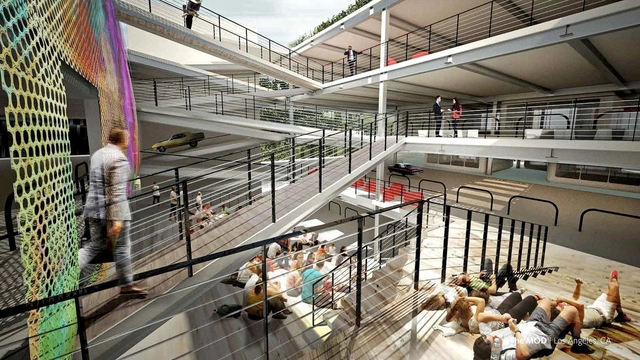
Are you in the market for a new home? If so, you may want to consider looking at a former parking garage, because they just might be the next place where developers are looking to build. In the United States alone, there are more than 500 million parking spots for 326 million citizens, covering approximately 2,500 square miles of land. Despite the push for a "car-free" future, more of these structures keep springing up across the country. If cities are building parking garages to support the need for the cars of today, how might we rethink their design so they can outfit the autonomous vehicle ambitions of tomorrow?
1. Abstract: Food is one of the most fundamental elements of human existence. Looking back, the way we produce, store and consume food has evolved greatly. Humans have thrived because our ancestors learnt how to gather, produce and consume food, all with their bare hands. And mankind has sustained due to these crucial elements of knowledge passed through generations. With industrialization came mass production, and with mass production came an influx of consumers - who started paying instead. Skills and crafts related to agriculture and food production are now mostly obsolete in the urbane environment. Mass consumerism through supermarkets and even
In anticipation of the 2018 Conscious Cities Festival this October, we are delighted to announce an open call for submissions to its official publication - showcasing the diverse and impactful thinking by Conscious Cities practitioners.
For this issue, we are soliciting submissions related to the Conscious Cities manifesto from both festival participants and the general public. Festival participants have the freedom to submit any piece of work, regardless of what they plan to present. Casting this wide net will not only further demonstrate the vital and diverse work being done within the Conscious Cities movement, but also serve as a way
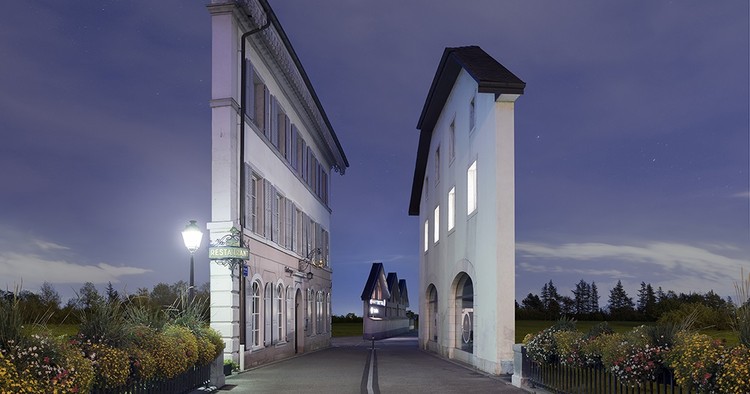
In his ongoing photo-series "Façades," French photographer Zacharie Gaudrillot-Roy a series of images in which he removes the mass and depth of buildings, and leaves behind the mere fragments of exterior skin. The photos, which resemble deserted Hollywood sets, illustrate roadways, towns, apartment complexes, and other environments without giving away the ideas of anything beyond the superficial image of the facade—leaving much to the imagination.
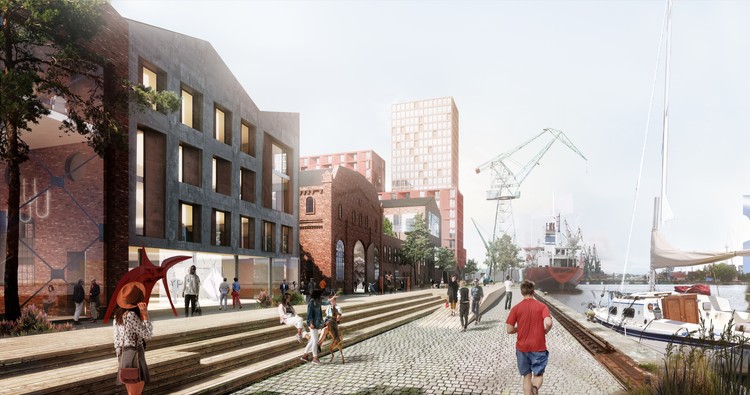
Henning Larsen has released images of their proposed urban development for the historic Imperial Shipyard at Gdansk, Poland. The 4.3million-square foot (400,000-square-meter) development seeks to transform the shipyard, built in 1844, into a “powerful financial and social engine building a thriving, mixed-use, inner-city neighborhood by the waterfront that is alive around the clock.”
The old industrial site has played a central role in the economic development of both Gdansk and Poland, serving as a key shipbuilding hub on the Baltic Coast. Through creating spines of public life centered on pedestrian/bicycle-friendly streets, Henning Larsen seeks to maintain the shipyard’s strong presence through waterfront living, work, and recreation.
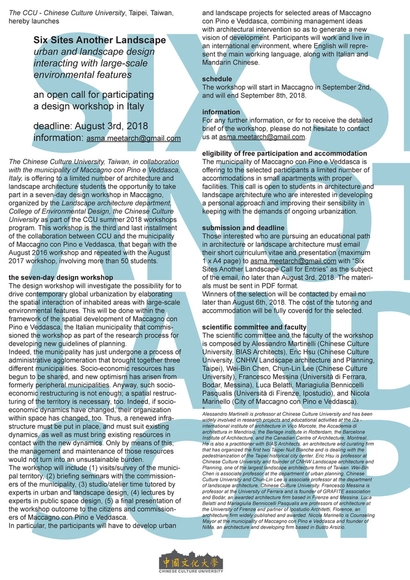
The Chinese Culture University, Taiwan, in collaboration with the municipality of Maccagno con Pino e Veddasca, Italy, is offering to a limited number of architecture and landscape architecture students the opportunity to take part in a seven-day design workshop in Maccagno, organized by the Landscape architecture department, College of Environmental Design, the Chinese Culture University as part of the CCU summer 2018 workshops program. This workshop is the third and last installment of the collaboration between CCU and the municipality of Maccagno con Pino e Veddasca, that began with the August 2016 workshop and repeated with the August 2017 workshop, involving more than 50 students.
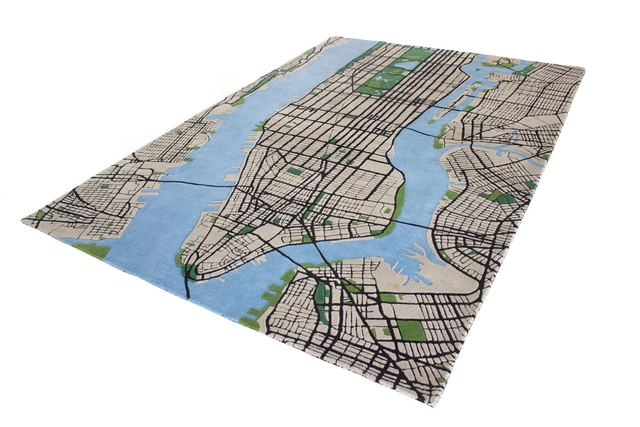
Have you ever dreamed of crossing from Midtown Manhattan to Brooklyn in just a few leisurely steps? These lofty ambitions are made possible on the New York City Carpet from South African studio Shift Perspective. Not literally though, unfortunately.
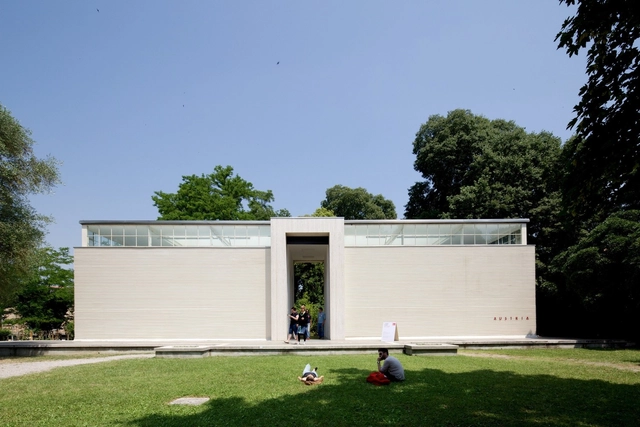
As part of our 2018 Venice Architecture Biennale coverage we present the proposal for the Austrian Pavilion. Below, the participants describe their contribution in their own words.
Cities are largely defined by their public spaces. It is here that a range of user expectations come together. The aim of urban design is to find a balance, to act with an eye to the future and cities are largely defined by their public spaces. It is here that a range of user expectations come together. The aim of urban design is to find a balance, to act with an eye to the future and to increase the attention given to public space. Public space is social space. And this is precisely why design is so important. In terms of architectural language, the quality of public space is defined by the balance between space and place, by convincing materials and by major urban design signals as much as by spontaneous and informal gestures. And, always, by high aesthetic aspirations.
France-based Hamonic + Masson Architects has been selected as one of the winners for the Imagine Angers Competition, which asked teams to propose innovative designs to be built on one of six different sites in the town of Angers, France. The winning teams were announced by the mayor of Angers at MIPIM, a real estate conference, held in Cannes. Other participating architects include Manuelle Gautrand, Steven Holl, Duncan Lewis, XTU, Sou FUJIMOTO and OXO architects.
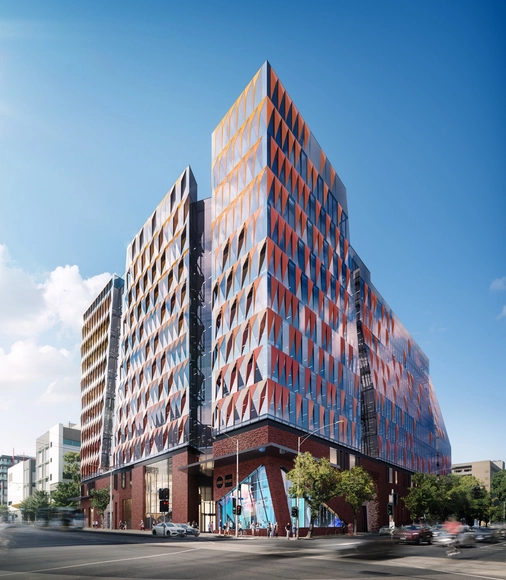
In partnership with Lendlease and the University of Melboure, Woods Bagot designed an architectural reflection of the university itself. Named the Carlton Connect Initiative, this masterplan will be a mixed-use precinct where not only university students and staff, but also international business professionals, researchers, and start-ups can come participate in idea exchange. In order to attract the best and brightest for the university, Woods Bagot is pursuing the highest standard of cutting-edge, sustainable design.
How can the future design and configuration of cities promote greater sustainability in the conditions of urban life? Dust to Dust: Redesigning Urban Life in Healthy Soils is an urban design ideas competition, supporting the UN Sustainable Development Goals.
We invite ideas for urban designs, planning approaches, and concrete interventions that could be implemented in real-life situations. Successful designs will be exhibited to inform and inspire more sustainable future urban design and development, accounting for a close relationship between urban life and soil ecosystem services.
Dust to Dust will operate as a charrette, held at the Prince’s Foundation, London on 16-18
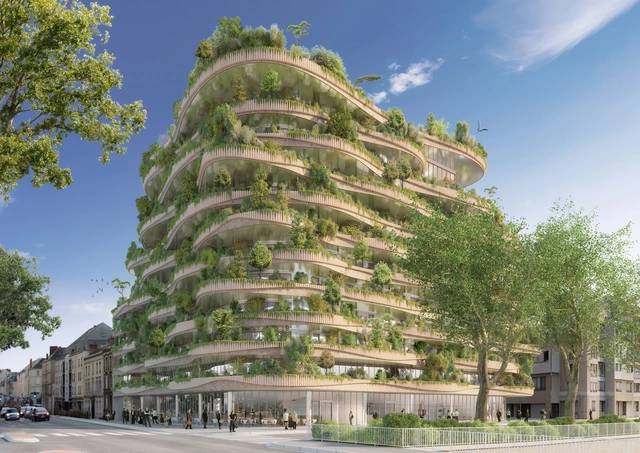
For the "Imagine Angers"international design competition, Vincent Callebaut Architectures worked in collaboration with Bouygues Immobilier group to submit a proposal for the French city at the intersection of social and technological innovation, with a focus on ecology and hospitality. Named Arboricole, meaning “tree” and “cultivation,” this live-work-play environment gives back as much to the environment as it does its users. Although WY-TO prevailed in the competition, the Callebaut scheme succeeded in winning the public vote.
International architecture competition, Imagine Angers, asked designers to create an innovative solution for one of six sites in Angers, France. Paris-based architecture firm WY-TO and Crespy & Aumont Architectes interlaced the natural landscape with a contemporary lifestyle for all ages in their winning design, Arborescence.
Recently, long-standing architecture critic for the LA Times Christopher Hawthorne announced that he was stepping down to take up the position of chief design officer for the City of Los Angeles in Mayor Eric Garcetti’s administration. According to Hawthorne, the role will involve raising “the quality of public architecture and urban design across the city — and the level of civic conversation about those subjects.” This dramatic shift from the question: what is the role of the critic and architecture criticism in shaping civic architecture?
A bounty of technological innovations in the 21st century have led to the theorization and implementation of so-called "Smart Cities," urban environments driven by data, and designed for efficiency. Although most smart technology focuses on infrastructure, a new tech startup named UNSense has been launched with adopts a human-centric approach, focusing on health and wellbeing.
Founded by Ben van Berkel, Principal Architect of Dutch firm UNStudio, and based in an Amsterdam innovation hub, UNSense aims to use technical interventions in the urban realm to improve people’s physical, mental and social health. As an independent, sister company of UNStudio, UNSense will specialize in sensor-driven technology for user-focused architecture – a "software" approach offering a counterpoint to the "hardware" of UNStudio.
https://www.archdaily.com/890744/unstudio-founder-launches-startup-for-shaping-human-focused-smart-citiesNiall Patrick Walsh
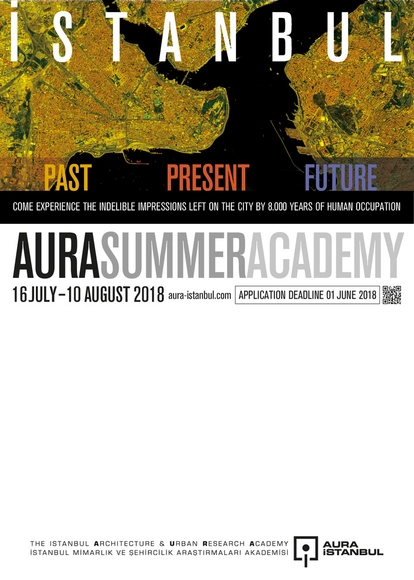
Architecture and Urbanism Research Academy (AURA) Istanbul would like to invite you to join its inspiring Summer Academy, "Istanbul: Past, Present, and Future".



.jpg?1533397440 "© <a href='https://upload.wikimedia.org/wikipedia/commons/f/f6/Parc_de_La_Villette_%40_Paris_%2828926264776%29.jpg'> Creative Commons User Guilhem Vellut</a> licensed under <a href=’https://creativecommons.org/licenses/by/2.0/'>CC BY 2.0</a>")
.jpg?1533397475 "© <a href='https://upload.wikimedia.org/wikipedia/commons/d/d2/Folie_N8_%40_La_Villette_%40_Paris_%2833893431256%29.jpg'> Creative Commons User Guilhem Vellut</a> licensed under <a href=’https://creativecommons.org/licenses/by/2.0/'>CC BY 2.0</a>")
.jpg?1533397559 "© <a href='https://upload.wikimedia.org/wikipedia/commons/b/b4/Canal_%40_La_Villette_%40_Paris_%2833091237904%29.jpg'> Creative Commons User Guilhem Vellut</a> licensed under <a href=’https://creativecommons.org/licenses/by/2.0/'>CC BY 2.0</a>")















AIRSTUDIO.jpg?1521515633&format=webp&width=640&height=580)