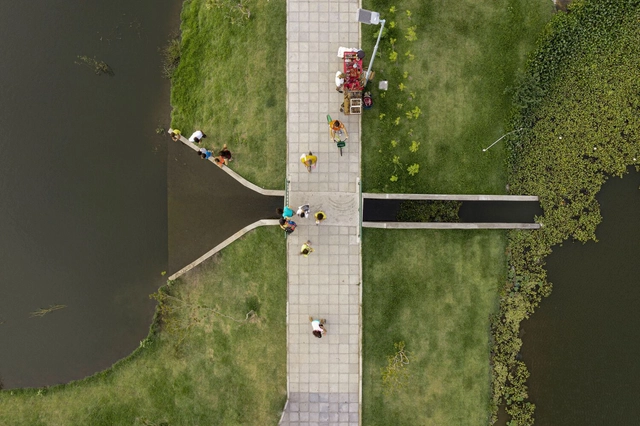
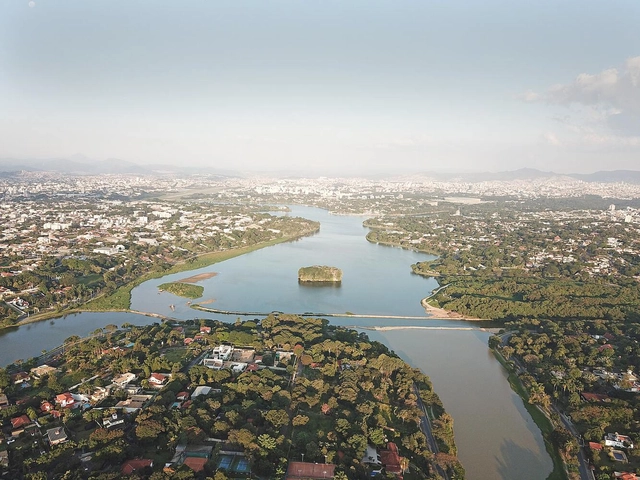
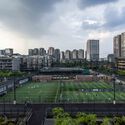
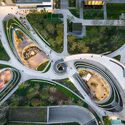
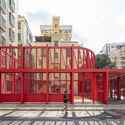
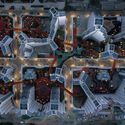
Besides reflecting the aspirations of a society, public spaces also configure the scenarios in which new ideas of coexistence and the collective can emerge from their qualities. Thinking about the streets, squares, parks, and even nature is a way of dealing with common ideals and ensuring the social dynamics in the relationship between bodies and the environment.
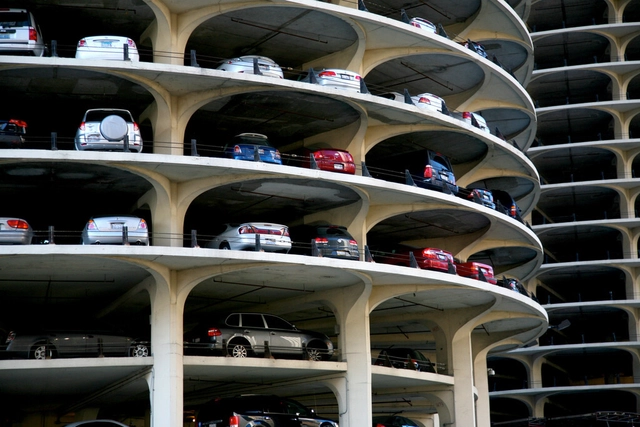
For every car that drives on the road, we need to find a place to put it- but are parking garages the answer? Parking garages are often seen as the antithesis of people-friendly urban planning. Large gray boxes are used solely to store cars that make temporary visits and seem like a poor use of space, especially in cities where land comes at a premium. Because of these garages, urban cores have quickly been transformed into parking districts, where vehicle storage dominates the aesthetic of a business district. Building codes only contribute to the problem, where the number of spaces is passed down as a mandate, even spreading out into suburban areas. Parking garages are everywhere- flanking shopping malls, connecting to residential towers, and surrounding sporting venues.
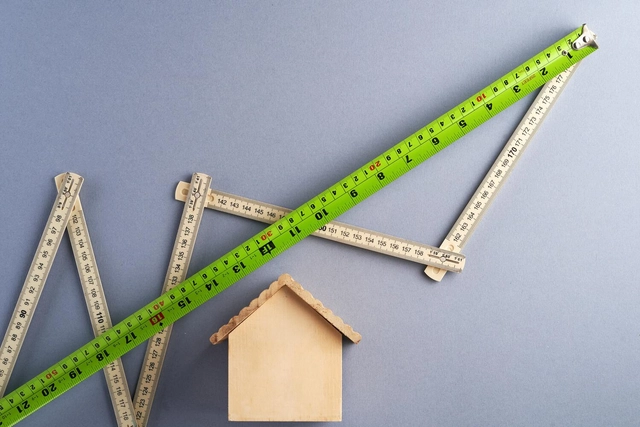
Animals measure distances and weight for their survival. On the other hand, stemming from their need to communicate to live in society, humans created languages and, later, established the standards of measuring. Whether for moving around, portioning food, making tools, or calculating the weight of objects and animals, measurement standards arise from this need that was already present in human activities in the age of chipped stone and has been with us ever since. Nowadays, most of the world's population uses meters and centimeters to measure distances. These standards come from the need to establish comparisons that allow trade between peoples and also from political and social disputes.
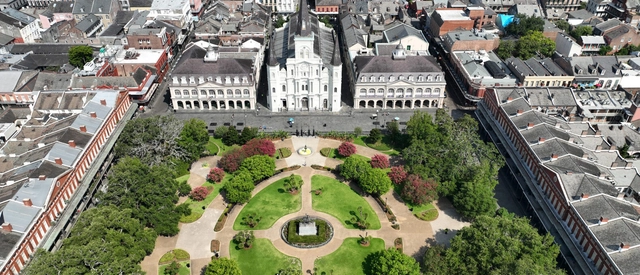
What is the 15-Minute City? It’s every city ever built by humans on this planet until a century ago, but with a catchy new name. If a city’s old parts haven’t been destroyed in the past century, it’s the areas that attract the most tourists. And people will travel across continents and oceans to experience the best of them.
Forty years ago, a few pioneers decided to start building 15-Minute Cities again. Actually, they built 5-minute cities because they didn’t think people would walk for 15 minutes—and, in the early 1980s, they were right, because people were so conditioned to driving everywhere back then. Seaside, Florida, is where it all began. Time magazine called it “the little town that changed the world.” For the first time in the modern history of sprawl, people could toss their car keys in a drawer or hang them on the wall and leave them there for days. When people returned from Seaside vacations, they came back asking, “Why can’t we build this way at home?” And soon, the New Urbanism was born.
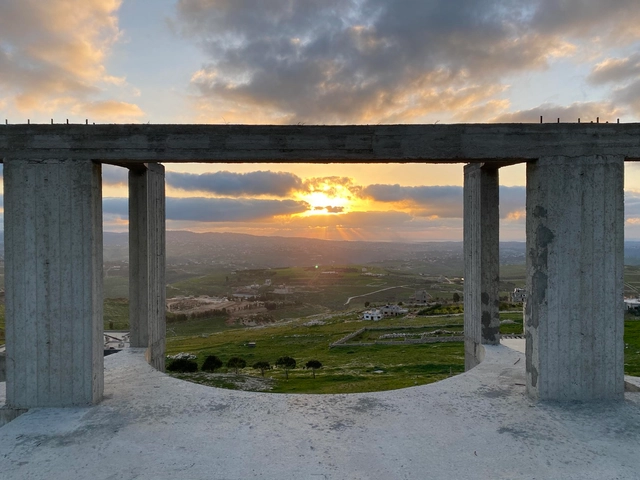
As farmers water crops by moonlight, undocumented children head to school and villagers scan the sky for surveillance airplanes—these are glimpses of a complex culture that emerges in south Lebanon after dark. In collecting some of these nightly practices, Mohamad Nahleh—lecturer in architecture and urbanism at MIT—journeyed across the landscapes of Jabal ‘Amil hoping to build a new alliance between architecture and the night. His "Path of Nightrise" research has turned into a construction to revive a forgotten river path and was published by Places Journal. The interview with Nahleh argues for a new nocturnal imagination in design and reveals, not only how the night has changed in Lebanon over time, but also how he has changed alongside it.
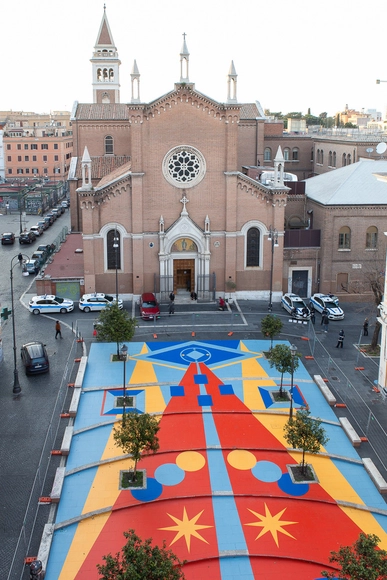
In 2018, the Roman neighborhood of San Lorenzo hit the headlines when a young girl was found dead in a derelict building. The media focused on the area’s decline, ignoring its long political and cultural history. Known as a “red” territory, San Lorenzo was one of the few districts to resist Mussolini’s 1922 March on Rome. Built in the late 19th century to house a working-class population of artisans as well as rail and factory workers, there’s a gritty feel to the neighborhood, defined by remnants of its industrial past and buildings that still bear the scars of Allied bombing in World War II. This small, centrally located neighborhood is wedged between Termini, the main train station, Verano, the monumental cemetery opened in 1812, and the Città Universitaria La Sapienza (La Sapienza University).
https://www.archdaily.com/997358/romes-possible-city-and-the-gentrification-battle-in-san-lorenzoMarina Engel
The Saudi Arabian government has revealed the design for the Mukaab, a cube-shaped supertall skyscraper that will become the center of the New Murabba district in downtownRiyadh. The Mukaab aims to become the largest built structure in the world, measuring 400 meters in height, width, and length. The building will be situated in the North West of Riyadh, in a 19 square kilometers area that will become one of the largest downtown developments in the world. The Mukaab skyscraper and the Murabba district were announced by His Royal Highness Crown Prince Mohammad bin Salman bin Abdulaziz, Prime Minister and Chairman of the New Murabba Development Company (NMDC).
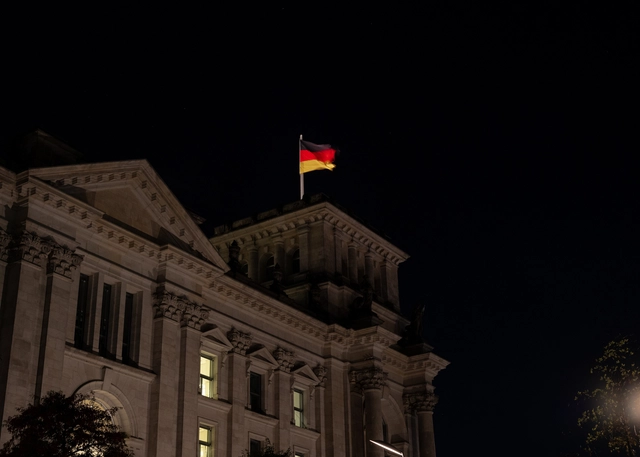
When capital cities like Paris and Berlin resolved to switch off lighting for public buildings and landmarks in July 2022 in order to save energy in the context of the Russian invasion of Ukraine, the cities created a ripple effect throughout central Europe. Images of dark iconic landmarks swept through the media and allowed politicians a momentary act of environmental demonstration. However, designers have started to question the sustainability of this ad hoc step. Seen from a broader perspective the impression arises that this alleged radical action has been part of a rather media-savvy campaign with small effect in cities at night. Further steps are necessary to reassess urban lighting that may have a major impact on energy saving and sustainability.
There are countless good bones in American downtowns across the country, but they’re seldom connected to enough good tissue to be filled with life. This post is on the 10 things needed to make downtowns thrive. And none are the usual suspects. I’ve omitted stuff everyone else talks about because many of you already know those things.
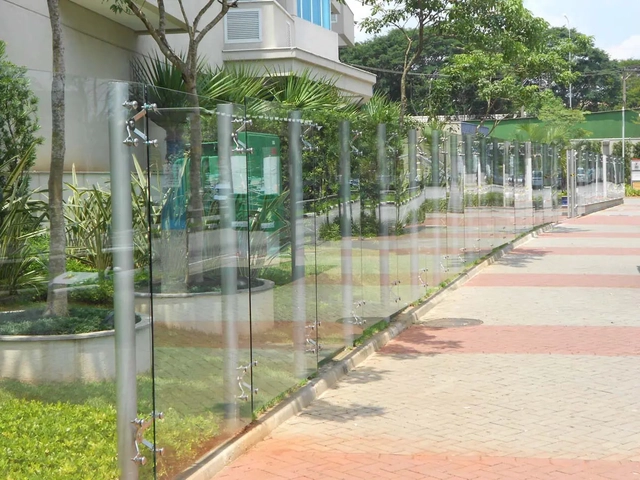
Via construcaoemvidros.com.br. Image used under fair use terms.
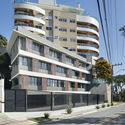
In the past, in a less densely populated urban context, houses and buildings were built with a direct connection to the street, with no need for walls and front fences. Over time, the urban fabric was transformed, and the division between public and private spaces became increasingly evident and — under the argument of public safety — necessary. Although this division occurs in different ways in Brazilian cities, in general, walls, fences and railings are used on the facades, creating a transitional space between the building and the street, transforming the relationship between them.
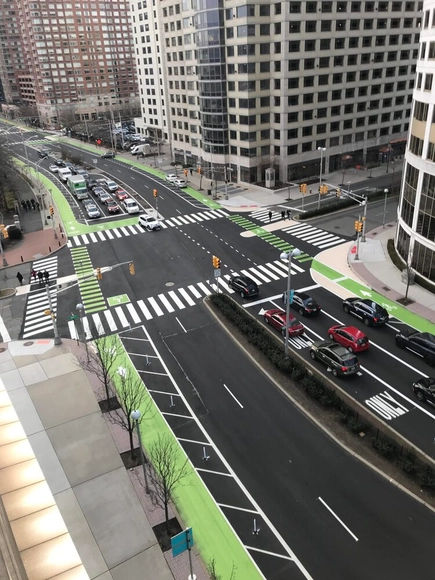
Once a 6-lane thoroughfare, Washington Boulevard underwent an initial "quick-build" transformation in 2019, adding painted protected bike lanes, curb extensions, pedestrian refuge islands, and boarding islands allowing for in-lane bus boarding/alighting. The physical protection for cyclists was upgraded further in 2022. Image Courtesy of Street Plans
Covid has been particularly hard on cities: downtown business districts are still struggling due to the shift to remote work; some cities have seen population declines; and crime has spiked virtually everywhere. In addition, the pandemic pushed more people into cars, setting back the safe streets movement. After years of progress, cities like New York City saw big increases in pedestrian deaths. This is a nationwide problem—with one notable exception: Jersey City recently announced that no one died on its city streets in 2022, meeting its Vision Zero plan for the city. The milestone was the result of years of work by the city and its collaborator, Street Plans, a planning firm founded by Mike Lydon and Anthony Garcia. Lydon, a DPZ alum and co-author of the 2015 book Tactical Urbanism (currently being updated), began working with Jersey City on a whole raft of initiatives six years ago. I spoke with Lydon last week and asked him, specifically, how the city and he did it.
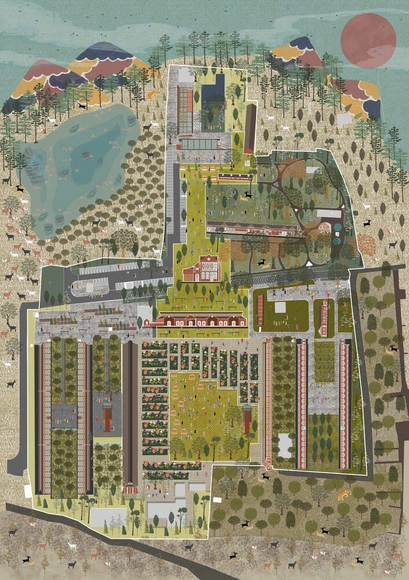
Master plans, or large-scale urban planning projects, are one of the main tools for shaping and structuring land use and development to ensure that the built environment is coherent and functional. The interventions vary in scope and approach. While some projects are extending the buildable area by creating floating neighborhoods off the coast of Florida, others are reusing the existing spaces and heritage to reimagine the future of their communities.
At a historical moment when industrialization and urbanization are continuing at a fast and predatory pace, we need to design and produce spaces that can adapt to new realities. Based on this need, concepts that can guide the transformation and production of future cities emerge.
Recent surveys have revealed the average frequency of daily baths in some countries. While in Latin America, led by Brazil, Mexico and Colombia, people take 8 to 12 baths a week, in the vast majority of countries affected, the average is around 6 to 8. Bathing, throughout human history, involves health, religious, spiritual and even social aspects.
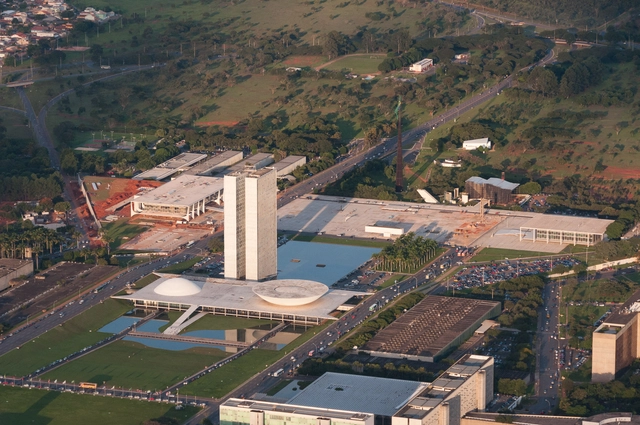
Few places in the world have an overlap of complexities as intense as Brasília. Even so, its architecture symbolizes the Republic and democracy of Brazil, and any act of attack on these symbols carries meanings and consequences for Brazilian memory and cultural heritage. The terrorist acts of January 2023 destroyed part of the heritage and raised questions beyond objects and architecture, touching on education, culture, and national political capital.
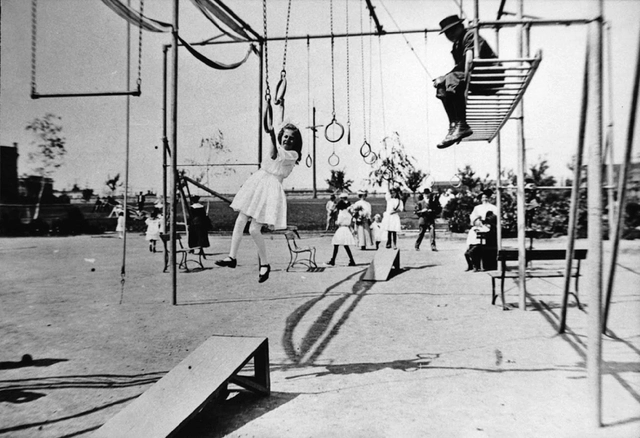
Playgrounds are spaces with equipment dedicated to children's leisure, where they can develop motor and social skills. However, these spaces are new to our cultures and cities and emerge from the recognition of childhood as a fundamental stage of human development.
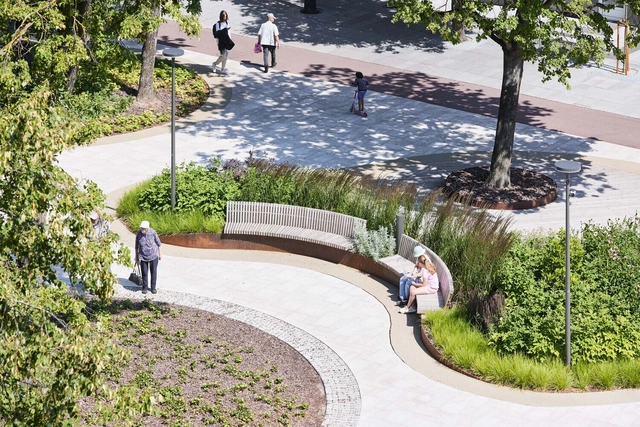
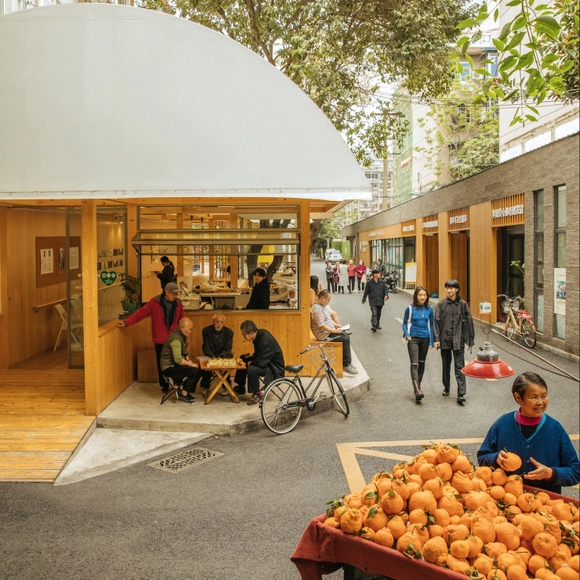
Urban public spaces can transform the life of neighborhoods and cities and, therefore, need to be open to the social, cultural and technological changes that occur in society. From urban vegetable gardens to pet spaces, from rain gardens to art pavilions, life in today's cities has created new demands and ways of using and appropriating public spaces.
What kind of city is a people-oriented city? This is a difficult question to answer because humanistic cities evaluate the city by "people”, and people are extremely diverse, producing individual different evaluation standards. For example, a city that is friendly to car drivers, may not be so friendly to pedestrians.
Nonetheless, there is a general perception that some cities seem to be more friendly to people than others. Why is this the situation?