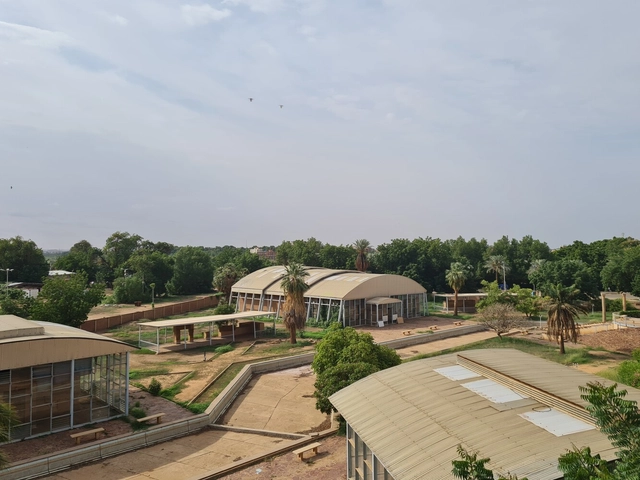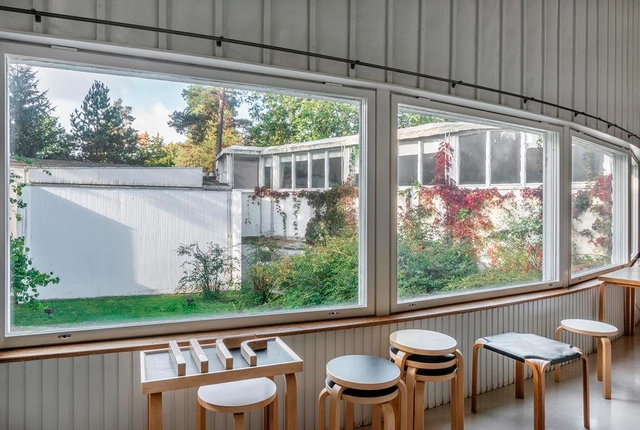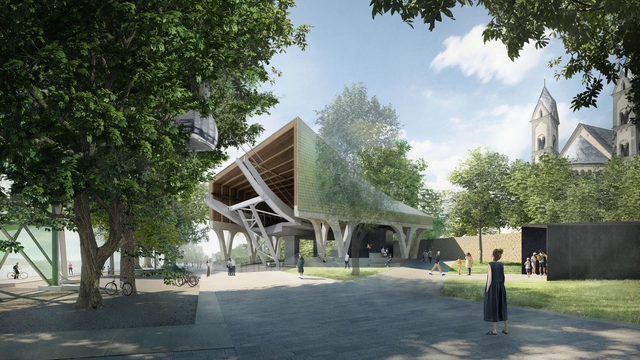
As repositories of knowledge and catalysts for innovation, museums represent an architectural typology filled with opportunities. They act as an intermediary between the general public and artists, historians, and researchers, creating the medium for the display of cultures and creativity while also striving to make knowledge accessible to all. Through careful curation and exhibition design, they provide a platform for education and research, fostering an understanding and appreciation of diverse cultures, histories, and ideas. For architects, they also present an opportunity to conceive spaces aligned with the exhibits on display to create an immersive experience for the visitors.
This week's curated selection of Best Unbuilt Architecture highlights projects submitted by the ArchDaily community that showcase art, technology, and innovation through the program of museums and cultural centers. Featuring projects from emerging and established architectural offices such as Hariri Pontarini Architects, Beyer Blinder Belle, Studio Saheb, RAMSA, and Ho Khue Architects, the selection includes a variety of scales and programs, from a museum dedicated to the commemoration of the Holocaust to a private sportscar museum in Austria or an intricately-shaped art gallery in Vietnam.
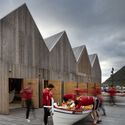
Located in the southern part of Benin-Republic, near the port city of Cotonou, is Ganvie; the largest floating village in Africa. It is situated in the middle of Lake Nokoué and is characterized by colorful wooden stilt houses arranged around artificial islands dating back to the 17th century.
This unique architecture was born from the history of the Tofinu tribe, who built it as a refuge from the slave trade. It has been sustained over time by their communal socio-ecological aquacultural systems and has now become a global tourist attraction for the country. The village was recognized as a world cultural heritage site by UNESCO in 1996, attracting up to 10,000 visitors annually. However, this influx of tourists has impacted the locals and their socio-ecological practices that sustain this water environment. Aquaculture has become increasingly challenging to maintain as the village struggles to retain its economic foundation. Additionally, traditional building practices have given way to modern ones, and the village faces ongoing environmental challenges. Nevertheless, the unique lifestyle of the locals around the water still offers many lessons for the design of prospective floating cities.
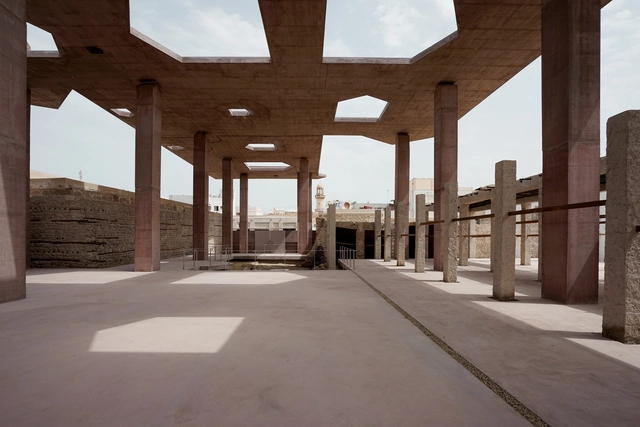
Following an international competition, Kengo Kuma & Associates has been selected to design the new visitor center for Butrint National Park, a UNESCO World Heritage Site on Albania’s Ionian coastline. Through its placement in a nodal and strategic position, the project aims to establish a new connection between the local communities and the expected archeological site visitors, thus improving the accessibility of the site, which is recognized as one of Albania’s chef cultural attractions. The visitor center, developed with Albanian partners CHwB Albania, is scheduled to open to the public in 2025.
Light — how we perceive the world around us — is an integral, emotive architectural element. Access to light is enhanced and limited in an architectural capacity globally, with architects of expensive tropical dwellings celebrating sunny vistas with expansive glazing, while a wide range of art galleries reject light in its natural form, eliminating it in adherence to the sensitive exhibit requirements of art pieces. Light in an architectural and urban sense is also highly symbolic, evident in the many metropolises of our world, but where this symbolism takes on an interesting dimension is in the archipelago of Zanzibar.
Yanacancha-Huaquis Cultural Landscape, Peru. Image Courtesy of World Monuments Fund
The World Monuments Fund (WMF) announced a commitment of more than US$10 million to go towards preservation projects to protect culturally significant places from around the globe in urgent need of intervention. The initiatives vary in scope, from winterization efforts at Ukrainian heritage sites to protecting remote archeological sites representative of Peru’s Chachapoyas Civilization. The suite of projects launching in 2023 aims to address and help mitigate the threats that heritage sites are facing: conflict, climate change, and underrepresentation.
Subject to the forces of capital, migrating populations, and political circumstances, our planet’s cities are constantly evolving. This continuous evolution is evident in the built fabric of settlements, as architects and planners build upon layers of the built environment, with some having the strenuous task of having to integrate the historic urban areas of cities successfully with contemporary architectural interventions and systems.
The cities of this category are frequently in an internal conflict — oftentimes having to grapple with the sometimes contradictory aims of both sustaining local populations and welcoming outside investment and national development projects.
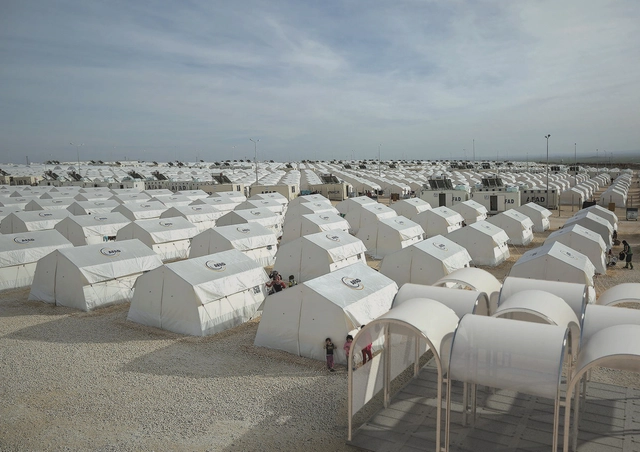
On 24 February 2022, Russia invaded Ukraine, a major escalation of the conflict dating since 2014. Now, a year later, the war is still ongoing. Both soldiers and civilians have fallen victim, while millions of others have become refugees, fleeing to safer areas across Europe or within Ukraine. What was instilled was a severe humanitarian and refugee crisis. The hostilities have also threatened Ukraine’s cultural and architectural heritage, as museums, monuments, and historical landmarks have become targets.
The implications are also reaching Europe and globally, as energy resources and food supplies become scarcer, damaging some economies. Still, Western countries remained unified in their support of Ukraine, as reported by international news outlets. Despite the economic difficulties, international support was mobilized through various initiatives in hopes of helping displaced people, protecting cultural heritage, and mapping a plan for reconstruction.
The World Heritage Committee decided to inscribe the Historic Center of the Port City Odesa, Ukraine, on the World Heritage List. The decision symbolizes the recognition of the outstanding value of the site and the commitment of the 194 States Party of the Convention not to undertake any deliberate step that may damage it and to help protect it. The site has also been inscribed on the List of World Heritage in Danger, which gives it access to international financial or technical assistance to ensure its protection and, if necessary, assist in its rehabilitation, according to UNESCO.
Skidmore, Owings & Merrill (SOM) and Egypt-based Raafat Miller Consulting (RMC) have been selected by OSL for Entertainment Projects to reimagine the visitor experience at one of the Seven Wonders of the World, the historic Pyramids and the Sphinx of Giza, Egypt. SOM will serve as lead designer of the project's concept, design, and masterplan, which will feature the transformation of the existing show facilities into a world-class visitor experience with a program that ensures environmental and preservation measures.
Skyscrapers are an unmissable characteristic of contemporary settlements. From São Paolo to New York, from Seoul to Dubai – these towering structures are a ubiquitous part of the urban fabric. The conventional image one has of these structures is of curtain-walled facades, but in Yemen – an ancient example goes against this trend. Central Yemen is home to the city of Shibam, surrounded by a fortified wall. It’s also home to a dazzling example of architectural ingenuity – tower houses that date back to the 16th century, stretching up to seven stories high.
Russia’s invasion of Ukraine unleashed a major humanitarian and refugee crisis, with 4.2 million people fleeing into neighbouring countries and 6.5 displaced internally. According to the United Nations Office for the Coordination of Humanitarian Affairs (UNOCHA), 18 million people are projected to become affected in the near future with the current scale and direction of the ongoing military violence. In addition to the threat to human lives, Ukraine’s culture is also at risk, as cities and historic buildings are being destroyed. In March, the United Nations Educational, Scientific, and Cultural Organization (UNESCO) has expressed concern over the damage caused to historic landmarks in Ukraine and called for the protection of its cultural heritage. The following are some of Ukraine’s most prominent architectural landmarks, which are now in danger of being destroyed amid the conflict.
The United Nations Educational, Scientific, and Cultural Organization (UNESCO) has expressed concern over the damage caused to historic landmarks in Ukraine and called for the protection of its cultural heritage. At the same time, the organization has taken action within its capabilities to help safeguard the endangered sites. Ukraine is home to seven World Heritage sites, including the 11th-century Saint-Sophia Cathedral and the entire ensemble of the Historic Centre of Lviv. In addition, several sites in the recently damaged cities of Kharkiv and Chernihiv were on the tentative list for potential nomination to World Heritage status.
The built environment we all inhabit is part and parcel of global, interconnected processes and systems. When we appraise the historically significant architecture of our cities, the structural integrity and aesthetics of a building merits equal consideration with factors such as the labour conditions of its builders to the existing power structures of its time. Examples of ItalianModernism in Eritrea, for instance, might be worthy of aesthetic praise – but intertwined with the legacy of these buildings hailed as Modernist icons is the sobering fact that they were built to further an imperial project. In the complex fields of architectural conservation, preservation and cultural heritage, democratisation should always remain a key priority.
This month, UNESCO has announced a series of decisions concerning important heritage sites, giving rise to conversations around preservation and urban development. Last week, the World Heritage Committee decided to strip Liverpool of its heritage status, as the new developments are considered detrimental to the waterfront's integrity. These projects placed the city on the List of World Heritage in Danger in 2012, a designation which Venice managed to avoid earlier this week, due in great part to the recent ban on cruise ships.
Association Cap Moderne have announced that the restoration of Eileen Gray’s modernist villa E-1027, along with other projects on the Cap Moderne site, such as Le Corbusier’s Cabanon and Unités de Camping, and l’Etoile de Mer restaurant, have been completed and are now open to visitors. The site is listed as a UNESCO World Heritage Site, and is considered as one of the must-see places to discover in the region, welcoming more than 10,000 visitors a year.
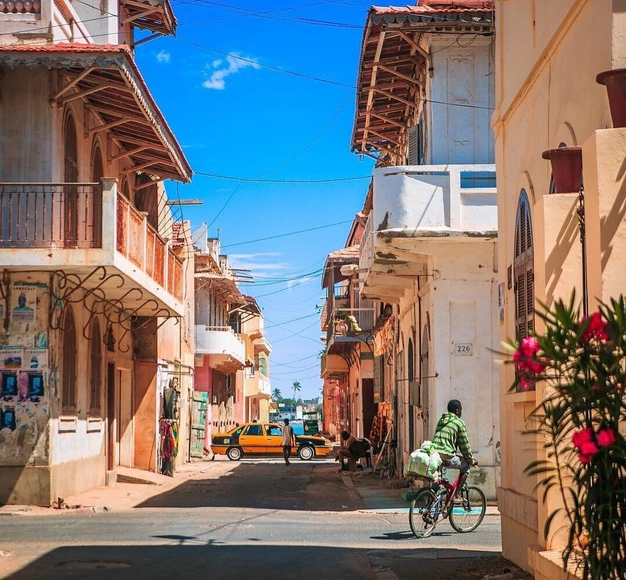
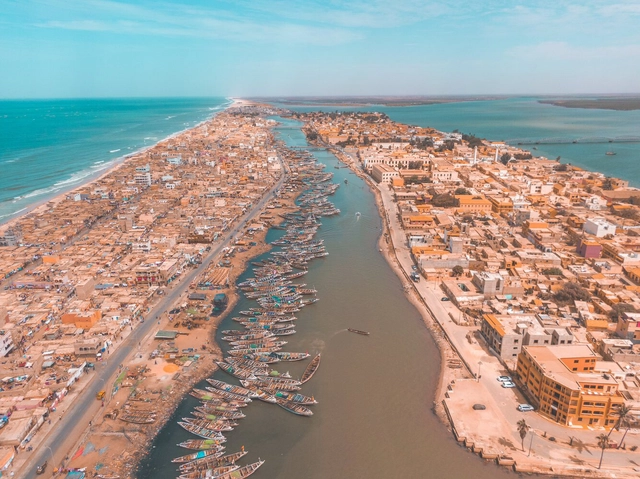
The African continent has been - throughout history – a key player in the ever-evolving story of human migration. Cultures and customs have been shared, adapted, and re-imagined as a result of this movement of populaces, and architectural styles are no exception. In a way, the varied architecture present in Africa is a lens one can look at to understand the intricacies of migration. Present on the continent are ancient indigenous and building typologies born out of the organic assimilation of cultures. Also present are remnants of colonial architecture, a legacy not of voluntary migration, but of forced colonial imposition.
The world of travelling is a multifaceted one. There are the everyday trips one takes for work or school, commuting to a set location during the week, usually within the confines of a city. There are the longer trips too, the trips which usually involve getting into an aeroplane to visit someplace a bit farther from where the traveller usually resides. These trips are frequently done for business purposes, but for those who have the means to afford it, these trips are undertaken for learning and leisure – where the traveller can be defined as a “tourist”.