As Canada’s most populous location, Toronto has developed into a global powerhouse, both as an economic and cultural hub. This extends to the significant museums and arts facilities across Queen City. With one of the most unique landscapes and ground conditions in the country, Toronto was built on a large ravine system running throughout its urban fabric. Today, the city’s educational, arts, and cultural buildings are thriving.
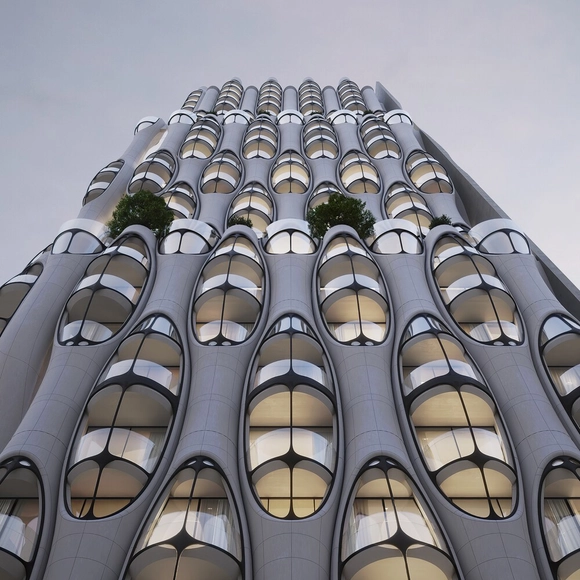
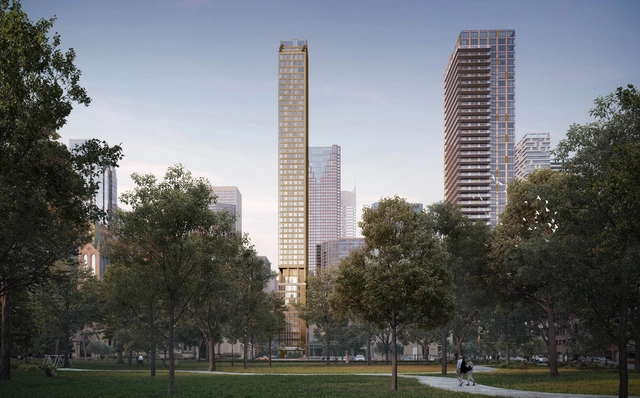
Architecture office Partisans have recently revealed the design of a new high-rise planned for downtown Toronto, on 15-17 Elm Street. The shape of the tower takes inspiration from the process of cloud formation, more specifically from the cirrocumulus, a meteorological term describing the curl-like shapes that form cloud systems. The 32-storey building will accommodate 174 residential units equipped with personal balconies and necessary amenities.
Icon Architects unveiled the design of a 90 meters tall timber tower in Toronto, Canada, which would become, once completed, North America's tallest building made of wood. Named the "191-199 College Street," the project is aligned with the master plan led by Alison Brooks Architects, Adjaye Associates, Henning Larsen, and SLA to develop Toronto's Waterfront that seeks to turn the Canadian city into a hub of affordable housing, robust public spaces, and new business opportunities. The construction of the CLT tower will cut over 3,300 metric tons of greenhouse gas emissions and accommodate around 400 affordable rental units.
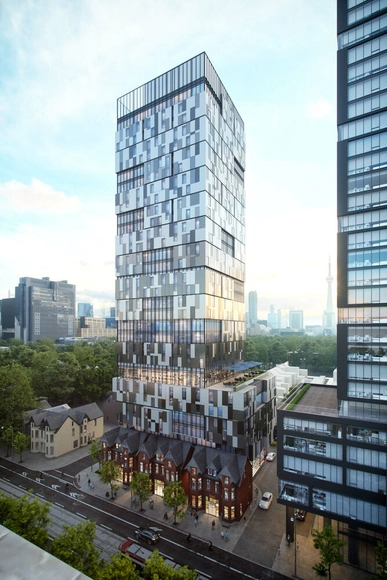
BDP Quadrangle has revealed the design of a 54-storey, mixed-use tower in downtown Toronto, Canada. The project will replace an existing 10-storey office tower built in the 1960s. The new tower will contain office and residential units, with amenities and outdoor terraces on the 11th floor and at the ground floor. The building is planned to accommodate a total of 278 apartments with penthouses on the 52nd and 53rd floors. The project is currently in the pre-construction phase.
Vienna in Austria has topped the rankings of The Economist Intelligence Unit (EIU) 2022 Global Liveability Index, gaining back its previous position from 2019 and 2018, mostly for its stability and good infrastructure, supported by good healthcare and plenty of opportunities for culture and entertainment. Western European and Canadian cities dominated the top positions with Copenhagen, Denmark in second place and Zurich, Switzerland, and Calgary, Canada in third place. Adding 33 new cities to the survey, one-third of which are in China, bringing the total up to 172 cities, the classification excluded this year the city of Kyiv, due to Russia’s invasion of Ukraine.
Classified across 5 categories, stability, healthcare, education, culture and the environment, and infrastructure, the index was largely driven by the covid-19 pandemic. While covid-19 restrictions have eased in big parts of the world, liveability rankings started resembling “those seen before the pandemic”, however, the global average score remained below the pre-pandemic time. Although covid-19 has receded, a new threat to liveability emerged when Russia invaded Ukraine this year.
Alison Brooks Architects, Adjaye Associates, Henning Larsen and SLA to Develop Toronto's Waterfront. Image Courtesy of Waterfront Toronto
As more smart cities make their way across the globe, whether it being in countries of the Far East, Latin America, or the Middle East, Toronto is stepping back from the smart city bandwagon, and reassessing its substantial contribution to the community. The Canadian city, which ranked 15th on Global Finance's ranking of the world's best cities to live in for the year 2022, plans on "killing the smart city forever", especially after Quayside's controversial cancellation reasons, questioning its lack of privacy, necessity on an urban scale, and whether people truly want to live in a tech-driven environment.
Global Finance's ranking of the world's best cities to live in, during 2022 has just been released. Centered on 8 different parameters that calculate and compare the quality of life of people living in urban areas such as economy, culture, population, environment, etc., this year’s edition also took into consideration Covid-19 deaths per thousand for each country, to reflect the new reality we live in. With data from the Global City Power index, Johns Hopkins University, Statista, and Macrotrends, the list seeks to have a complete vision, putting together traditional metrics with new factors.

Claiming the first position is London, U.K, a city that although didn’t get high rankings in its Covid-19 metrics, still topped the list, mainly due to its scores in culture, accessibility, and population growth. Tokyo was selected for the second position, showing weakness in one parameter, population, as its numbers have been declining for the past 10 years. Shanghai followed next, in the third position, because of relatively low Covid-19 death figures and strong population growth. Singapore and Melbourne came in 4th and 5th positions.
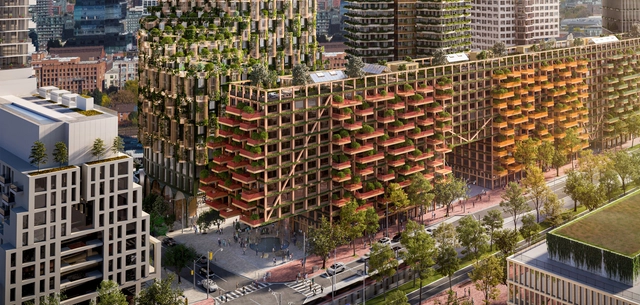
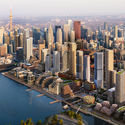
A consortium comprising developers Dream Unlimited and Great Gulf together with lead architects Alison Brooks Architects, Adjaye Associates, Henning Larsen and landscape design practice SLA were selected to develop Toronto's Quayside into a new neighbourhood containing affordable housing, robust public spaces and new business opportunities. The design for the 4.9 hectares site on Toronto's waterfront proposes over 800 affordable housing units, together with an 8,000 square-metres forested green space and an urban farm, accompanied by arts venues and flexible educational spaces.