

Thanks to state of the art mobile laser scanners, scientists can now document the greatest architecture in history, from The Pyramids to St. Paul's Cathedral, as digital models with pinpoint accuracy. The digital representations take you inside, around and through the buildings, which means researchers can study and analyze sites without being in the field. The technology is already proving its worth - watch the trailer above to see how Petra was constructed and more!
Technology: The Latest Architecture and News
Timescanners: Digital Scanners Explain Historic Architecture's Engineering Mysteries
https://www.archdaily.com/513971/timescanners-digital-scanners-explain-historic-architecture-s-engineering-mysteriesAndrew Galloway
VIDEO: "Bionic" Architecture That Moves When You Do
The Brooklyn based firm The Principals are known for their interactive design, industrial design and installation work. The video above hi-lights their latest "bionic" installation, which actually responds and reacts to human movement thanks to myoelectric sensors that pick up voltage increases on the skin when a muscle contracts. To learn more head over to their website - and make sure to check out all of The Principals other installations featured on ArchDaily.
https://www.archdaily.com/510167/video-bionic-architecture-that-moves-when-you-doAndrew Galloway
The Hudson Yards - New Development, "Smart" Development

The largest private project New York City has seen in over 100 years may also be the smartest. In a recent article on Engadget, Joseph Volpe explores the resilience of high-tech ideas such as clean energy and power during Sandy-style storms. With construction on the platform started, the Culture Shed awaiting approval, and Thomas Heatherwick designing a 75-Million dollar art piece and park – the private project is making incredible headway. But with the technology rapidly evolving, how do investors know the technology won't become obsolete before its even built?
https://www.archdaily.com/507635/the-hudson-yards-new-development-smart-developmentJoseph Volpe
The Steel Age Is Over. Has The Next Age Begun?
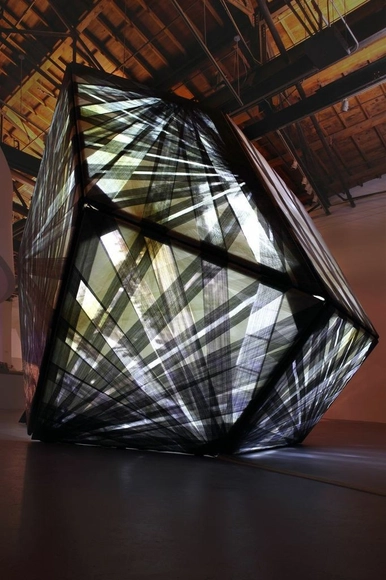
Andrew Carnegie once said, “Aim for the highest.” He followed his own advice. The powerful 19th century steel magnate had the foresight to build a bridge spanning the Mississippi river, a total of 6442 feet. In 1874, the primary structural material was iron — steel was the new kid on the block. People were wary of steel, scared of it even. It was an unproven alloy.

Nevertheless, after the completion of Eads Bridge in St. Louis, Andrew Carnegie generated a publicity stunt to prove steel was in fact a viable building material. A popular superstition of the day stated that an elephant would not cross an unstable bridge. On opening day, a confident Carnegie, the people of St. Louis and a four-ton elephant proceeded to cross the bridge. The elephant was met on the other side with pompous fanfare. What ensued was the greatest vertical building boom in American history, with Chicago and New York pioneering the cause. That’s right people; you can thank an adrenaline-junkie elephant for changing American opinion on the safety of steel construction.
So if steel replaced iron - as iron replaced bronze and bronze, copper - what will replace steel? Carbon Fiber.
https://www.archdaily.com/499097/the-steel-age-is-over-has-the-next-age-begunAndrew Galloway
The Depreciating Value of Form in the Age of Digital Fabrication
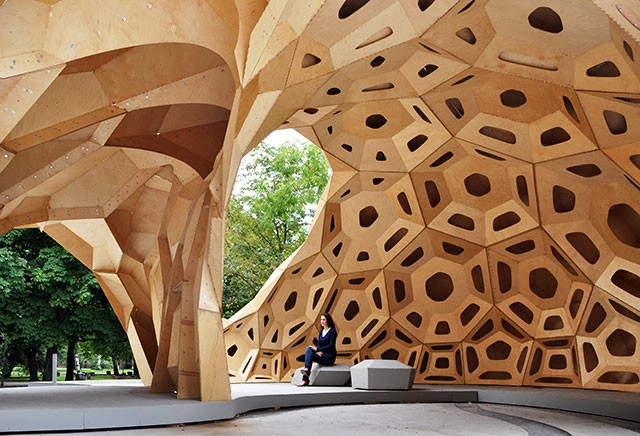
In this article, originally appearing on the Australian Design Review as "Tolerance and Customisation: a Question of Value", Michael Parsons argues that the complex forms made possible by digital fabrication may soon be victims of their own popularity, losing their intrinsic value as they become more common and the skill required to make them decreases.
The idea of tolerance in architecture has become a popular point of discussion due to the recent mainstreaming of digital fabrication. The improvements in digital fabrication methods are allowing for two major advancements: firstly, the idea of reducing the tolerance required in construction to a minimum (and ultimately zero) and secondly, mass customisation as a physical reality. Digital fabrication has made the broad-brushstroke approach to fabrication tolerance obsolete and now allows for unique elements and tolerance specific to each element. The accuracy that digital fabrication affords the designer, allows for the creation of more complex forms with greater ease and control. So far, this has had great and far reaching implications for design.
Read on to find out how this ease of form-making could diminish the success of complex forms.
https://www.archdaily.com/495089/the-depreciating-value-of-form-in-the-age-of-digital-fabricationRory Stott
Forget Flying Cars - Smart Cities Just Need Smart Citizens

This article by Carlo Ratti originally appeared in The European titled "The Sense-able City". Ratti outlines the driving forces behind the Smart Cities movement and explain why we may be best off focusing on retrofitting existing cities with new technologies rather than building new ones.
What was empty space just a few years ago is now becoming New Songdo in Korea, Masdar in the United Arab Emirates or PlanIT in Portugal — new “smart cities”, built from scratch, are sprouting across the planet and traditional actors like governments, urban planners and real estate developers, are, for the first time, working alongside large IT firms — the likes of IBM, Cisco, and Microsoft.
The resulting cities are based on the idea of becoming “living labs” for new technologies at the urban scale, blurring the boundary between bits and atoms, habitation and telemetry. If 20th century French architect Le Corbusier advanced the concept of the house as a “machine for living in”, these cities could be imagined as inhabitable microchips, or “computers in open air”.
Read on for more about the rise of Smart Cities
https://www.archdaily.com/491630/forget-flying-cars-smart-cities-just-need-smart-citizensCarlo Ratti
Autodesk Launches Foundation Aimed to Solve "Epic Design Challenges"
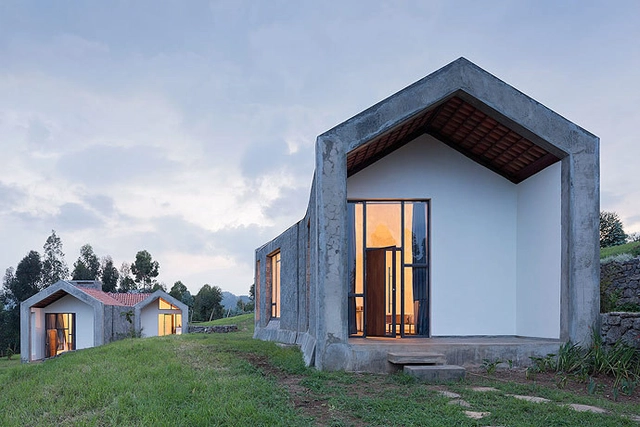
Autodesk has launched the Autodesk Foundation, an organization which will "invest in and support the most impactful nonprofit organizations using the power of design to help solve epic challenges." In an effort to aid those tackling global issues such as "climate change, access to water, and healthcare," the foundation will provide select design-oriented grantees with software, training and financial support.
https://www.archdaily.com/482881/the-autodesk-foundation-aims-to-help-solve-epic-design-challengesJames Taylor-Foster
VIDEO: A Mobile Phone That Maps Your Whole World
Johnny Lee, a project leader in the Advanced Technology and Projects group at Google, wants our phones to experience the world more like we do: "we are physical beings that live in a 3D world, yet mobile devices today assume that the physical world ends at the boundaries of the screen", he says - which is why his team has been working on Project Tango, a mobile phone which uses movement and depth sensors to build a 3D model of the space around it.
https://www.archdaily.com/480616/video-a-mobile-phone-that-maps-your-whole-worldRory Stott
"Invisible Cities" App Turns the Data of City Life Into an Extraordinary Landscape
The social life of cities is complex. Where once the networks which operated within cities could be understood - to an extent - through their physical infrastructure, in the internet age much of the network that supports city life is hidden, existing only through intangible data.
Invisible Cities is an app which makes this network tangible, using geocoded data from Twitter and Instagram to morph the landscape, displaying where the most activity is occurring. These hills of activity can then be linked by lines representing keywords, showing underlying affinities between different geographical areas.
https://www.archdaily.com/478295/see-the-data-of-city-life-as-an-extraordinary-landscape-with-invisible-cities-appRory Stott
How Should We Implement Smart Cities?

In this article, originally published by Arup Connect as "Anthony Townsend on Smart Cities", Townsend discusses his book "Smart Cities: Big Data, Civic Hackers, and the Quest for a New Utopia" and explains how, in his view, the push towards smart cities is being led by the wrong people - namely technology companies with short term goals; the architects, planners and scientists who should be leading this change, however, often struggle to share their knowledge.
Your book argues that there's a need for grassroots action rather than top-down, corporate-led implementation of smart cities. How do you see architects and engineers fitting into this picture?
Architects and engineers for the most part have to serve the interests of their clients. There's a balance that has to be struck, almost on a project-by-project basis, about how much they can push back in saying a piece of technology related to the business model for the project, or even a placemaking strategy, has unintended consequences, or that there may be a more democratic or innovative approach.
A lot of the vision of smart cities has been shaped by IT engineers and marketers. The problem there is not just that it's sort of a naïve vision being pushed by companies with very short-term sales goals. It just doesn't appreciate the complexity of good urbanism, and the role that both communications and information play in creating good places that people want to buy, work, live in.
Read more about the challenges facing smart cities after the break
https://www.archdaily.com/476803/how-should-we-implement-smart-citiesArup Connect
Adobe Photoshop Becomes a Tool for 3D Printing
Adobe has unveiled a major update to Photoshop CC (Creative Cloud) with the hope that a "radically simplified 3D printing process" will make their software the "go-to tool for anyone who wants to print a 3D model." Their new software allows for designers to create a model from scratch or refine an existing design leading to perfect print ready 3D models. Since one of the most common problems with 3D printing is the human errors in virtual modeling, Photoshop includes automatic mesh repair and will insert a support structure if necessary to ensure that the model will print reliably and without faults.
https://www.archdaily.com/473050/adobe-photoshop-becomes-a-3d-print-toolJames Taylor-Foster
VIDEO: Angles on the View with Parametric Design
This two-minute video with NBBJ’s Andrew Heumann highlights a valuable capability of parametric design; whereby the architect can optimize the shape and orientation of a building to appropriate a variety of viewing conditions at the client’s request.
https://www.archdaily.com/472944/video-angles-on-the-view-with-parametric-designAndrew Gipe
TEDx: Designing for the Internet of Things / Rodolphe el‐Khoury
Filmed at TEDxToronto in September 2013, this talk by architect, educator and theorist Rodolphe el‐Khoury is based on the inevitable “internet of things.” As TEDxToronto described, “More than ever before, the line between the digital and real worlds is increasingly blurred. Historically, computers and devices have functioned as a separate layer within our lives... In this world, our homes, workplaces, and the objects within them will all be digitally connected, intelligent, and responsive.” It is only a matter of time.
https://www.archdaily.com/451550/tedx-designing-for-the-internet-of-things-rodolphe-el-nil-khouryKarissa Rosenfield
ArchDaily's Google Glass Experiment
When Google Glass launched, we wondered how this wearable augmented reality device could add a whole other dimension to the consumption of architectural publications, by bringing the experience of space, matter, and light to our screens.
https://www.archdaily.com/446763/archdaily-s-google-glass-experimentDavid Basulto
3D Laser Technology to Digitally Preserve The World's Greatest Sites

CyArk, a non-for-profit 3D laser scanning organization, is scanning the world's greatest monuments, hoping to preserve over 500 cultural heritage sites around the globe, The Independent reports. The portable laser system creates such a detailed, digital blueprint of structures and ruins that each building can then be reproduced in 3D, with a margin of error of only two millimeters. So far, the statues of Easter Island, the Tower of London, Mount Rushmore, the Tower of Pisa have been preserved. Check out more about the technology in Ben Kacyra's TED Talk.
https://www.archdaily.com/444445/3d-laser-technology-to-digitally-preserve-the-world-s-greatest-sitesEric Baldwin
A Walking City for the 21st Century
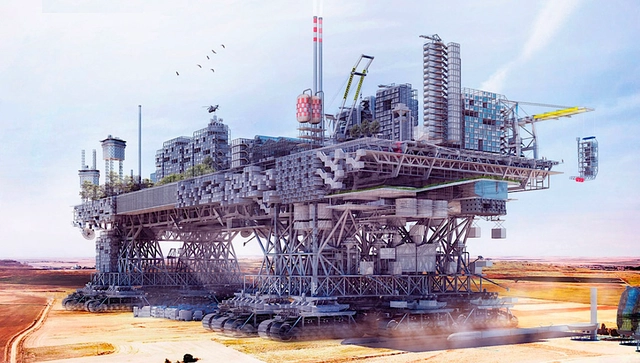
In a world where people live more mobile lifestyles than they have for centuries, cities are facing a problem they rarely planned for: their citizens move away. When jobs and resources start to decline, modern cities, such as Detroit, suffer difficult and often wasteful processes of urban contraction. In contrast to this, Manuel Dominguez's "Very Large Structure," the result of his thesis project at ETSA Madrid, proposes a nomadic city that can move on caterpillar tracks to locations where work and resources are abundant.
Of course this is not the first time that the idea of a nomadic city has been proposed. Ron Herron's Walking City is one of the more recognizable Archigram designs from the 1960s, and has been influential to architectural theory ever since. However, the design for the "Very Large Structure" expands on the Walking City by including strong proposals for energy generation on board the city.
Read on to see more on this provocative project - including a full set of presentation boards in the image gallery.





https://www.archdaily.com/443701/a-walking-city-for-the-21st-centuryRory Stott
Robots, Cars and Architecture

Since the dawn of the modern era, there has been a strong relationship between architecture and the car, especially in the works of Le Corbusier.
Le Corbusier was fascinated by his car (the Voisin C7 Lumineuse); the aesthetics of this functional, mass produced machine deeply influenced his designs. Its focus on function translated into his concept that houses should be "machines for living" and inspired a series of experiments of mass produced, pre-fab houses (such as the Maison Citrohan). Most of these concepts were later materialized in the iconic Villa Savoye, whose floorplan was even designed to accommodate the car's turning radius.
https://www.archdaily.com/438388/robots-cars-and-architectureDavid Basulto
What Happens When Smart Cities Malfunction?

An interesting essay by Anthony Townsend in Design Observer investigates a largely unconsidered aspect of smart cities: what happens if (or perhaps when) they malfunction? Townsend argues that as technology seeps into every aspect of our life within a complex system such as a smart city, glitches and bugs are likely to be magnified many times. He also explains that many of the communications systems that smart cities will rely on are insufficiently resilient, meaning entire cities could be vulnerable to failure or attack - an issue that will not sit well with the AIA. You can read the whole essay here.
https://www.archdaily.com/437983/what-happens-when-smart-cities-malfunctionRory Stott