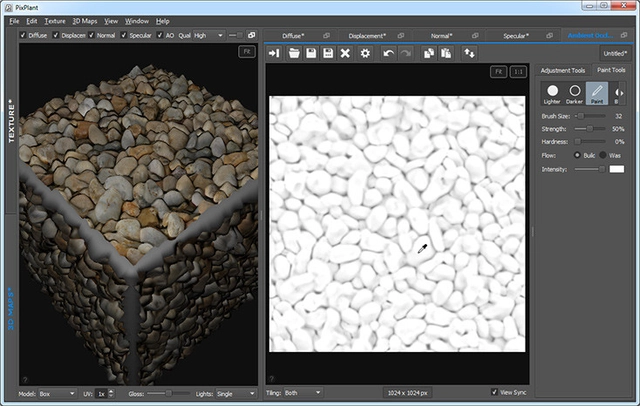
Rendering has become the ultimate tool in the architect’s arsenal for communicating designs directly to clients. But with the seemingly infinite number of real-life material options that exist today, the textures built into rendering programs often fall short. In some cases, one may be able to find appropriate texture maps for their desired materials online, but when experimenting with new materials or unique colors the need for greater customization arises. In the past, perhaps you could attempt to manually create and edit your own texture maps, but this can be a long and arduous process.
https://www.archdaily.com/637445/pixplant-3-create-custom-3d-texture-maps-for-renderingAD Editorial Team
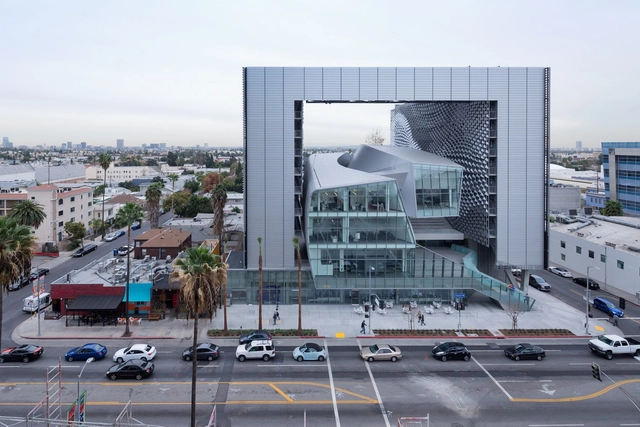
The AIA has announced four projects as the winners of its inaugural Technology in Architectural Practice (TAP) Innovation Awards, with Morphosis Architects' Emerson College Los Angeles taking away the headline "Stellar Architecture" award. Started in 2005, the TAP Knowledge Community has led efforts to acknowledge and disseminate the best use of Building Information Modeling (BIM) technologies, and the AIA hopes that the new TAP Innovation Award will "enliven the discourse on how these innovations can advance the profession and practice of architecture and further the mission of the Institute."
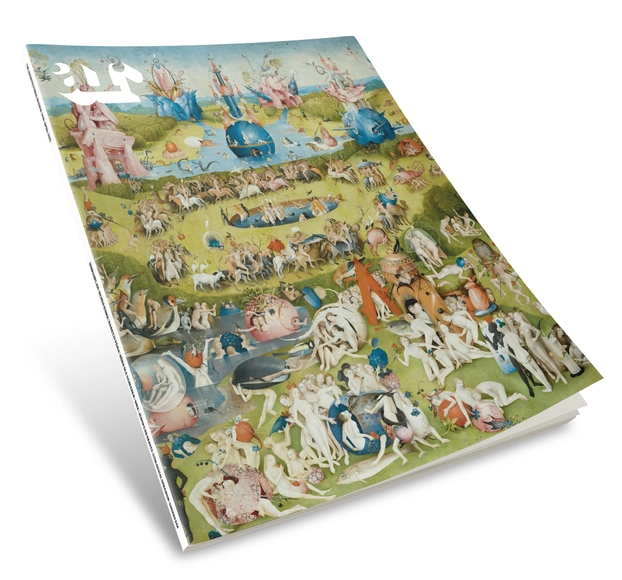
ArchDaily is continuing our partnership with The Architectural Review, bringing you short introductions to the themes of the magazine’s monthly editions. In this introduction to the April 2015 issue, her final editorial at the magazine, Catherine Slessor reflects on the changes in her two-decade tenure as a member of the AR's editorial staff - from the technological change that has irrevocably changed the nature of architectural publishing, to the worrying decline in the relevance of the architectural profession.
Cyberpunk king William Gibson once remarked: "The future is already here; it’s just not evenly distributed." But we’re getting there. The AR’s digital adventure has just climaxed with the recent launch of the AR app. Our lavish and incomparable banquet of criticism, culture and campaigning can now be savoured at your leisure, wherever you are and whatever you’re doing. It’s a leap that completes the journey from paper magazine to digital multiverse, offering more and different kinds of content on your platform of choice.
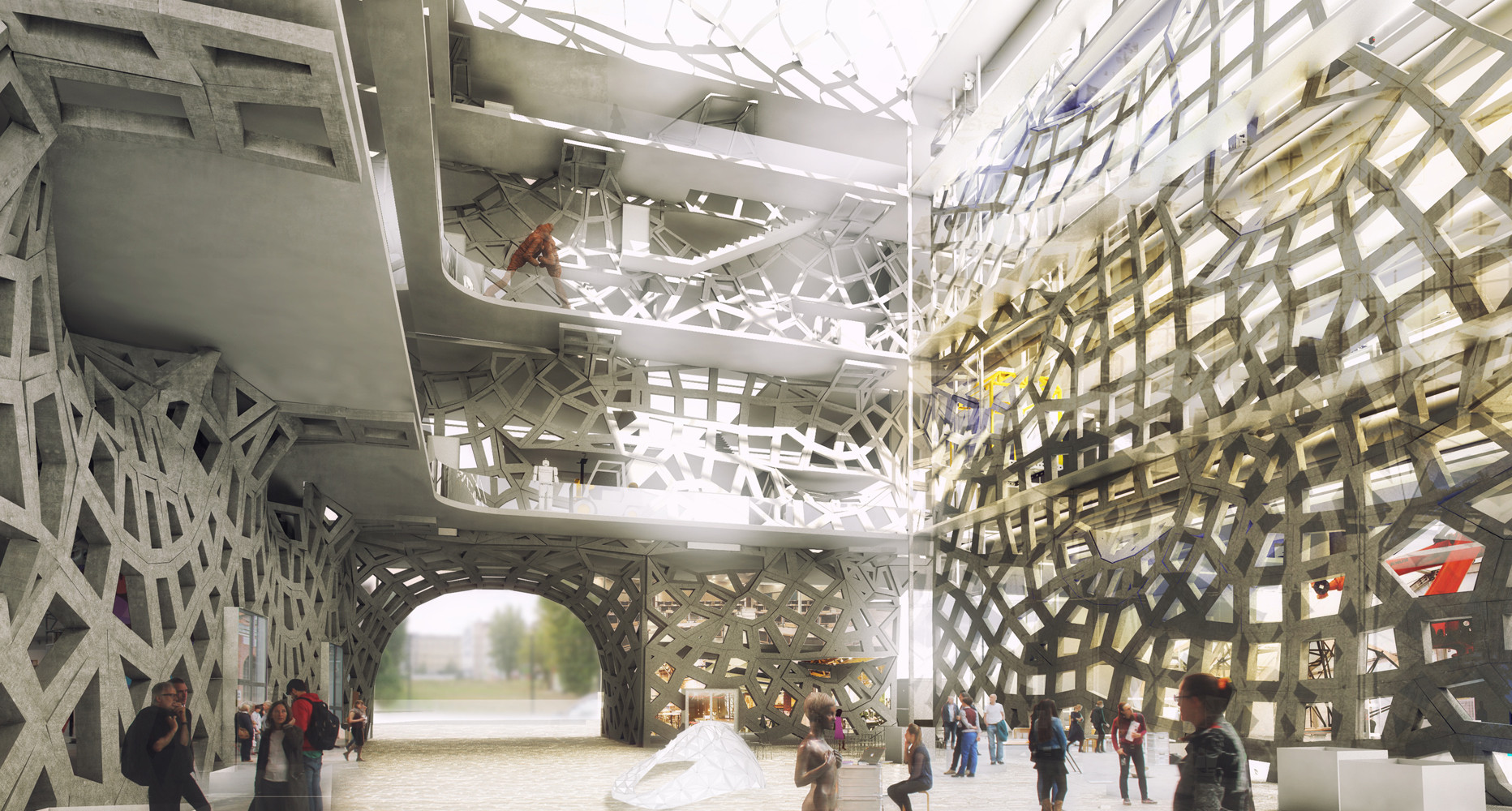
Courtesy of Strelka Institute for Media, Architecture, and Design, via Flickr
In the latest of a series ofpolemicalarguments against smart cities, Rem Koolhaas has penned perhaps his most complete analysis yet of the role that emerging technologies and the way they are implemented will affect our everyday lives, in an article over at Artforum. Taking on a wide range of issues, Koolhaas goes from criticizing developments in building technology as a "stealthy infiltration of architecture via its constituent elements" to questioning the commercial motivations of the (non-architects) who are creating these smart cities - even at one point implicating his other erstwhile recent interest, the countryside, where he says "a hyper-Cartesian order is being imposed." Find out more about Koolhaas' smart city thoughts at Artforum.
What if the manufacturers of the phones and social networks we cling to became the rulers of tomorrow’s cities? Imagine a world in which every building in your neighborhood is owned by Samsung, entire regions are occupied by the ghosts of our digital selves, and cities spring up in international waters to house outsourced laborers. These are the worlds imagined by self-described speculative architect, Liam Young in his latest series of animations entitled ”New City.” Read on after the break to see all three animations and learn more about what’s next in the series.
In his popular post on how architects can "work smarter, not harder," Michael Kilkelly suggests that you should "customize your tools to work the way you work" and "use macros to automate repetitive tasks." Both sound very helpful of course, but wouldn't those require you to to write some code? Yes - but according to Kilkelly this should be a tool available in every architect's toolkit. Originally published on ArchSmarter, here he offers 5 reasons that architects should learn to code.
As architects, we need to know a lot of stuff. We need to know building codes, structures, mechanical systems, materials. We need to know how to read zoning codes, how to calculate building area, how to layout office floor. The list goes on and on. Do we really need to know how to write computer programs as well?
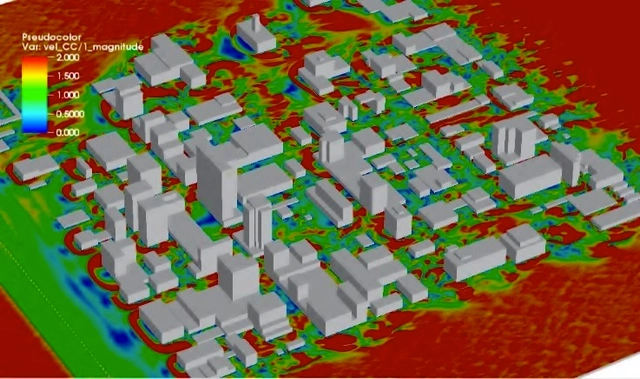
What possible use could architects have for a supercomputer? Well, of course it would be nice to produce that ultra-high-quality render in a matter of seconds rather than hours - but this post on the XSEDE blog recounts another use that is (arguably) much more important. XSEDE, an organization that helps researchers by providing them with access to supercomputers, has been working with a group from the University of Utah's Mechanical Engineering Department to simulate wind flow in cities, with the ultimate aim of providing architects and engineers with the tools to reduce wind tunneling effects, improve energy efficiency and lower pollution. Find out more about the research project here.
A dynamic post-professional program in Emerging Systems, Technologies, & Media (ESTm) offered by the Southern California Institute of Architecture (SCI-Arc) in Los Angeles has been charged with examining core contemporary issues facing architecture and design today. Spanning topics from advanced manufacturing methodologies to new building systems, this one year Master of Design Research track allows professionals to rethink architecture and design through the experimental hands-on approach of the SCI-Arc community.
The ESTm program tests new levels of environmental performance as it prepares students to successfully integrate formal, technical, logistical, and material processes into advanced architectural designs. The program is open to graduates in architecture, engineering, product design, computer sciences and other professionals who wish to develop advanced research and design skills in light of continuously evolving materials and new production paradigms of the 21st century.
https://www.archdaily.com/611103/sci-arc-offers-emerging-systems-technologies-and-media-post-professional-programSponsored Post
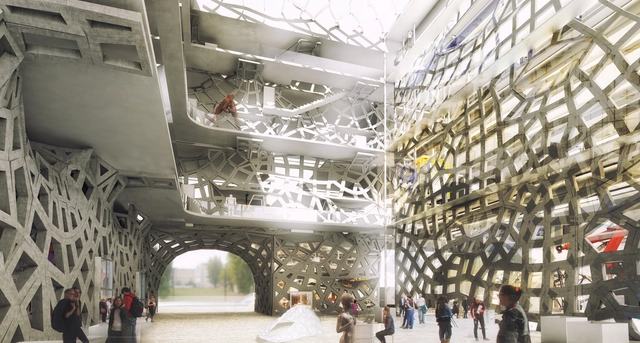
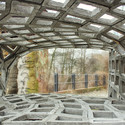
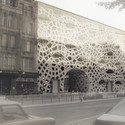
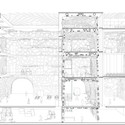
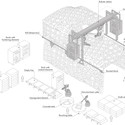
When one hears the term masonry architecture, digital fabrication and automated construction processes are probably not the first ideas to come to mind. By its very nature, the architecture produced with stone masonry is often heavy, massive, and incorporates less natural light than alternative methods. However, with their research proposal for "Smart Masonry," ZAarchitects are proposing to change masonry buildings as we know them and open opportunities for digital fabrication techniques in stone and other previously antiquated materials. Read on after the break to get a glimpse of what these new masonry buildings could look like and learn more about the process behind their construction.
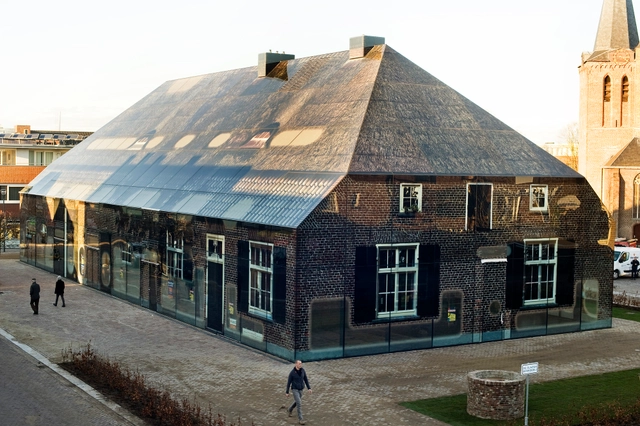
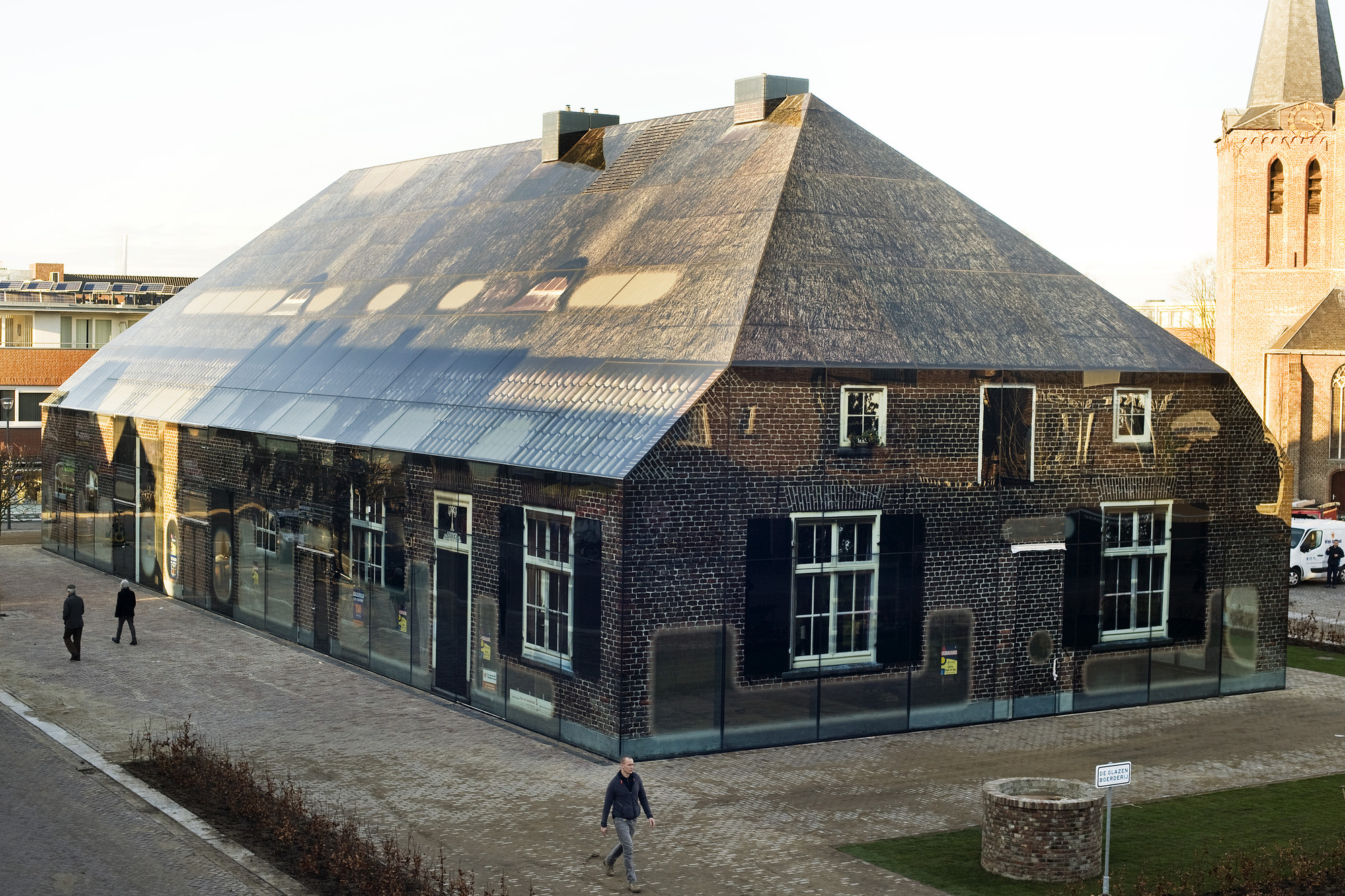
If you search the web for information on MVRDV's Glass Farm, you'll find plenty of people writing about the project's 33-year history, and about its context in the small town of Schijndel. You'll even find plenty of people theorizing on the nature of those glass walls, and the relationships between image and authenticity and between modern technology and modest tradition. But strangely, you'll find almost no information on how the project made use of Digital Ceramic Printing, a relatively new process which was able to handle the many colors, variable transparency and fine tolerances required to display an entire farmhouse facade across a thousand glass panels.
In this new installment of our Material Minds series, presented by ArchDaily Materials, we spoke to MVRDV's project leader on the Glass Farm Gijs Rikken, and to Niv Raz, an Architect at Dip-Tech - the company who produces the printers, ink, software and support required for the process.
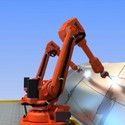
With a recently released animation entitled “We Start the Future of Construction,” Coop Himmelb(l)au announced their intention to take digital fabrication to a radical new scale, demonstrating how technology is impacting almost every aspect of the architectural profession. The advent of building information modeling and other modeling software has transformed how architects and engineers navigate the construction process, allowing us to achieve increasingly complex forms that can be modeled with the aid of CNC machining and 3D Printing, but still there remains a wide gap between the technologies available to architects and those employed by builders. When it comes to a building’s actual construction we have been limited by the great costs associated with non-standard components and labor - but now, the automated practices that transformed manufacturing industries could revolutionize how we make buildings.
Last week, ArchDaily sat down with co-founder, Design Principal and CEO of Coop Himmelb(l)au, Wolf D. Prix for his thoughts on the future of construction and the role of the architect in an increasingly technological practice. Read on after the break to find out how robots could impact architectural design, construction, and the future of the profession.
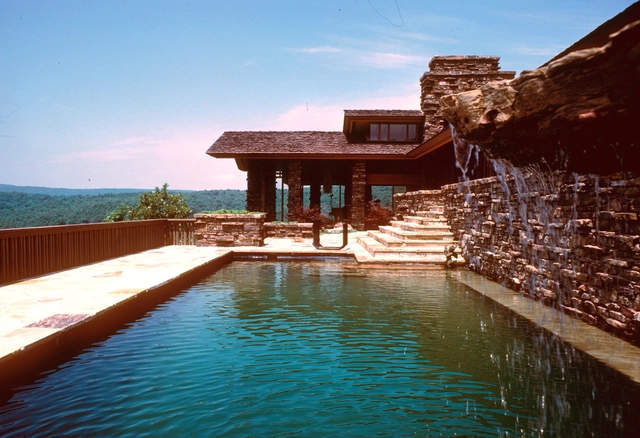
Yesterday afternoon, I was able to visit the University of Arkansas exhibition “Fay Jones and Frank Lloyd Wright: Organic Architecture Comes to Arkansas” - without purchasing a ticket or leaving my apartment. This extensive exhibition on the life and development of these two notable architects was made possible through a collaboration between University of Arkansas Libraries’ Special Collections and Crystal Bridges Museum of American Art Library and Archives. Exhibitions such as this are part of a broader movement in recent years towards making archived content more easily accessible to the public through web platforms. The concept of the online exhibition, however, is still in its infancy and there remains significant room for innovation.
Long after earth’s first journey to the moon, the idea of space colonization has continued to fascinate us. It is a subject repeated in countless science fiction works and even architectural proposals. For designers, this new frontier is seen as a tantalizing subject for exploration and will likely generate entirely new typologies for inhabitation. These fascinations formed the basis for Luis Daniel Pozo’s Diploma Project at the University of Applied Arts Vienna, from which he developed possible prototypes for “the city above the skies.”
A version of this article originally appeared on the Percolate Blog.
In spring of 2009, I graduated from architecture school. At the time, the post-recession economy was rough and not much was happening for architects. With an interest in entrepreneurship and technology, I took a risk and decided to try working at a tech startup. Much to my surprise, I fell in love with the industry and 5 years later, I’m now a Product Designer at Percolate in NYC, a company which produces web and mobile marketing software.
Since my career pivot, I’ve noticed many interesting parallels between architecture and product design. Although the mediums are different, it’s amazing to see how many of the design principles and processes are the same. To some degree, even the tools can be applied to both design industries. In this post, I will discuss hand-drawing, and learn how we apply architecture tools to product design at Percolate.
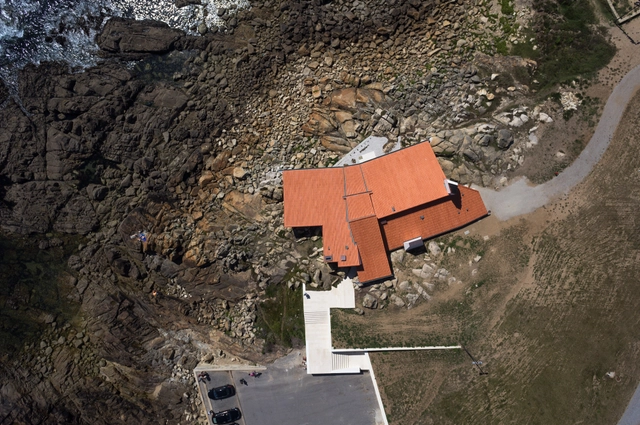
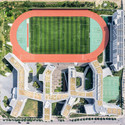
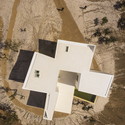
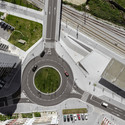
What is the draw of the aerial view? Whereas architects and designers often find solace in this particular spatial perspective there is a more inclusive, universal appeal to this way of seeing. The ease of access to online mapping services has increased our collective reliance on understanding our world from above.
Maps condense the planet into a little world inside our pocket, the commodification of which has universalised the ‘plan-view’ photograph. The question of whether or not their ubiquitous availability, having now been assimilated into our collective consciousness, is a positive step for the status of the plan is a discussion ongoing. Yet, in the face of this dilemma, architectural photographers are pushing the boundaries of drone technology in order to find new meaning.
At their Windows 10 Event today in Redmond, Washington, Microsoft unveiled features for its forthcoming operating system that it feels could revolutionize computing, particularly for people who want to design, make or fix something in the real world: holographics. The company revealed both the Windows Holographic features that will be built into Windows 10 and HoloLens, an in-house designed headset that will be capable of placing holographic elements into the world around you - think of it as a combination of the flat augmented reality overlay in Google Glass, and the immersive yet virtual-only presentation of Oculus Rift.
The video trailer above shows the far-reaching implications for a variety of designers, both professional and amateur (including a nod to the architecture profession at the 50-second mark), with TechCrunch explaining how the technology "offers a way for architects to survey and present their designs alongside clients even when separated by great distances."
Wouldn’t it be nice to have a time machine - to skip ahead into a future when technology has solved all of our problems, or perhaps to go back to a simpler time when we didn’t have to deal with the complications that modern technology brings? However, in the wise words of Archibald, the animated architect: “Architecture is not a final destination in time; it is a journey through life.” As architects and builders, we are constantly imagining and designing for the future, while attempting to deal with reality as it exists in the present.
https://www.archdaily.com/588463/blueprints-printing-the-architect-s-time-machineSponsored Post
A version of this article originally appeared on the Percolate Blog.
In spring of 2009, I graduated from architecture school. At the time, the post-recession economy was rough and not much was happening for architects. With an interest in entrepreneurship and technology, I took a risk and decided to try working at a tech startup. Much to my surprise, I fell in love with the industry and 5 years later, I’m now a Product Designer at Percolate in NYC, a company which produces web and mobile marketing software.
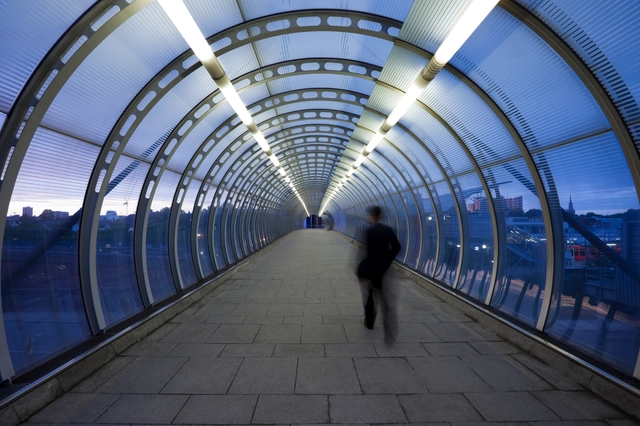
Since my career pivot, I’ve noticed many interesting parallels between architecture and product design. Although the mediums are different, it’s amazing to see how many of the design principles and processes are the same. To some degree, even the tools can be applied to both design industries. In this post, I will discuss how circulation is a fundamental property in the usefulness of both buildings and products.
One of the greatest lessons I learned in architecture school is the importance of circulation systems in the design of buildings.