1. ArchDaily
  2. Technology

Technology: The Latest Architecture and News

Call For Submissions: [TRANS-] lation

ABOUT :: [TRANS-] is a critically-reviewed academic journal published in print and online, inviting expressions of interest for submitting works of design, writing, or multi-media on the topic of design process and design communication for Vol. No. 2 to be published in May 2016.

TOPIC ::
In the second volume, [TRANS-] will explore the topic of [TRANS-]lation.
In a largely results-based society, how do designers evaluate process? How can a more thorough assessment of the translation that occurs during creative activities make us better communicators and collaborators with end users, consultants, clients, and all others we affect through design?

ELIGIBILITY ::
[TRANS-] accepts submissions from
Tech, Big Data, and the Future of Retail Design

Subscriber Access | 

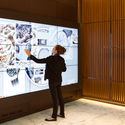
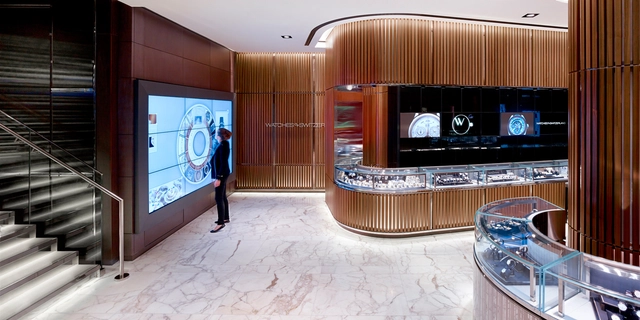
With the rise of the internet, old-fashioned brick-and-mortar stores have struggled, as online ordering services have increasingly made it unnecessary to actually go to a store. The answer for the physical stores of the future? Make spaces not for purchasing the things people need, but experiencing the things people want, as explored in this article by Matt Alderton originally published on Autodesk's Redshift publication as "How Technology and Big Data in Retail Are Shaping Store Designs of the Future." Alderton looks at how forward-looking stores are being designed to appeal to customers, finding that the same technology revolution that threatened to make stores obsolete might also play a key role in saving them, too.

Shopping used to be stimulating. Although its end was sales, its means was a mix of status and spectacle. It was social commerce in which partakers transacted not just cash, but also cachet.

Nowhere was this more evident than in the earliest department stores, whose architects designed them to be destinations. In London, for instance, Harrods boasts the motto “Omnia, Omnibus, Ubique”—Latin for “All Things for All People, Everywhere.” Established in 1849, it has seven floors, comprising more than 1 million square feet across more than 330 departments. The store installed one of the world’s first escalators in 1898, opened a world-famous food hall in 1902, and sold exotic pets such as lion cubs until the 1970s.

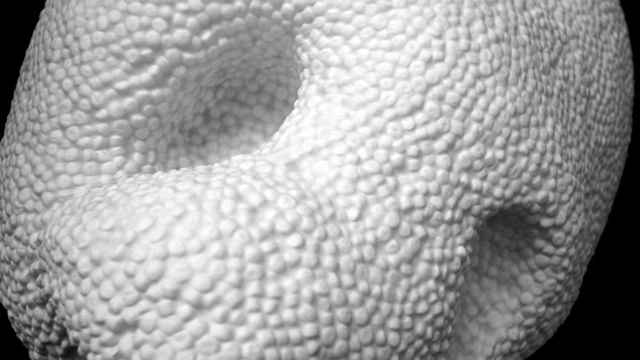
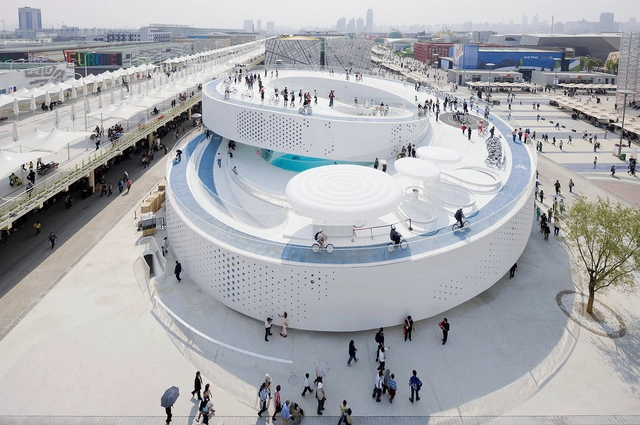
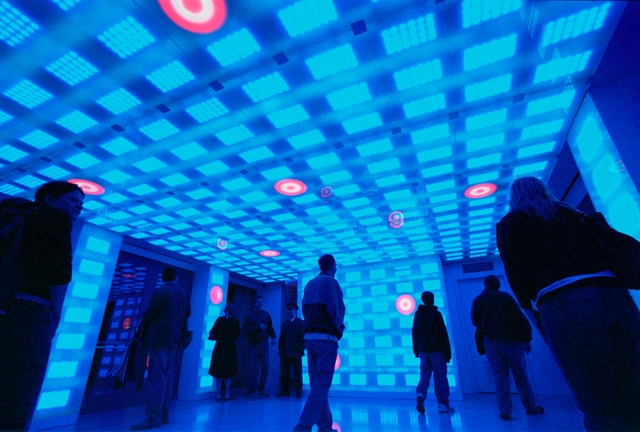
Tech, Big Data, and the Future of Retail Design - Image 1 of 4Tech, Big Data, and the Future of Retail Design - Image 2 of 4Tech, Big Data, and the Future of Retail Design - Image 3 of 4Tech, Big Data, and the Future of Retail Design - Image 4 of 4Tech, Big Data, and the Future of Retail Design - More Images+ 4

Digifest 2016: Future5 Talks Call for Proposals

Digifest explores the future of design—how is technology changing the way we create, and what this means for our future.

We invite proposals on topics for discussion on the themes:

Design | Technology | Entrepreneurship

15-minute presentations followed by 5 minutes Q&A.

Please provide a 250-word abstract summarizing your talk. Indicate if you are presenting case studies, theory, personal experiences, etc.

Examples of topics for discussion:

- How does art, design, architecture, fashion, food or music and technology intersect and improve our lives?
- Examples of creative leadership.
- Projects that think creatively and strategically in the digital age.
- Examples of social design impacting business, society, government

ThyssenKrupp and Microsoft's MAX Elevator Will Save Users Years of Waiting

German mechanical company ThyssenKrupp, in collaboration with Microsoft, has launched its newest innovational elevator, MAX. Together, the companies have created an elevator that could create time savings for elevator passengers “equivalent to 108 centuries of new availability in each year of operation."

Installation: JB1.0: Jamming Bodies

"JB1.0: Jamming Bodies" is an immersive installation that transforms Storefront’s gallery space into a laboratory. The installation, a collaboration between science fiction artist Lucy McRae and architect and computational designer Skylar Tibbits with MIT’s Self-Assembly Lab, explores the relationship between human bodies and the matter that surrounds them.

United States Allocates $160 Million to Smart Cities Initiative

Subscriber Access | 

In the continuing quest for smarter cities, the White House has announced the dedication of 160-million dollars toward the integration of sensors and data collection in cities across the United States. The new initiative strives to produce better, real-time data for local organizations, companies and governments to improve responses, both in time and effectiveness. The initiative broadly covers various organizations and federal grants, but hopes to address issues like crime, traffic congestion and climate change. Read more after the break.

Bjarke Ingels Talks Tech, Entrepreneurship and Modernism in this Podcast with Prehype

Subscriber Access | 

Prehype, a venture development firm, has released its latest in a series of podcasts by partner Henrik Werdelin, featuring Danish architect Bjarke Ingels. Having worked with Prehype on investments into tech development, Bjarke Ingels discusses his experiences and perspectives on the industry, drawing parallels between entrepreneurship, tech development and architecture.

MIT Researchers Develop 10-Material 3D Printer Capable of "Smart" Printing

In the latest of a series of technological developments which are expanding the capabilities of 3D Printing, researchers at MIT's Computer Science and Artificial Intelligence Laboratory (CSAIL) have developed a 3D printer that is capable of handling up to 10 materials simultaneously, and uses a process called "machine vision" to dramatically increase the variety of objects which the printer can produce.

Why Good Lighting Design Has Little to Do With Lux or LEDs

Is there a designer who does not dream of the perfect lighting concept, which conveys a feeling of well-being and shows the architecture at its best? Unfortunately, however, it is often the case that the brief received from the client causes difficulties. All too often discussions are peppered with such terms as LEDs and lux levels,causing an unconscious shift in thinking in the direction of norms and technology instead of placing questions about requirements and lighting quality at the centre of discussion. But what exactly is quality lighting design?

Mediated Matter's New Platform 3D Prints Glass with Stunning Precision

Glass can be molded, formed, blown, plated, sintered and now 3D printed. Neri Oxman and her Mediated Matter Group team has just unveiled their new glass printing platform: G3DP: Additive Manufacturing of Optically Transparent Glass. A collaboration with the Glass Lab at MIT, G3DP is the first of its kind and can 3D print optically transparent glass with stunning precision.

"G3DP is an additive manufacturing platform designed to print optically transparent glass," Oxman told ArchDaily. "The tunability enabled by geometrical and optical variation driven by form, transparency and color variation can drive; limit or control light transmission, reflection and refraction, and therefore carries significant implications for all things glass: aerodynamic building facades optimized for solar gain, geometrically customized and variable thickness lighting devices and so on."

Taipei 101 Sets New Record During Typhoon Soudelor

Taipei 101, once the world's tallest building before losing the title to the Burj Khalifa, has set a new record. As Popular Mechanics reports, the 1,667-foot-tall skyscraper's internal "tuned mass damper" swayed more than it ever has before in last week's Typhoon Soudelor. Also known as a "harmonic absorber," the massive damper moved a full meter from its central position at the tower's top in an effort to keep Taipei 101 upright during the early morning storm's 100 to 145 mph winds.

The weighted ball, measuring 18-feet in diameter and weighing 728 tons, sits on hydraulic cylinders suspended between the 87th and 92nd floors. It was engineered for winds up to 135 mph. Watch the damper (and building) sway in the video below. 

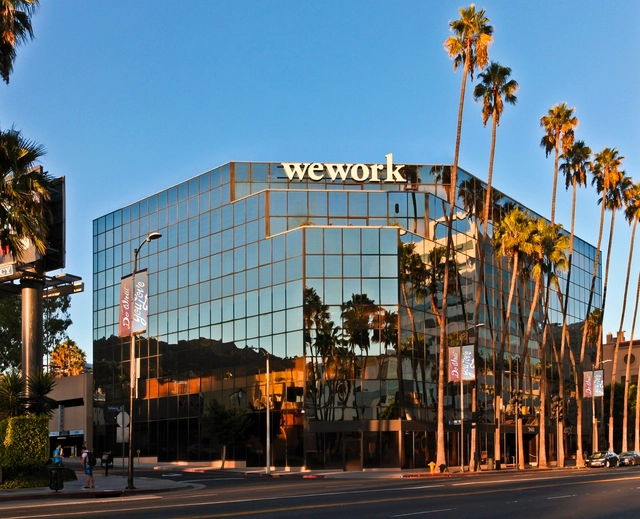
As WeWork Acquires CASE, the Future of Office Design May Start Today

"Buildings shouldn't just be a place where you go to do stuff. How can we enable the buildings themselves to be a positive contributor to the activities that happen within them?"

This is how David Fano, co-founder of New York consultancy CASE, explained the logic behind their acquisition by WeWork, the company that provides flexible coworking spaces for entrepreneurs and small businesses. Announced today, the merger could potentially mark a new chapter in the field of office design, as CASE proposes to bring their trademark attitude to Building Information Modeling (BIM) and other cutting edge technology to every space developed by WeWork.

Find out how this acquisition could change the face of Office design after the break.

As WeWork Acquires CASE, the Future of Office Design May Start Today - Image 1 of 4As WeWork Acquires CASE, the Future of Office Design May Start Today - Image 2 of 4As WeWork Acquires CASE, the Future of Office Design May Start Today - Image 3 of 4As WeWork Acquires CASE, the Future of Office Design May Start Today - Image 4 of 4As WeWork Acquires CASE, the Future of Office Design May Start Today - More Images+ 1

How Architecture Firms Can Safely Make the Switch to Cloud Storage

Subscriber Access | 

As an architect, whether you’re storing large design files, sharing them with colleagues, syncing files to your tablet to show clients in meetings, or filing away confidential patent documentation, the benefits of the cloud are increasingly on your side. Because the architecture industry relies so heavily on collaboration throughout the course of a project, it seems like a natural fit for using the cloud but nonetheless, many architecture firms generally dissuade cloud adoption, largely due to concerns about security and the necessity of protecting intellectual property.

To be fair, these concerns are not entirely unfounded: After all, nearly a quarter of cybercriminals are intellectual property spies, hoping to sell your designs to a competitor or release confidential plans to the public. So when you work in an industry where intellectual property is your bread and butter, it’s essential to regularly address security concerns and maintain strong contingency plans.

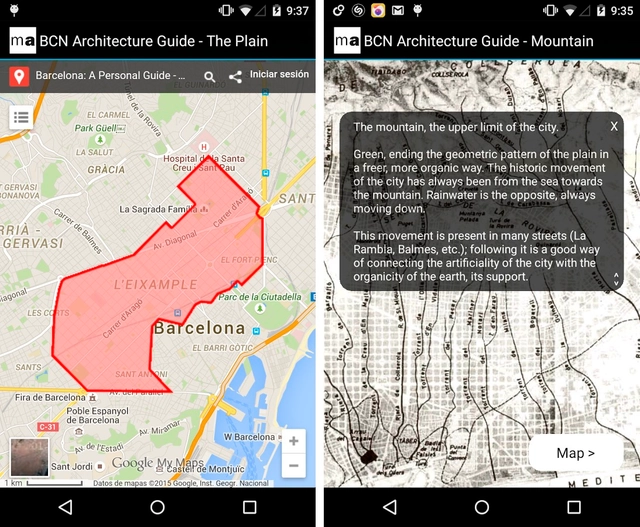
Explore Barcelona’s Architecture with This Free App by Josep Lluís Mateo

Spanish architect Josep Lluís Mateo of Mateo Arquitectura has launched the “BCN Architecture Guide,” a free application to help travelers and architecture lovers explore Barcelona. The app guides users to both highlights of the city’s built environment as well as its natural environment, including some “places to experience nature in tension with the city, places to be rather than objects to look at.”

The app is available for download in both the App Store and Google Play.

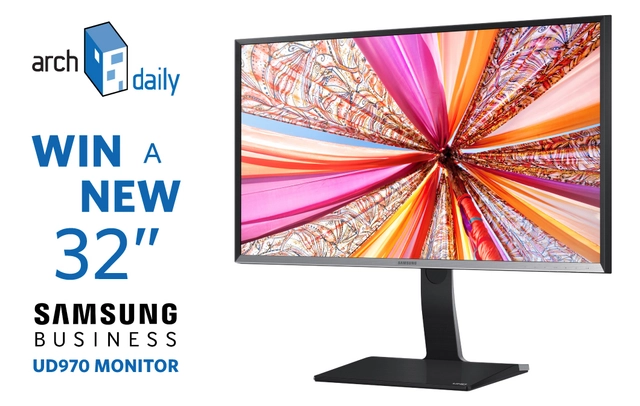
Architecture Gear Giveaway: Win the new 32” Samsung UD970 Monitor

Subscriber Access | 

The success of a design, from inception to construction, can depend on the extent to which designers can represent their intentions, but the days when architects used the drafting pencil and parallel edge to exercise physical control over their work are rapidly fading away. While computerization makes possible innovative forms and new methods of working, if not calibrated and engineered perfectly, digital technology can bring unintended consequences into the design process. Samsung’s UD970 monitor, however, resynchronizes the design process with the build environment through ultra-high definition (UHD) technology. Samsung partnered with leading designers, including Mark English Architects, to explore the importance of high-resolution detail in their work and ArchDaily has teamed up to bring these UHD monitors to our readers. To learn more, read on after the break.

Sliden'joy Adds Two Extra Monitors to Your Laptop

Subscriber Access | 

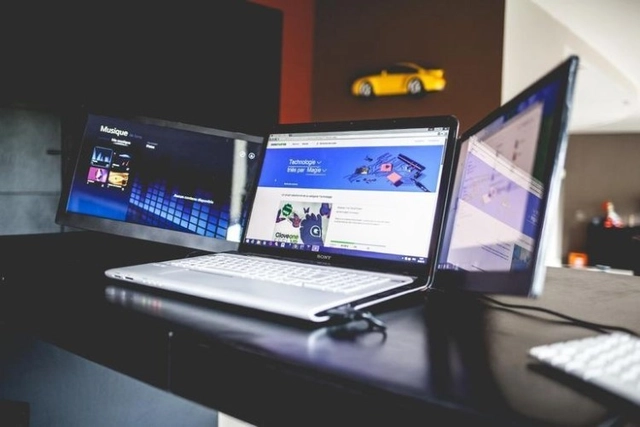
A design team from Belgium is developing a new way to add real estate to your laptop. The Sliden’joy, founded by Charlee Jeunehomme, Laurent Wéry and Thomas Castro, is an attachment for Mac and PC that adds up to two extra displays to your laptop.

With the ability to rotate each (13”, 15” or 17”) monitors 180°, the attachment gives you 360° visibility of your screen. The thickness of the unit varies, depending on how many screens and which finish the user selects; the 2-screen unit is currently 1.7 centimeters thick, though the designers claim it could be thinner. Finishes include wood, leather and carbon.

4 Ways Technology Can Improve Architecture for (and by) the Blind

Seven years after waking up without sight, San Francisco-based architect Chris Downey is helping to revolutionize the built environment with interactive technologies optimized for the blind. One of the world's leading blind architects, Downey intrinsically understands the issues facing blind and visually impaired people worldwide. As a consultant to a variety of organizations serving to advance universal access, Downey has played an integral role in the development and integration of new, non-invasive technologies designed to assist the blind.

In a recent article in Dwell, Downey illustrates the various technologies currently being tested and implemented in San Francisco - a city notorious for its topographical challenges to differently abled residents. See four takeaways from Dwell's interview with Downey on how technology can help bridge the gap between architecture and universal access after the break.

Could Hovering Buildings be the Future of Sustainability?

Could Hovering Buildings be the Future of Sustainability?

If Arx Pax, a cutting-edge technology firm led by Greg and Jill Henderson, has its way, levitating objects could become a common sight. The team is developing what they call Magnetic Field Architecture (MFA), a technology which controls electromagnetic energy to make objects hover, and at the several months ago, they used it to produce Hendo Hover, a hoverboard capable of carrying a person. While the fact that Arx Pax was able to produce a hoverboard is fascinating, the technology could have much more serious applications: as an architect, Greg Henderson envisions that one day MFA technology could be used in buildings to produce sustainable structures which can better survive earthquakes and other natural disasters. Is this goal realistic?