Sustainability has been a central theme in architectural discussions for years, encompassing not only the profession’s role in combating climate change and transitioning to low-carbon economies but also preserving cultural heritage and celebrating vernacular traditions. In 2024, a wave of projects and studies stood out for their innovative use of natural materials, particularly in the Global South. These initiatives skillfully blend creativity and technology with renewable resources, demonstrating how architecture can deliver high-quality spaces that align with contemporary demands for sustainability and environmental responsibility.
For decades, our society has predominantly embraced an extractivist approach when formulating models for material manufacturing across diverse industries. While we now know that this model is unsustainable, a major question remains: So, how do we do it? We may be a while away from offering a definitive answer to this challenge. Still, it is exciting to note that, in a context marked by a challenging global and ecological horizon, the architectural community maintains a positive approach by pushing for a re-evaluation of what we make and how we make it.
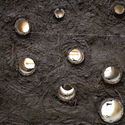
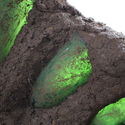
This momentum may be gaining relevance due to the emergence of new, more environmentally conscious generations, such as Gen Z and Alpha. What is certain is that we are witnessing the development of new production philosophies, such as plant-based materials, which adopt practices aimed at favoring the use of resources derived from plants, reducing dependence on extractive processes, and promoting conscious and sustainable alternatives in various aspects of the manufacture and production of materials in architecture.
https://www.archdaily.com/1014260/harvesting-architecture-a-glimpse-into-3-plant-based-materialsEnrique Tovar
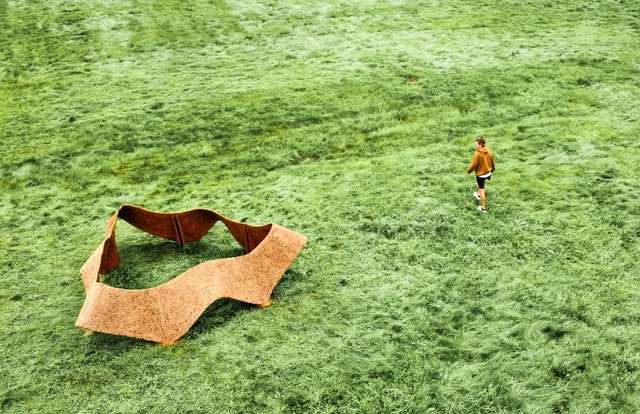
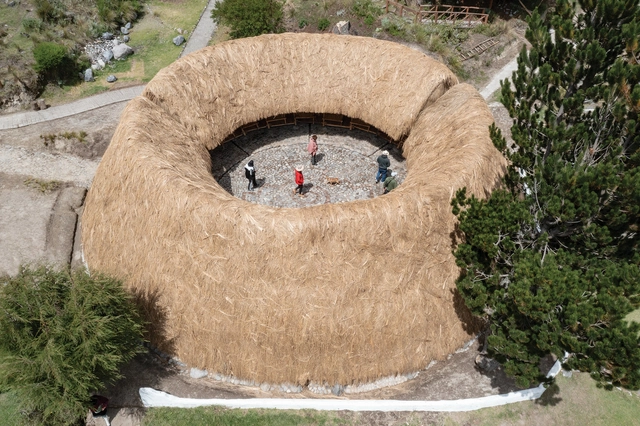
The use and demand for natural materials in architecture and interior design have facilitated the revival of updated traditional construction systems for the contemporary context. What was once considered rustic is now being explored in more modern settings; therefore, the application of the material is also subject to new forms of fixation, coloring, and orientation (horizontal or vertical). While wood is the dominant material in traditional systems and environmentally sustainable materials, another material that has been used for centuries, equally sustainable and biodegradable, and has received less attention is straw.
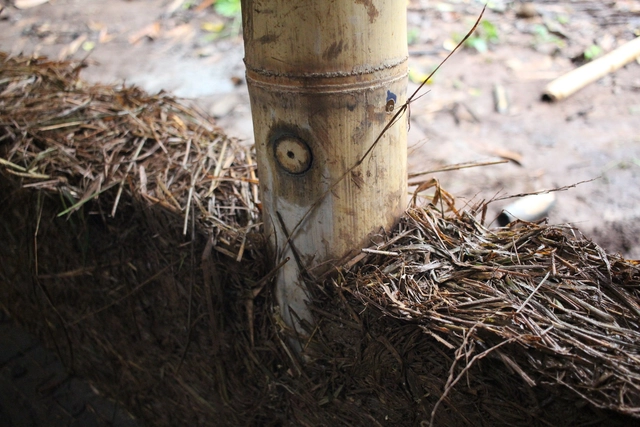
By recognizing and analyzing the multiple architectural possibilities of bamboo—a construction material mostly native to warm and tropical areas—the following questions arise: How can we take advantage of its qualities and enhance its use in colder climates? Such regions necessarily require a certain level of thermal isolation in walls, floors, and roofs—but for these climates, we can combine bamboo with materials that complement it.
We spoke with Penny Livingston-Stark, a designer and professor of permaculture who has worked for 25 years in the field of regenerative design based on non-toxic natural materials, to understand the opportunities offered by combining bamboo with earth.
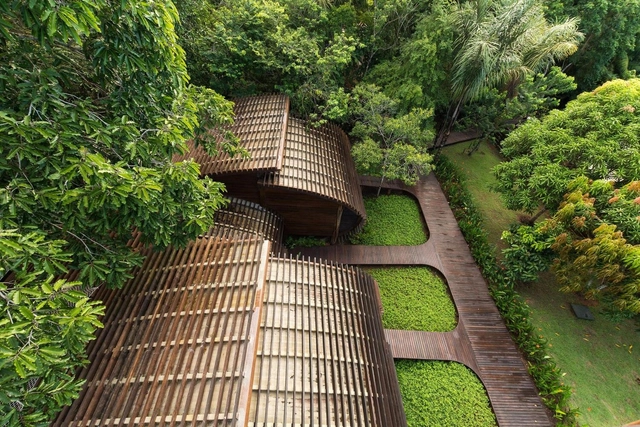
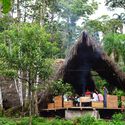
Mirante do Gavião Amazon Lodge / Atelier O'Reilly. Photo: Jean Dallazem
The architecture of indigenous peoples is deeply rooted in their surroundings, in the sense that materials are locally sourced and empirically tested, to discover the construction techniques and dwellings that best respond to the values of the community and their understanding of housing. The situation in the Amazon is no different. Many different groups of people have settled on the land and water, developing many unique building skills that attract a lot of architects working in these regions. As a result, there is an exchange of knowledge, combining native cultures and novel architecture.
Working within the restrictions of a limited carbon footprint can be one of the hardest – but also most rewarding – parts of a modern architect’s role. Whether to suit a large multinational corporation’s sustainability report, to achieve LEED status or similar for a commercial developer, or to build an eco-home for a climate-conscious private client – or even one who just wants to spend less on energy, it’s imperative to keep up-to-date with the latest carbon-neutral and low-carbon building practices and materials.
Whether looking at a project’s structural beginnings, its high-grade finishes, or thinking more holistically about its entire lifetime, there are huge gains to be made with sustainable substitutes and alternatives to traditional materials and techniques.
In an effort to address the architecture industry’s environmental impact, Henning Larsen is presenting the “Changing Our Footprint” exhibition at AedesArchitecture Forum in Berlin. The event features the small but scalable steps that the office is taking to move towards a more desirable future through the projects they are designing and the research they are conducting. The exhibition aims to be an engaging event, inviting visitors to participate in the dialogue, to think critically about the proposed solutions and initiatives, and to ask difficult questions in the search for better outcomes. The exhibition is open until March 22, 2023. Henning Larsen will also host a series of panel debates at the Aedes Architecture Forum from February 22 to March 14.
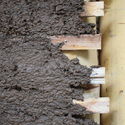
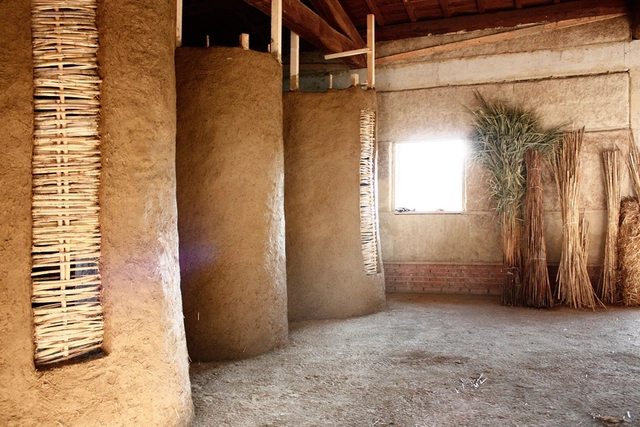
In a 12-day workshop, Building Trust International and Terraepaglia joined the Ciuffelli Agricultural Technical Institute in Todi, Italy, with the aim of exploring a series of construction techniques with raw soil. In addition to producing earth bricks and rammed earth structures -in collaboration with experts such as Eliana Baglioni and Pouya Khazaeli-, a curved wall was erected with a wooden structure and a cane framework, on which a massive layer of earth and straw was spread.
The activity generated a series of internal spaces as a kind of laboratory, to show the construction methods and the materials in situ.
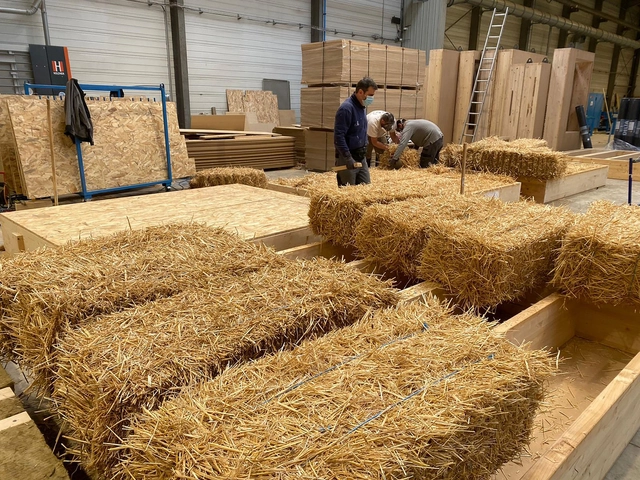
The competition topic is the preliminary design of a 40 sm one-floor building, located in an Italian municipality, to be announced later, employing straw bale and timber construction techniques. The building will consist of a single multifunctional area available to different associations to carry out conferences, meetings, and events. The building will be used periodically and in a discontinuous way, thus management costs should be minimized. Thanks to an agreement between Promopaglia and the Municipality of Caino (Italy), the two winning projects will be submitted to the Municipality as part of a public- private partnership in order to achieve their realization.
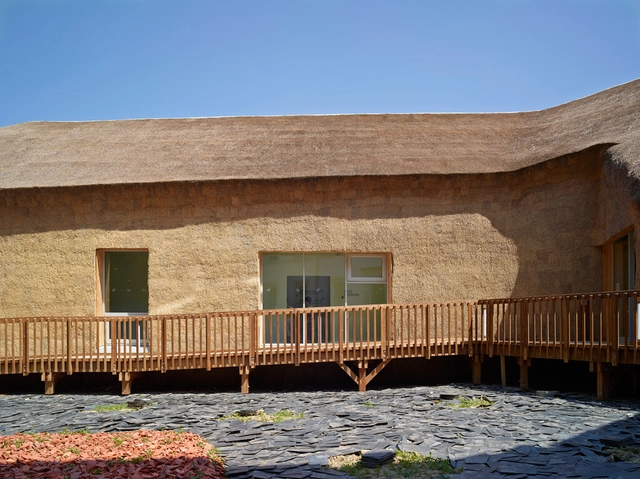
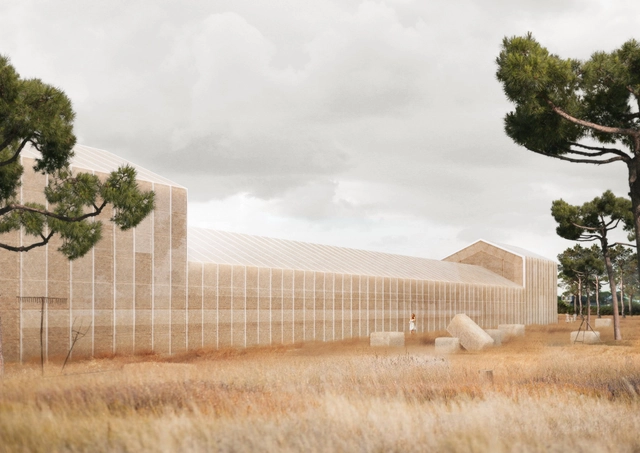
A proposal from George Batzios Architects for the Konaki Averof Cultural Center in Greece uses a cutting edge, sustainable approach to revive a deeply historical site. The design intertwines elements of architecture and agriculture to refit an existing structure with reference to the Thessalian plains on which it lies. The new architecture recreates the existing envelopes with straw cladding, regenerating the "golden environment" which defined the place in the late 19th century.