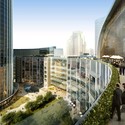
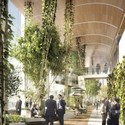
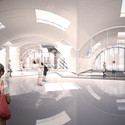
AECOM has designed a preliminary study for a mixed-use transportation development in Solana Beach, California, as part of a response for a RFP (Request for Proposal). Located near major roads and connected to railroads, the project proposal consists of a combination of retail stores and restaurants, providing transit users with leisure spaces on their travels, in addition to parking for the nearby AMTRAK train station.
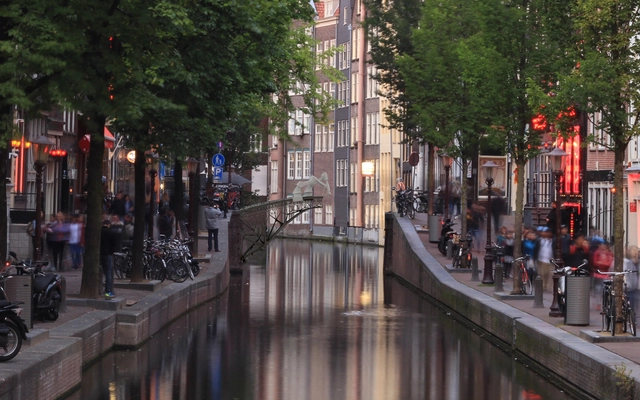
Amsterdam already has over 1,200 bridges throughout its canals, with some dating as far back as the 17th century, but the city is about to add one more in correspondence with its growing 3D printing industry. Dutch start-up MX3D has partnered with Joris Laarman Lab, Heijmans, Autodesk, and several other supporters, in a collaboration that will create an intricate steel pedestrian bridge made by 3D printers.
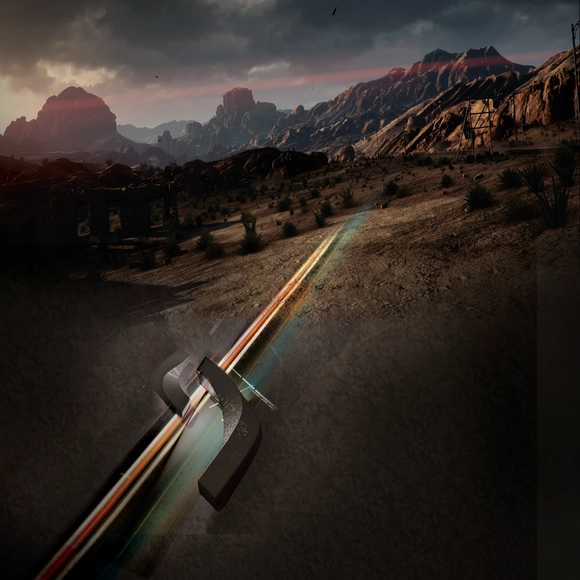
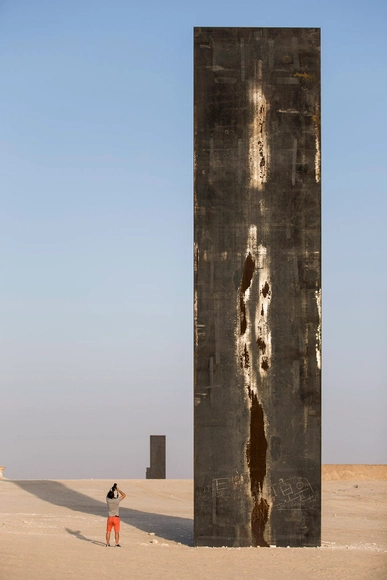
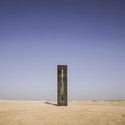
A new sculpture has risen in the desert of Qatar: “East-West/West-East,” Richard Serra's second public commission by the Gulf nation. Sited in a barren landscape that was suggested by Sheikh Hamad bin Khalifa al-Thani, the former Emir, the installation is comprised of four steel plates incrementally placed and standing perpendicular to the ground.
Much like Serra's first Qatari sculpture - "7" in Doha - the German rolled steel structure will oxidize, changing from gray to orange and eventually a dark amber, much like the Seagram Building in midtown, said Serra in an interview with The New Yorker. The artist hopes it will become a landmark within the country.
A selection of images from architecture photographer Nelson Garrido, after the break.
Donovan Dunkley, Vail Nuguid & Alexia Sanchezm, City College of New York. Image Courtesy of Association of Collegiate Schools of Architecture
In Borders: A Very Short Introduction, Hagan Diener writes, "…every border has a story. Every line on a map, every maker in the landscape, was derived from some complex negation of power and culture." It is this potency of meaning that makes the physical and conceptual border such a fascinating site. The 2013-2014 ACSA administered and AISC sponsored Steel Design Student Competition challenged students to design a border crossing station addressing the complex factors of cross-border relationships, using structural steel as the primary material. Learn more about the competition and the winning projects after the break.
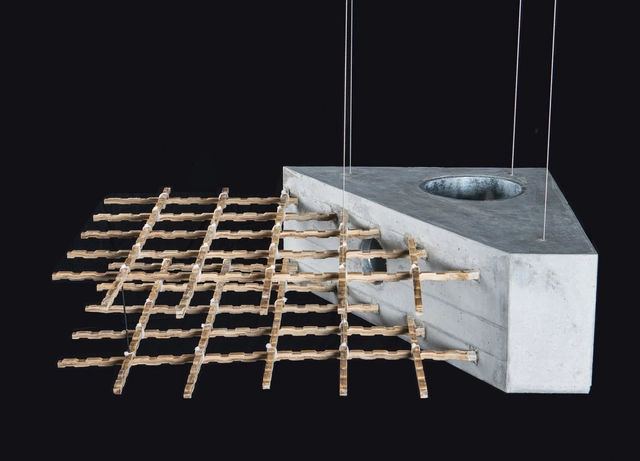
Developing countries have the highest demand for steel-reinforced concrete, but often do not have the means to produce the steel to meet that demand. Rather than put themselves at the mercy of a global market dominated by developed countries, Singapore’s Future Cities Laboratorysuggests an alternative to this manufactured rarity: bamboo. Abundant, sustainable, and extremely resilient, bamboo has potential in the future to become an ideal replacement in places where steel cannot easily be produced.
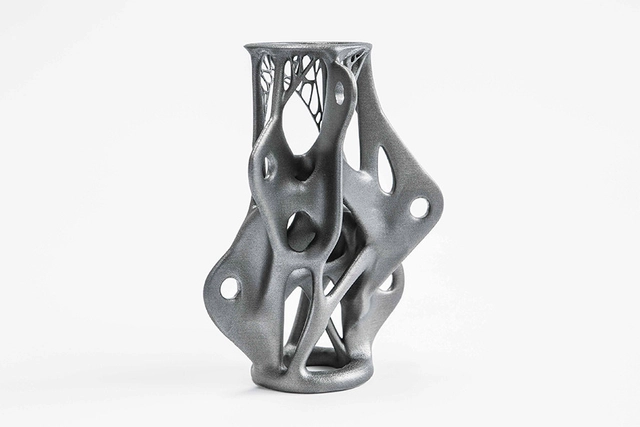
A team lead by Arup has developed a method of designing and 3D Printing steel joints which will significantly reduce the time and cost needed to make complex nodes in tensile structures. Their research is being touted as "a whole new direction for the use of additive manufacturing" which provides a way of taking 3D printing "firmly into the realm of real-world, hard hat construction."
Aside from creating more elegant components which express the forces within each individual joint - as you can see in the above photo - the innovation could potentially reduce costs, cut waste and slash the carbon footprint of the construction sector.
Andrew Carnegie once said, “Aim for the highest.” He followed his own advice. The powerful 19th century steel magnate had the foresight to build a bridge spanning the Mississippi river, a total of 6442 feet. In 1874, the primary structural material was iron — steel was the new kid on the block. People were wary of steel, scared of it even. It was an unproven alloy.
Nevertheless, after the completion of Eads Bridge in St. Louis, Andrew Carnegie generated a publicity stunt to prove steel was in fact a viable building material. A popular superstition of the day stated that an elephant would not cross an unstable bridge. On opening day, a confident Carnegie, the people of St. Louis and a four-ton elephant proceeded to cross the bridge. The elephant was met on the other side with pompous fanfare. What ensued was the greatest vertical building boom in American history, with Chicago and New York pioneering the cause. That’s right people; you can thank an adrenaline-junkie elephant for changing American opinion on the safety of steel construction.
So if steel replaced iron - as iron replaced bronze and bronze, copper - what will replace steel? Carbon Fiber.
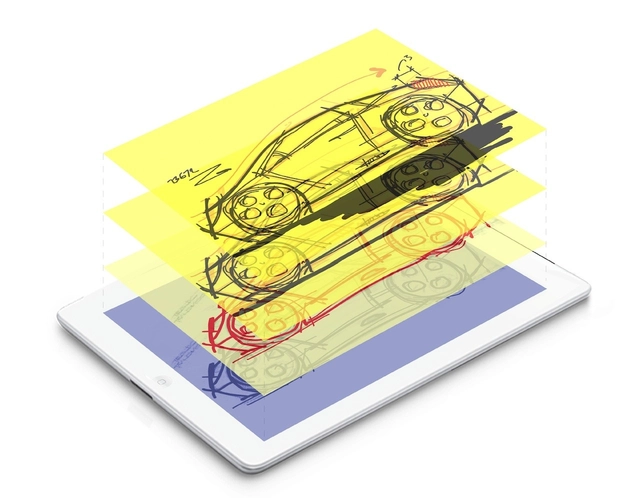
Following our readers poll last year, here's an updated list of what we think are the best ten apps for architects. From condensed versions of large scale programmes architects and designers use every day, to blank canvases to scratch ideas down onto, you might just find an app that could improve the way you work.
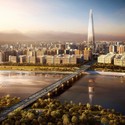
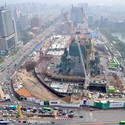
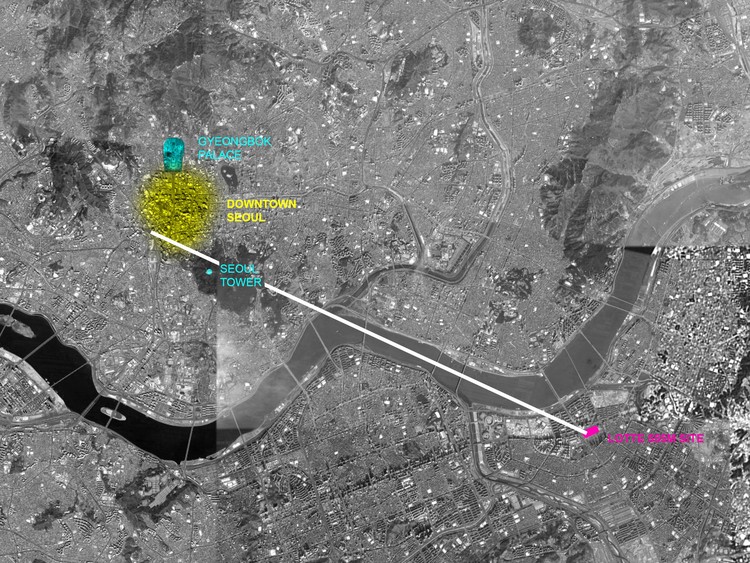
Construction of the Lotte World Tower in Seoul, South Korea designed by high-rise architectural firm KPF is well underway. Won via an international design competition, this new tower will rise up to a pinnacle height of 555 meters. Organized around a mixed-use program including retail, office, hotel and an observation deck at the peak, the tower pulls inspiration from historical Korean arts of ceramics, porcelain, and calligraphy. More details after the break.
Soon to be Shenzhen’s tallest tower at 660 meters, the Ping An Finance Center by KPF will anchor the city’s new Central Business District. Positioned at the southwest corner of the intersection of Yi Tian Road and Fu Hua Road in the Futian District, the tower will connect with neighboring properties in addition to Shenzhen Line 1 Gou Wu Gong Yuan metro station. More details after the break.
Architects: Dominique Perrault Architecture Location: Parque de la Arganzuela, Madrid, Spain Engineering: MC2 – Julio Martínez Calzón (stucture) / TYPSA (mechanical engineering) Built area: Footbridge 150 m (section 1) 128 m (section 2) length, 5 to 12 m width Completion: 2010 Photographs: Georges Fessy, Ayuntamiento de Madrid
The ASM International World Headquarters, originally constructed in 1959, is an architectural composition by two influential designers during the mid-twentieth century: John Terence Kelly, who studied under Bauhaus-founder Walter Gropius, and R. Buckminster Fuller, well known for his geodesic domes, environmentally-conscious designs and the dymaxion car. The complex includes the building, dome and garden on the 45-acre site known as Materials Park. The renovation, led by The Chesler Groupand Dimit Architects, brings new life to Kelly’s building. According to Architectural Record, (Snapshot, Laura Raskin), Michael Chesler of The Chesler Group, campaigned to salvage the architectural marvel, giving it a place in the National Register of Historic Places and using tax credits to fund the renovation.
Pictures and details of the renovation after the break.
In reference to Living Steel‘s 3rd International Architecture Competition for Sustainable Housing, Glen Murcuttdiscusses his ideas surrounding the issue of sustainability. He emphasizes the strategies employed by the top contenders such as the planning of orientation, thermal performance, and human effort in addition to other variables involved in sustainable architecture. One particular method that Murcutt stresses is using materials that can dissolve back into the earth, citing earth walls as an excellent medium to build with and their inherent thermal mass qualities. Each team was invited to present their ideas in person, a variation from previous years which Murcutt believes led to the highest quality of work and diversity of the competition series.





.jpg?1430423256 "“East-West/West-East” / Richard Serra. Image © Nelson Garrido")